
Keep Your Family Warm and Safe—No Matter What
With winter lows averaging in the mid-30s, wood isn't the primary heat source for most Fultondale homes—but for backup heat and ambiance, it still has a place. Here's what to know before you install.
Every Project Starts From One of These Five Situations
Wood heat isn't the default here—and that's fine.
Fultondale sits in Jefferson County at roughly 500 feet elevation, in climate zone 3A, with about 2,533 heating degree days a year and winter lows that average around 35°F. That's a fraction of what a wood-dependent town like Duluth, MN or Burlington, VT sees each winter, and it's why most Fultondale homes rely on gas furnaces or electric heat pumps through Alabama Power for day-to-day heating rather than a wood stove or insert.
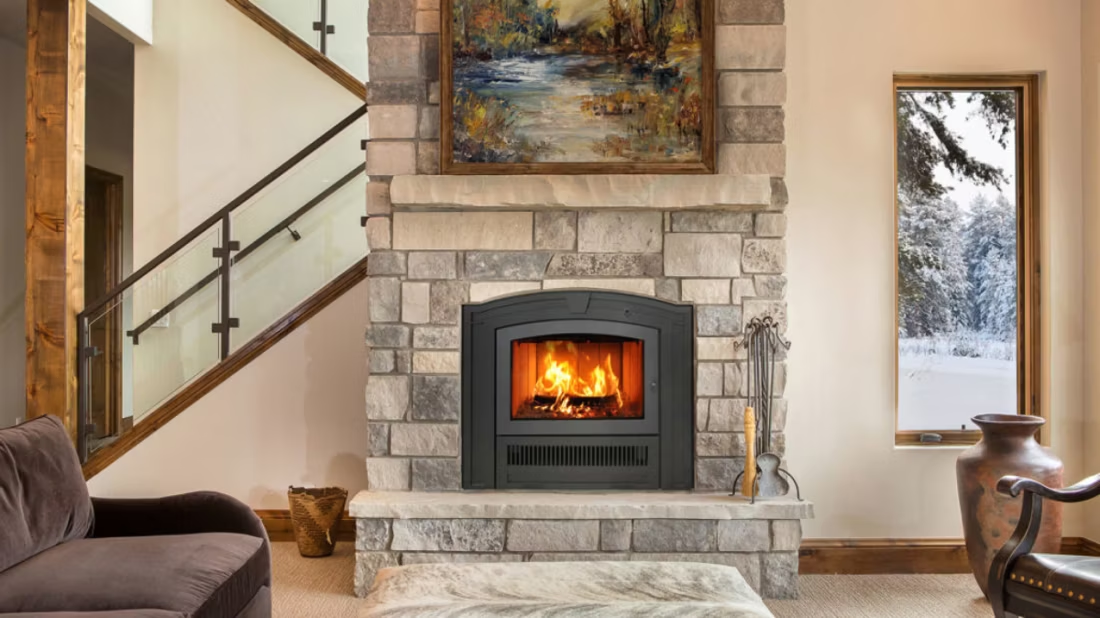
That said, wood-burning fireplaces and stoves aren't unheard of here—homeowners install them for the ambiance of a real fire on the handful of genuinely cold nights each winter, for the rustic character they add to a den or basement, or as backup heat for the ice storms that occasionally knock out power across Jefferson County. Local hardwoods like oak and hickory burn hot and long when that need arises, with pine useful for kindling and quick starts. If you're one of the homeowners for whom wood makes sense, it pays to work with a dealer who installs these units regularly rather than one who treats it as an afterthought.
Three steps. No salesperson until you're ready.
Tell us about your project
Your zip code, your situation, and the fuel you're leaning toward—or let the answers point you to one.
See what's actually available
The brands dealers within 100 miles genuinely carry—real options, never a catalog mirage.
Get your dealer & Project Guide
A trusted local dealer, plus the free Project Guide & Parts List that names every component of the job.
Frequently Asked Questions
Does a wood stove actually make sense for a home in Fultondale?
For most Fultondale homes, no—not as a primary heat source. With only about 2,533 heating degree days a year and winter lows averaging in the mid-30s, gas furnaces and electric heat pumps through Alabama Power handle the bulk of the heating load more efficiently and with less daily effort. Where a wood stove or fireplace does make sense is for supplemental warmth on the coldest nights of January and February, for the ambiance of a real fire, or as backup heat during the ice storms that occasionally take down power lines in Jefferson County. It's a smaller, more specific use case here than in colder parts of the country, and that's worth being upfront about.
How much does it cost to install a wood stove in Fultondale?
Because wood-burning installs are less common in this part of Alabama than in colder regions, pricing is driven more by the individual job than by a high-volume local market. Expect a freestanding EPA-certified wood stove with a new Class A chimney to run roughly $4,000 to $7,500 depending on the model and whether the chimney has to be built from scratch. If your home already has a masonry fireplace, converting it with a wood insert and liner is usually cheaper, often $3,000 to $5,500. A local dealer can give you a firm number after seeing your home—venting path matters more than anything else in the final cost.
What firewood works best around Fultondale?
Oak and hickory are the standout choices—both are dense native hardwoods common to Jefferson County that burn hot and slow, which matters if you're using a stove for occasional overnight backup heat rather than constant tending. Pine is plentiful locally too, but it burns fast and can leave more creosote if it's not fully seasoned, so it's better used for kindling and quick fires than as your main fuel. Whatever species you burn, make sure it's been seasoned at least six to twelve months—humid Alabama summers mean freshly cut wood holds moisture longer than it would in a drier climate.
Do I need a permit to install a wood stove in Fultondale?
In most cases, yes. New solid-fuel appliance installations typically require a building permit through the City of Fultondale or, for addresses outside city limits, Jefferson County's permitting office. The review confirms proper clearances to combustibles, hearth pad sizing, and an EPA-certified stove. There's no regional air quality non-attainment issue in Fultondale, so unlike some Western cities, you won't run into wood-burning curtailment days or seasonal restrictions—the permit process here is mostly about fire safety, not smoke management.
Is a wood stove worth it just for power outage backup?
It's one of the more compelling reasons to install one here. Ice storms move through North-Central Alabama every few winters and can knock out Alabama Power service for days at a time, which leaves gas furnaces (most need electricity to run the blower) and heat pumps offline. A wood stove keeps working with no power at all. If backup heat is your main motivation rather than daily use, a smaller, simpler stove is usually the right call—you don't need a unit sized to heat the whole house around the clock, just enough to keep a main living area livable until the power comes back.
How often should a wood stove or chimney be inspected in Fultondale?
Even with light, occasional use, an annual inspection before burning season starts (October, ahead of the first cold snaps) is worth doing. Creosote builds up more slowly when you're only burning a handful of weekends a winter, but Alabama's humid off-season creates its own risks—moisture intrusion, animal nests, and debris in a chimney that sits unused for eight or nine months. A CSIA-certified sweep can catch those issues before your first fire of the season rather than after.
Will my homeowners insurance cover a wood stove installation?
Most insurers will cover it, but because wood stoves are less common in this part of Alabama than gas or electric heat, some carriers ask for more documentation than they would for a standard HVAC upgrade—proof of a licensed installer, code-compliant clearances, and sometimes a follow-up inspection. It's worth calling your agent before the install rather than after; a few insurers adjust premiums slightly for solid-fuel appliances, and having paperwork from a certified installer on hand makes that conversation easier.
Wood stove or electric heat pump—which makes more sense for a Fultondale home?
For everyday heating, an electric heat pump is usually the better fit here. Alabama Power's residential rate runs about $0.1677 per kWh, and with only 2,533 heating degree days a year, a heat pump handles Fultondale's mild winters efficiently without any fuel handling or ash cleanup. A wood stove isn't competing with that for daily use—it's a different tool, better suited to occasional supplemental heat, ambiance, or power-outage backup. Plenty of local homes run a heat pump as the primary system and keep a wood stove or fireplace for the handful of nights each winter when a real fire is worth having.
What's the difference between a decorative wood fireplace and a real wood-heating stove for a climate like this?
A traditional open masonry fireplace is built mostly for looks and ambiance—it loses more heat up the chimney than it puts into the room, which is fine in a mild climate like Fultondale's where you're not relying on it to carry the heating load. An EPA-certified wood stove or insert, by contrast, is a sealed combustion appliance designed to actually heat a space efficiently, which matters more if you want genuine backup heat during a winter power outage. If ambiance is the goal, a factory-built wood-burning fireplace is often the simpler, less expensive choice. If you want real heat output when the power's out, a stove or insert is worth the extra investment.
Why is a fireplace insert so efficient?
An insert does two things: it seals the chimney completely, so you stop losing air you already paid to heat, and it radiates warmth into the room through the firebox and glass. Most add a heat-exchange fan that pulls cool room air underneath, wraps it around the hot firebox, and pushes it back out warm. Your home is more efficient before you've even lit the first fire.
Do I have to leave the stove door cracked open to start a fire?
On many stoves, yes—a new fire needs extra air, and cracking the door a couple inches is how most stoves get it. But some modern stoves offer an automatic startup air system: engage it when you light, and timed air jets feed the fire for the first 20 minutes with the door fully shut, then close automatically. It's mechanical—like an egg timer, no electricity—and it means you can load it, light it, and walk away.
How much should I budget for a fireplace?
For an average home—covering the fireplace, the vent pipe, and basic installation—a budget between $3,900 and $5,500 gives you a lot of options across wood, gas, and pellet. By the time you add finish work, gas line, and electrical, the average complete installation lands between $5,000 and $12,000 all-in. In a remodel or new build, a good rule is to put about 2.5% of the total project cost toward the fireplace.
What is an in-home preview and do I need one?
It's a visit where a hearth professional measures your space, confirms the model you picked actually works in your home, and walks the specs—framing, gas line, venting, finish work—before anything is ordered. Some details you just can't know until you see the house. Never make a down payment without one; it's the single most-skipped step that burns buyers.
Nearby Dealers
Hearth shops serving Fultondale and the surrounding area. Every listing shows whether it is a WhyFire partner, a dealer we have verified as authorized for the brands we recommend, or a local business carrying hearth products. No manufacturer pays for placement. How we verify dealers →
Allgas, Inc. - Gardendale
Southern Fireplaces
Colonial Fireplace Company
Find your wood fireplace in Fultondale.
Tell us a bit about your home and your reasons for wanting wood heat, and we'll match you with a local dealer who installs it regularly—plus a free Project Guide & Parts List with the exact components for your install.
Find Your Fireplace →