
Find the right pellet stove for your Clay County home.
Mild winters, moderate heating needs, and a growing interest in clean, low-maintenance heat—pellet stoves fit well in Clay County. Find the right unit and connect with a trusted local dealer.
Every Project Starts From One of These Five Situations
Consistent, low-fuss heat for a mild-winter county.
Clay County sits in climate zone 3A with a winter low average around 31 degrees and roughly 2,954 heating degree days a year—a moderate heating load compared to places like Duluth MN or Burlington VT, but still enough that Ashland and Lineville homes see real value from a dedicated supplemental heat source through December, January, and February. Oak, pine, and hickory are the dominant woods locally, which makes traditional wood-burning familiar territory here, but pellet stoves offer an appealing alternative for homeowners who want steady heat without splitting, stacking, or hauling cordwood.
With no air quality non-attainment issues in Clay County, pellet stoves don't face the burn-curtailment restrictions that show up in more urbanized or inversion-prone counties—you can run one on a cold January night without checking an advisory first. Regional brands like Lignetics, Hamer Pellet Fuel, and Greenway Renewable Energy supply pellets within reasonable driving distance, which keeps fuel logistics simple for rural Clay County homes that might otherwise face long delivery runs for cordwood or propane.
Three steps. No salesperson until you're ready.
Tell us about your project
Your zip code, your situation, and the fuel you're leaning toward—or let the answers point you to one.
See what's actually available
The brands dealers within 100 miles genuinely carry—real options, never a catalog mirage.
Get your dealer & Project Guide
A trusted local dealer, plus the free Project Guide & Parts List that names every component of the job.
Frequently Asked Questions
How much does a pellet stove installation cost in Clay County?
A typical pellet stove installation in Clay County runs in the $4,500 to $7,500 range, depending on whether you're installing a freestanding stove with new vent penetration through an exterior wall or converting an existing fireplace to a pellet insert. Homes without an existing chimney or masonry fireplace usually land toward the middle of that range once wall venting and electrical work (pellet stoves need a standard outlet for the auger and blower) are factored in. Local dealers will give you a firm number after seeing your specific setup.
Do pellet stoves make sense in a mild climate like Clay County's?
Yes, though the case is different than in a place with brutal winters. With roughly 2,954 heating degree days and winter lows averaging around 31 degrees, most Clay County homes don't need a pellet stove as their primary heat source—but it works well as supplemental heat for the coldest stretches, or as a way to cut electric or propane heating costs in a specific room or living area. Homes on well or septic in rural parts of the county also appreciate that a pellet stove, unlike central HVAC, can keep one room comfortable during a cold snap without running the whole system.
Where do I buy pellets in Clay County, and what do they cost?
Regional brands including Lignetics, Hamer Pellet Fuel, and Greenway Renewable Energy are the most common options available to Clay County shoppers, typically sold in 40-pound bags by the ton (roughly 50 bags). Pricing varies by retailer and season, but buying a full ton ahead of the winter heating season generally gets a better per-bag rate than buying by the bag as needed. Local hearth dealers can usually tell you which brands they stock or can order, and some coordinate bulk delivery for customers buying multiple tons.
What's the difference between a pellet stove and a pellet insert?
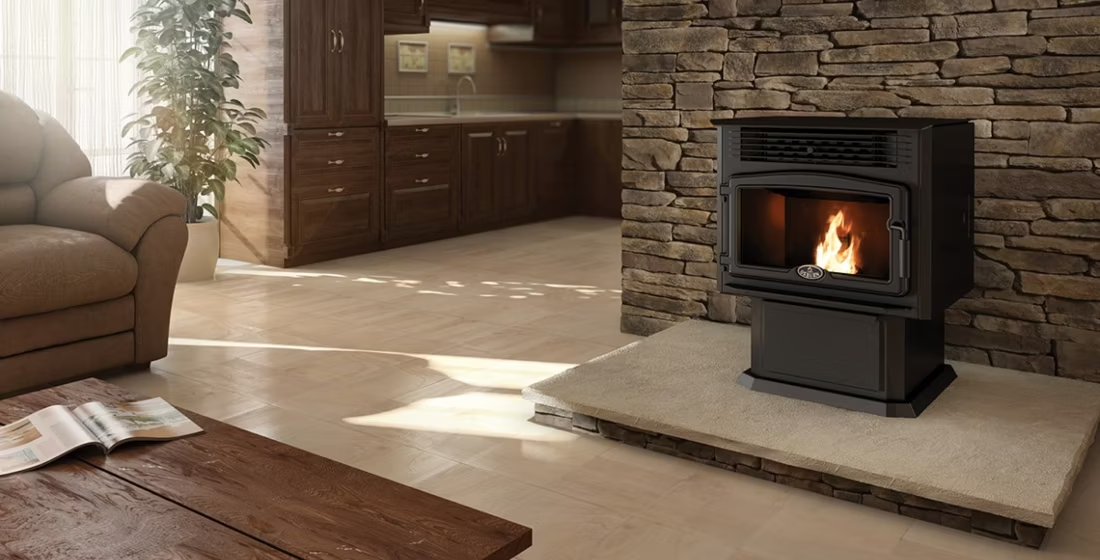
A pellet stove is a freestanding unit that vents through an exterior wall using a small-diameter pipe—it doesn't need an existing chimney and can go in almost any room with wall access. A pellet insert is built to slide into an existing masonry fireplace opening, using the existing chimney (with a proper liner) as part of the vent path. For Clay County homes with an existing wood-burning fireplace that doesn't get much use, an insert is often the simpler retrofit. For homes without a fireplace, a freestanding stove is the more common choice.
Do I need a permit to install a pellet stove in Clay County?
Most pellet stove installations in Clay County require a building permit through the local jurisdiction, since the work involves a wall penetration for venting and, in many cases, new electrical work for the outlet that powers the auger and blower. Most local dealers handle the permitting as part of the installation, so you generally don't have to navigate it yourself. Since Clay County has no air quality non-attainment designation, there are no burn-curtailment rules to worry about once the stove is installed and permitted.
How does a pellet stove handle a power outage?
Pellet stoves need electricity to run the auger that feeds fuel and the blower that distributes heat, so they will not operate during a power outage unless you have a battery backup or generator. This is the main tradeoff against a wood stove, which burns without power. For Clay County homes where storm-related outages are a real concern, some homeowners pair a pellet stove for everyday convenience with a small backup generator, or keep a wood-burning option as well given the local availability of oak, pine, and hickory.
How often does a pellet stove need cleaning and maintenance?
Pellet stoves need regular ash removal from the burn pot (every few days of use) and a more thorough cleaning of the hopper, auger, and venting system a few times per season, plus an annual professional inspection. Compared to a wood stove, maintenance is lighter and less messy—no creosote buildup from resinous woods like the pine common in Clay County, and no annual chimney sweep required for a wall-vented installation. Local dealers can walk you through the maintenance schedule specific to the model you choose.
What size pellet stove do I need for my Clay County home?
Sizing depends on square footage, insulation quality, and whether the stove is primary or supplemental heat. Given Clay County's relatively mild heating load—about 2,954 heating degree days—many homes do well with a smaller to mid-size unit rated for the specific room or open living area they want to heat, rather than sizing for whole-home output. Older, less-insulated farmhouses common in rural parts of the county may need a step up in output compared to newer, tighter construction. A local dealer can size your space correctly during an in-home visit.
Pellet stove vs. wood stove—which is right for my home?
Wood stoves burn without electricity, work well with the oak, pine, and hickory that are plentiful locally, and often cost less to fuel if you're cutting or buying cordwood directly. Pellet stoves are easier to operate day to day, produce less ash and mess, and burn more cleanly and consistently—but they require power to run the auger and blower, so they're not a backup option during an outage. For Clay County homeowners who want convenience and don't mind depending on grid power, pellet is a strong fit. For those who want an off-grid backup heat source or already have a wood supply, a wood stove may make more sense. Some homes choose to have both.
Why is my open fireplace making my house colder?
Open fireplaces suck—literally. As the fire burns, it consumes air your furnace already paid to heat and pulls it out through the chimney, so the house is actually colder after the fire goes out than before you lit it. An insert fixes this: it seals the chimney, puts fixed glass across the front, and turns that hole in your house into a real heat source.
Why is a fireplace insert so efficient?
An insert does two things: it seals the chimney completely, so you stop losing air you already paid to heat, and it radiates warmth into the room through the firebox and glass. Most add a heat-exchange fan that pulls cool room air underneath, wraps it around the hot firebox, and pushes it back out warm. Your home is more efficient before you've even lit the first fire.
Can a fireplace actually lower my heating bill?
Yes—by creating a comfort zone. A furnace heats every square foot of the house just to warm the one room you're in; a gas fireplace on low burns roughly a sixth of the gas a typical furnace does. Set the furnace around 55–60 degrees as a baseline, then heat the rooms your family actually uses. Families who heat this way commonly save $20–$60 a month.
What is an in-home preview and do I need one?
It's a visit where a hearth professional measures your space, confirms the model you picked actually works in your home, and walks the specs—framing, gas line, venting, finish work—before anything is ordered. Some details you just can't know until you see the house. Never make a down payment without one; it's the single most-skipped step that burns buyers.
Stove and Fireplace Dealers in Clay County
Listings include WhyFire partner dealers, dealers we have verified as authorized for the brands we recommend, and established local businesses that carry hearth products. Every listing shows which one it is. The ones marked Preferred run on WhyFire's software, so they can show you real pricing and book your appointment right here. No manufacturer pays for placement. How we verify dealers →
East Central Alabama Gas District
Blossman Gas And Appliance
Coosa Valley Propane
Pellet Brands Stocked Around Clay County
Manufacturers will point you to the nearest stocking dealer.
Find your pellet stove in Clay County.
Tell us a bit about your home and we'll match you with the right pellet stove or insert, plus a free Project Guide & Parts List—including the vent kit—from a trusted local dealer.
Find Your Fireplace →