
Find the right electric fireplace for your Clay County home.
With winter lows averaging 31°F and a winter heating season that stays short and mild, Clay County doesn't need a furnace-grade heat source in every room—it needs clean, flip-a-switch warmth for the living room, the sunroom, or the mantel that never gets used otherwise. Get matched with a local dealer who installs it right.
Every Project Starts From One of These Five Situations
Mild winters, real ambiance, no chimney required.
Clay County sits in climate zone 3A, with winter lows that average around 31°F and a winter heating season that's short and mild—a fraction of what a place like Bozeman, Montana or International Falls, Minnesota deals with in a single season. That milder profile means most homes in Ashland, Lineville, and the rural stretches between don't rely on a single heat source to survive the winter. What Clay County homeowners are usually after is supplemental warmth and atmosphere: a fireplace that looks good in the living room, takes the edge off a cold snap, and doesn't require a chimney, a gas line, or a cord of oak and hickory stacked out back.
That's exactly where electric fireplaces earn their keep. There's no venting to plan, no combustion byproducts to worry about, and no building permit hurdles the way there are with a wood stove or a gas insert—most units plug into a standard outlet or a dedicated 120V/240V circuit and start throwing heat immediately. For a county without the air quality concerns that drive burn restrictions elsewhere, and without the deep-cold demand for a Blaze King catalytic stove holding a fire overnight, electric fits the actual use case: a real flame look, real supplemental heat on the handful of nights that dip toward freezing, and none of the maintenance a wood or gas system asks for.
Three steps. No salesperson until you're ready.
Tell us about your project
Your zip code, your situation, and the fuel you're leaning toward—or let the answers point you to one.
See what's actually available
The brands dealers within 100 miles genuinely carry—real options, never a catalog mirage.
Get your dealer & Project Guide
A trusted local dealer, plus the free Project Guide & Parts List that names every component of the job.
Frequently Asked Questions
How much does an electric fireplace installation cost in Clay County?
Most electric fireplace installations in Clay County run in the $400 to $1,200 range. A plug-in insert or wall-mount unit that uses an existing outlet sits at the low end—often just the cost of the unit plus mounting hardware. Built-in units that require a dedicated 240V circuit, new wiring, or a custom mantel surround land toward the higher end, particularly if an electrician needs to run new circuit capacity in an older Ashland or Lineville home. Because there's no venting or gas line work involved, electric installs are consistently the least expensive fireplace option in the county.
Is an electric fireplace enough heat for a Clay County home?
For most homes here, yes—as supplemental heat. With average winter lows around 31°F and a winter heating season that stays fairly short and mild, Clay County doesn't see the sustained sub-zero stretches that demand a whole-home wood or gas system. An electric fireplace comfortably heats a single room (typically 400-1,000 sq ft depending on the unit) and covers the cold mornings and occasional hard freeze without needing to be the home's primary heat source. If you're relying on central HVAC for whole-home heating already, an electric unit in the main living space is usually the right scale—you're not trying to replace a furnace, you're adding warmth and a focal point to one room.
Do I need a permit to install an electric fireplace in Clay County?
In most cases, no. Plug-in electric fireplaces and inserts that use an existing standard outlet typically don't require a building permit since there's no venting, gas line, or structural chimney work involved. If your installation requires new electrical wiring—a dedicated circuit for a larger built-in unit, for example—a licensed electrician will need to pull an electrical permit, which is standard practice regardless of the appliance. Local dealers can tell you upfront whether your specific unit and home setup will trigger that step.
What's the difference between an electric insert, a wall-mount unit, and a built-in electric fireplace?
An electric insert is sized to slide into an existing masonry fireplace opening, giving old fireplaces in Clay County's older farmhouses and brick homes a functional heat source without touching the chimney. A wall-mount unit hangs on the wall like a flat-screen TV and works well in rooms without an existing fireplace. A built-in electric fireplace is framed into a wall or custom surround during a remodel or new construction, giving the cleanest, most integrated look. For most existing homes in Ashland and Lineville with an old wood fireplace that no longer gets used, an insert is the simplest upgrade—it reuses the opening you already have.
How does an electric fireplace compare to a wood-burning setup here?
Wood is still common in Clay County—oak, pine, and hickory are all locally available, and a wood stove works without electricity, which matters during storm-related outages. But wood asks for chimney maintenance, cutting or buying firewood, and daily tending. Electric asks for none of that: no ash, no creosote buildup, no annual chimney sweep. Given the county's mild winter lows (averaging 31°F) and a winter heating season that runs short and easy, most homeowners here aren't leaning on wood heat to survive the season—it's more of a backup or aesthetic choice. Electric fits homeowners who want the fireplace look and some real warmth without the upkeep, while wood still appeals to those who value self-sufficiency or already have a supply on hand.
Will an electric fireplace work during a power outage?
No—this is the one honest tradeoff. Electric fireplaces require power to run the heating element and, in most models, the flame effect too. If your area loses power during a storm, the unit goes dark along with everything else on the circuit. For Clay County homeowners who want a backup heat source specifically for outage situations, a wood stove or a battery-backed gas unit is a better fit. Electric fireplaces excel at everyday supplemental heat and ambiance, not emergency backup—it's worth being clear-eyed about that before you buy.
Are electric fireplaces energy efficient to run?
Yes, relative to their heat output. Most electric fireplaces draw around 1,500 watts on the heat setting, which costs roughly 15-20 cents per hour to run depending on local electricity rates—comparable to running a space heater. Because Clay County's winters are mild, most homeowners only run the heat function on genuinely cold days or evenings, using the flame-only mode (which draws very little power) the rest of the time for ambiance. That flexibility—heat when you need it, look without the cost when you don't—is one of the more practical advantages over a wood or gas system that's either on or off.
Can an electric fireplace be installed in a mobile home or rental in Clay County?
Yes, and it's one of the more common uses for electric units in the county. Because there's no venting, gas line, or chimney required, a plug-in or wall-mount electric fireplace is often the only fireplace option available to renters or mobile home owners who can't modify the structure. Freestanding units require nothing more than an outlet, making them the go-to choice for the manufactured and rental housing that's common throughout rural stretches of Clay County.
Electric vs. gas—which makes more sense for my Clay County home?
Gas delivers more heat output and a more authentic flame, and it can run during a power outage if paired with a battery-backup ignition system—but it requires either a natural gas line or a propane tank, plus venting work and a higher upfront installation cost. Electric is simpler and cheaper to install, requires no fuel supply or venting, and is the practical choice for homes without gas access or for secondary rooms where a big heat source isn't needed. Given Clay County's mild winter profile and the number of homes without natural gas service, electric often wins for anyone prioritizing low-cost installation and simplicity, while gas appeals to those who want a stronger flame presentation and are already set up with propane or a gas line.
Do electric fireplaces actually produce heat?
Yes—most put out around 4,800–5,000 BTUs from a standard outlet, which comfortably warms a bedroom, office, or den as a comfort-zone heater. What they won't do is carry a whole house the way wood, gas, or pellet can. Think of electric as ambiance-first with honest supplemental heat: flames on with no heat in July, flames plus warmth in January.
Can I put a TV above my fireplace?
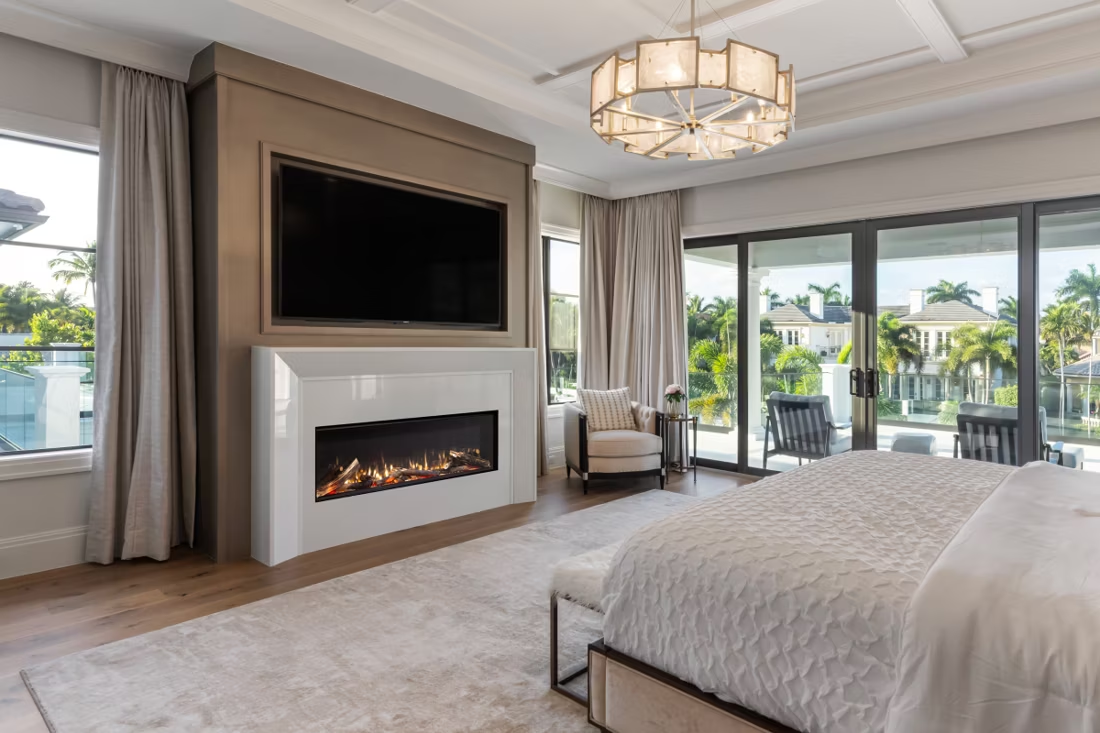
Yes—with an asterisk. Fireplaces are hot and TVs don't like heat. Either put a mantel between them to deflect rising warmth, or choose a fireplace with heat-management technology that creates a cool zone on the wall above—the wall stays around 125 degrees, barely warm, while the room still gets full heat. If you like clean lines and don't want a mantel, heat management is the answer.
Can I install a fireplace myself?
If you're putting a fire in your house on purpose, it's best to work with an expert. Unless you're genuinely experienced in framing, gas line, vent pipe, and the national code on clearances to combustibles, have a professional do it—and ideally the same company that sells you the fireplace, so warranty, service, and liability all live under one roof.
Can a fireplace actually lower my heating bill?
Yes—by creating a comfort zone. A furnace heats every square foot of the house just to warm the one room you're in; a gas fireplace on low burns roughly a sixth of the gas a typical furnace does. Set the furnace around 55–60 degrees as a baseline, then heat the rooms your family actually uses. Families who heat this way commonly save $20–$60 a month.
Stove and Fireplace Dealers in Clay County
Listings include WhyFire partner dealers, dealers we have verified as authorized for the brands we recommend, and established local businesses that carry hearth products. Every listing shows which one it is. The ones marked Preferred run on WhyFire's software, so they can show you real pricing and book your appointment right here. No manufacturer pays for placement. How we verify dealers →
East Central Alabama Gas District
Blossman Gas And Appliance
Coosa Valley Propane
Get your Clay County electric fireplace Project Guide & Parts List.
Tell us about your home and we'll match you with a trusted local Clay County dealer and send over a free Project Guide & Parts List—the exact unit, mounting hardware, and electrical requirements for your space.
Find Your Fireplace →