
Warmth without the wood pile in Washakie County, Wyoming.
Zone heat and real ambiance for Bighorn Basin homes—from Worland to Ten Sleep—without a chimney, a gas line, or a cord of wood to split. Find the right unit and connect with a trusted local dealer.
Every Project Starts From One of These Five Situations
Electric heat earns its place in the Bighorn Basin.
Washakie County sits low in Wyoming's Bighorn Basin, with the county seat of Worland at roughly 4,061 feet and a population just over 5,000 spread thin across ranch country, Ten Sleep, and Hyattville. The basin's winters are genuinely severe—Washakie County's winter heating load is in the same range as Bismarck, ND, and average winter lows sit around 4°F, with the surrounding Absaroka and Bighorn ranges funneling arctic air straight down onto the valley floor. This is not a climate where any single appliance carries the whole heating load lightly.
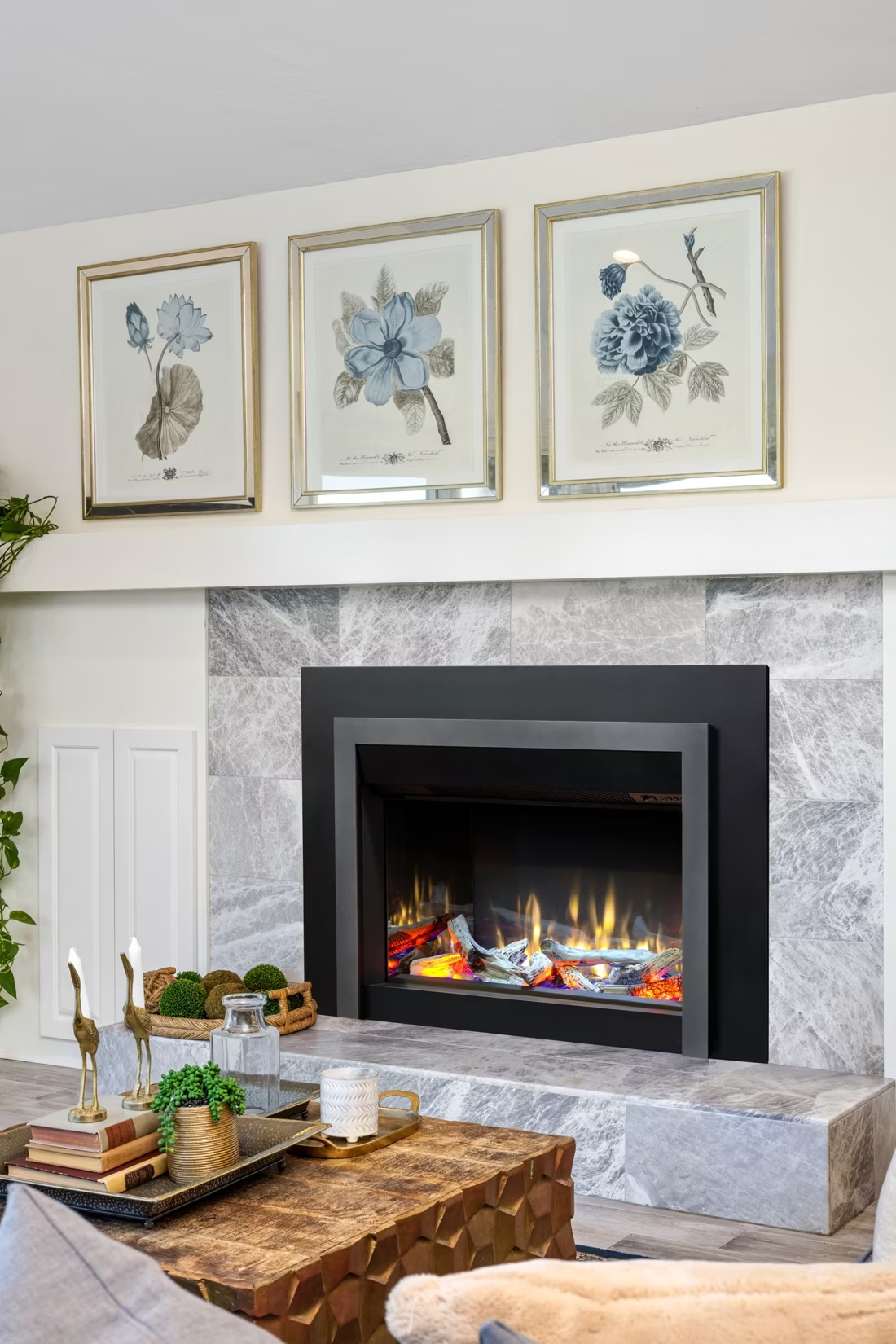
Most homes here lean on wood—lodgepole pine, aspen, and ponderosa pine cut under permit from Shoshone or Bighorn National Forest for $5 to $20 a cord during the May-to-October season—or on propane and central furnaces for the bulk of winter heat. Electric fireplaces fill a real, specific niche around that: zone heat for a finished basement or ranch office, ambiance in a living room without a usable chimney, an easy retrofit for a Worland rental where running gas or wood venting isn't practical, and a smoke-free option during summer wildfire smoke events when the basin's air quality turns unpleasant. What electric won't do here is replace your primary heat source on a night when the mercury drops toward single digits—and any honest local dealer will tell you that upfront.
Three steps. No salesperson until you're ready.
Tell us about your project
Your zip code, your situation, and the fuel you're leaning toward—or let the answers point you to one.
See what's actually available
The brands dealers within 100 miles genuinely carry—real options, never a catalog mirage.
Get your dealer & Project Guide
A trusted local dealer, plus the free Project Guide & Parts List that names every component of the job.
Frequently Asked Questions
How much does an electric fireplace installation cost in Washakie County?
A plug-in freestanding electric fireplace or a small electric insert needs nothing more than a standard outlet, so the appliance cost is essentially the whole cost. A built-in wall unit or a larger insert that requires a dedicated 20-amp circuit and some carpentry or drywall work typically runs $1,500 to $4,500 installed in this area, depending on wall framing, whether new wiring has to be run, and whether you're finishing a basement or retrofitting an existing opening. Because there's no chimney, no gas line, and no venting to size, electric installs are consistently the least expensive fireplace project a local dealer will quote in Washakie County.
Can an electric fireplace actually heat a room in Washakie County's climate?
Yes, but with real limits worth understanding before you buy. Most electric fireplaces top out around 1,500 watts, enough to noticeably warm a single room in the 200-to-400-square-foot range under normal conditions. On a Washakie County night when the outdoor temperature is sitting near the winter average of 4°F, that same unit is a helpful supplement to your furnace or wood stove—not a substitute for it. Homeowners here tend to use electric fireplaces for a specific room (a finished basement, a converted garage office, a guest cabin) rather than as whole-home heat, and that's exactly the use case they're built for.
Do I need a permit to install an electric fireplace in Washakie County?
A plug-in unit that runs off an existing outlet doesn't require a permit—it's no different than plugging in a space heater. A built-in electric fireplace that needs a new dedicated circuit typically requires an electrical permit, since a licensed electrician has to run and inspect that wiring regardless of the appliance. This is a much lighter permitting lift than wood or gas installations in Washakie County, which involve building permits, clearance inspections, and in wood's case, EPA-certified equipment—one of the main reasons homeowners choose electric for a secondary room.
Will my electric fireplace work if the power goes out?
No—an electric fireplace has no function without grid power, which matters in a rural county like Washakie where winter storms can knock lines down for hours at a time. If you're relying on a fireplace for actual emergency heat during an outage, a wood stove or a properly vented gas unit is the better choice; electric should be understood as everyday convenience heat and ambiance, not storm-season backup. Many ranch and basin households keep a wood stove or propane heater as the outage plan and use electric for daily zone heat the rest of the time.
What's the difference between an electric fireplace, insert, and stove?
An electric fireplace is typically a built-in unit set into a wall or a media-console-style cabinet, designed to look like a framed hearth. An electric insert is sized to slide into an existing masonry fireplace opening, giving an old wood-burning fireplace a clean, no-maintenance electric flame effect and some supplemental heat. An electric stove is a freestanding, cabinet-style unit that mimics a wood stove's footprint but plugs into a standard outlet. For Washakie County homes with an existing but unused masonry fireplace, an insert is usually the simplest upgrade; new construction or remodels favor a built-in unit.
What should I look for in an electric fireplace for a Bighorn Basin home?
Look for a unit with a true 1,500-watt heater and a thermostat, not just a decorative flame—in a climate with a winter heating load in the same range as Bismarck, ND, you want every watt of supplemental heat you can get out of the appliance. Models with adjustable flame brightness and heat-only settings are useful here too, since many Washakie County homeowners run the flame for ambiance in the shoulder seasons without the heater running, then use full heat output during the coldest stretches. A local dealer can walk you through the wattage, room size, and features that actually make sense for your specific space rather than the marketing claims on the box.
How much maintenance does an electric fireplace need?
Very little, which is a big part of the appeal in a county where wood stove owners are scheduling annual chimney sweeps and gas fireplace owners are booking yearly burner inspections. Electric units need occasional dusting, an LED bulb replacement every several years on older models, and that's about it—no creosote, no venting to inspect, no combustion byproducts to worry about. It's one reason electric fireplaces show up so often in Worland rentals and second homes where nobody wants to manage ongoing upkeep.
Electric vs. wood—which makes more sense for my Washakie County home?
Wood remains the backbone of home heating for a lot of Washakie County households, and with lodgepole pine, aspen, and ponderosa pine permits running $5 to $20 a cord through Shoshone or Bighorn National Forest, it's an economical way to carry real heating load through a winter as demanding as Bismarck, ND's. Wood also keeps working when the power doesn't. Electric can't compete on raw heat output or outage resilience, but it wins on convenience, install simplicity, and zero maintenance—which is exactly why so many local homes end up with both: wood or propane for the main heating burden, electric for a basement, office, or secondary living space where running a chimney or gas line isn't worth the cost.
Electric vs. gas—which is right for my space?
Gas fireplaces and inserts put out real heat and can be sized to genuinely offset furnace use in a Bighorn Basin winter, but they require either a gas line or a propane tank, venting, and a proper building permit—a bigger project with a bigger price tag. Electric skips all of that: no combustion, no venting, no gas plumbing, just an outlet or a simple circuit. For a primary living area where you want serious supplemental heat, gas or propane is usually the stronger choice in this climate. For a basement, a guest room, a ranch office, or anywhere you want ambiance and modest warmth without the infrastructure, electric is the more practical fit.
Can I put a TV above my fireplace?
Yes—with an asterisk. Fireplaces are hot and TVs don't like heat. Either put a mantel between them to deflect rising warmth, or choose a fireplace with heat-management technology that creates a cool zone on the wall above—the wall stays around 125 degrees, barely warm, while the room still gets full heat. If you like clean lines and don't want a mantel, heat management is the answer.
Does an electric fireplace need a vent or chimney?
No—that's its superpower. An electric fireplace needs a wall and an outlet, period. No vent pipe, no gas line, no clearances to design around, which is why it works in bedrooms, offices, apartments, and walls where venting a gas or wood unit would be impractical or impossible. Installation is typically the simplest and least expensive of any fireplace type.
Can a fireplace actually lower my heating bill?
Yes—by creating a comfort zone. A furnace heats every square foot of the house just to warm the one room you're in; a gas fireplace on low burns roughly a sixth of the gas a typical furnace does. Set the furnace around 55–60 degrees as a baseline, then heat the rooms your family actually uses. Families who heat this way commonly save $20–$60 a month.
Can I install a fireplace myself?
If you're putting a fire in your house on purpose, it's best to work with an expert. Unless you're genuinely experienced in framing, gas line, vent pipe, and the national code on clearances to combustibles, have a professional do it—and ideally the same company that sells you the fireplace, so warranty, service, and liability all live under one roof.
Stove and Fireplace Dealers in Washakie County
Listings include WhyFire partner dealers, dealers we have verified as authorized for the brands we recommend, and established local businesses that carry hearth products. Every listing shows which one it is. The ones marked Preferred run on WhyFire's software, so they can show you real pricing and book your appointment right here. No manufacturer pays for placement. How we verify dealers →
Hufft Chimney Services
Bloedorn Lumber
Fireside Services
Ramsey Enterprises
Great Divide Fabrication LLC
Alpine Climate Control
Ecommerce World LLC
Total Comfort Heating & Cooling
Top Line
Find your electric fireplace in Washakie County.
Tell us a bit about your home and we'll put together a free Project Guide & Parts List for your electric fireplace project—sized right for your space, with a recommended local Washakie County dealer to handle the install.
Find Your Fireplace →