
Heating solutions built for Washakie County's 7,671 heating degree days.
Wood, gas, pellet, and electric fireplace resources for Worland, Ten Sleep, and the ranch country between them. Find the right unit for your home and connect with a trusted local hearth retailer.
Every Project Starts From One of These Five Situations
Basin cold in the shadow of the Bighorns.
Washakie County sits in the Bighorn Basin between the Absaroka Range and the Bighorn Mountains, with Worland anchoring the valley floor and Ten Sleep tucked up against the canyon country to the west. At Climate Zone 6B with an average winter low of 4°F and 7,671 heating degree days, this county runs colder over the season than Duluth, Minnesota—a long, dry-cold winter that starts early and doesn't let go until spring. Wood heat has real staying power here: lodgepole pine, aspen, and ponderosa from the Shoshone and Bighorn National Forests fill a lot of woodsheds, and a properly loaded catalytic or non-cat stove will carry a home through a sub-zero night without help from the grid.
What you'll find on this hub: hearth retailers, service technicians, and fuel suppliers covering both incorporated cities and the ranches and rural routes between them. Pick your fuel below for the specifics—local dealers, installation costs, recommended units, and what actually holds up through a Bighorn Basin winter. Whether you're heating a Worland in-town house or a place out past Ten Sleep with no natural gas line anywhere close, this is the starting point.
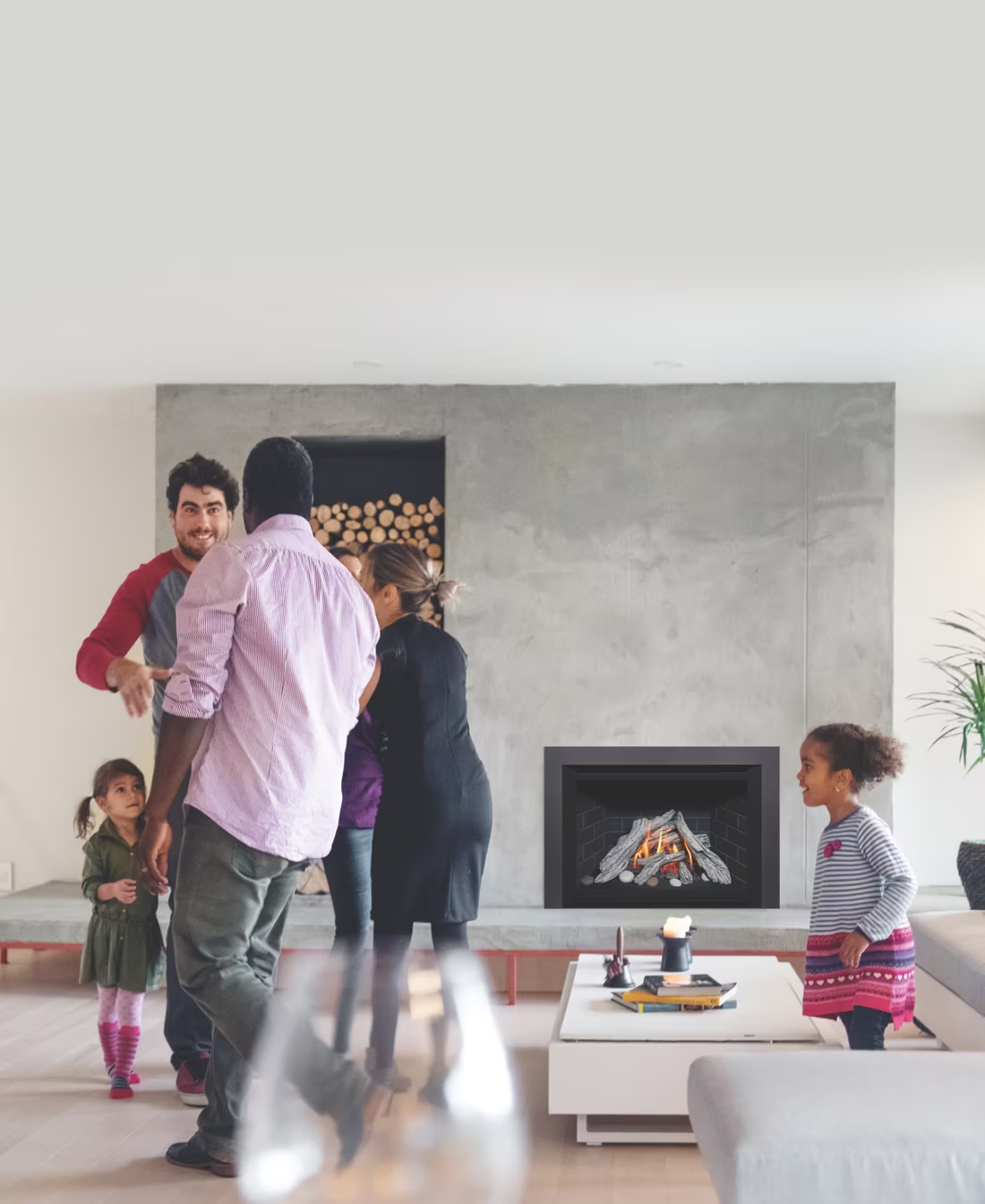
Four fuels. One honest answer for Washakie County.
Three steps. No salesperson until you're ready.
Tell us about your project
Your zip code, your situation, and the fuel you're leaning toward—or let the answers point you to one.
See what's actually available
The brands dealers within 100 miles genuinely carry—real options, never a catalog mirage.
Get your dealer & Project Guide
A trusted local dealer, plus the free Project Guide & Parts List that names every component of the job.
Frequently Asked Questions
Which fuel works best in Washakie County?
It depends on where you live and what you're heating. Wood is the workhorse fuel in the rural parts of the county—lodgepole pine, aspen, and ponderosa cut under Shoshone or Bighorn National Forest permits keep fuel costs manageable, and a catalytic stove will hold a burn through a 4°F night without any grid dependence. Gas is the convenience pick in Worland, where in-town natural gas service makes instant, thermostat-controlled heat straightforward to install. Pellet stoves are a solid middle path—Bear Mountain, Lignetics, and Forest Energy bags are all sold regionally, so fuel supply isn't a concern, and you get wood-like heat without splitting rounds. Electric fireplaces work well as supplemental heat in bedrooms or additions, but with 7,671 heating degree days, nobody in this county is running electric resistance as a primary heat source. Most homes here end up with two fuels—wood or pellet doing the heavy lifting, gas or electric filling in secondary rooms.
Do I need a permit to install a fireplace in Washakie County?
Generally, yes. New wood stoves, wood inserts, gas fireplaces, gas inserts, gas stoves, and pellet stoves typically require a building permit, and gas installations need a separate line permit completed by a licensed gas fitter. Within Worland, permits route through the city; in unincorporated Washakie County—Ten Sleep and the surrounding ranch land—they go through the county building department. Electric fireplaces usually skip the permit process unless you're doing a built-in installation with new wiring or a dedicated circuit. Most local hearth retailers pull the permit as part of the installation package, so it's rarely something you have to manage on your own.
Are there air quality restrictions on wood burning in Washakie County?
There's no formal wood-burning curtailment program in Washakie County the way there is in some inversion-prone Western basins, but wildfire smoke is a real seasonal concern here given the proximity to the Shoshone and Bighorn National Forests. Late-summer and fall smoke events from regional wildfires can affect outdoor air quality independent of home heating, and it's worth checking regional air quality monitoring during active fire seasons. For heating-season wood burning, the practical guidance is straightforward: burn seasoned lodgepole pine or aspen (below 20% moisture), run a properly sized EPA-certified stove, and keep the chimney swept—that combination minimizes smoke output regardless of formal regulation.
Can one local hearth retailer handle all four fuel types?
In a county this size, most retailers stock the fuels that make sense for their customer base rather than carrying all four as a matter of course. Dealers based in Worland typically carry wood, gas, and pellet units, since those three cover the bulk of demand across in-town and rural customers. Electric fireplace inventory tends to be thinner and more special-order, since it's mostly a secondary or supplemental purchase here rather than a primary heat decision. If you're comparing fuels side by side, ask your local retailer directly which units they keep on the showroom floor versus what they can special-order—in a small-population county, floor inventory varies dealer to dealer.
How does service work in rural parts of Washakie County?
Technicians based in Worland travel out to Ten Sleep, the canyon country, and the ranch routes for both installs and annual service—expect a modest trip fee for the more remote calls given the distances involved in a county this sparsely populated. Scheduling early matters more here than in denser markets: with a small number of technicians covering a wide area, pre-season appointments (late summer through early fall) are far easier to book than a mid-January emergency call when a chimney needs sweeping before a cold front. If you're heating a remote property, it's worth keeping a backup fuel source on hand—a wood stove as backup for a pellet unit, for instance—given how disruptive a multi-day cold spell paired with a service delay can be.
What's the typical cost range for fireplace installation across all fuel types in Washakie County?
Costs vary by fuel and by how much venting or gas-line work is involved. Wood stove or insert installation: roughly $4,500–$9,000 for a typical install, running higher for new-construction chimney work. Gas fireplace, insert, or stove: roughly $4,500–$10,500, with costs trending toward the lower end for in-town Worland homes that already have gas service, and higher for rural propane conversions requiring new line runs. Pellet stove or insert: roughly $4,500–$7,000 for a standard installation. Electric fireplace: $200–$3,000 for the unit itself, plus $400–$1,200 in labor for anything beyond a plug-and-play setup. See the county + fuel pages above for cost detail tied to specific local retailers.
Does a fireplace add value to my home?
On average, a fireplace adds back to the home about the same amount you spent installing it. Add the monthly savings from heating the rooms you actually use instead of the whole house—often hundreds of dollars a year—and the value case is strong before you even count what a fire does for how your family uses the room.
How much should I budget for a fireplace?
For an average home—covering the fireplace, the vent pipe, and basic installation—a budget between $3,900 and $5,500 gives you a lot of options across wood, gas, and pellet. By the time you add finish work, gas line, and electrical, the average complete installation lands between $5,000 and $12,000 all-in. In a remodel or new build, a good rule is to put about 2.5% of the total project cost toward the fireplace.
Wood, gas, pellet, or electric—how do I choose?
Match the fuel to your life, not the other way around. Wood: lowest fuel cost and total power-outage independence, but you're hauling and stacking. Gas: press a button, set a thermostat, no maintenance to speak of. Pellet: wood economics with automatic feeding, in exchange for weekly cleaning and a need for electricity. Electric: plugs in anywhere with honest supplemental heat. Nobody regrets the fuel that fits how they actually live.
What are the biggest mistakes people make buying a fireplace?
Five come up constantly: budgeting for the unit but not the full job (vent, gas line, electrical, finish work); drowning in options instead of starting from style and fuel; buying without an in-home preview; handing installation to a handyman instead of a pro; and giving up out of sheer indecision. Every one is avoidable with a clear plan—step one, step two, step three.
Stove and Fireplace Dealers in Washakie County
Listings include WhyFire partner dealers, dealers we have verified as authorized for the brands we recommend, and established local businesses that carry hearth products. Every listing shows which one it is. The ones marked Preferred run on WhyFire's software, so they can show you real pricing and book your appointment right here. No manufacturer pays for placement. How we verify dealers →
Hufft Chimney Services
Bloedorn Lumber
Fireside Services
Ramsey Enterprises
Great Divide Fabrication LLC
Alpine Climate Control
Ecommerce World LLC
Total Comfort Heating & Cooling
Top Line
Find your fireplace in Washakie County.
Tell us your fuel and your project, and we'll match you with a trusted local dealer and send a free Project Guide & Parts List—sized venting, the right parts, and a dealer recommendation built for a Bighorn Basin winter.
Find Your Fireplace →