
Instant heat built for high-plains winters.
South Greeley sits above 6,000 feet on Wyoming's high plains, where wind-driven cold and over 7,000 heating degree days make instant, reliable heat worth having. Find the right gas unit and connect with a trusted local dealer.
Every Project Starts From One of These Five Situations
Heat you can count on when the wind picks up.
South Greeley sits just outside Cheyenne's city limits in unincorporated Laramie County, at roughly 6,056 feet on Wyoming's high plains. Average winter lows run around 18°F, and with over 7,000 heating degree days a year, the climate here is closer to Bismarck, ND than most people expect from Wyoming's reputation for sunshine—the difference is the wind, which turns a cold night into a genuinely dangerous one if the heat goes out.
Because South Greeley is unincorporated, natural gas line access isn't uniform block to block the way it is inside Cheyenne proper—a meaningful number of homes out here run on propane rather than piped gas, and that's a normal, well-supported setup for a gas fireplace or insert. Either fuel path delivers the same benefit: heat at the flip of a switch, with no wood to split or ash to haul, and (with the right ignition system) a fireplace that still works when a high-plains windstorm takes the power down.
Three steps. No salesperson until you're ready.
Tell us about your project
Your zip code, your situation, and the fuel you're leaning toward—or let the answers point you to one.
See what's actually available
The brands dealers within 100 miles genuinely carry—real options, never a catalog mirage.
Get your dealer & Project Guide
A trusted local dealer, plus the free Project Guide & Parts List that names every component of the job.
Frequently Asked Questions
How much does a gas fireplace installation cost in South Greeley?
Most gas fireplace installations in the South Greeley area run in the $4,000 to $10,500 range, depending on the unit, the venting path, and whether it's tied into an existing propane tank or natural gas line versus needing new fuel line work. Homes that already have a propane tank and regulator in place land toward the lower end; new propane tank installation, a direct-vent unit built into new framing, or a longer gas line run push toward the higher end. One local wrinkle worth knowing: at 6,056 feet, many gas appliances need a manufacturer's high-altitude orifice kit to burn correctly, since standard kits are rated for elevations under 4,500-5,500 feet. A local dealer will factor that into the quote automatically—it's one more reason not to buy a big-box unit sight-unseen.
Can I convert my existing wood fireplace to gas?
Yes, and it's a common request in older South Greeley and Laramie County homes originally built around a wood-burning masonry fireplace. A gas insert slides into the existing firebox and uses a stainless liner run through your current chimney, so you keep the look of the fireplace while gaining instant on-demand heat. Typical cost runs $4,500 to $9,500 depending on whether the home is on propane or natural gas and whether new fuel line work is needed. It's worth comparing against keeping the wood option, too—lodgepole pine, aspen, and ponderosa pine are all common local firewood species with cutting permits available through the Medicine Bow-Routt or Arapaho-Roosevelt National Forests for $5 to $20 per cord.
Do I need natural gas, or should I plan on propane?
For a lot of South Greeley properties, propane is the more realistic answer. Because the area is unincorporated Laramie County rather than inside Cheyenne's service footprint, piped natural gas isn't guaranteed to reach every lot, and many homes already heat with a propane tank for their furnace or water heater. If you're closer to Cheyenne's city limits, it's worth asking a local dealer to check whether a gas line is accessible to your address before you commit to a fuel type—but propane is a completely normal, well-supported choice for a gas fireplace out here, and most units on the market can be configured for either fuel.
Will my gas fireplace work during a power outage?
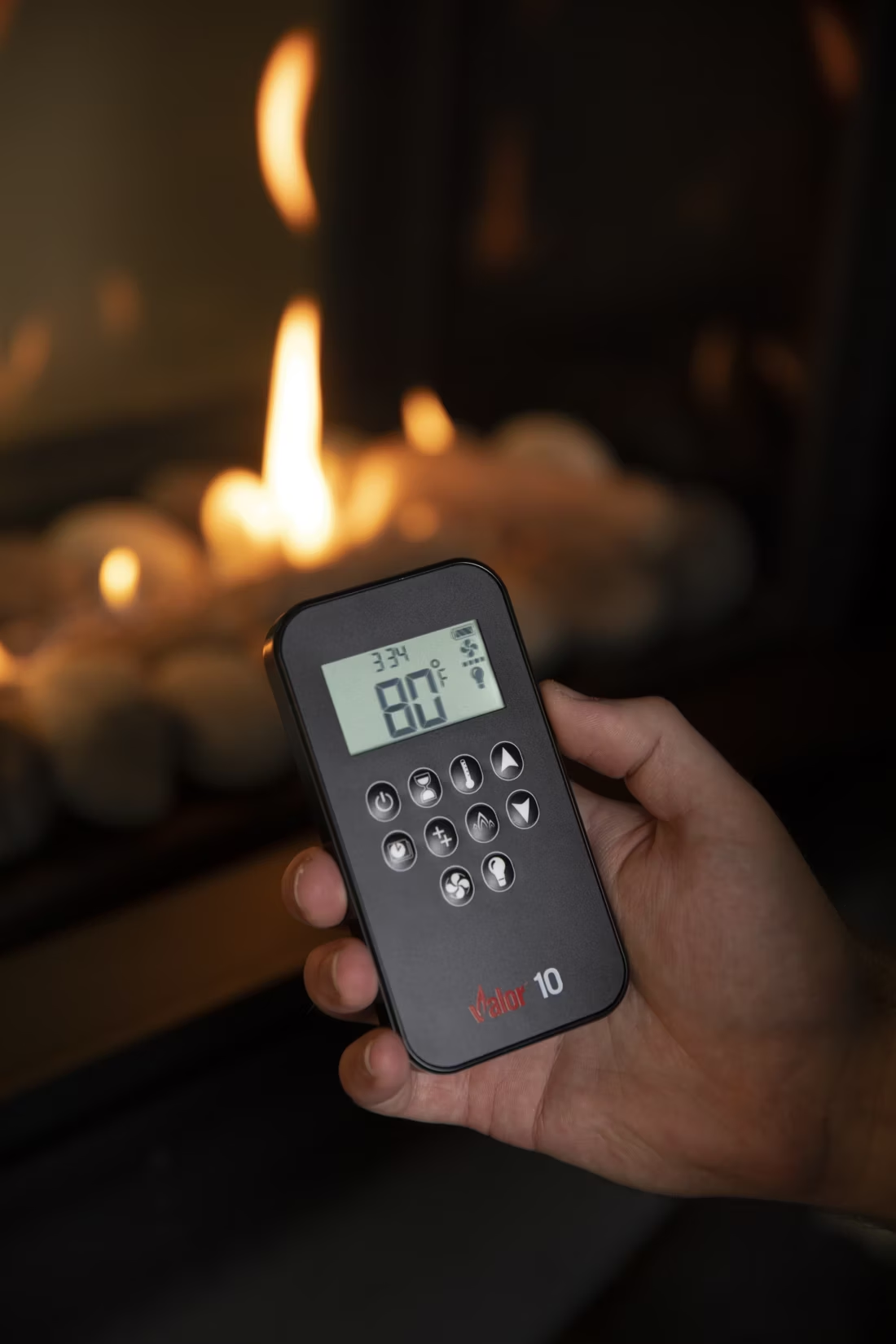
Most will, which matters here—high-plains wind events around South Greeley can knock out power for hours at a time, sometimes longer in a bad winter storm. Units with intermittent pilot ignition (IPI) run on a small battery backup that kicks the pilot on automatically when line power drops, so the fireplace lights and heats normally off batteries alone. Valor's gas fireplaces go a step further: the pilot's thermocouple generates the small amount of electricity the unit needs, so there's no battery to remember to replace at all. Ask your local dealer which ignition system a given model uses before you decide—it's a meaningful difference for a household that actually loses power in the wind.
What's the difference between a gas fireplace, gas insert, and gas stove?
A gas fireplace is a fully built-in unit framed into a wall—the right call for new construction or a remodel without an existing chimney. A gas insert drops into an existing masonry firebox and vents through the current chimney with a liner, which is the common upgrade path for older South Greeley homes with a wood fireplace already in place. A gas stove is freestanding, sits on its own hearth pad, and can go almost anywhere with proper clearances—often the simplest option for a home with no existing fireplace and no interest in a full remodel. A local dealer can walk your specific layout and tell you which category actually fits.
Do I need a permit to install a gas fireplace in South Greeley?
Yes. Because South Greeley is unincorporated, permitting runs through the Laramie County building and planning office rather than a city building department, and any new gas line or propane line connection also needs sign-off from a licensed gas-fitter or propane installer. Most established local hearth dealers handle this paperwork as part of the installation rather than leaving it to the homeowner, which is one of the practical reasons to go through a trusted installer instead of a big-box purchase.
What's the difference between vented and vent-free gas fireplaces?
Vented (direct-vent) gas fireplaces draw combustion air from outside and exhaust it back outside through a sealed pipe—they're the safest, most universally code-compliant option and the standard choice for South Greeley's climate, where you want real, sustained heat output on the coldest nights. Vent-free units burn fuel directly into the room and are legal in Wyoming, but they come with strict room-size and ventilation requirements, and they lose efficiency faster at elevation since combustion is more sensitive to available oxygen above 5,000 feet. For a high-plains home at 6,056 feet, most local dealers will steer you toward a direct-vent unit for that reason alone.
How often should my gas fireplace be serviced?
Plan on an annual inspection, ideally before the coldest stretch of winter sets in. A technician checks the burner, pilot or ignition system, venting, and gas or propane connections, and cleans the glass and interior. This runs roughly $150 to $250 locally. It matters even more for propane-fed units, where a technician can also confirm your tank's regulator and pressure settings are still correct—worth doing given how many South Greeley homes run on propane rather than piped gas.
Gas vs. wood—which is right for my home?
Wood has real advantages here: lodgepole pine, aspen, and ponderosa pine are all abundant locally, cutting permits through the Medicine Bow-Routt and Arapaho-Roosevelt National Forests run just $5 to $20 per cord, and a wood stove keeps working with zero electricity during a wind-driven outage. Gas trades that self-sufficiency for convenience—instant heat with no splitting, hauling, or ash cleanup, and (with the right ignition system) reliable operation during outages too. For a primary living space where you want heat without daily tending, gas usually wins; for a self-sufficient backup heat source paired with cheap local firewood, wood still has a strong case in Laramie County. Plenty of local homes end up with both.
What's the difference between an insert and a zero-clearance fireplace?
An insert is a fireplace that slides into a pre-existing wood-burning fireplace—if you don't have one, there's nothing to insert it into. A zero-clearance fireplace is built into a framed wall, which makes it the answer for remodels and new construction. Simple test: existing masonry fireplace means insert; blank or framed wall means zero-clearance.
Why is a fireplace insert so efficient?
An insert does two things: it seals the chimney completely, so you stop losing air you already paid to heat, and it radiates warmth into the room through the firebox and glass. Most add a heat-exchange fan that pulls cool room air underneath, wraps it around the hot firebox, and pushes it back out warm. Your home is more efficient before you've even lit the first fire.
Does a fireplace add value to my home?
On average, a fireplace adds back to the home about the same amount you spent installing it. Add the monthly savings from heating the rooms you actually use instead of the whole house—often hundreds of dollars a year—and the value case is strong before you even count what a fire does for how your family uses the room.
Can I install a fireplace myself?
If you're putting a fire in your house on purpose, it's best to work with an expert. Unless you're genuinely experienced in framing, gas line, vent pipe, and the national code on clearances to combustibles, have a professional do it—and ideally the same company that sells you the fireplace, so warranty, service, and liability all live under one roof.
Nearby Dealers
Hearth shops serving South Greeley and the surrounding area. Every listing shows whether it is a WhyFire partner, a dealer we have verified as authorized for the brands we recommend, or a local business carrying hearth products. No manufacturer pays for placement. How we verify dealers →
Harmony Hearth & Home
Capital Lumber Co.
Premium Home Selection
Find your gas fireplace in South Greeley.
Tell us about your home and fuel situation—propane or natural gas—and we'll match you with a trusted local dealer and send over your free Project Guide & Parts List, including the correct vent kit and altitude-rated parts for your gas fireplace project in South Greeley.
Find Your Fireplace →