
Steady Heat for Powell's Long Wyoming Winters.
With 8,227 heating degree days and winter lows averaging 6°F, Powell homes need heat that comes on instantly and keeps running. Find the right gas fireplace or insert and get matched with a trusted local dealer.
Every Project Starts From One of These Five Situations
Gas heat built for sub-zero mornings in the Bighorn Basin.
Powell sits at 4,384 feet in the Bighorn Basin, just east of Shoshone National Forest, in a climate zone (6B) that racks up roughly 8,227 heating degree days a year—a cold-climate load in the same range as Bismarck, ND or Fargo, ND. Winter lows averaging 6°F, combined with wind off the basin, mean a heat source has to work every single day of the season, not just on the coldest nights.
Gas is the standard choice for fireplace installs here, and for good reason: it lights instantly, holds a steady output through a cold snap, and doesn't require the daily upkeep of cutting or hauling fuel. Because Powell is a small town without citywide natural gas mains reaching every neighborhood, many installations run on propane rather than piped natural gas—your local dealer will confirm which is available at your address. Wood stoves are uncommon here as a primary installed appliance despite abundant lodgepole pine, aspen, and ponderosa pine on nearby Forest Service land; between periodic wildfire-smoke air quality concerns and the convenience gap, most Powell households that want backup or supplemental heat lean toward gas or electric rather than a new wood-burning unit.
Three steps. No salesperson until you're ready.
Tell us about your project
Your zip code, your situation, and the fuel you're leaning toward—or let the answers point you to one.
See what's actually available
The brands dealers within 100 miles genuinely carry—real options, never a catalog mirage.
Get your dealer & Project Guide
A trusted local dealer, plus the free Project Guide & Parts List that names every component of the job.
Frequently Asked Questions
How much does a gas fireplace installation cost in Powell?
A gas fireplace or insert installation in Powell typically runs $4,000 to $10,000. Units feeding off an existing gas line come in on the lower end; installations that require a new propane tank set, a buried gas line run, or venting through an exterior wall in an older home push toward the higher end. Because much of Powell relies on propane rather than piped gas, budgeting for a tank installation or delivery contract with a regional propane supplier is worth doing up front—a local dealer will walk you through both the appliance cost and the fuel-supply side together.
Will I need propane or natural gas for a fireplace in Powell?
It depends on where in town you're located. Some parts of Powell have access to piped natural gas, but many homes—especially on the outskirts of the city and in the surrounding Park County countryside—run on propane delivered by regional suppliers. Most gas fireplace models can be configured for either fuel with the correct orifice and regulator, so the appliance choice usually isn't limited by which fuel you have. Your installer will confirm what's already run to your house before finalizing a quote.
Can I convert an older wood fireplace to gas?
Yes, and it's a common project even in a town where new wood installations are relatively rare. If your home has an existing masonry fireplace, a direct-vent gas insert can usually be installed into it, using a stainless liner run through your existing chimney. This is often the most cost-effective way to get reliable, no-maintenance heat out of a fireplace opening that's currently just decorative or drafty, and it typically costs less than a full new gas fireplace install since the chimney and opening are already in place.
Will my gas fireplace still work if the power goes out?
Most will, which matters in the Bighorn Basin where winter storms and high wind events can knock out power for hours at a time. Units with intermittent pilot ignition (IPI) run on a battery backup that kicks in automatically, so the fireplace lights and runs off the appliance's batteries until utility power is restored. Valor fireplaces go a step further—the pilot's thermocouple generates the electricity the unit needs, so there's no battery to remember at all. Ask your local dealer about the ignition system on any model you're considering if outage backup is a priority.
What's the difference between a gas fireplace, insert, and stove?
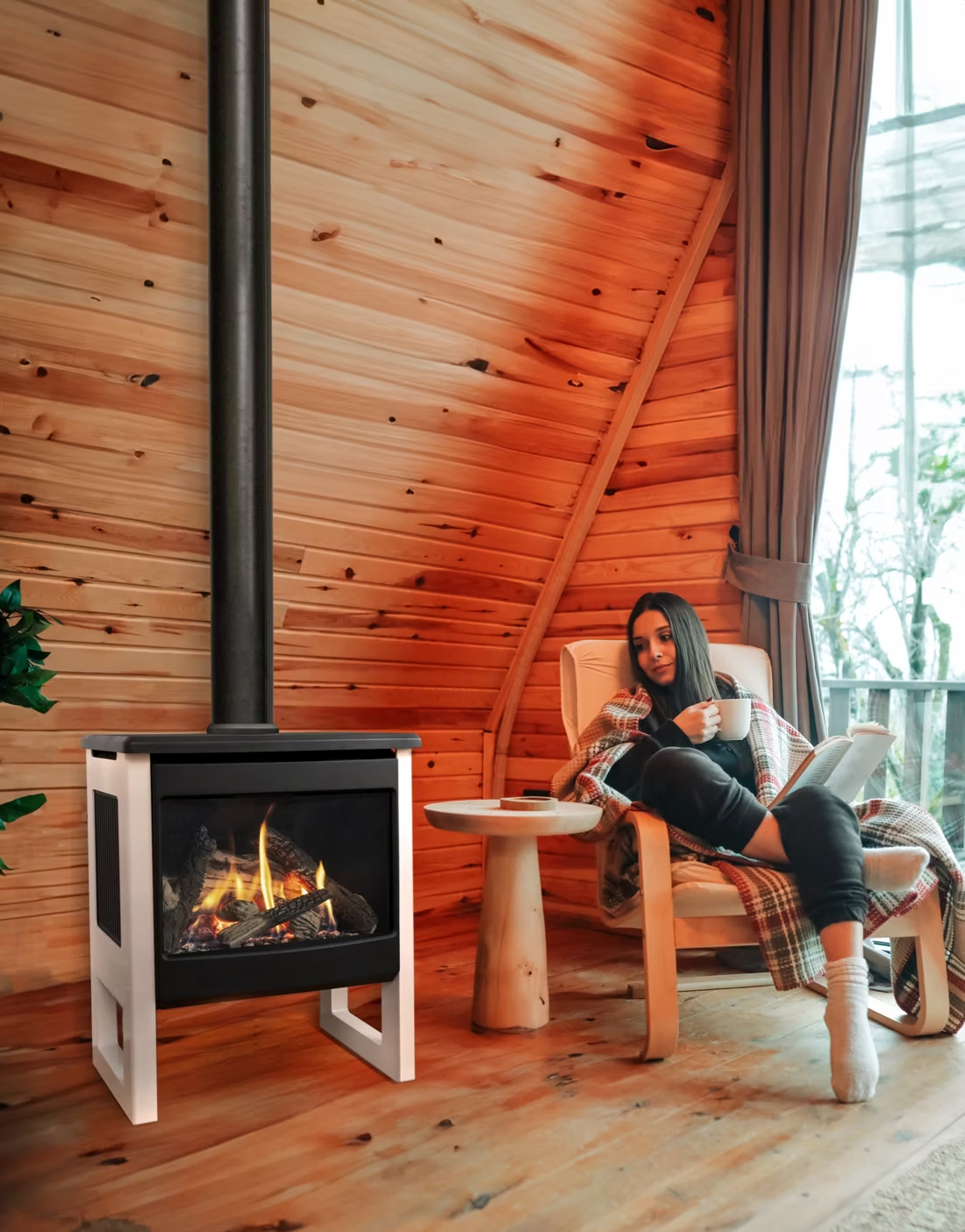
A gas fireplace is a built-in unit framed into a wall—the standard choice for new construction or a remodel without an existing fireplace opening. A gas insert is sized to slide into an existing masonry fireplace and vent through the chimney, which is the common route for older Powell homes with an existing hearth. A gas stove is a freestanding cast-iron or steel unit that sits on the floor like a wood stove but burns gas or propane—a good fit for a room without any existing fireplace or chimney where you don't want to frame in a built-in unit.
Do I need a permit for a gas fireplace installation in Powell?
Yes. New gas fireplace installations typically require both a building permit and a gas-line or LP-fitting permit through the City of Powell Building Department, or through Park County Planning & Building if the property sits outside city limits. A licensed gas fitter needs to handle any new line work, whether it's tying into an existing gas service or running new propane piping to a tank. Most established hearth dealers coordinate the permitting and inspection directly, so you're not left managing separate trades.
Should I get a vented or vent-free gas fireplace?
Vented (direct-vent) units draw combustion air from outside and exhaust it back outside through sealed venting—they're the standard, code-approved choice everywhere and hold up well in Powell's long, cold-climate heating season without any indoor air quality tradeoffs. Vent-free units burn without external venting and release some combustion byproducts into the room; they're legal in Wyoming with proper room-sizing and an oxygen depletion sensor, but they're a poor match for a tightly sealed, well-insulated home built for a place with 8,000+ heating degree days. For most Powell homeowners, a direct-vent unit is the more practical and comfortable choice.
How often does a gas fireplace need to be serviced?
Plan on an annual inspection, ideally before the heating season starts in the fall. A technician checks the burner, pilot assembly, venting, gas connections, and any battery or electronic ignition components, and cleans the glass and interior. This is a much lighter service than chimney sweeping but just as important for safety and efficiency, particularly on units that run daily through a Powell winter. Expect to pay in the neighborhood of $150 to $250 for a standard annual check.
Gas vs. electric fireplace—which makes more sense in Powell?
Gas delivers real heat output—enough to meaningfully offset a furnace during a hard cold stretch—and, with battery backup or a Valor-style self-powered pilot, it can keep running through a power outage. Electric fireplaces plug into a standard outlet, install for as little as a few hundred dollars, and produce a realistic flame effect, but they're primarily ambiance with modest supplemental heat, and they go dark the moment Garland Light & Power service drops. At the current residential rate of about 13.4 cents per kWh, electric units are cheap to run occasionally but aren't built to carry real heating load through an 8,227-heating-degree-day winter. For most Powell homes, gas is the better fit for a room you actually want to heat; electric works well for a bedroom, den, or space where ambiance matters more than BTUs.
Can I put a TV above my fireplace?
Yes—with an asterisk. Fireplaces are hot and TVs don't like heat. Either put a mantel between them to deflect rising warmth, or choose a fireplace with heat-management technology that creates a cool zone on the wall above—the wall stays around 125 degrees, barely warm, while the room still gets full heat. If you like clean lines and don't want a mantel, heat management is the answer.
What's the difference between an insert and a zero-clearance fireplace?
An insert is a fireplace that slides into a pre-existing wood-burning fireplace—if you don't have one, there's nothing to insert it into. A zero-clearance fireplace is built into a framed wall, which makes it the answer for remodels and new construction. Simple test: existing masonry fireplace means insert; blank or framed wall means zero-clearance.
Can I install a fireplace myself?
If you're putting a fire in your house on purpose, it's best to work with an expert. Unless you're genuinely experienced in framing, gas line, vent pipe, and the national code on clearances to combustibles, have a professional do it—and ideally the same company that sells you the fireplace, so warranty, service, and liability all live under one roof.
How much should I budget for a fireplace?
For an average home—covering the fireplace, the vent pipe, and basic installation—a budget between $3,900 and $5,500 gives you a lot of options across wood, gas, and pellet. By the time you add finish work, gas line, and electrical, the average complete installation lands between $5,000 and $12,000 all-in. In a remodel or new build, a good rule is to put about 2.5% of the total project cost toward the fireplace.
Nearby Dealers
Hearth shops serving Powell and the surrounding area. Every listing shows whether it is a WhyFire partner, a dealer we have verified as authorized for the brands we recommend, or a local business carrying hearth products. No manufacturer pays for placement. How we verify dealers →
Hufft Chimney Services
Find your gas fireplace in Powell.
Tell us about your home and heating goals, and we'll match you with a trusted local dealer and send over a free Project Guide & Parts List—sized venting, the right unit for a Bighorn Basin winter, and no big-box guesswork.
Find Your Fireplace →