
Warmth and ambiance for Powell's long, cold winters.
Electric fireplaces bring instant, no-mess flame and zone heat to homes across Park County. Find the right unit and connect with a trusted local dealer.
Every Project Starts From One of These Five Situations
Supplemental heat that never needs a chimney.
Powell sits at 4,384 feet in Park County, in the shadow of the Absaroka Range and about an hour from Yellowstone's east entrance. Winters here are long and genuinely cold—the average winter low hovers around 6°F, and the region has a winter heating load comparable to Fargo, North Dakota. That kind of cold shapes how homeowners think about supplemental heat, and it's a big part of why electric fireplaces have become a common fixture in living rooms, bedrooms, and finished basements across town.
Electric fireplaces here work best as zone heat and ambiance rather than a home's primary heat source—resistance heat from Garland Light & Power Company, the local utility, runs about 13.4 cents per kWh, which adds up quickly if you're trying to heat an entire house rather than just the room you're sitting in. Where electric really earns its place is in rooms without existing gas lines or masonry chimneys, in bedrooms, and during Park County's wildfire-smoke season, when many residents would rather not add any open flame or extra particulate load to the house at all.
Three steps. No salesperson until you're ready.
Tell us about your project
Your zip code, your situation, and the fuel you're leaning toward—or let the answers point you to one.
See what's actually available
The brands dealers within 100 miles genuinely carry—real options, never a catalog mirage.
Get your dealer & Project Guide
A trusted local dealer, plus the free Project Guide & Parts List that names every component of the job.
Frequently Asked Questions
How much does it cost to install an electric fireplace in Powell?
Most electric fireplace projects in Powell run $500 to $2,500 installed, depending on the unit. A plug-in insert or wall-mount unit on a standard 120V outlet is on the low end—often just the cost of the unit plus a mantel or surround if you want one. A built-in electric fireplace that requires a dedicated 240V circuit, in-wall wiring, or custom framing runs higher, sometimes reaching $3,500 to $4,000 once an electrician is involved. Because there's no venting, chimney, or gas line to run, electric installs are consistently the least expensive hearth option available to Powell homeowners.
What's the difference between an electric fireplace insert and a built-in unit?
An electric insert is sized to slide into an existing masonry fireplace opening or a factory-built firebox, giving an old wood-burning fireplace a second life without any venting work. A built-in electric fireplace is designed to be framed into a wall from scratch—common in Powell new-builds and remodels where there's no existing fireplace at all. Both use the same basic heating elements and flame-effect technology; the difference is really about what opening you're working with. If you've got an old, unused masonry fireplace in an older Powell home, an insert is usually the simpler and cheaper path.
Can an electric fireplace heat my whole house in a Powell winter?
No—and any dealer being straight with you will say the same. Electric fireplaces are supplemental heaters, typically rated between 4,000 and 5,000 BTUs, which is enough to noticeably warm a single room but not a home working against a winter heating load comparable to Fargo, North Dakota. Powell's cold snaps regularly push well below zero, and running resistance electric heat as a primary source at 13.4 cents per kWh through Garland Light & Power gets expensive fast. Most Powell homes pair an electric fireplace with a furnace, boiler, or gas heat as the primary system, using the fireplace for the room they're actually living in.
Do I need a permit to install an electric fireplace in Powell?
Plug-in electric fireplaces that use a standard 120V outlet typically don't require a permit—you're just plugging in an appliance. If you're installing a built-in unit that needs a new dedicated 240V circuit or any wiring run inside a wall, that electrical work should go through a licensed electrician, and larger remodel work may need to pass through the Park County Building Department depending on scope. Local dealers who install electric fireplaces regularly can tell you upfront whether your specific unit and setup will need an electrician or inspection.
Will my electric fireplace still work if the power goes out?
No. Unlike a wood stove or a gas fireplace with battery-backup ignition, an electric fireplace has no function at all without grid power—no flame effect, no heat. That's worth considering in Park County, where winter storms occasionally knock out power for hours at a time. If backup heat during outages matters to you, it's worth talking to a local dealer about pairing an electric fireplace for everyday ambiance with a wood or gas appliance that can actually carry the house through an outage.
What size electric fireplace do I need for my room?
Electric fireplaces are sized more by room dimensions and visual proportion than by aggressive heat-output math, since most units top out around 4,000-5,000 BTUs regardless of price. For a typical Powell living room in the 250-400 square foot range, a 40-50 inch unit is usually the sweet spot for both heat and visual scale. Smaller bedrooms or dens do fine with a 30-36 inch unit. A local dealer can walk you through sizing based on your actual wall space and whether you're prioritizing heat output or the look of the flame.
Electric vs. gas fireplace—which makes more sense in Powell?
Gas is the better choice if you want a unit that can meaningfully heat a room and keep working during a power outage—propane and natural gas are both well established in Park County, and gas fireplaces here typically deliver real BTU output. Electric wins on install simplicity and cost: no gas line, no venting, and a unit you can move or swap out easily. Worth noting: wood stoves, despite the lodgepole pine and aspen available through Shoshone National Forest cutting permits, are relatively uncommon as a primary heat choice in Powell homes today—most residents lean on gas or electric instead, saving wood burning for cabins or recreational use. For everyday living spaces, it usually comes down to whether you want ambiance (electric) or genuine backup heat capacity (gas).
How much does it cost to run an electric fireplace in Powell?
At Garland Light & Power Company's residential rate of about 13.4 cents per kWh, a typical 1,500-watt electric fireplace costs roughly 20 cents an hour to run on the heat setting. Used for about 5 hours an evening through a Powell winter, that's close to $1 a day, or around $30 a month if you're running it daily. Using just the flame effect without heat draws far less power—usually under 100 watts—so you can leave the ambiance on without much impact on your bill.
Are electric fireplaces a good option during wildfire smoke season?
Yes, and it's one of the more practical reasons Powell homeowners choose electric. Park County sees periods of wildfire smoke drift in from regional fires, and during those stretches, adding any wood smoke or combustion byproducts indoors is the last thing anyone wants. An electric fireplace produces zero emissions and no particulate matter, so you get the ambiance of a fire without adding to indoor air quality problems on the worst smoke days of the year.
Can I put a TV above my fireplace?
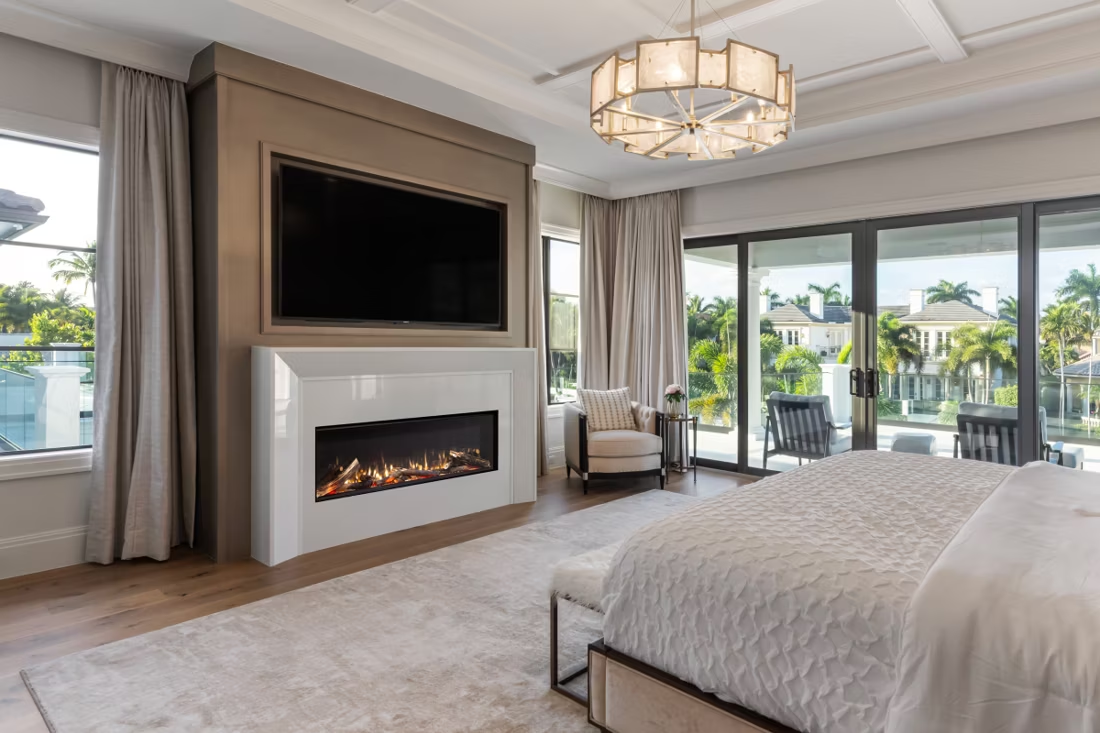
Yes—with an asterisk. Fireplaces are hot and TVs don't like heat. Either put a mantel between them to deflect rising warmth, or choose a fireplace with heat-management technology that creates a cool zone on the wall above—the wall stays around 125 degrees, barely warm, while the room still gets full heat. If you like clean lines and don't want a mantel, heat management is the answer.
Do electric fireplaces actually produce heat?
Yes—most put out around 4,800–5,000 BTUs from a standard outlet, which comfortably warms a bedroom, office, or den as a comfort-zone heater. What they won't do is carry a whole house the way wood, gas, or pellet can. Think of electric as ambiance-first with honest supplemental heat: flames on with no heat in July, flames plus warmth in January.
What is an in-home preview and do I need one?
It's a visit where a hearth professional measures your space, confirms the model you picked actually works in your home, and walks the specs—framing, gas line, venting, finish work—before anything is ordered. Some details you just can't know until you see the house. Never make a down payment without one; it's the single most-skipped step that burns buyers.
Does a fireplace add value to my home?
On average, a fireplace adds back to the home about the same amount you spent installing it. Add the monthly savings from heating the rooms you actually use instead of the whole house—often hundreds of dollars a year—and the value case is strong before you even count what a fire does for how your family uses the room.
Nearby Dealers
Hearth shops serving Powell and the surrounding area. Every listing shows whether it is a WhyFire partner, a dealer we have verified as authorized for the brands we recommend, or a local business carrying hearth products. No manufacturer pays for placement. How we verify dealers →
Hufft Chimney Services
Electric Service in Powell
An electric fireplace's heater draws about 1,500 watts—pennies per hour at local rates.
Garland Light & Power Company
Find your electric fireplace in Powell.
Tell us about your space in Powell and we'll match you with a trusted local dealer, plus a free Project Guide & Parts List—sized to your room, your wiring, and your budget.
Find Your Fireplace →