
Find your pellet stove in Park County.
Automated, hopper-fed heat for Park County's long winters—from Cody to Powell to Meeteetse. Get matched with a trusted local dealer who can size, permit, and install it right.
Every Project Starts From One of These Five Situations
Consistent heat for a place where the wind doesn't quit.
Park County sits along Wyoming's northwest edge, running from the Bighorn Basin floor near Cody and Powell up into the peaks bordering Yellowstone's east entrance. With a winter heating season on par with Bismarck, ND and a climate zone 6B classification, this county sees long, cold, and windy winters—enough that many homeowners want a heat source that doesn't depend on tending a fire by hand through the night. Winter lows average 18°F across the basin, with far colder stretches at elevation and during the wind events the Absarokas are known for.
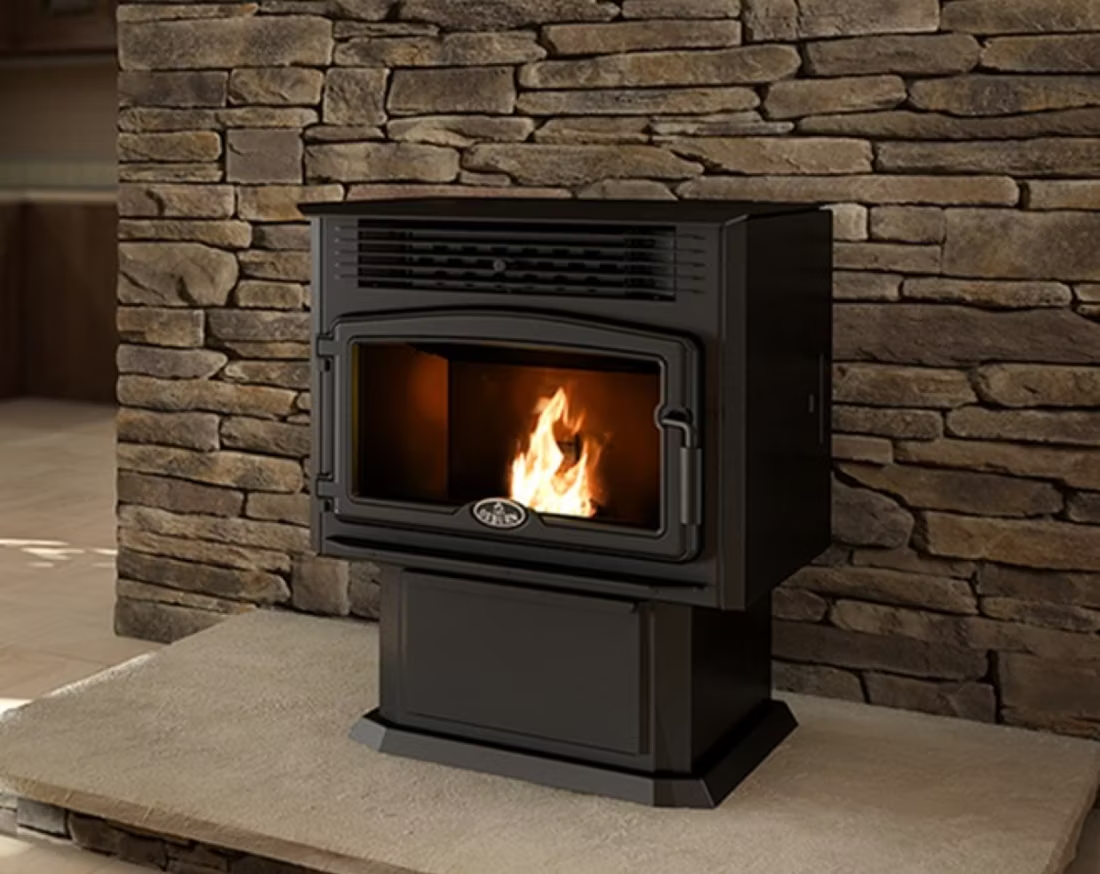
Pellet stoves fit that need well. A hopper-fed appliance burns compressed pellets from brands like Bear Mountain, Lignetics, and Forest Energy—all commonly stocked by regional suppliers—and runs on a thermostat rather than constant attention, which matters when a Cody or Powell household is heating through a multi-day cold snap. Wood is still deeply rooted here, with Shoshone National Forest permits ($5-$20 per cord, May through October) putting lodgepole pine, aspen, and ponderosa within reach of anyone willing to cut their own. But pellet appliances offer a cleaner, lower-maintenance alternative for homes that want dependable, adjustable heat without the wood-splitting and hauling—particularly useful given the wildfire smoke concerns that occasionally affect regional air quality in late summer and fall.
Three steps. No salesperson until you're ready.
Tell us about your project
Your zip code, your situation, and the fuel you're leaning toward—or let the answers point you to one.
See what's actually available
The brands dealers within 100 miles genuinely carry—real options, never a catalog mirage.
Get your dealer & Project Guide
A trusted local dealer, plus the free Project Guide & Parts List that names every component of the job.
Frequently Asked Questions
How much does a pellet stove installation cost in Park County?
Installation costs in Park County typically run in line with national pellet averages, generally landing between $3,500 and $7,000 depending on whether you're installing a freestanding stove or a pellet insert into an existing fireplace, plus any venting work required. Homes without an existing chimney or vent path will sit toward the higher end once wall penetration and venting materials are factored in. A trusted local dealer can give you a firm number after seeing your space, and it's worth asking whether the quote includes the vent kit—that's a common line item people forget to budget for.
Do pellet stoves work well in Park County's climate?
Yes, and they're a genuinely good fit here. With a winter heating load comparable to Duluth, MN, Park County needs sustained, reliable heat output over long stretches, not just occasional warmth. Pellet stoves hold a steady burn rate for many hours on a single hopper load, which suits the basin's pattern of extended cold snaps punctuated by high wind events. The tradeoff is that pellet stoves run on electricity to power the auger and combustion blower, so homeowners in more rural parts of the county—out toward Meeteetse or up the South Fork—sometimes pair a pellet stove with a battery backup or keep a wood stove as an off-grid fallback during outages.
What size pellet stove do I need for my home?
Sizing depends on square footage, ceiling height, insulation quality, and elevation. As a general guide for Park County's cold, wind-exposed conditions: smaller units (rated for up to 1,000-1,300 sq ft) suit a single zone or a smaller Powell-area home, while larger units (1,800-2,500+ sq ft) are better for whole-home heating in a drafty older Cody property or anything at higher elevation toward the Absarokas. Homes at elevation or with significant west-facing wind exposure often need to size up from what square footage alone would suggest. A local dealer will walk your home and give you an actual number rather than a rule of thumb.
Where do I buy pellets in Park County, and what do they cost?
Regional brands like Bear Mountain, Lignetics, and Forest Energy are commonly available through hearth and hardware retailers serving Cody and Powell. Pricing fluctuates seasonally and by supplier, so it's worth asking your local dealer which brands they stock and recommend for their specific stove models—burn quality and ash output can vary noticeably between pellet brands, even within the same BTU rating. Buying a pallet or two ahead of the coldest months is common practice here, since demand and pricing can tighten in January and February.
Do I need a permit to install a pellet stove in Park County?
Most jurisdictions require a building permit for a new pellet stove installation, covering the appliance placement, clearances, and venting. In Park County, that typically means a permit through the relevant county or city building department depending on whether the home is inside Cody, Powell, or in unincorporated county land. A trusted local dealer who regularly installs in the area will usually handle the permitting paperwork as part of the install, so you're not tracking it down yourself.
What's the difference between a pellet stove and a pellet insert?
A pellet stove is a freestanding appliance that sits on its own hearth pad and vents through a wall or existing chimney chase—it can go almost anywhere in a home with the right clearances. A pellet insert is built to slide into an existing masonry fireplace opening, converting an old wood-burning fireplace into an automated, efficient heat source while reusing the existing chimney as a vent path. For Park County homes that already have a fireplace—common in older Cody and Powell housing stock—an insert is often the simpler retrofit. Homes without an existing fireplace usually go with a freestanding stove instead.
How much maintenance does a pellet stove need?
Pellet stoves need more routine attention than a gas unit but less than a wood stove. Expect to empty the ash pan every few days to weekly depending on use, clean the burn pot and glass regularly, and have the unit professionally serviced once a year—typically before the start of the heating season in late summer or early fall. The auger, blower motors, and gaskets are the components most likely to need attention over time. A local dealer can point you toward technicians who service the specific brand you buy.
Will my pellet stove work if the power goes out?
Not without a backup power source—pellet stoves rely on electricity to run the auger that feeds pellets and the blower that manages combustion air, so they shut down in an outage unless connected to a generator or battery backup system. This is worth weighing seriously in Park County, where winter storms and high wind events can knock out power in rural stretches of the county for extended periods. Some homeowners here pair a pellet stove for everyday convenience with a wood stove or fireplace as off-grid backup heat. A local dealer can talk through backup power options if that's a priority for your property.
Pellet stove vs. wood stove—which is right for Park County?
Wood stoves work without electricity, which matters during the wind-driven power outages that occur in parts of Park County, and pair naturally with the low-cost Shoshone National Forest cutting permits ($5-$20 per cord) that make lodgepole pine, aspen, and ponderosa pine accessible to anyone willing to cut and haul their own. Pellet stoves trade that self-sufficiency for convenience—set a thermostat, load a hopper, and let the appliance manage the burn, with less ash and a cleaner overall footprint. For a full-time Cody or Powell residence with reliable grid power, pellet is often the easier day-to-day choice. For a rural property, a cabin, or anyone prioritizing off-grid resilience, wood still has a strong case. Many local homes end up with one of each.
Why is my open fireplace making my house colder?
Open fireplaces suck—literally. As the fire burns, it consumes air your furnace already paid to heat and pulls it out through the chimney, so the house is actually colder after the fire goes out than before you lit it. An insert fixes this: it seals the chimney, puts fixed glass across the front, and turns that hole in your house into a real heat source.
Why is a fireplace insert so efficient?
An insert does two things: it seals the chimney completely, so you stop losing air you already paid to heat, and it radiates warmth into the room through the firebox and glass. Most add a heat-exchange fan that pulls cool room air underneath, wraps it around the hot firebox, and pushes it back out warm. Your home is more efficient before you've even lit the first fire.
Does a fireplace add value to my home?
On average, a fireplace adds back to the home about the same amount you spent installing it. Add the monthly savings from heating the rooms you actually use instead of the whole house—often hundreds of dollars a year—and the value case is strong before you even count what a fire does for how your family uses the room.
Can I install a fireplace myself?
If you're putting a fire in your house on purpose, it's best to work with an expert. Unless you're genuinely experienced in framing, gas line, vent pipe, and the national code on clearances to combustibles, have a professional do it—and ideally the same company that sells you the fireplace, so warranty, service, and liability all live under one roof.
Stove and Fireplace Dealers in Park County
Listings include WhyFire partner dealers, dealers we have verified as authorized for the brands we recommend, and established local businesses that carry hearth products. Every listing shows which one it is. The ones marked Preferred run on WhyFire's software, so they can show you real pricing and book your appointment right here. No manufacturer pays for placement. How we verify dealers →
Hufft Chimney Services
Pellet Brands Stocked Around Park County
Manufacturers will point you to the nearest stocking dealer.
Get your Park County pellet stove Project Guide & Parts List.
Tell us about your home and we'll match you with a trusted local dealer and a free Project Guide & Parts List—the exact parts, including the vent kit, for your pellet project in Park County.
Find Your Fireplace →