
Instant heat built for Wyoming's harshest winter nights.
With winter lows averaging 2°F and nearly 9,700 heating degree days a year, Lincoln County homes need heat that starts instantly and keeps running. Find the right gas fireplace or insert and get matched with a trusted local dealer.
Every Project Starts From One of These Five Situations
Reliable heat for one of the coldest counties in the Lower 48.
Lincoln County stretches across southwest Wyoming from the Salt River Range and Star Valley down through Kemmerer and the high sagebrush plains near Cokeville, with much of the county sitting above 6,000 feet. At 9,695 heating degree days a year and winter lows that average just 2°F, this is climate zone 7 territory—comparable to International Falls, Minnesota, for sheer cold. Winter here runs long, often from October through April, and a fireplace that only works when the power is on isn't good enough for most households.
Ironically, Lincoln County sits on top of some of the largest natural gas reserves in the country—the LaBarge gas complex nearby is one of the biggest gas treating facilities in the world—but that hasn't meant natural gas lines reach every home. Utility gas service is generally limited to town cores like Kemmerer and Afton, while ranches and outlying communities across Star Valley and the Cokeville area rely on propane delivery. Either fuel works well in a modern direct-vent gas fireplace, and the right unit gives you real heat at the flip of a switch—including models built to keep running during the ground blizzards and prolonged power outages that hit this part of Wyoming most winters.
Three steps. No salesperson until you're ready.
Tell us about your project
Your zip code, your situation, and the fuel you're leaning toward—or let the answers point you to one.
See what's actually available
The brands dealers within 100 miles genuinely carry—real options, never a catalog mirage.
Get your dealer & Project Guide
A trusted local dealer, plus the free Project Guide & Parts List that names every component of the job.
Frequently Asked Questions
How much does a gas fireplace installation cost in Lincoln County?
A typical gas fireplace or insert installation in Lincoln County runs roughly $4,000 to $10,500, depending on the unit, the venting path, and whether you're running new gas line or setting a propane tank. Homes in Kemmerer or Afton with existing utility gas service and a masonry fireplace already in place tend to land on the lower end, since the insert simply uses the existing chimney as a vent chase. Ranch properties in Star Valley or near Cokeville that need a new propane tank and buried line run higher. Local dealers will give you a firm number after walking the space.
Can I convert my existing wood fireplace to gas?
Yes—this is one of the more common projects in Lincoln County, especially in older Kemmerer and Afton homes built around a wood-burning masonry fireplace. A direct-vent gas insert drops into the existing opening and uses a stainless liner run through your current chimney, so you keep the look of the fireplace while gaining instant on-off heat. Expect $4,000 to $9,000 for the conversion, with propane hookup or a new gas line as the main cost variable. It's a straightforward upgrade for homes where the open masonry hearth was never doing much real heating anyway.
Should I use natural gas or propane for my fireplace?
It depends on where you live in the county. Utility natural gas is generally available in and around Kemmerer and Afton; almost everywhere else in Lincoln County—the ranches around Cokeville, Star Valley Ranch, and the outlying areas near the LaBarge gas fields—runs on propane, delivered and stored in a tank on the property. Most gas fireplace and insert models are available in either configuration; your dealer sets the orifice and regulator for whichever fuel you have. If you're building new and have a choice, proximity to an existing gas main is usually the deciding factor, since running new utility line any real distance gets expensive fast.
Will my gas fireplace still work if the power goes out?
Most direct-vent gas fireplaces with intermittent pilot ignition (IPI) include a battery backup that keeps the unit lighting on demand when the power drops—which matters here, since Lincoln County's winter storms regularly knock out power for hours at a time in Star Valley and the more rural stretches of the county. Some manufacturers, including Valor, go a step further and generate their own electricity from the pilot flame's thermocouple, so there's no battery to remember at all. Given how far the nearest utility crew sometimes has to travel to restore power out here, that self-powering design is worth asking about.
What's the difference between a gas fireplace, insert, and stove?
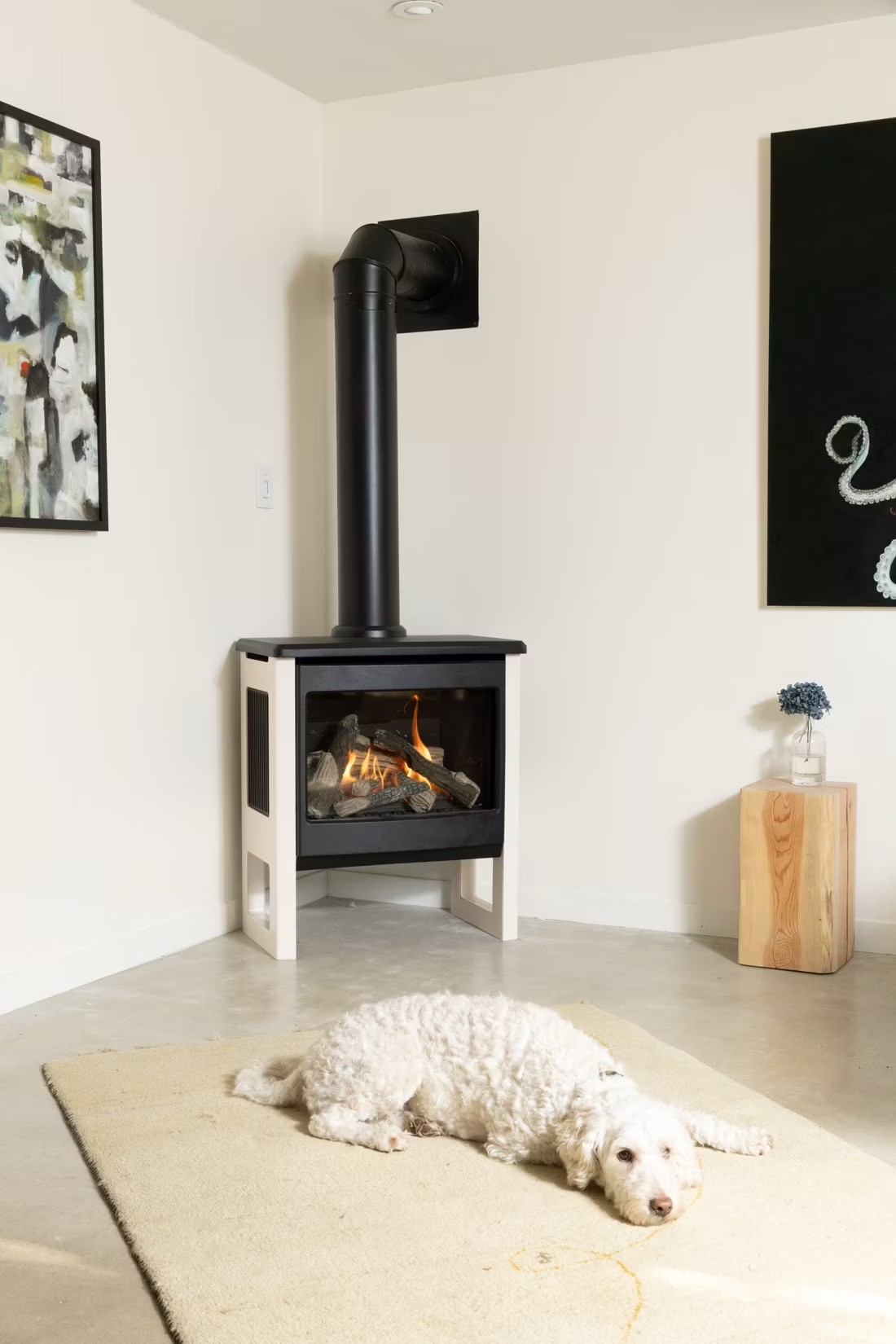
A gas fireplace is a built-in unit framed into a wall, typically used in new construction or a remodel. A gas insert slides into an existing masonry fireplace opening and uses the existing chimney as its vent path—the most common upgrade for older homes in Kemmerer and Afton. A gas stove is a freestanding, cast-iron-look unit that sits on the floor like a wood stove but runs on gas or propane, a good fit for cabins and additions without an existing chimney. Which one makes sense depends mostly on whether you already have a fireplace opening to work with.
Do I need a permit to install a gas fireplace in Lincoln County?
Yes—new gas fireplace and insert installations require a building permit, and any new gas line or propane connection needs a licensed gas-fitter to sign off on the work. Most established hearth dealers pull the permit and coordinate the gas-fitter as part of the installation, so you're not left managing separate trades. If you're in unincorporated Lincoln County outside Kemmerer or Afton city limits, permitting runs through the county building department rather than a city office—your installer will know which applies to your address.
Should I get a vented or vent-free gas fireplace?
Vented (direct-vent) units draw combustion air from outside and exhaust gases back outside through sealed pipe, which is why they're the standard recommendation almost everywhere, including Lincoln County. Vent-free units burn without any outside venting and release some combustion byproducts into the room—legal in Wyoming under specific room-sizing and ventilation rules, but a harder sell in a climate this cold, where homes are built tight for efficiency and have less natural air exchange to begin with. For a Lincoln County home, a direct-vent unit is almost always the better call, both for indoor air quality and for real heat output on the coldest nights.
How often does a gas fireplace need to be serviced?
Plan on an annual inspection, ideally before the start of the heating season in September or October. A technician checks the burner, pilot assembly, venting, and gas connections, and cleans the glass and interior—usually $150 to $250. It's a lighter lift than sweeping a wood chimney, but skipping it is how pilot and ignition problems show up on the coldest night of the year, which in Lincoln County is a real inconvenience rather than a minor one.
Gas or wood—which makes more sense for a Lincoln County home?
Wood is still common here, with lodgepole pine, aspen, and ponderosa pine all cut locally, and it keeps working without electricity during winter power outages. But wood also means dealing with ash, chimney maintenance, and occasional burning restrictions when wildfire smoke settles into Star Valley in late summer. Gas gives you instant, consistent heat with none of that upkeep, and modern battery-backup or self-powering models still work in an outage. Many Lincoln County households end up with both—gas in the main living space for daily convenience, wood or a wood stove elsewhere as backup and for the ambiance.
Why is a fireplace insert so efficient?
An insert does two things: it seals the chimney completely, so you stop losing air you already paid to heat, and it radiates warmth into the room through the firebox and glass. Most add a heat-exchange fan that pulls cool room air underneath, wraps it around the hot firebox, and pushes it back out warm. Your home is more efficient before you've even lit the first fire.
What do I measure to size a fireplace insert?
Four numbers tell you what fits: the front width, the front height, the back width, and the overall depth of your existing fireplace opening. Grab a tape measure, jot those down, and snap a photo of the wall—those two things do more to move your project forward than anything else you can do today.
Does a fireplace add value to my home?
On average, a fireplace adds back to the home about the same amount you spent installing it. Add the monthly savings from heating the rooms you actually use instead of the whole house—often hundreds of dollars a year—and the value case is strong before you even count what a fire does for how your family uses the room.
What is an in-home preview and do I need one?
It's a visit where a hearth professional measures your space, confirms the model you picked actually works in your home, and walks the specs—framing, gas line, venting, finish work—before anything is ordered. Some details you just can't know until you see the house. Never make a down payment without one; it's the single most-skipped step that burns buyers.
Stove and Fireplace Dealers in Lincoln County
Listings include WhyFire partner dealers, dealers we have verified as authorized for the brands we recommend, and established local businesses that carry hearth products. Every listing shows which one it is. The ones marked Preferred run on WhyFire's software, so they can show you real pricing and book your appointment right here. No manufacturer pays for placement. How we verify dealers →
Advanced Mechanical Solutions
Valley Wide Co-Op
Mountain West Heating And Air Conditioning
Valley Wide Co-Op
Bear Lake Heating
Pinedale Lumber
Mr Cool Inc
Find your gas fireplace in Lincoln County.
Tell us about your home and we'll match you with the right gas fireplace, insert, or stove—plus a free Project Guide & Parts List with the exact vent kit and parts, and our recommended local dealer.
Find Your Fireplace →