
Heat built for 9,695 heating degree days.
Wood, gas, pellet, and electric fireplace resources for every town in Lincoln County—from Kemmerer to Star Valley Ranch. Find the right unit and connect with a trusted local hearth retailer.
Every Project Starts From One of These Five Situations
Climate Zone 7 heating in Lincoln County, Wyoming.
Lincoln County sits in Climate Zone 7—the same severe-cold band that covers places like Bozeman, Montana—with an average winter low around 2°F and nearly 9,700 heating degree days a year. That's a heating season that starts early and runs long, from the Salt River Range down through Star Valley and over toward the Wyoming Range near Kemmerer. Lodgepole pine, aspen, and ponderosa pine are the wood species most homeowners here burn, and a lot of that wood is self-cut off nearby national forest land. At these HDD numbers, a fireplace or stove isn't decorative—it's core infrastructure for getting through a Wyoming winter.
What you'll find on this hub: hearth retailers, service technicians, and fuel suppliers serving every community in the county—from Kemmerer and Diamondville in the north down through Afton, Thayne, and Star Valley Ranch to the south. Pick your fuel below to drill into specifics—local dealers, installation costs, recommended units, and the resources that match your project. Whether you're heating a ranch house outside Cokeville or a cabin near the Salt River Range, this is the starting point.
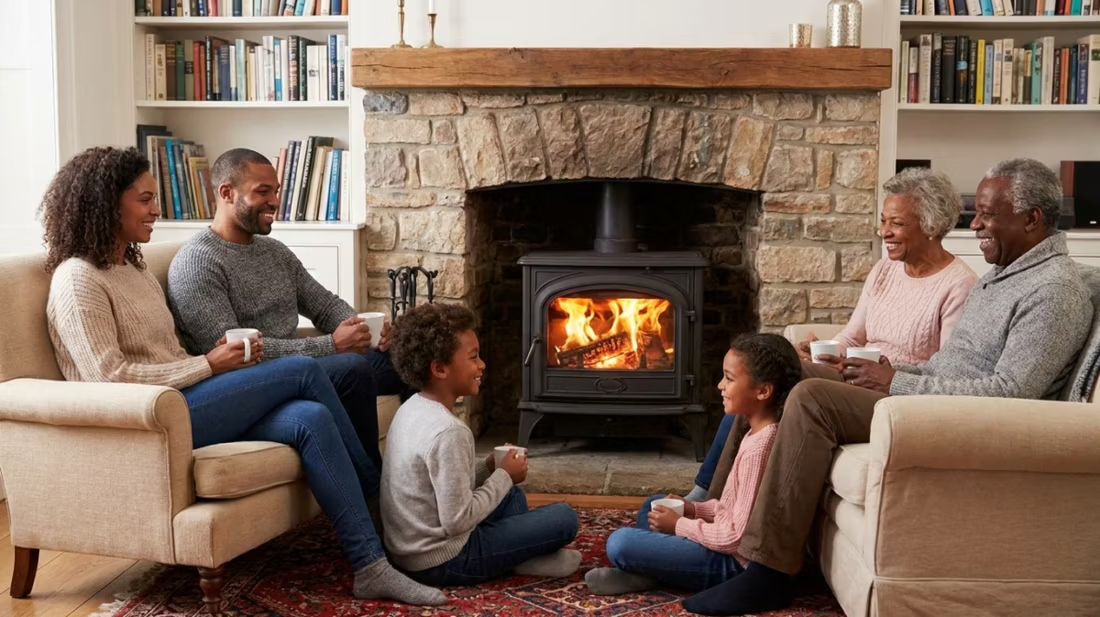
Four fuels. One honest answer for Lincoln County.
Three steps. No salesperson until you're ready.
Tell us about your project
Your zip code, your situation, and the fuel you're leaning toward—or let the answers point you to one.
See what's actually available
The brands dealers within 100 miles genuinely carry—real options, never a catalog mirage.
Get your dealer & Project Guide
A trusted local dealer, plus the free Project Guide & Parts List that names every component of the job.
Frequently Asked Questions
Which fuel works best in Lincoln County?
It depends on your home and what you're trying to solve for. Wood remains the workhorse fuel for a lot of rural Lincoln County homes—lodgepole pine and aspen are widely available, self-cut permits keep costs down, and a catalytic wood stove can hold a fire through single-digit overnight lows without power. Gas is the convenience pick where propane or natural gas service reaches—instant heat with no wood-hauling, which matters a lot by February. Pellet stoves split the difference, offering wood-like heat with less daily labor; Bear Mountain, Lignetics, and Forest Energy pellets are all stocked regionally, so supply isn't usually the bottleneck. Electric fireplaces are supplemental here, not primary heat—at 9,695 heating degree days, an electric unit alone won't keep up through a Star Valley winter. Most homes in the county run a primary wood or pellet setup with gas or electric backup in secondary rooms.
Do I need a permit to install a fireplace in Lincoln County?
In most cases, yes. New wood stoves, wood inserts, gas fireplaces, gas inserts, gas stoves, and pellet stoves generally require a building permit, and gas installations also need a separate gas line permit handled by a licensed gas-fitter. Wood-burning appliances need to meet current EPA emissions standards to be installed new. Electric fireplaces are usually permit-free unless you're doing a built-in installation that involves new wiring or a dedicated circuit. Permitting jurisdiction depends on whether you're inside city limits (Kemmerer, Afton, etc.) or in unincorporated Lincoln County—a local retailer who's done installs in your specific town will know which office to file with, and most handle that paperwork as part of the install.
Does wildfire smoke affect wood burning in Lincoln County?
It's more of a late-summer and fall concern than a winter one here. Lincoln County sits amid national forest and rangeland that sees periodic wildfire smoke in dry years, which can affect outdoor air quality well before the heating season starts. It doesn't typically restrict indoor wood-burning appliances the way winter inversion advisories do in some western basins, but it's worth checking regional air quality conditions if you're planning summer construction or chimney work. For the actual heating season, the bigger factor is simply the cold—at 9,695 HDD, appliance sizing and stove efficiency matter more than air quality curtailments.
Can one local hearth retailer handle all four fuel types?
Coverage varies by dealer, and in a county this spread out, not every retailer stocks every fuel. Some hearth shops based in the Star Valley area carry wood, gas, and pellet with a smaller electric selection, while others near Kemmerer lean more heavily into wood and gas given the local heating demand. Few small independent dealers stock all four fuel types in-store—it's more common to find a dealer strong in two or three fuels who can special-order or refer you out for the rest. If you're cross-shopping fuels before committing, ask a retailer directly which lines they carry and install, since inventory in a market this size shifts based on what local homeowners are asking for.
How does service work in rural parts of Lincoln County?
Most technicians serving Lincoln County are based out of Kemmerer or the Star Valley towns and travel to outlying ranches and smaller communities like Cokeville, Fairview, and Etna. Expect to budget a travel fee for calls well outside town limits, and expect scheduling to tighten up fast once temperatures drop—pre-season service in late summer or early fall is far easier to book than a mid-January emergency call. Given how long the heating season runs here, it's worth scheduling your annual sweep or gas inspection early and keeping a backup heat source (a second stove, propane heater, or generator for gas IPI units) on hand for outages.
What's the typical cost range for fireplace installation across all fuel types in Lincoln County?
Costs vary by fuel and by how much venting or gas line work is involved. Wood stove or insert installation: roughly $4,500–$9,500 for a typical install, more for new chimney construction in new-build homes. Gas fireplace, insert, or stove: roughly $4,500–$11,500, with cost driven mostly by whether gas line work is needed or already in place. Pellet stove or insert: roughly $4,500–$7,500 for a standard install. Electric fireplace: $200–$3,000 for the unit itself, plus $400–$1,200 in labor for anything beyond a plug-and-play setup. These are county-wide ranges—see the county + fuel pages above for retailer-specific pricing detail.
Can I install a fireplace myself?
If you're putting a fire in your house on purpose, it's best to work with an expert. Unless you're genuinely experienced in framing, gas line, vent pipe, and the national code on clearances to combustibles, have a professional do it—and ideally the same company that sells you the fireplace, so warranty, service, and liability all live under one roof.
How much should I budget for a fireplace?
For an average home—covering the fireplace, the vent pipe, and basic installation—a budget between $3,900 and $5,500 gives you a lot of options across wood, gas, and pellet. By the time you add finish work, gas line, and electrical, the average complete installation lands between $5,000 and $12,000 all-in. In a remodel or new build, a good rule is to put about 2.5% of the total project cost toward the fireplace.
Does a fireplace add value to my home?
On average, a fireplace adds back to the home about the same amount you spent installing it. Add the monthly savings from heating the rooms you actually use instead of the whole house—often hundreds of dollars a year—and the value case is strong before you even count what a fire does for how your family uses the room.
What is an in-home preview and do I need one?
It's a visit where a hearth professional measures your space, confirms the model you picked actually works in your home, and walks the specs—framing, gas line, venting, finish work—before anything is ordered. Some details you just can't know until you see the house. Never make a down payment without one; it's the single most-skipped step that burns buyers.
Stove and Fireplace Dealers in Lincoln County
Listings include WhyFire partner dealers, dealers we have verified as authorized for the brands we recommend, and established local businesses that carry hearth products. Every listing shows which one it is. The ones marked Preferred run on WhyFire's software, so they can show you real pricing and book your appointment right here. No manufacturer pays for placement. How we verify dealers →
Advanced Mechanical Solutions
Valley Wide Co-Op
Mountain West Heating And Air Conditioning
Valley Wide Co-Op
Bear Lake Heating
Pinedale Lumber
Mr Cool Inc
Find your fireplace in Lincoln County.
Tell us your fuel and town, and we'll match you with a trusted local hearth retailer plus a free Project Guide & Parts List—the exact parts, vent kit, and dealer recommendation for your Lincoln County home.
Find Your Fireplace →