
Gas heat built for Converse County's high-plains winters.
Instant, reliable warmth for Douglas, Glenrock, Rolling Hills, and the ranches in between—where 7,255 heating degree days and relentless Powder River Basin wind make a dependable gas fireplace more than decoration. Find the right unit and get matched with a trusted local dealer.
Every Project Starts From One of These Five Situations
Reliable heat for a county built on energy.
Converse County covers roughly 4,255 square miles of east-central Wyoming, from the North Platte River valley at Douglas and Glenrock up into the buttes and grassland of the Thunder Basin. At a climate zone of 6B, an average winter low near 12°F, and 7,255 heating degree days, the county runs colder than Helena, Montana most winters—and the wind here rarely lets up. Wildfire smoke is the main air quality concern rather than winter inversion, which means burn restrictions here are more about summer and fall conditions than midwinter curtailment.
Converse County's economy has long run on energy—oil, natural gas, coal, and uranium production shape the local workforce—so homeowners here tend to be comfortable evaluating fuel systems on their merits. In town, natural gas service through Black Hills Energy reaches Douglas and Glenrock; out on the ranches and in Rolling Hills, propane from regional suppliers is the standard. Either way, a direct-vent gas fireplace or insert delivers heat at the flip of a switch, doesn't demand daily tending like a wood stove, and—with the right ignition system—keeps working through the power outages that come with high-wind events on the plains.
Three steps. No salesperson until you're ready.
Tell us about your project
Your zip code, your situation, and the fuel you're leaning toward—or let the answers point you to one.
See what's actually available
The brands dealers within 100 miles genuinely carry—real options, never a catalog mirage.
Get your dealer & Project Guide
A trusted local dealer, plus the free Project Guide & Parts List that names every component of the job.
Frequently Asked Questions
How much does a gas fireplace installation cost in Converse County?
A typical gas fireplace installation in Converse County runs roughly $4,000 to $10,500 depending on the unit, the venting run, and whether new gas line work is needed. A direct-vent insert going into an existing masonry fireplace with gas already at the house sits toward the lower end. New construction or a fireplace added to a room that has never had gas—requiring a fresh line, framing, and venting—lands in the middle to upper range. Ranch properties well outside Douglas or Glenrock should expect a modest travel charge added to the quote, and propane households may also need to budget for a new tank set by a local propane supplier.
Can I convert my existing wood fireplace to gas?
Yes, and it's a common project for older homes around Douglas and Glenrock that were originally built with a lodgepole-pine-burning masonry fireplace. A gas insert typically uses your existing chimney as the vent path with a stainless liner, which keeps the visible opening intact while eliminating ash and wood handling. Cost usually runs in the $4,500 to $9,000 range locally, with the final number depending on whether you're on natural gas or propane and whether the flue needs relining before the insert goes in.
Do I need natural gas, or does propane work for a gas fireplace?
Either fuel works, and most gas fireplace models can be configured for whichever one you have. Natural gas service through Black Hills Energy reaches homes in and around Douglas and Glenrock, so if you already have a gas water heater or furnace, adding a fireplace is straightforward. Outside those service areas—which is most of Converse County's ranch land—propane is the standard, either from an existing tank or a new one installed by a regional propane supplier. Your installer sets the correct orifice and regulator for whichever fuel you're running.
Will my gas fireplace still work if the power goes out?
Most modern gas fireplaces are built to handle that. Units with intermittent pilot ignition (IPI) run a small battery backup that kicks in the moment power drops, so the fireplace lights on demand just like normal. That matters in Converse County, where high-wind events regularly take down rural power lines and outages on ranch spurs can stretch on for a while. Valor fireplaces go a step further—their pilot assembly generates its own electricity through the thermocouple, so there's no battery to remember at all. Ask your local dealer about the ignition system on any unit you're weighing.
What's the difference between a gas fireplace, gas insert, and gas stove?
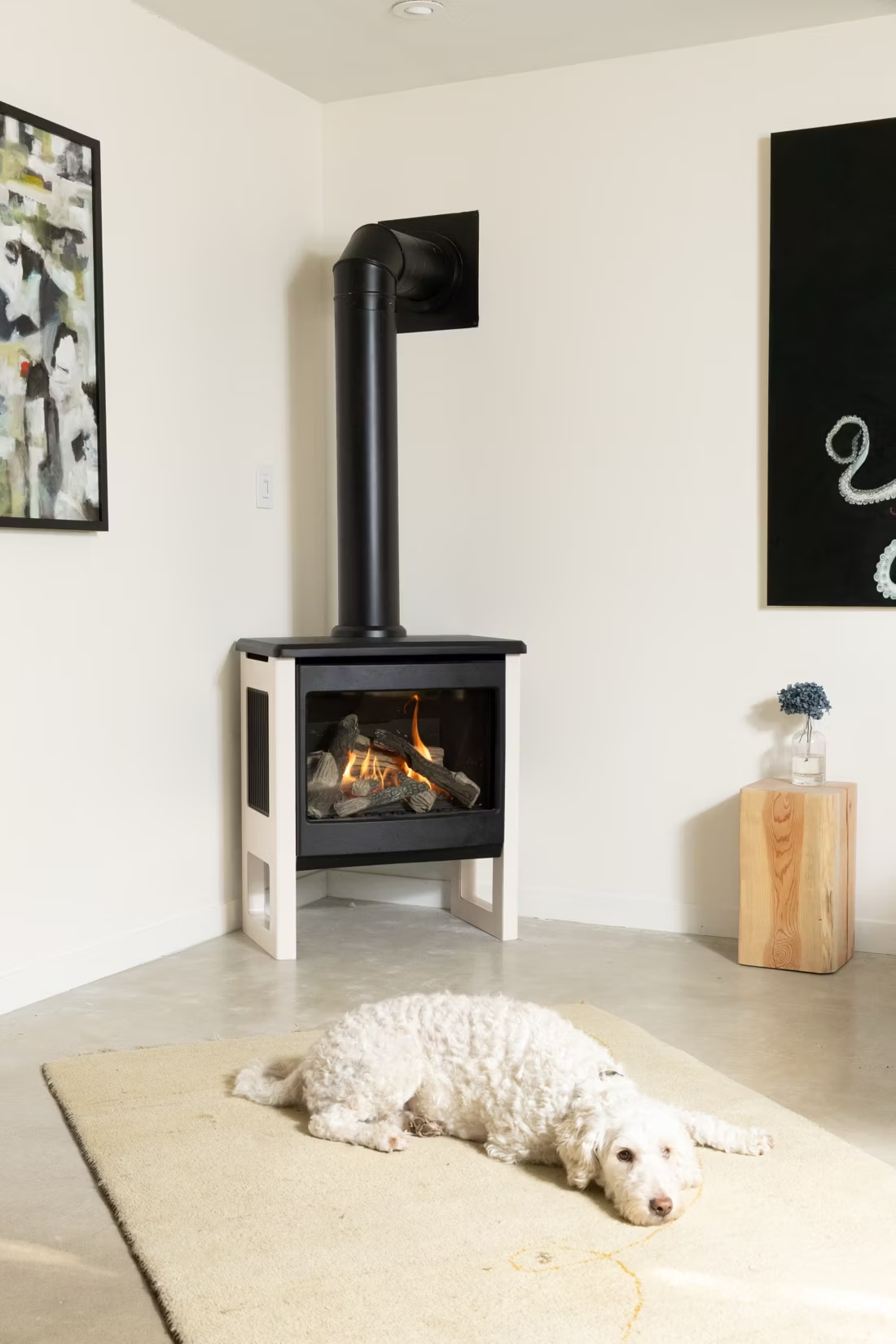
A gas fireplace is a fully built-in unit framed into a wall, typically chosen for new construction or a remodel. A gas insert drops into an existing masonry fireplace opening and uses the existing chimney as its vent path—the right fit for older Douglas and Glenrock homes with a fireplace they want to upgrade. A gas stove is a freestanding, cabinet-style unit that sits on the floor and vents through a wall or the ceiling, which works well in a shop, cabin, or a room without an existing hearth. A local dealer can walk you through which format fits your floor plan.
Do I need a permit to install a gas fireplace in Converse County?
Yes—new gas fireplace installations require both a building permit through the Converse County Building Department and a gas line permit, with the gas line work performed by a licensed gas-fitter. Most established hearth dealers handle the permitting and coordinate the gas line, venting, and inspection as part of the install, so you're not left managing separate trades yourself.
Should I get a vented or vent-free gas fireplace?
Vented (direct-vent) gas fireplaces draw combustion air from outside and exhaust it back outside through a sealed pipe—they're the cleanest, safest option and the one most commonly installed in Converse County. Vent-free units burn directly into the room and are legal in Wyoming, but they come with strict room-sizing rules and require an oxygen depletion sensor. Given how tightly built newer Converse County homes tend to be for energy efficiency, and how long the heating season runs here, a direct-vent unit is generally the safer and more comfortable choice for full-time use.
How often should a gas fireplace be serviced?
Plan on an annual inspection, ideally before the first hard cold snap hits the Powder River Basin in late fall. A certified technician checks the burner, pilot assembly, venting, and gas connections, and cleans the glass and interior—a shorter job than a wood chimney sweep but just as important for safe operation. Local gas appliance service providers typically charge $150 to $250 for this visit, and scheduling it in September or early October beats waiting until the unit is needed on the coldest night of the year.
Gas vs. wood—which makes more sense in Converse County?
Wood heat still has a real following here, with lodgepole pine, aspen, and ponderosa pine available through cutting permits on the Thunder Basin National Grassland and nearby Medicine Bow-Routt National Forest land—a draw for anyone comfortable cutting and hauling their own fuel and wanting heat that works without electricity. Gas wins on convenience: no wood handling, no ash, consistent output, and instant on-off operation, which suits primary living areas and households who want zone heat without the daily upkeep. A number of Converse County homes run both—gas for the main living space, a wood stove in a shop or basement as backup.
What's the difference between an insert and a zero-clearance fireplace?
An insert is a fireplace that slides into a pre-existing wood-burning fireplace—if you don't have one, there's nothing to insert it into. A zero-clearance fireplace is built into a framed wall, which makes it the answer for remodels and new construction. Simple test: existing masonry fireplace means insert; blank or framed wall means zero-clearance.
What does it take to replace an existing fireplace?
Fireplaces are like icebergs—bigger behind the wall than in front of it. Replacement means removing the surrounding tile or stone (the finish material laps onto the fireplace face), pulling the old unit, setting the new one in the same enclosure, and re-finishing the wall. A hearth professional can determine what's behind your wall without demolition during an in-home preview.
How much should I budget for a fireplace?
For an average home—covering the fireplace, the vent pipe, and basic installation—a budget between $3,900 and $5,500 gives you a lot of options across wood, gas, and pellet. By the time you add finish work, gas line, and electrical, the average complete installation lands between $5,000 and $12,000 all-in. In a remodel or new build, a good rule is to put about 2.5% of the total project cost toward the fireplace.
What is an in-home preview and do I need one?
It's a visit where a hearth professional measures your space, confirms the model you picked actually works in your home, and walks the specs—framing, gas line, venting, finish work—before anything is ordered. Some details you just can't know until you see the house. Never make a down payment without one; it's the single most-skipped step that burns buyers.
Stove and Fireplace Dealers in Converse County
Listings include WhyFire partner dealers, dealers we have verified as authorized for the brands we recommend, and established local businesses that carry hearth products. Every listing shows which one it is. The ones marked Preferred run on WhyFire's software, so they can show you real pricing and book your appointment right here. No manufacturer pays for placement. How we verify dealers →
Shortline Industries
Sheet Metal Specialties, Inc.
Magic City Stoves
Sutherlands -Casper -2219
Log Smith Art - Rick Conner
Get matched with a gas fireplace dealer in Converse County.
Tell us about your home and heating goals, and we'll match you with a trusted local dealer plus a free Project Guide & Parts List—the exact fireplace, insert, or stove and venting your Converse County project needs, laid out before you ever pick up the phone.
Find Your Fireplace →