
Real heat for a Converse County winter.
Wood, gas, pellet, and electric fireplace resources for every town in Converse County—from Douglas and Glenrock out to the ranches along the North Platte. Find the right unit and connect with a trusted local hearth retailer.
Every Project Starts From One of These Five Situations
High plains cold in Converse County, Wyoming.
Converse County sits on Wyoming's high plains, with winters cold enough to demand steady heat for roughly seven months a year and average winter lows around 12°F—cold on par with Fargo, ND, and cold enough that a heating system needs to run reliably for six-plus months straight. Wind is as much a factor here as temperature: exposed ranch properties and the open country around Douglas and Glenrock see sustained gusts that make chimney draft and venting design matter more than they would in a sheltered valley. Lodgepole pine, aspen, and ponderosa pine are the common local wood species, and wood heat is a practical, standard choice across the county—not a novelty.
What you'll find on this hub: hearth retailers, service technicians, and fuel suppliers covering every community in the county—Douglas, Glenrock, Lost Springs, Rolling Hills, and the ranch country in between. Pick your fuel below to see local dealers, installation costs, recommended units, and resources specific to your project. Whether you're heating a home in town or a place out along Highway 20, this page is the starting point.
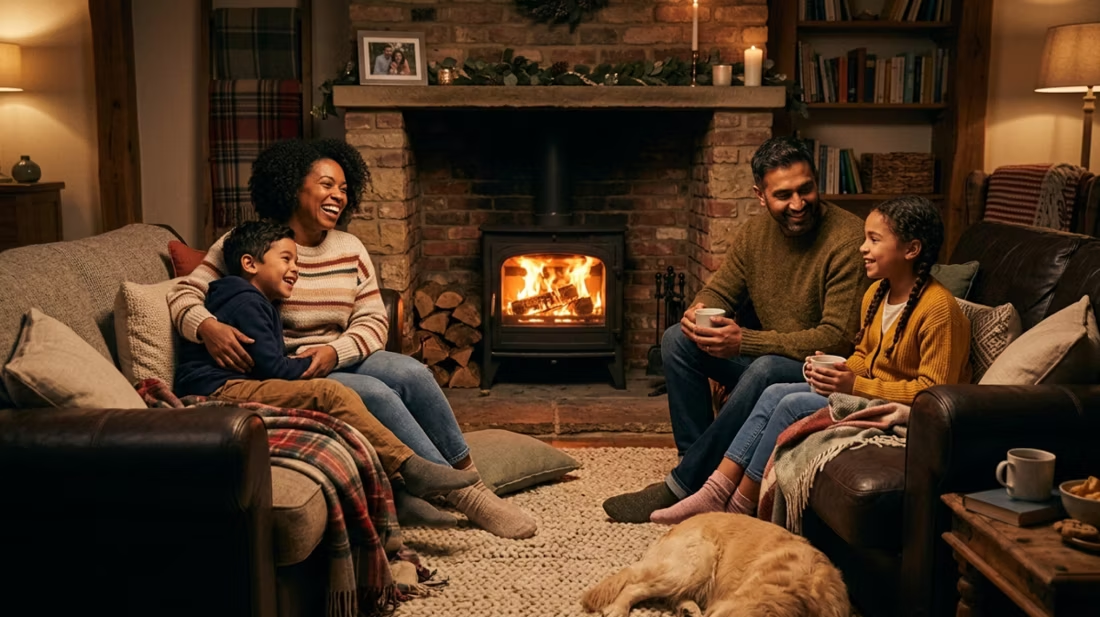
Four fuels. One honest answer for Converse County.
Three steps. No salesperson until you're ready.
Tell us about your project
Your zip code, your situation, and the fuel you're leaning toward—or let the answers point you to one.
See what's actually available
The brands dealers within 100 miles genuinely carry—real options, never a catalog mirage.
Get your dealer & Project Guide
A trusted local dealer, plus the free Project Guide & Parts List that names every component of the job.
Frequently Asked Questions
Which fuel works best in Converse County?
It depends on the home and how you use it. Wood is a strong standard choice here—lodgepole pine and ponderosa pine are both locally available, and a catalytic or non-cat stove can carry a home through a stretch of single-digit nights without relying on the grid, which matters given how exposed much of the county is to winter wind and power interruptions. Gas is the convenience option for in-town homes with natural gas service or rural properties running propane—no wood handling, consistent output, easy to zone to specific rooms. Pellet works well as a lower-labor alternative to wood, with Bear Mountain, Lignetics, and Forest Energy all reasonably accessible in this part of Wyoming. Electric is best treated as supplemental heat—good for a bedroom or den, but not something to rely on as a sole heat source through a Converse County winter. Many homes here pair wood or pellet as primary heat with gas or electric for secondary rooms.
Do I need a permit to install a fireplace in Converse County?
In most cases yes, for wood, gas, and pellet appliances. New wood stoves and inserts need to meet current EPA emissions standards, and gas installations require a gas line permit plus a licensed gas fitter for the connection work. Electric units generally don't need a permit unless you're doing a built-in installation with new wiring or a dedicated circuit. Permitting runs through the town if you're within Douglas or Glenrock city limits, and through the county building office for rural and unincorporated properties. Most local hearth retailers pull the permit as part of the installation quote, so it's rarely something you have to manage yourself.
Are there air quality restrictions on wood burning in Converse County?
There's no routine winter wood-smoke advisory program here the way there is in some western basin counties, but wildfire smoke is a recurring seasonal concern—summer and early fall smoke from regional fires can affect air quality and, in some years, prompt temporary local burn restrictions unrelated to home heating. For home wood-burning appliances, the main requirement is that new installations meet current EPA New Source Performance Standards. If you're replacing an older, uncertified stove, a newer EPA-certified unit will burn noticeably cleaner and use less wood per BTU, which matters both for air quality and for how often you're splitting and hauling wood.
Can one local hearth retailer handle all four fuel types?
Several dealers serving Converse County carry three or four fuel types, which is useful if you're still deciding between wood, gas, pellet, and electric. Multi-fuel retailers based in Douglas and Glenrock typically stock working displays of wood and gas units at minimum, with pellet stoves and electric inserts as secondary lines. Smaller shops may specialize—focusing heavily on wood and pellet, for instance, and referring out gas line work to a licensed subcontractor. If you're cross-shopping fuels, ask upfront which types a dealer actually installs versus which they just sell the box for; that distinction matters more in a smaller county market like this one.
How does service work in rural areas of Converse County?
Most technicians are based out of Douglas or Glenrock and travel to outlying ranches and smaller communities like Lost Springs and Rolling Hills for service calls—expect a modest trip fee for anything well off Highway 20 or Highway 18. Scheduling before the heating season starts, ideally August through October, gets you ahead of the rush; mid-winter emergency calls in a county this spread out can mean a multi-day wait. For rural properties especially, it's worth keeping basic backup supplies on hand—spare batteries for gas ignition systems, dry kindling for a wood stove—given how wind and winter storms can disrupt both power and road access for a day or two at a time.
What's the typical cost range for fireplace installation across all fuel types in Converse County?
Costs vary by fuel and by how much venting or gas line work is involved. Wood stove or insert installation: roughly $4,000–$8,500 for a typical retrofit, more for new-construction chimney work. Gas fireplace, insert, or stove: roughly $4,000–$10,000 depending on whether new gas line runs are needed. Pellet stove or insert: roughly $4,000–$7,000 for most installs. Electric fireplace: $200–$3,000 for the unit itself, plus $400–$1,200 in labor for anything beyond a simple plug-in placement. For fuel-specific detail tied to local retailer pricing, see the county + fuel pages linked above.
What is an in-home preview and do I need one?
It's a visit where a hearth professional measures your space, confirms the model you picked actually works in your home, and walks the specs—framing, gas line, venting, finish work—before anything is ordered. Some details you just can't know until you see the house. Never make a down payment without one; it's the single most-skipped step that burns buyers.
Wood, gas, pellet, or electric—how do I choose?
Match the fuel to your life, not the other way around. Wood: lowest fuel cost and total power-outage independence, but you're hauling and stacking. Gas: press a button, set a thermostat, no maintenance to speak of. Pellet: wood economics with automatic feeding, in exchange for weekly cleaning and a need for electricity. Electric: plugs in anywhere with honest supplemental heat. Nobody regrets the fuel that fits how they actually live.
Can a fireplace actually lower my heating bill?
Yes—by creating a comfort zone. A furnace heats every square foot of the house just to warm the one room you're in; a gas fireplace on low burns roughly a sixth of the gas a typical furnace does. Set the furnace around 55–60 degrees as a baseline, then heat the rooms your family actually uses. Families who heat this way commonly save $20–$60 a month.
Can I install a fireplace myself?
If you're putting a fire in your house on purpose, it's best to work with an expert. Unless you're genuinely experienced in framing, gas line, vent pipe, and the national code on clearances to combustibles, have a professional do it—and ideally the same company that sells you the fireplace, so warranty, service, and liability all live under one roof.
Stove and Fireplace Dealers in Converse County
Listings include WhyFire partner dealers, dealers we have verified as authorized for the brands we recommend, and established local businesses that carry hearth products. Every listing shows which one it is. The ones marked Preferred run on WhyFire's software, so they can show you real pricing and book your appointment right here. No manufacturer pays for placement. How we verify dealers →
Shortline Industries
Sheet Metal Specialties, Inc.
Magic City Stoves
Sutherlands -Casper -2219
Log Smith Art - Rick Conner
Find your fireplace in Converse County.
Pick your fuel below and we'll match you with a trusted local dealer and send a free Project Guide & Parts List—the exact parts, vent kit included, for your Converse County project.
Find Your Fireplace →