
Instant heat built for Washburn County's coldest nights.
With a long, hard heating season and average winter lows near 1°F, Washburn County—Shell Lake, Spooner, Birchwood, Minong, and the lake country between—needs heat that works the moment you flip the switch. Find the right gas fireplace or insert and connect with a trusted local dealer.
Every Project Starts From One of These Five Situations
Dependable heat for a genuinely brutal climate zone.
Washburn County sits in climate zone 7—the same brutal-winter classification you'd find around International Falls, Minnesota—with a long, hard heating season and an average winter low of just 1°F. That's a stretch of cold running from October into April across a county of lakes, forest, and small towns like Shell Lake, Spooner, and Birchwood, with a population under 5,500 spread thin across a lot of rural acreage and seasonal cabin property. Wood heat runs deep here—oak, maple, birch, and aspen are all common cordwood species, and cutting permits through the Chequamegon-Nicolet National Forest run $10 to $20 per cord during the May-to-October season. But gas fireplaces have become increasingly common in primary living spaces, year-round homes, and lake properties where owners want reliable heat without hauling wood every winter.
Natural gas service in Washburn County is limited mostly to Spooner and a handful of incorporated areas—most of the county, including the lake cabins and rural homesteads that make up much of Washburn County's housing stock, runs on propane instead. That's not a downgrade: a propane-fueled direct-vent fireplace or insert delivers the same instant, thermostat-controlled heat as natural gas, just with a tank on the property instead of a buried line. For a county where ice storms and extended power outages happen most winters, a gas unit with battery-backup ignition is often the difference between a warm living room and a cold house until the lines are restored.
Three steps. No salesperson until you're ready.
Tell us about your project
Your zip code, your situation, and the fuel you're leaning toward—or let the answers point you to one.
See what's actually available
The brands dealers within 100 miles genuinely carry—real options, never a catalog mirage.
Get your dealer & Project Guide
A trusted local dealer, plus the free Project Guide & Parts List that names every component of the job.
Frequently Asked Questions
How much does a gas fireplace installation cost in Washburn County?
Most gas fireplace and insert installations in Washburn County run somewhere between $3,500 and $10,000, depending on the unit, whether you're on propane or natural gas, and how much venting or gas line work is involved. A direct-vent propane insert going into an existing masonry fireplace, with a tank already on the property, sits toward the lower end. New construction or a lake cabin without existing gas service—where a propane tank installation and full gas line run are needed alongside framing and venting—will land higher. Because so much of Washburn County's housing is seasonal or off the natural gas grid, expect your local retailer to talk through propane tank sizing and delivery logistics as part of the estimate.
Can I convert my existing wood fireplace to gas?
Yes, and it's a common upgrade for Washburn County homes with an older masonry fireplace that's more decorative than functional. A gas insert slides into the existing firebox and vents through a stainless liner run up your current chimney, so you keep the look of the fireplace while gaining real, controllable heat output. Expect $4,000 to $8,500 for a typical conversion, with propane conversions running slightly higher than natural gas conversions in the Spooner area simply because of tank setup. This is a good fit for lake homes where the original fireplace was built for ambiance rather than heat.
Do I need natural gas, or is propane the better option in Washburn County?
For most of the county, propane is the practical answer. Natural gas lines reach Spooner and a few nearby developed areas, but the majority of Washburn County—including most lake homes around Shell Lake, Birchwood, and Minong—isn't on the natural gas grid at all. Propane fireplaces and inserts perform identically to natural gas units; the difference is a tank on your property (owned or leased through a regional propane supplier) instead of a buried utility line. If you already have propane for a furnace, range, or water heater, adding a fireplace to that same system is usually straightforward and keeps installation costs down.
Will my gas fireplace still work if the power goes out?
Most modern gas fireplaces will, which matters in a county where ice storms and downed lines can knock out power for a day or more most winters. Units with intermittent pilot ignition (IPI) run on battery backup—typically AA batteries built into the unit—that kick in automatically when the power drops, so the fireplace still lights on demand. Valor fireplaces take it a step further: their pilot assembly generates its own electricity through the thermocouple, so there's no battery to remember or replace. For a rural Washburn County home where an outage could mean a genuinely cold house for days, ask your local dealer specifically about the ignition system before you buy.
What's the difference between a gas fireplace, a gas insert, and a gas stove?
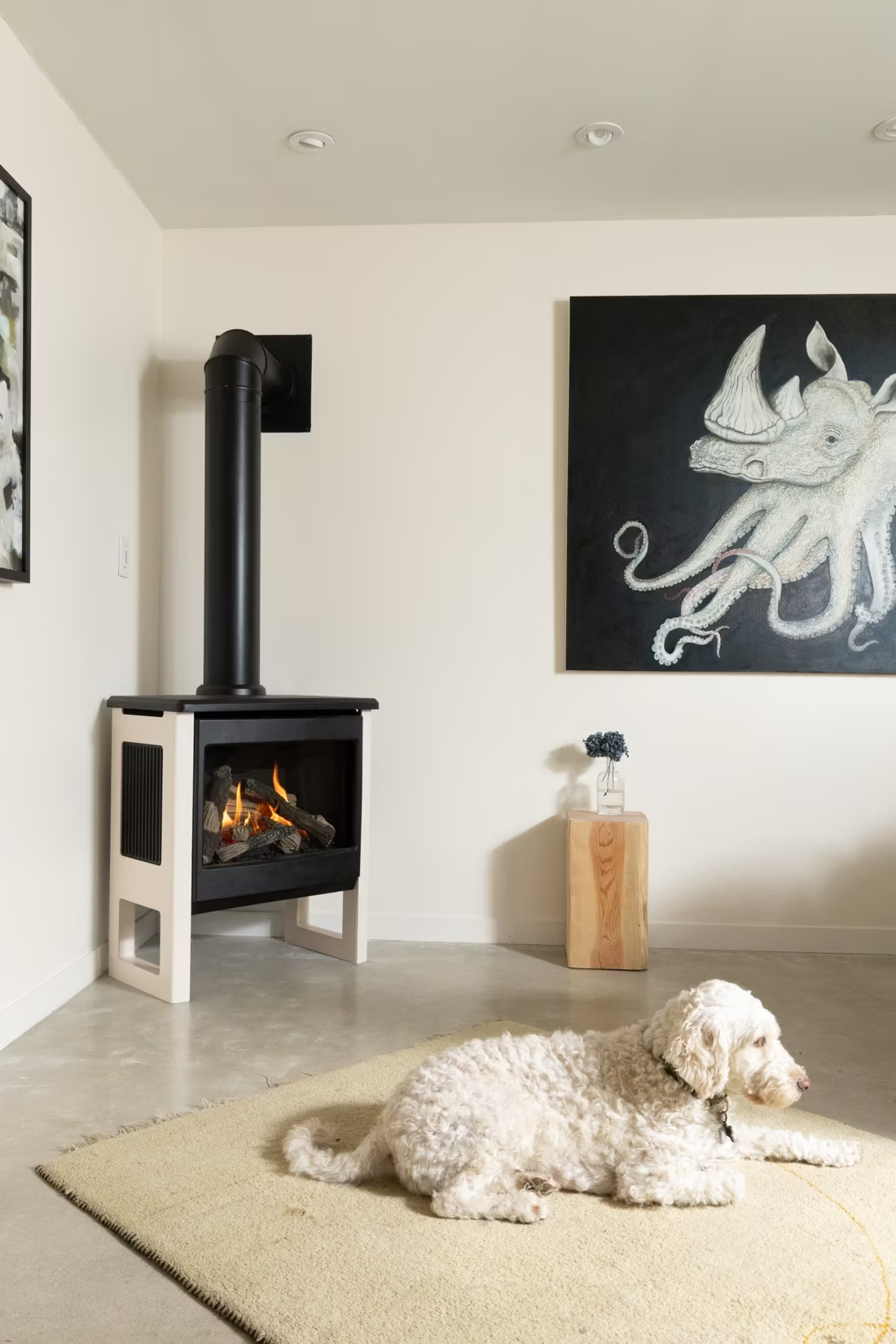
A gas fireplace is a fully built-in unit, framed into a wall—the right choice for new construction or a remodel without an existing hearth. A gas insert is built to slide into an existing masonry fireplace opening, using the chimney as its vent path, and is the more common choice for older Washburn County farmhouses and lake cottages with a fireplace already in place. A gas stove is a freestanding unit that sits on the floor on its own hearth pad, similar in footprint to a wood stove, and works well in cabins or additions where there's no existing fireplace to build around.
Do I need a permit to install a gas fireplace in Washburn County?
Yes. New gas fireplace and insert installations require a building permit through the Washburn County Zoning & Building Department, and any gas line or propane connection work needs to be done by a licensed gas-fitter or propane technician. Most local hearth retailers coordinate this as part of the installation, so you're not left managing the permit, the gas line, and the venting inspection as three separate trades. For seasonal lake properties, check with the county early if the fireplace is part of a larger remodel, since permitting timelines can run longer during peak summer building season.
Should I get a vented or vent-free gas fireplace?
Vented, direct-vent units are the better fit for almost every Washburn County home. They pull combustion air from outside and exhaust it back outside through sealed venting, which matters in a climate zone 7 county where homes and cabins tend to be built tight for the cold. Vent-free units burn directly into the room and release some combustion byproducts indoors—they're legal in Wisconsin with proper room-sizing and oxygen-depletion sensors, but in a well-sealed lake cabin or an older farmhouse retrofitted with modern insulation, that indoor air trade-off is one most local retailers steer customers away from. Direct-vent is the standard recommendation, and it's what you'll find most commonly installed across the county.
How often does a gas fireplace need to be serviced?
Plan on an annual inspection, ideally before the heating season starts in the fall. A technician checks the burner, pilot assembly, gas connections, and venting, and cleans the glass and interior—a quicker and less involved job than a wood chimney sweep, but just as important for safety and efficiency. For propane units especially, an annual check is also a good time to confirm tank pressure and line integrity heading into a Washburn County winter where the unit may run daily for months.
Gas vs. wood—which makes more sense for a Washburn County home?
Wood remains deeply practical here—oak, maple, birch, and aspen are all locally available, cutting permits through the Chequamegon-Nicolet National Forest run $10 to $20 per cord, and a wood stove keeps working through the multi-day power outages that ice storms sometimes bring. Gas can't run without fuel supply and, for propane units, still needs a working ignition system, though battery-backup models handle outages fine. For primary living spaces where daily convenience matters—no wood hauling, no ash, instant heat at 1°F outside—gas is usually the better everyday fit. Plenty of Washburn County homes end up with both: gas for the main living area, a wood stove in the cabin or garage as serious backup heat.
What's the difference between an insert and a zero-clearance fireplace?
An insert is a fireplace that slides into a pre-existing wood-burning fireplace—if you don't have one, there's nothing to insert it into. A zero-clearance fireplace is built into a framed wall, which makes it the answer for remodels and new construction. Simple test: existing masonry fireplace means insert; blank or framed wall means zero-clearance.
Can I put a TV above my fireplace?
Yes—with an asterisk. Fireplaces are hot and TVs don't like heat. Either put a mantel between them to deflect rising warmth, or choose a fireplace with heat-management technology that creates a cool zone on the wall above—the wall stays around 125 degrees, barely warm, while the room still gets full heat. If you like clean lines and don't want a mantel, heat management is the answer.
What is an in-home preview and do I need one?
It's a visit where a hearth professional measures your space, confirms the model you picked actually works in your home, and walks the specs—framing, gas line, venting, finish work—before anything is ordered. Some details you just can't know until you see the house. Never make a down payment without one; it's the single most-skipped step that burns buyers.
Can I install a fireplace myself?
If you're putting a fire in your house on purpose, it's best to work with an expert. Unless you're genuinely experienced in framing, gas line, vent pipe, and the national code on clearances to combustibles, have a professional do it—and ideally the same company that sells you the fireplace, so warranty, service, and liability all live under one roof.
Stove and Fireplace Dealers in Washburn County
Listings include WhyFire partner dealers, dealers we have verified as authorized for the brands we recommend, and established local businesses that carry hearth products. Every listing shows which one it is. The ones marked Preferred run on WhyFire's software, so they can show you real pricing and book your appointment right here. No manufacturer pays for placement. How we verify dealers →
Kindled Hearth Fireplace Store
The Stove Works, Inc
Earth Sense Energy Systems- Rice Lake
Copycat Hearth & Home
Find your gas fireplace in Washburn County.
Tell us about your home or cabin and heating goals, and we'll match you with a trusted local dealer and send over a free Project Guide & Parts List—the exact parts, including the vent kit, for your gas fireplace project in Washburn County.
Find Your Fireplace →