
Zone 7 winters call for a serious heating plan in Washburn County.
Wood, gas, pellet, and electric fireplace resources for every town in Washburn County—from Shell Lake to Minong. Get matched with a trusted local dealer who knows what actually holds heat through an 8,673-HDD winter.
Every Project Starts From One of These Five Situations
Deep-cold heating in Washburn County, Wisconsin.
Washburn County sits in Climate Zone 7, with an average winter low near 1°F and roughly 8,673 heating degree days a year—a heat load closer to Duluth or International Falls than most of the Midwest. With just over 5,000 residents spread across a county thick with lakes and second-growth hardwood forest, wood heat isn't a novelty here—it's a practical answer to long winters and, for many rural properties, occasional power interruptions. Oak, maple, birch, and aspen are the woodpile staples, split and dried well ahead of a heating season that can start in October and run into April.
What you'll find on this hub: hearth retailers, service technicians, and fuel suppliers covering the whole county—Shell Lake, Spooner, Birchwood, Minong, and the smaller unincorporated communities around Long Lake and the Yellow River. Pick your fuel below to see local dealers, typical installation costs, and unit recommendations suited to this climate. Whether you're heating a year-round home near Shell Lake or a hunting cabin off a Forest Service road, this is the starting point.
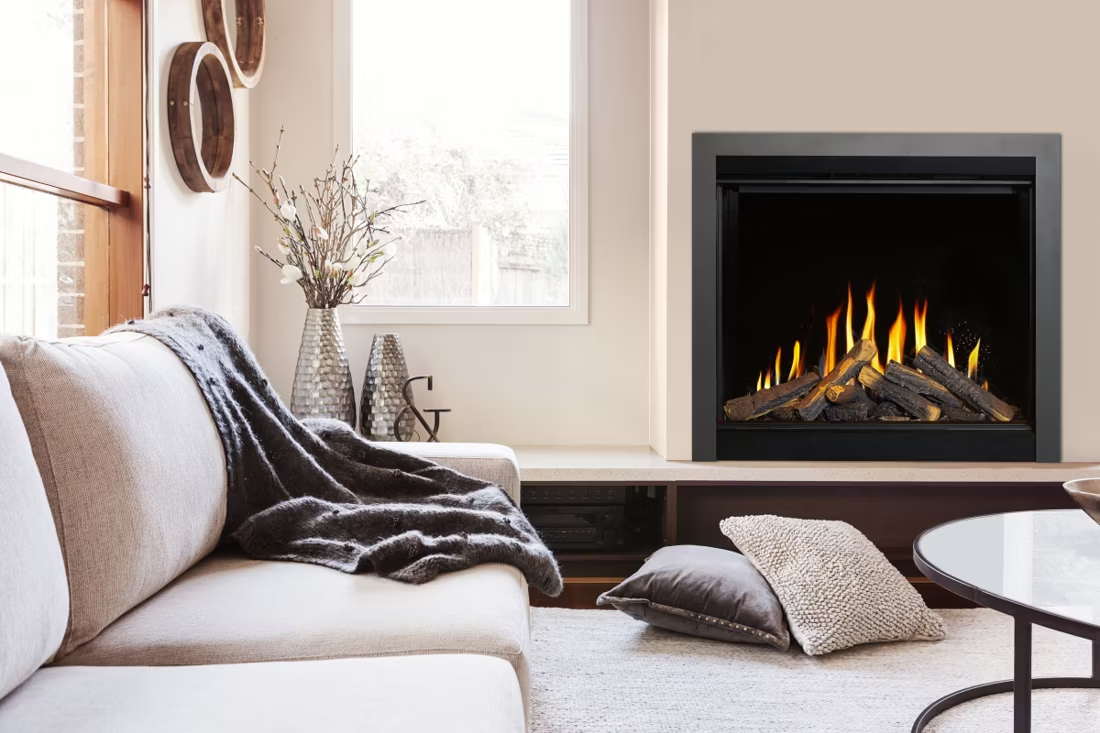
Four fuels. One honest answer for Washburn County.
Three steps. No salesperson until you're ready.
Tell us about your project
Your zip code, your situation, and the fuel you're leaning toward—or let the answers point you to one.
See what's actually available
The brands dealers within 100 miles genuinely carry—real options, never a catalog mirage.
Get your dealer & Project Guide
A trusted local dealer, plus the free Project Guide & Parts List that names every component of the job.
Frequently Asked Questions
Which fuel makes sense for a Washburn County winter?
With average winter lows near 1°F and heating degree days over 8,600—a load similar to Duluth or Bozeman—the fuel choice usually comes down to reliability and burn time. Wood remains the backbone for many rural properties: oak and maple split from local timber burn long and hot, and a catalytic stove holds a fire through a genuinely cold night, plus it keeps working if the power goes out along a rural line. Propane is the dominant convenience fuel here since natural gas service is limited outside the larger towns—instant heat with no wood handling. Pellet stoves are a solid middle path, especially with regional supply from Lignetics and Somerset Pellet Fuel keeping fuel local rather than trucked in from far away. Electric fireplaces show up as supplemental heat in bedrooms or additions, but given the HDD load here, they're rarely anyone's primary source. Many county homes run wood or pellet as the workhorse and propane or electric as backup.
Do I need a permit to install a fireplace or stove in Washburn County?
Generally yes. New wood stoves, wood inserts, gas fireplaces, gas inserts, and pellet stoves typically require a building permit through the local municipality or the county building department for unincorporated areas, and wood-burning appliances need to meet current EPA emissions standards. Gas installations also need the gas line work done or inspected by a licensed gas fitter. Electric fireplaces usually skip the permit process unless they involve new wiring for a built-in unit. If you're cutting your own firewood on Forest Service land—Chequamegon-Nicolet or Superior National Forest both border the county—you'll need a separate cutting permit from the ranger district, which is unrelated to your home installation permit. Most local hearth retailers handle the installation permit as part of the job.
Are there air quality restrictions on wood burning in Washburn County?
No—Washburn County doesn't have the winter inversion or non-attainment issues you see in some western basin communities. There are no local burn-restriction advisories tied to air quality here. That said, any new wood stove or insert installation still needs to meet current EPA New Source Performance Standards for emissions, which is a national requirement rather than a local one. In practice this just means newer catalytic and non-catalytic stoves burn cleaner and more efficiently than older pre-1990s units, which matters as much for wood consumption and creosote buildup as it does for smoke.
Can one local retailer in Washburn County handle all four fuel types?
Some can, though in a county this size, full four-fuel showrooms are less common than in larger markets. Retailers based in Spooner and Shell Lake typically carry wood and gas as their core lines, with pellet stoves as a strong secondary offering given regional pellet supply. Electric fireplace selection tends to be lighter—often special-order rather than floor-stocked—since electric isn't the primary heat driver in this climate. If you want to compare wood, gas, and pellet side by side, ask which showroom has working display units; if electric is part of your project, confirm ahead of time whether it's stocked or ordered in.
How does service work for rural properties around Washburn County's lakes?
Technicians based in Spooner and Shell Lake cover the county, including the more remote lake-country properties around Long Lake, Sarona, and the Yellow River area. Expect a modest trip fee for calls well outside town, and know that scheduling gets tight from September through November as everyone tries to get pre-season chimney sweeps and gas inspections done before the first hard freeze. If your property is a seasonal cabin, plan service around your visit schedule rather than waiting for a mid-winter problem—a stuck damper or fouled igniter is a harder fix when the driveway hasn't been plowed.
What's the typical installation cost range across fuel types in Washburn County?
Costs run in line with rural Wisconsin/Minnesota pricing, though full chimney work can push wood installs higher given the masonry and venting needs of a hard-use climate. Wood stove or insert: roughly $4,000-$8,500 for a typical retrofit, more for new full chimney construction. Gas fireplace, insert, or stove: $4,000-$10,000, with propane tank and line work affecting the low versus high end. Pellet stove or insert: $4,000-$7,000 for most installs. Electric fireplace: $200-$2,800 for the unit itself, plus $300-$1,000 in labor unless it's a simple plug-and-play placement. See the county + fuel pages above for retailer-specific pricing detail.
Can a fireplace actually lower my heating bill?
Yes—by creating a comfort zone. A furnace heats every square foot of the house just to warm the one room you're in; a gas fireplace on low burns roughly a sixth of the gas a typical furnace does. Set the furnace around 55–60 degrees as a baseline, then heat the rooms your family actually uses. Families who heat this way commonly save $20–$60 a month.
Can I install a fireplace myself?
If you're putting a fire in your house on purpose, it's best to work with an expert. Unless you're genuinely experienced in framing, gas line, vent pipe, and the national code on clearances to combustibles, have a professional do it—and ideally the same company that sells you the fireplace, so warranty, service, and liability all live under one roof.
Does a fireplace add value to my home?
On average, a fireplace adds back to the home about the same amount you spent installing it. Add the monthly savings from heating the rooms you actually use instead of the whole house—often hundreds of dollars a year—and the value case is strong before you even count what a fire does for how your family uses the room.
I know I want a fireplace—where do I actually start?
Do two things today: snap a photo of the wall or fireplace you want to transform, and take a tape measure to the space—width, height, depth. Those two artifacts answer most of a hearth professional's first questions. Then settle fuel (wood, gas, pellet, or electric) and set a realistic budget: $3,900–$5,500 covers fireplace, vent, and basic install for most homes.
Stove and Fireplace Dealers in Washburn County
Listings include WhyFire partner dealers, dealers we have verified as authorized for the brands we recommend, and established local businesses that carry hearth products. Every listing shows which one it is. The ones marked Preferred run on WhyFire's software, so they can show you real pricing and book your appointment right here. No manufacturer pays for placement. How we verify dealers →
Kindled Hearth Fireplace Store
The Stove Works, Inc
Earth Sense Energy Systems- Rice Lake
Copycat Hearth & Home
Find your fireplace in Washburn County.
Tell us your fuel and your home, and we'll match you with a trusted local dealer and send a free Project Guide & Parts List—the exact parts, including the vent kit, and the dealer we recommend for your project.
Find Your Fireplace →