
Keep Your Family Warm and Safe—No Matter What
Most homes in this Ozaukee County village heat with gas. A small number of homeowners still add a wood stove for ambiance, backup heat, or a converted fireplace—and it's worth doing right.
Every Project Starts From One of These Five Situations
Gas heats Thiensville homes—wood is the rare exception.
Thiensville is a small, tightly built village of about 3,279 people along the Milwaukee River in Ozaukee County. Winters here are genuinely cold—climate zone 6A, roughly 6,774 heating degree days a year, and average winter lows around 17°F, in the same general range as the cold that shapes life in Duluth, MN, if not quite as extreme. Despite that, wood-burning heat never became the default here the way it has in more rural or forested parts of Wisconsin. Lot sizes are modest, homes sit close together, and the village is fully built into the natural gas and electric grid, so most residents simply never need a woodpile.
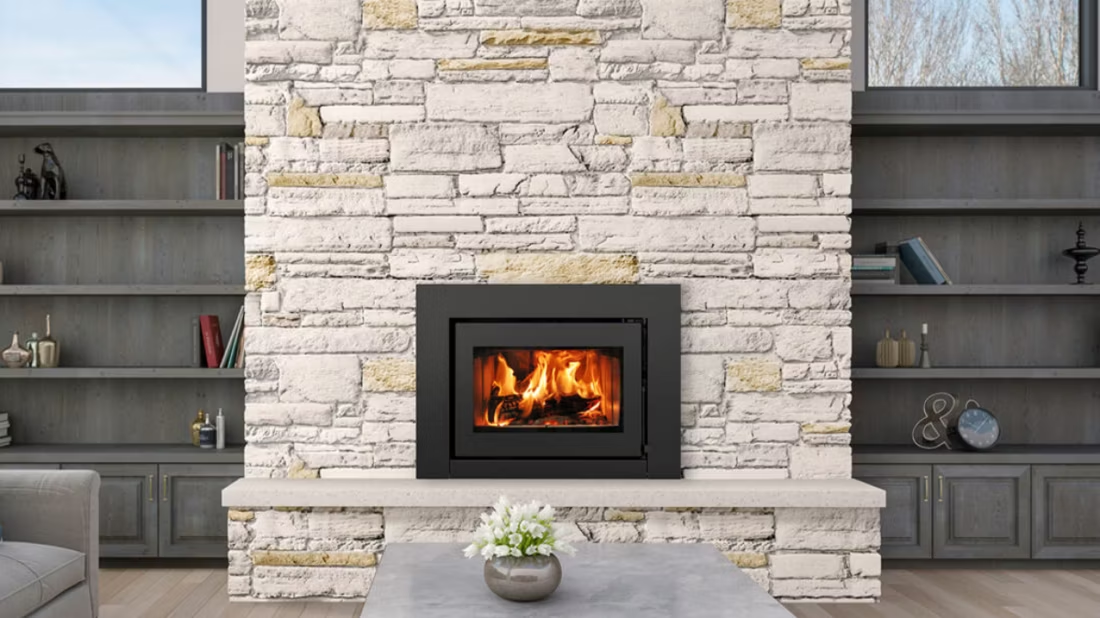
That said, a wood stove isn't off the table. Thiensville has no local air quality concerns on file—no non-attainment status, no winter burn curtailments—so a homeowner who wants one faces no regulatory hurdles beyond a standard building permit. The homeowners who do install wood heat here tend to fall into two groups: owners of older capes and bungalows near downtown converting an existing masonry fireplace into a wood-burning insert for ambiance, and a handful of properties on the village's outer edges with enough yard for a woodpile who want a real backup heat source if the We Energies grid ever goes down. Oak, maple, birch, and aspen are the common regional species, sourced from suppliers in Ozaukee and Washington counties rather than any nearby public forest.
Three steps. No salesperson until you're ready.
Tell us about your project
Your zip code, your situation, and the fuel you're leaning toward—or let the answers point you to one.
See what's actually available
The brands dealers within 100 miles genuinely carry—real options, never a catalog mirage.
Get your dealer & Project Guide
A trusted local dealer, plus the free Project Guide & Parts List that names every component of the job.
Frequently Asked Questions
Is a wood stove even a realistic option for a home in Thiensville?
It's realistic, just uncommon. Thiensville's housing stock is dense and most homes already run on natural gas and the We Energies electric grid, so there isn't the same reliance on wood heat you'd see in more rural parts of Wisconsin. That said, some owners of older homes near downtown install a wood-burning insert into an existing masonry fireplace purely for ambiance and occasional supplemental heat, and a smaller number on larger outlying lots add a freestanding stove as genuine backup heat for winter storms. If that's your goal, a local hearth dealer can tell you quickly whether your home's chimney, clearances, and lot support it.
How much does a wood stove installation cost in Thiensville?
In the broader Milwaukee-area market, a freestanding wood stove installation—including a code-compliant hearth pad and Class A chimney pipe—typically runs $4,000 to $8,500 depending on the stove size and whether you're venting through an existing chimney chase or building new. Converting an existing masonry fireplace to a wood-burning insert is usually less expensive, often $3,000 to $5,500, since it reuses the chimney you already have. Because so few Thiensville homes have existing wood infrastructure, get a firm in-home quote from a local installer rather than budgeting off a national average.
Do I need a permit to install a wood stove in Thiensville?
Yes. New wood stove and insert installations require a building permit through the Village of Thiensville Building Inspection Department, which will check clearances, venting, and hearth pad compliance. The stove itself needs to meet current EPA 2020 NSPS emissions standards. Unlike some Wisconsin communities, Thiensville has no winter burn curtailment periods or air-quality restrictions on file, so once installed, there's no seasonal limit on when you can use it.
What size wood stove do I need for a Thiensville home?
Most homes in the village's older sections are modest-sized capes and bungalows, where a small-to-medium stove rated for 1,000 to 1,800 square feet is typically plenty for one zone of supplemental heat. Larger homes on bigger lots toward the edges of the village, closer to Mequon, may want a medium-capacity stove if the goal is genuine backup heat for more of the house. A local dealer will size this based on your specific layout and insulation rather than square footage alone.
Should I get a freestanding wood stove or a wood insert?
If your Thiensville home already has a working masonry fireplace—common in the older housing stock near the river—a wood insert is usually the better choice, since it uses the existing chimney and turns a drafty, inefficient fireplace into a real heat source. If you don't have an existing fireplace, a freestanding stove on a new hearth pad with new Class A chimney pipe is the way to go. Given how few homes here already have wood-burning setups, most local projects start from scratch with a freestanding stove.
Where can I buy firewood near Thiensville?
Oak, maple, birch, and aspen are the common hardwoods sold by firewood suppliers across Ozaukee and neighboring Washington County. Seasoned hardwood cordwood typically runs around $220 to $280 per cord delivered in this part of southeastern Wisconsin. Because Thiensville isn't adjacent to any national forest or other public land with cutting permits, there's no self-cut option here—buying seasoned wood from a local supplier is the standard route.
How often should a wood stove chimney be inspected in Thiensville?
The Chimney Safety Institute of America recommends an annual inspection for any wood-burning appliance, and that holds true even for the occasional-use stoves common here. Plan on a sweep and inspection each late summer or early fall before the first fire of the season, especially if the stove sits unused for stretches during Thiensville's shorter burning habits compared to more wood-reliant parts of the state.
Wood stove or gas fireplace—which makes more sense in Thiensville?
For most homes here, gas is the practical default—it's widely available, requires no wood handling, and matches how the village is already built and heated. A wood stove makes sense as a deliberate secondary choice: for the ambiance of a real fire, or as backup heat that keeps working if the We Energies grid goes down during a winter storm. Very few Thiensville homeowners choose wood as their only heat source; it's almost always an addition to an existing gas or electric system rather than a replacement for one.
Would an electric fireplace make more sense than a wood stove for my home?
If your goal is ambiance without venting, permits, or firewood storage, an electric fireplace is simpler to install and can go almost anywhere with an outlet. But at Wisconsin Electric Power Co's residential rate of about 19.2 cents per kWh, running one as a serious heat source costs more per BTU than burning wood, and it offers no heat during a power outage. A wood stove costs more upfront and requires a chimney and fuel storage, but it's the only one of the two that keeps producing heat if the power goes out. Most Thiensville homeowners choose based on that outage question first.
Do I have to leave the stove door cracked open to start a fire?
On many stoves, yes—a new fire needs extra air, and cracking the door a couple inches is how most stoves get it. But some modern stoves offer an automatic startup air system: engage it when you light, and timed air jets feed the fire for the first 20 minutes with the door fully shut, then close automatically. It's mechanical—like an egg timer, no electricity—and it means you can load it, light it, and walk away.
Can a wood stove burn all night?
The right one can. If waking up to a warm house and live coals matters to you, say exactly that when you're shopping—firebox size and burn-rate control determine overnight performance far more than any number on a spec sheet. It's a much more useful question than asking about BTUs.
Can a fireplace actually lower my heating bill?
Yes—by creating a comfort zone. A furnace heats every square foot of the house just to warm the one room you're in; a gas fireplace on low burns roughly a sixth of the gas a typical furnace does. Set the furnace around 55–60 degrees as a baseline, then heat the rooms your family actually uses. Families who heat this way commonly save $20–$60 a month.
Does a fireplace add value to my home?
On average, a fireplace adds back to the home about the same amount you spent installing it. Add the monthly savings from heating the rooms you actually use instead of the whole house—often hundreds of dollars a year—and the value case is strong before you even count what a fire does for how your family uses the room.
Nearby Dealers
Hearth shops serving Thiensville and the surrounding area. Every listing shows whether it is a WhyFire partner, a dealer we have verified as authorized for the brands we recommend, or a local business carrying hearth products. No manufacturer pays for placement. How we verify dealers →
David J. Frank Landscape Contracting, Inc.
Bbq Grills Of Wisconsin
Chimney Doctors
The Fire Factory
Stonecraft Studios
Find your wood heat option in Thiensville.
Tell us about your home and we'll put together a free Project Guide & Parts List—the right stove or insert, the vent kit it needs, and a trusted local Ozaukee-area dealer who can actually install it.
Find Your Fireplace →