
Gas heat that keeps up with a 7,040-degree-day winter.
Sturtevant sees winter lows averaging 14°F and one of the longer heating seasons in southeastern Wisconsin. I'll match you with a trusted local dealer who knows the gas line work, the venting, and what's actually installable in a Racine County home.
Every Project Starts From One of These Five Situations
Built for a climate that rarely lets up.
Sturtevant sits just west of Lake Michigan in Racine County, and the lake doesn't do this village any favors in January—cold air moving over open water feeds the lake-effect snow squalls that roll through the I-94 corridor. At 724 feet elevation with a climate zone of 6A, an average winter low of 14°F, and roughly 7,040 heating degree days a year, Sturtevant's heating season runs closer to what Minneapolis deals with than what most of the lower Midwest sees. That's a long stretch of months where a furnace alone is doing a lot of work, and a lot of homeowners here add a gas fireplace or insert specifically to take pressure off the main system on the coldest nights.
Wisconsin Electric Power Co—better known locally as We Energies—serves both electric and natural gas accounts through most of the village, with a residential electric rate around 19.2 cents per kWh, which makes a gas-fired zone heat source a genuinely cheaper way to warm the rooms you actually use most. Older farmhouses scattered through unincorporated Racine County still burn plenty of oak, maple, birch, and aspen in wood stoves, and there are no local air quality restrictions on burning here, but for a main living room or a remodel, a direct-vent gas fireplace gives Sturtevant homeowners heat that starts instantly and doesn't depend on a woodpile getting through a seven-month season.
Three steps. No salesperson until you're ready.
Tell us about your project
Your zip code, your situation, and the fuel you're leaning toward—or let the answers point you to one.
See what's actually available
The brands dealers within 100 miles genuinely carry—real options, never a catalog mirage.
Get your dealer & Project Guide
A trusted local dealer, plus the free Project Guide & Parts List that names every component of the job.
Frequently Asked Questions
How much does a gas fireplace installation cost in Sturtevant?
Most installations in this part of Racine County run roughly $4,000 to $9,500. A direct-vent insert dropped into an existing masonry firebox with a gas line already nearby sits at the lower end. A new built-in fireplace for a remodel or addition—with framing, a fresh gas line run from your We Energies meter, and venting through an exterior wall—lands higher. If your property is outside the We Energies service footprint on the edges of unincorporated Racine County and runs on propane, tank setup or a line extension adds to the total. A local dealer will give you a firm number after walking the space.
Can I convert my existing wood fireplace to gas?
Yes, and it's a common request in Sturtevant's older housing stock, particularly homes with a masonry fireplace originally built to burn local oak or maple. A gas insert typically fits inside that existing firebox with a stainless liner run through the current chimney, and most conversions land between $4,000 and $8,500 depending on whether new gas line work is needed and whether you're on natural gas or propane. It's a straightforward way to keep the existing masonry look while getting rid of the wood-hauling and ash cleanup that a seven-month heating season makes tedious.
Do I need natural gas service, or will I need propane?
That depends on exactly where in Racine County your address falls. Most of the village of Sturtevant is within the We Energies (Wisconsin Electric Power Co) natural gas footprint, so if your furnace or water heater already runs on gas, adding a fireplace is a relatively simple tap into existing service. Homes further out in unincorporated Racine County, past the edge of the utility's gas mains, typically run on propane with an on-site tank instead. Either fuel works fine in a modern direct-vent fireplace—your installer just configures the burner orifice for whichever one you have.
Will my gas fireplace still work if the power goes out?
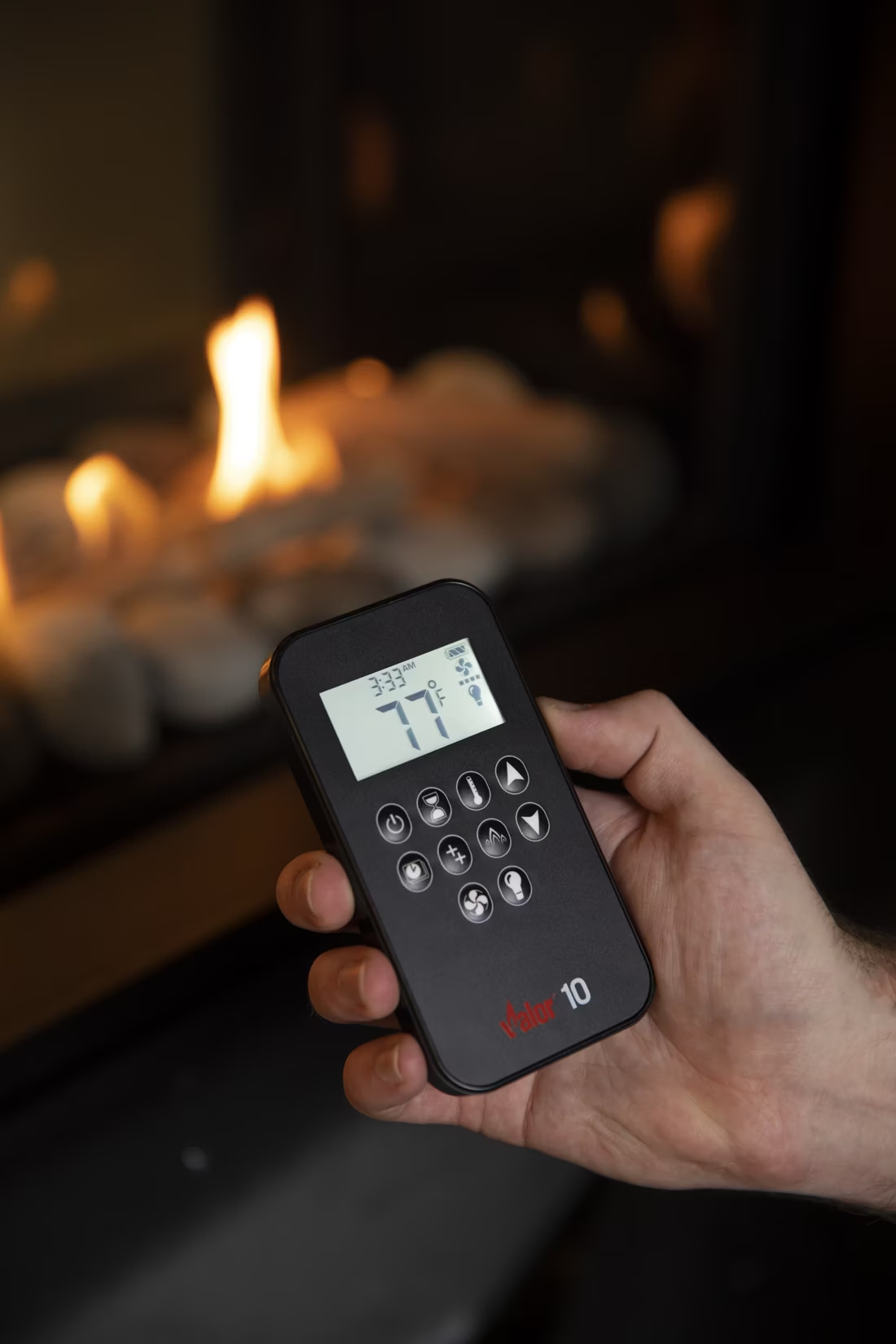
Most will, and it's worth checking before you buy given how often lake-effect snow squalls off Lake Michigan knock out power along the I-94 corridor in a typical Sturtevant winter. Units with intermittent pilot ignition (IPI) run on a AA battery backup that kicks in the moment the power drops. Valor fireplaces use a different design—the pilot's thermocouple generates its own electricity, so there's no battery involved at all. If you want a fireplace that can double as backup heat during a multi-day outage in a 7,040-HDD climate, ask your dealer specifically about the ignition system before you settle on a model.
What's the difference between a gas fireplace, insert, and stove?
A gas fireplace is a built-in unit framed into a wall, which is the usual choice for new construction or a remodel in Sturtevant's newer subdivisions near Renaissance Park. A gas insert fits inside an existing masonry firebox, which is the more common upgrade in older village homes that started out burning oak or birch in an open fireplace. A gas stove is freestanding on a hearth pad, similar in footprint to a wood stove but running off a gas line or propane tank instead of cordwood. For most Sturtevant homeowners with an existing chimney, an insert is the simpler and cheaper of the three.
Do I need a permit to install a gas fireplace in Sturtevant?
Yes. You'll need a building permit through the Village of Sturtevant's building inspection process (or Racine County's, depending on the exact parcel), plus a separate gas piping permit since a licensed gas fitter has to run or tie into the line. Most established hearth dealers in the Racine-Kenosha area handle both permits and the final inspection as part of the installation, so you aren't coordinating two separate trades on your own.
Vented vs. vent-free gas fireplaces—what should I know for a Wisconsin winter?
Vented, or direct-vent, units pull combustion air from outside and exhaust it back outside through sealed venting, which makes them the safest option and the one that performs consistently through a long climate zone 6A heating season. Vent-free units burn directly into the room and are legal in Wisconsin under specific room-size and ventilation rules, but they add moisture and combustion byproducts to a house that's already sealed up tight for months at a time during a Sturtevant winter. Most local dealers steer homeowners toward direct-vent for exactly that reason—it's the better fit for a climate where windows stay shut from November into April.
How often should a gas fireplace be serviced in Sturtevant?
An annual inspection, ideally in September before the first real cold snap, is the standard recommendation. A technician checks the burner, pilot or ignition assembly, gas connections, and venting, and cleans the glass—a lighter job than a wood chimney sweep, but important on a unit that may run daily through a seven-month heating season here. Expect to pay somewhere in the $150 to $250 range for a standard visit from a local hearth technician.
Gas vs. wood—which makes more sense for a Sturtevant home?
Wood still has a real place here—oak, maple, birch, and aspen are all common firewood species in Racine County, there are no local air quality restrictions on burning, and a wood stove keeps working without electricity during a lake-effect power outage. Gas wins on convenience and daily cost efficiency: with We Energies electric rates near 19 cents per kWh, a gas fireplace heating the main living room costs noticeably less to run than electric resistance heat, and it starts instantly on a 14°F morning with no kindling involved. Plenty of Sturtevant households end up running gas for daily zone heat and keeping a wood stove in a den or basement as backup for extended outages.
Why is my open fireplace making my house colder?
Open fireplaces suck—literally. As the fire burns, it consumes air your furnace already paid to heat and pulls it out through the chimney, so the house is actually colder after the fire goes out than before you lit it. An insert fixes this: it seals the chimney, puts fixed glass across the front, and turns that hole in your house into a real heat source.
What's the difference between an insert and a zero-clearance fireplace?
An insert is a fireplace that slides into a pre-existing wood-burning fireplace—if you don't have one, there's nothing to insert it into. A zero-clearance fireplace is built into a framed wall, which makes it the answer for remodels and new construction. Simple test: existing masonry fireplace means insert; blank or framed wall means zero-clearance.
What is an in-home preview and do I need one?
It's a visit where a hearth professional measures your space, confirms the model you picked actually works in your home, and walks the specs—framing, gas line, venting, finish work—before anything is ordered. Some details you just can't know until you see the house. Never make a down payment without one; it's the single most-skipped step that burns buyers.
Does a fireplace add value to my home?
On average, a fireplace adds back to the home about the same amount you spent installing it. Add the monthly savings from heating the rooms you actually use instead of the whole house—often hundreds of dollars a year—and the value case is strong before you even count what a fire does for how your family uses the room.
Nearby Dealers
Hearth shops serving Sturtevant and the surrounding area. Every listing shows whether it is a WhyFire partner, a dealer we have verified as authorized for the brands we recommend, or a local business carrying hearth products. No manufacturer pays for placement. How we verify dealers →
Alaskan Fireplace Co
Stonecraft Studios
Get your free Project Guide & Parts List for a gas fireplace in Sturtevant.
Tell me about your home and your gas access—We Energies service or propane—and I'll match you with a trusted local dealer and send a free Project Guide & Parts List with the exact vent kit and parts your Sturtevant project needs.
Find Your Fireplace →