
Gas heat built for Racine County's cold, lake-effect winters.
Instant, even heat for Racine County's long Lake Michigan winters—natural gas through We Energies in the City of Racine and Mount Pleasant, propane out in Dover, Raymond, and the rest of the county's rural townships. Find the right unit and connect with a trusted local dealer.
Every Project Starts From One of These Five Situations
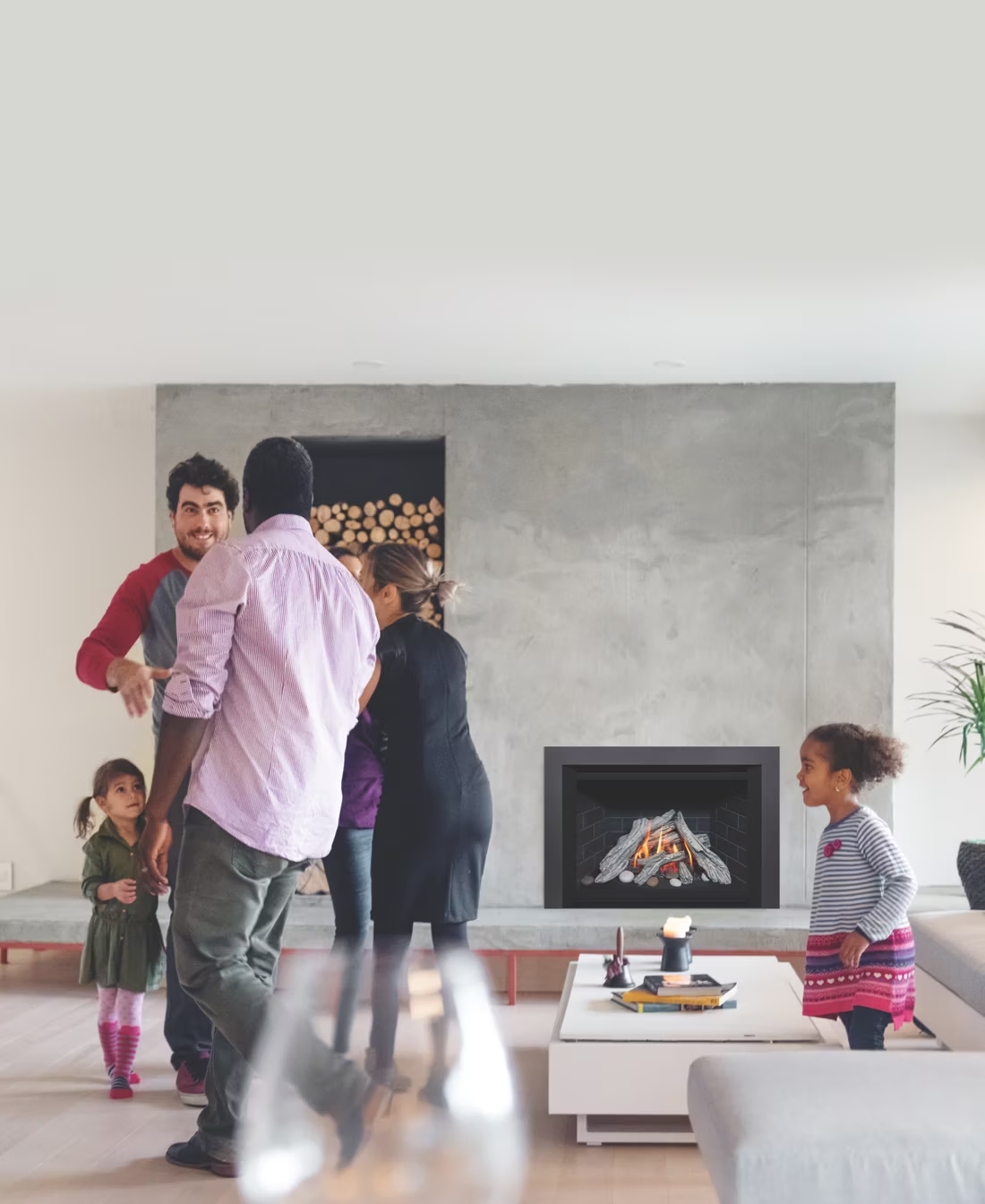
Reliable heat without the wood pile.
Racine County sits along the Lake Michigan shoreline in southeastern Wisconsin, home to roughly 242,000 people spread across the City of Racine, Burlington, Union Grove, Sturtevant, and rural townships like Dover, Raymond, and Norway. At climate zone 6A, with a heavy winter heating load and winter lows averaging 14°F, the county sees a heating season that runs from October well into April—closer in severity to Minneapolis than to most of the Midwest. Lake-effect snow and biting wind off the water add to the chill, especially for homes closest to the shoreline.
Gas fireplaces have become the default heat-and-ambiance choice in much of the county, particularly in the City of Racine and the more built-up areas served by We Energies natural gas—Mount Pleasant, Sturtevant, Caledonia. Out in the county's rural townships, propane fills the same role for homes beyond the natural gas footprint. Either fuel delivers the same core advantage: heat at the flip of a switch, no wood to split or haul, and—with the right ignition system—a fireplace that still works when a winter storm off the lake takes down the power lines.
Three steps. No salesperson until you're ready.
Tell us about your project
Your zip code, your situation, and the fuel you're leaning toward—or let the answers point you to one.
See what's actually available
The brands dealers within 100 miles genuinely carry—real options, never a catalog mirage.
Get your dealer & Project Guide
A trusted local dealer, plus the free Project Guide & Parts List that names every component of the job.
Frequently Asked Questions
How much does a gas fireplace installation cost in Racine County?
A typical gas fireplace installation in Racine County runs between $4,000 and $10,000, depending on the unit, the venting path, and whether new gas line work is needed. A direct-vent insert dropped into an existing masonry fireplace with a gas line already run to the chimney sits on the lower end. A new built-in unit for a remodel or new-construction great room—with framing, venting, and a fresh gas line from the meter—lands in the middle to upper end. Homes in the county's rural townships (Dover, Raymond, Norway, Rochester) that rely on propane rather than We Energies natural gas service often see costs creep higher if a new propane tank has to be set. A local retailer will size the job and give you a firm number after an in-home visit.
Can I convert my existing wood fireplace to gas?
Yes—it's one of the most common upgrades hearth dealers handle in Racine County, especially in the older housing stock around the City of Racine and Burlington. A gas insert typically slides into your existing masonry firebox and vents through a stainless liner run up your current chimney, which keeps costs down. Expect $4,000 to $8,500 depending on the insert and whether you're on natural gas or propane. Homes already served by We Energies natural gas usually land on the lower end; homes on propane in the outlying townships run a bit higher once tank and line work is factored in.
Do I need natural gas, or can I use propane?
Either works, and which one you use mostly comes down to where in Racine County you live. We Energies natural gas service covers the City of Racine and the more built-up areas—Mount Pleasant, Sturtevant, Caledonia—so if you already have a gas water heater or furnace, adding a fireplace is a straightforward tie-in. Out in the rural townships (Dover, Raymond, Norway, Rochester, Yorkville), propane is the standard fuel, supplied by a regional propane company with either an owned or leased tank. Most gas fireplace models can be set up for either fuel—your installer just swaps the orifice and regulates the pressure accordingly.
Will my gas fireplace work during a power outage?
Most will, with the right ignition system. Units with IPI (intermittent pilot ignition) run on a small battery backup that kicks in automatically when power drops, so the fireplace lights on demand just like normal—you just need to keep fresh batteries in the unit. Valor fireplaces take a different approach: the pilot's thermocouple generates its own electricity, so there's no battery to remember at all. That matters in Racine County, where Lake Michigan winter storms and ice on the power lines can knock out electricity for a day or more at a stretch. Ask your local dealer about the ignition system on any model you're considering.
What's the difference between a gas fireplace, gas insert, and gas stove?
A gas fireplace is a fully built-in unit framed into a wall—the right choice for new construction or a major remodel. A gas insert is built to drop into an existing masonry fireplace, sealing up that opening and using the existing chimney as a chase for a direct-vent liner. A gas stove is a freestanding cast-iron or steel unit that sits out on a hearth pad, similar in footprint to a wood stove but running on gas. For the many Racine County homes with an older brick fireplace that barely throws heat, an insert is usually the highest-value upgrade.
Do I need a permit to install a gas fireplace in Racine County?
Yes. Within the City of Racine, permits for both the appliance install and the gas line run through the City's Inspection Services Division. In the surrounding townships and unincorporated areas—Dover, Raymond, Norway, Rochester, Yorkville—permitting runs through Racine County's Planning & Development Services. Either way, the gas line connection has to be done by a licensed gas fitter, which is one reason working with an established hearth dealer is worth it: they coordinate the appliance install, the gas line, and the inspection instead of leaving you to manage separate trades.
What's the difference between vented and vent-free gas fireplaces?
Vented (direct-vent) gas fireplaces pull combustion air from outside and exhaust it back outside through sealed pipe, so nothing from the fire ends up in your living space. Vent-free units burn gas directly into the room, which is more efficient on paper but releases some water vapor and combustion byproducts indoors. Wisconsin permits vent-free units with restrictions on room size and required oxygen-depletion sensors, but in a climate zone 6A county like Racine—with tightly sealed, well-insulated homes built for a heavy winter heating load—the added indoor humidity and air quality tradeoff from a vent-free unit is a real consideration. Most Racine County dealers steer homeowners toward direct-vent units for exactly that reason.
How often should my gas fireplace be serviced?
Plan on an annual inspection, ideally before the heating season ramps up in October. A technician checks the burner, pilot assembly, venting, and gas connections, and cleans the glass and interior—a much lighter lift than a wood chimney sweep, but just as important for safe operation. Most gas service providers in the Racine area charge $150 to $250 for a standard annual visit.
Gas vs. wood—which is right for my home?
Wood offers real backup heat during outages, lower fuel costs if you're cutting your own, and the classic crackle-and-glow experience—oak, maple, birch, and aspen are the common local species Racine County homeowners burn. Gas offers instant on-off convenience, no ash or creosote, and consistent output without any hauling or stacking. For most Racine County homes—especially in the City of Racine, Mount Pleasant, and other areas with reliable We Energies gas service—gas wins on pure day-to-day convenience. Households in the outer townships or anyone concerned about extended winter power outages often keep a wood stove or insert as backup alongside a gas unit in the main living space.
What's the difference between an insert and a zero-clearance fireplace?
An insert is a fireplace that slides into a pre-existing wood-burning fireplace—if you don't have one, there's nothing to insert it into. A zero-clearance fireplace is built into a framed wall, which makes it the answer for remodels and new construction. Simple test: existing masonry fireplace means insert; blank or framed wall means zero-clearance.
Why is a fireplace insert so efficient?
An insert does two things: it seals the chimney completely, so you stop losing air you already paid to heat, and it radiates warmth into the room through the firebox and glass. Most add a heat-exchange fan that pulls cool room air underneath, wraps it around the hot firebox, and pushes it back out warm. Your home is more efficient before you've even lit the first fire.
Does a fireplace add value to my home?
On average, a fireplace adds back to the home about the same amount you spent installing it. Add the monthly savings from heating the rooms you actually use instead of the whole house—often hundreds of dollars a year—and the value case is strong before you even count what a fire does for how your family uses the room.
Can I install a fireplace myself?
If you're putting a fire in your house on purpose, it's best to work with an expert. Unless you're genuinely experienced in framing, gas line, vent pipe, and the national code on clearances to combustibles, have a professional do it—and ideally the same company that sells you the fireplace, so warranty, service, and liability all live under one roof.
Stove and Fireplace Dealers in Racine County
Listings include WhyFire partner dealers, dealers we have verified as authorized for the brands we recommend, and established local businesses that carry hearth products. Every listing shows which one it is. The ones marked Preferred run on WhyFire's software, so they can show you real pricing and book your appointment right here. No manufacturer pays for placement. How we verify dealers →
Alaskan Fireplace Co
James R. Tayler & Sons
Stonecraft Studios
Lakeside Fireplace
Find your gas fireplace in Racine County.
Tell us a bit about your home and we'll match you with the right gas fireplace, insert, or stove, plus a free Project Guide & Parts List—the exact parts, including the vent kit, and our recommended local dealer for your Racine County installation.
Find Your Fireplace →