
Pellet Heat Is Rare in Sheboygan—But Not Impossible.
Sheboygan's Lake Michigan winters bring a heating season nearly as demanding as Duluth's across the lake, but most homes here heat with natural gas or electric, not pellets. If a pellet stove still makes sense for your space, we'll connect you with a local dealer who actually stocks and installs them.
Every Project Starts From One of These Five Situations
A natural gas market, with pellet as the exception.
Sheboygan sits on the Lake Michigan shoreline at 664 feet elevation, in climate zone 6A, with winter lows averaging 15°F and a heating season about as demanding as Duluth, MN across the lake. That's serious cold, and Sheboygan County homes take heating seriously. But most of that demand is met by natural gas furnaces and electric heat through the City of Sheboygan Falls utility, not freestanding pellet appliances. Pellet stoves never caught on here the way they have in parts of the Northeast or the Pacific Northwest, and today they're a specialty request rather than a mainstream one.
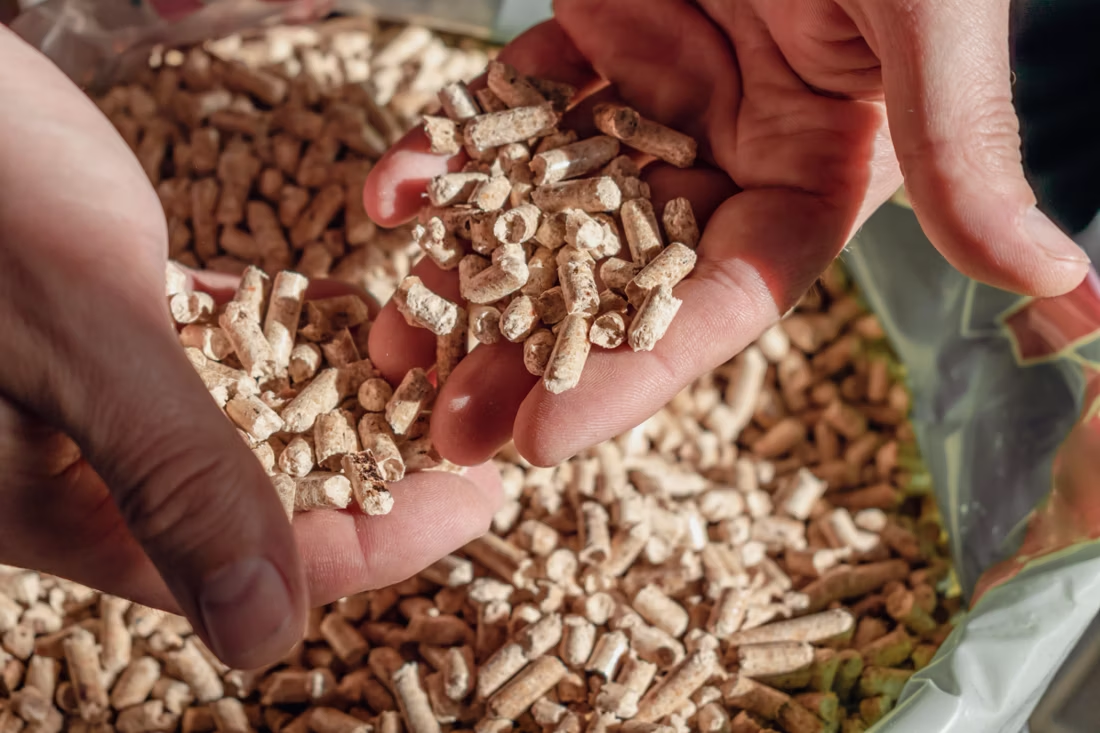
That doesn't mean pellets are unavailable—Wisconsin is actually a pellet-producing state, and regional brands like Lignetics and Somerset Pellet Fuel manufacture from the same oak, maple, birch, and aspen sawmill byproduct that fills the state's hardwood forests. Indeck Energy Services also operates in the region. Where we do see pellet stoves installed in Sheboygan, it's usually for a specific reason: a finished basement that's hard to heat with ductwork, a detached garage or workshop, a three-season room, or a lakeshore cottage where a homeowner wants set-it-and-forget-it heat without a chimney. If that's your situation, a local dealer can tell you honestly whether it's the right call—or whether a gas insert makes more sense for your home.
Three steps. No salesperson until you're ready.
Tell us about your project
Your zip code, your situation, and the fuel you're leaning toward—or let the answers point you to one.
See what's actually available
The brands dealers within 100 miles genuinely carry—real options, never a catalog mirage.
Get your dealer & Project Guide
A trusted local dealer, plus the free Project Guide & Parts List that names every component of the job.
Frequently Asked Questions
Are pellet stoves actually available in Sheboygan, or is this a niche product?
They're available, but it's a niche request. Sheboygan's hearth market is dominated by natural gas fireplaces and inserts, plus electric units, so most local dealers carry pellet stoves as a smaller part of their lineup rather than a headline product. That's not a reason to avoid one—it just means finding a dealer who genuinely stocks and services pellet equipment (not just gas) matters more here than in a market like Vermont or upstate New York where pellet heat is mainstream.
Why don't more Sheboygan homes use pellet stoves given how cold the winters get?
It comes down to infrastructure and convenience, not climate suitability—a heating season as demanding as Duluth's and 15°F average winter lows would support pellet heat just fine. But natural gas service is widely available across Sheboygan and gas appliances require no fuel storage, no hopper loading, and no ash removal. Electric heat is also common through the City of Sheboygan Falls utility. Pellet stoves need somewhere to store 40-lb bags, a hopper refilled every day or two in cold weather, and regular ash cleanout—extra work that most homeowners here simply haven't needed to take on when gas is already piped to the house.
Where can I buy pellet fuel in Sheboygan?
Wisconsin is home to several pellet manufacturers, including Lignetics and Somerset Pellet Fuel, both of which produce from regional hardwood sawmill residue (oak, maple, birch, and aspen are the common species in this part of the state). Indeck Energy Services also has a regional presence. Locally, farm supply stores and hardware chains with a Sheboygan County presence are the most reliable places to check for bagged pellets in-season—call ahead in peak winter months, since stock can run low during cold snaps.
Is a pellet stove a good fit for my Sheboygan home?
It depends on the space. Pellet stoves make the most sense in Sheboygan for finished basements that are hard to heat with existing ductwork, detached garages or workshops, three-season rooms, or lakeshore cottages where you want independent zone heat without running new gas line. If you're heating a main living area in a home that already has (or can easily get) natural gas service, a gas insert is usually the more common and more serviceable choice locally. A local dealer walk-through will tell you which makes sense for your specific room.
What does a pellet stove installation cost in Sheboygan?
Because pellet installs are less common here, there isn't a well-established local price range the way there is for gas—but nationally, a pellet stove installation with a dedicated vent typically runs $3,500 to $6,500 depending on the unit and venting complexity. Since Sheboygan has fewer installers actively doing this work, it's worth getting a quote from a dealer who installs pellet units regularly rather than a shop that treats it as a rare add-on to their gas business.
Pellet vs. gas insert—which is right for my Sheboygan home?
For most Sheboygan homes, gas wins on convenience and long-term serviceability—natural gas is widely available, gas inserts need no fuel storage or hopper refills, and local technicians who service gas appliances are easy to find. Pellet stoves offer a real wood-fire look and lower fuel costs per BTU in some years, but they need electricity to run the auger and blower, plus regular ash and hopper maintenance. If you already have gas service to the house, that's usually the simpler long-term choice here; pellet makes more sense for a space without gas access, like a detached garage.
Will a pellet stove work during a power outage?
No—pellet stoves depend on electricity to run the auger that feeds pellets into the firebox and the blower that circulates heat, so they shut down when the power does. That matters in Sheboygan, where lake-effect winter storms off Lake Michigan can knock out power for hours at a time. If backup heat during outages is a priority, a battery backup unit (sized for a pellet stove's low draw) or a separate propane or electric backup plan is worth discussing with your installer.
What maintenance does a pellet stove need?
Plan on emptying the ash pan every few days during regular use, cleaning the burn pot weekly to keep the fire feeding properly, and vacuuming the hopper and auger area periodically to prevent jams. A full professional service—checking the exhaust fan, gaskets, and venting—is recommended once a year, ideally before the coldest part of the Sheboygan winter sets in around December. Because pellet service techs are less common locally than gas techs, it's worth confirming a dealer offers ongoing service before you buy.
Does running a pellet stove cost much on my electric bill?
Not much—the auger motor and combustion blower on a typical pellet stove draw a small amount of power, generally a few dollars a month in electricity even run continuously through a Sheboygan winter, at the City of Sheboygan Falls' residential rate of about $0.1923 per kWh. The real ongoing cost is the pellets themselves, not the electricity to run the unit—though that electric dependency is exactly why a pellet stove won't function as backup heat if the power goes out.
Why is a fireplace insert so efficient?
An insert does two things: it seals the chimney completely, so you stop losing air you already paid to heat, and it radiates warmth into the room through the firebox and glass. Most add a heat-exchange fan that pulls cool room air underneath, wraps it around the hot firebox, and pushes it back out warm. Your home is more efficient before you've even lit the first fire.
What do I measure to size a fireplace insert?
Four numbers tell you what fits: the front width, the front height, the back width, and the overall depth of your existing fireplace opening. Grab a tape measure, jot those down, and snap a photo of the wall—those two things do more to move your project forward than anything else you can do today.
Does a fireplace add value to my home?
On average, a fireplace adds back to the home about the same amount you spent installing it. Add the monthly savings from heating the rooms you actually use instead of the whole house—often hundreds of dollars a year—and the value case is strong before you even count what a fire does for how your family uses the room.
How much should I budget for a fireplace?
For an average home—covering the fireplace, the vent pipe, and basic installation—a budget between $3,900 and $5,500 gives you a lot of options across wood, gas, and pellet. By the time you add finish work, gas line, and electrical, the average complete installation lands between $5,000 and $12,000 all-in. In a remodel or new build, a good rule is to put about 2.5% of the total project cost toward the fireplace.
Nearby Dealers
Hearth shops serving Sheboygan and the surrounding area.
Pellet Brands Stocked Around Sheboygan
Manufacturers will point you to the nearest stocking dealer.
Find your pellet fireplace in Sheboygan.
Pellet heat is a specialty request in Sheboygan's mostly gas-and-electric market, which is exactly why matching with the right local dealer matters. Tell us about your space and we'll send you a free Project Guide & Parts List—the parts, the vent kit, and a trusted local dealer who actually carries and installs pellet equipment near you.
Find Your Fireplace →