
Set It, Forget It—Heat That Keeps Up With Port Washington Winters.
Thermostat-controlled warmth for a Lake Michigan shoreline town with a long, cold heating season. Find the right pellet appliance and connect with a trusted local dealer.
Every Project Starts From One of These Five Situations
Consistent warmth without the wood pile.
Port Washington sits on the Lake Michigan shoreline in Ozaukee County, where winters comparable to Minneapolis put the local heating season in the same league—long, damp, and often windy off the lake. Winter lows average around 15°F, but lake-effect systems can push cold snaps and heavy snow into the harbor area well into March. Wood heat has deep roots here, with plenty of oak, maple, birch, and aspen available regionally, but not every home in town has the space or lifestyle for cordwood storage and daily tending.
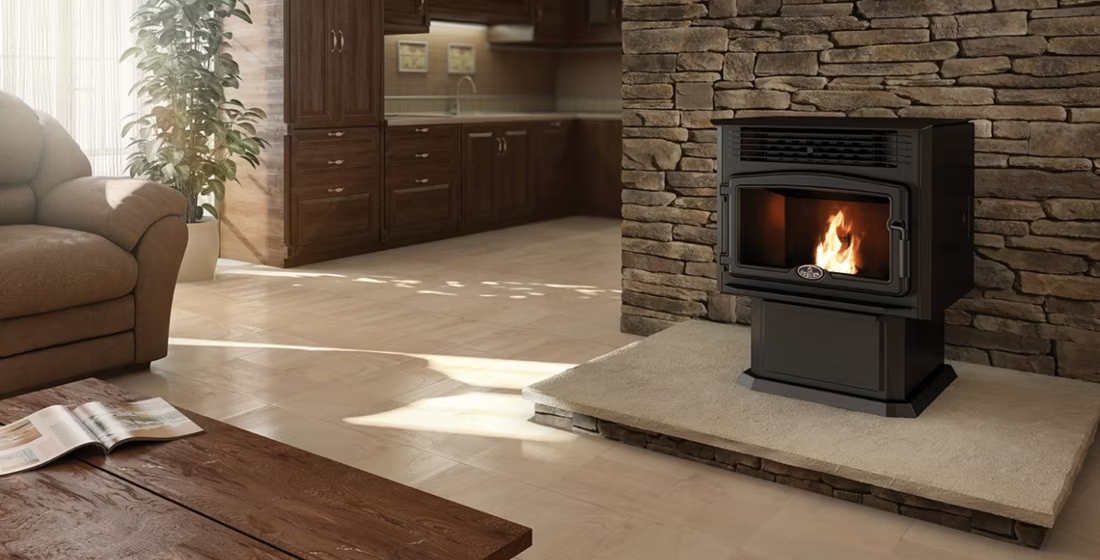
That's where pellet appliances fit in. They deliver steady, automated heat with a thermostat, no splitting or stacking, and a fraction of the mess of a wood stove—a good match for in-town lots, condos near the marina, or households that just want reliable warmth without the chore list. Pellet fuel from regional producers like Indeck Energy Services, Lignetics, and Somerset Pellet Fuel is sold at hearth shops and farm supply stores throughout the Milwaukee-Ozaukee corridor, so restocking isn't a special trip. One tradeoff worth planning for: pellet stoves run on electricity for the auger and blower. Wisconsin Electric Power Co. (We Energies) serves the area at roughly 19.2 cents per kWh, and a battery backup or small generator is worth budgeting for if winter power outages concern you.
Three steps. No salesperson until you're ready.
Tell us about your project
Your zip code, your situation, and the fuel you're leaning toward—or let the answers point you to one.
See what's actually available
The brands dealers within 100 miles genuinely carry—real options, never a catalog mirage.
Get your dealer & Project Guide
A trusted local dealer, plus the free Project Guide & Parts List that names every component of the job.
Frequently Asked Questions
How much does a pellet stove installation cost in Port Washington?
A freestanding pellet stove typically installs for $3,000 to $6,500 in the Port Washington area, depending on the unit, hearth pad requirements, and vent-pipe run length. A pellet insert going into an existing masonry fireplace usually runs $4,500 to $7,500, since it reuses your chimney chase but needs a stainless liner and venting adapter. Homes without an existing fireplace or hearth setup will land toward the higher end once framing and a proper non-combustible surface are added. A local dealer can give you a firm number after seeing the install location in person—venting path and wall construction matter more to price than the stove itself.
Where can I buy wood pellets in Port Washington?
Pellets are widely available through hearth retailers and farm supply stores across Ozaukee and Milwaukee counties, with regional brands like Indeck Energy Services, Lignetics, and Somerset Pellet Fuel commonly stocked. Expect to pay roughly $250 to $320 per ton depending on the brand and whether you buy by the pallet (about 50 bags) or individual bags. Buying a full season's supply in late summer or early fall—before the first cold snap drives demand—is the easiest way to lock in a lower price and guarantee availability through a Port Washington winter.
Do pellet stoves work during a power outage?
Not without backup power. Pellet stoves rely on an electric auger to feed fuel and a blower to distribute heat, so a standard unit shuts down the moment the power drops—a real consideration given how lake-effect storms off Lake Michigan can knock out power in Ozaukee County for hours at a time. Some pellet stove models accept an aftermarket battery backup rated for several hours of runtime, and a small portable generator (roughly 2,000-3,000 watts) is more than enough to keep a pellet stove running through a longer outage. If uninterrupted heat during outages is a top priority, ask your local dealer about battery-backup compatibility before you buy, or consider pairing a pellet stove with a wood-burning backup elsewhere in the house.
What size pellet stove do I need for my Port Washington home?
With winters comparable to Minneapolis, Port Washington's heating demand is significant, so err toward the larger end of any sizing chart rather than the smaller end. Small pellet stoves (rated for roughly 1,000-1,300 sq ft) suit a single room, a lake cottage, or supplemental use. Mid-size units (1,300-2,000 sq ft) cover most main living areas in the area's older shoreline homes and newer subdivisions alike. Larger units (2,000+ sq ft) can handle whole-home heating in well-insulated construction. Ceiling height, window count, and how exposed your home is to lake wind all affect real-world performance, so an in-home consultation from a local dealer is worth more than any chart.
Pellet stove vs. wood stove—which makes more sense in Port Washington?
Wood stoves burning local oak, maple, or birch offer lower fuel costs if you have access to cordwood, work without any electricity, and give you the classic look and feel of a live fire—appealing given how much wood heat tradition exists in this part of Wisconsin. Pellet stoves trade some of that romance for convenience: automated feed, a thermostat you can set and leave, cleaner glass, and far less ash and creosote to manage. For in-town lots and condos near the harbor where storing several cords of wood isn't realistic, pellet is usually the better fit. For rural Ozaukee County properties with wood already on hand and a priority on power-outage resilience, wood often wins out.
Do I need a permit to install a pellet stove in Port Washington?
Most pellet stove and insert installations require a building permit through the City of Port Washington Building Inspection Department, or the Ozaukee County building office if your property sits outside city limits. Because pellet venting uses smaller-diameter PL-vent pipe rather than a full masonry chimney, the permitting and inspection process tends to be quicker and less involved than a wood stove install. Most established hearth dealers in the area handle the permit application and schedule the inspection as part of the installation, so it's worth confirming that's included before you sign a contract.
How much maintenance does a pellet stove need?
Pellet stoves need more frequent light maintenance than wood stoves, but far less heavy lifting. Plan on emptying the ash pan every few days to weekly depending on use, and wiping down the glass as needed. Most manufacturers recommend a deeper cleaning of the burn pot, exhaust fan, and venting every one to two months during heavy winter use—a task that takes about 20 minutes once you know the routine. An annual professional inspection and full cleaning, similar to a chimney sweep for wood appliances, is recommended before each heating season to keep the auger, igniter, and venting system running reliably through a Port Washington winter.
Pellet stove vs. gas fireplace—which should I choose?
Gas fireplaces offer instant on-off operation, no fuel storage at all, and—if your home already has natural gas service—some of the lowest ongoing operating costs available. Pellet stoves require a fuel supply on hand (a pallet or two of bags), some hands-on feeding and cleaning, and electricity to run, but many owners prefer the visible, more substantial flame and the lower dependence on utility gas pricing. If your Port Washington home is already plumbed for gas and you want zero-maintenance convenience, gas is usually the simpler choice. If you like the idea of a real fuel-fed fire without cordwood storage, pellet is the middle ground worth considering.
What are the best pellet stove brands for a cold Wisconsin winter?
Look for stoves with a solid BTU output rating and a hopper large enough to reduce nighttime refills—important given how long Port Washington's heating season runs. Brands like Harman, Lopi, and PelPro are commonly installed in Wisconsin and built for sustained cold-climate use, with larger hopper capacities (40-plus pounds) that can hold a burn overnight on the coldest nights. Ask your local dealer about hopper size and burn-time-per-load relative to your square footage—that combination matters more for comfort during a February cold snap than any single spec sheet number.
How often does a pellet stove need cleaning?
A clean pellet stove is a happy pellet stove. Plan on cleaning the burn pot about once a week when you're burning regularly—ash and clinkers gum up the air holes just like a pellet barbecue. Most pellet stove problems trace back to skipped cleaning that nobody explained up front. Some designs make it easy with a trapdoor burn pot: pull a lever and the gunk drops into the ash pan.
Why is a fireplace insert so efficient?
An insert does two things: it seals the chimney completely, so you stop losing air you already paid to heat, and it radiates warmth into the room through the firebox and glass. Most add a heat-exchange fan that pulls cool room air underneath, wraps it around the hot firebox, and pushes it back out warm. Your home is more efficient before you've even lit the first fire.
Can I install a fireplace myself?
If you're putting a fire in your house on purpose, it's best to work with an expert. Unless you're genuinely experienced in framing, gas line, vent pipe, and the national code on clearances to combustibles, have a professional do it—and ideally the same company that sells you the fireplace, so warranty, service, and liability all live under one roof.
Can a fireplace actually lower my heating bill?
Yes—by creating a comfort zone. A furnace heats every square foot of the house just to warm the one room you're in; a gas fireplace on low burns roughly a sixth of the gas a typical furnace does. Set the furnace around 55–60 degrees as a baseline, then heat the rooms your family actually uses. Families who heat this way commonly save $20–$60 a month.
Nearby Dealers
Hearth shops serving Port Washington and the surrounding area. Every listing shows whether it is a WhyFire partner, a dealer we have verified as authorized for the brands we recommend, or a local business carrying hearth products. No manufacturer pays for placement. How we verify dealers →
The Fire Factory
David J. Frank Landscape Contracting, Inc.
Bbq Grills Of Wisconsin
Chimney Doctors
Falls Glass
Pellet Brands Stocked Around Port Washington
Manufacturers will point you to the nearest stocking dealer.
Find your pellet stove in Port Washington.
Tell us a bit about your home and heating needs, and we'll match you with a trusted local dealer and send over a free Project Guide & Parts List—the exact equipment, venting, and recommended installer for your Port Washington pellet project.
Find Your Fireplace →