
Steady zone heat for Winnebago County's long winters.
With 7,336 heating degree days and winter lows averaging 10°F off Lake Winnebago, Oshkosh homeowners lean on electric fireplaces for supplemental warmth and no-hassle ambiance. I'll match you with a trusted local dealer who knows what actually fits your circuit and your room.
Every Project Starts From One of These Five Situations
Supplemental warmth without a chimney to maintain.
Oshkosh sits at 756 feet on the western shore of Lake Winnebago, and the lake effect plus a long Wisconsin winter add up to 7,336 heating degree days a year—a heating load closer to Madison or even Fargo than to most of the Midwest. Winter lows average around 10°F, and most homes here run a gas or propane furnace as the primary heat source. An electric fireplace isn't trying to replace that furnace; it's built to warm the room you're actually sitting in, whether that's a finished basement in an Algoma Boulevard bungalow or a newer build out toward the west side.
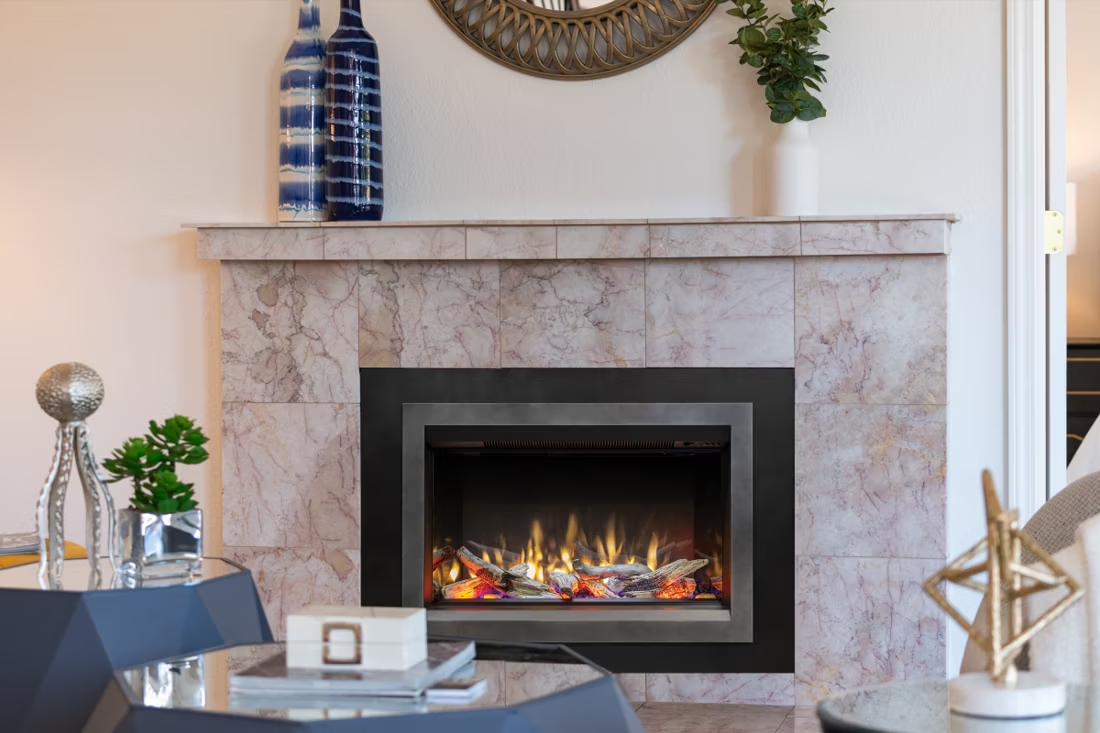
Wisconsin Public Service Corp serves electric accounts across Winnebago County at roughly 16.23 cents per kWh, which keeps the cost of running a typical unit modest for occasional use—it's the upfront simplicity that draws most Oshkosh buyers. There's no chimney to sweep, no wood to season, and no combustion byproducts to vent, which matters in tighter, more energy-efficient homes and in the condos and rental units common near downtown and the UW-Oshkosh campus where a masonry fireplace or wood stove was never in the plans to begin with. Between an outlet-ready insert and a built-in unit tied into a dedicated circuit, most homeowners here find a fit regardless of whether they own or rent.
Three steps. No salesperson until you're ready.
Tell us about your project
Your zip code, your situation, and the fuel you're leaning toward—or let the answers point you to one.
See what's actually available
The brands dealers within 100 miles genuinely carry—real options, never a catalog mirage.
Get your dealer & Project Guide
A trusted local dealer, plus the free Project Guide & Parts List that names every component of the job.
Frequently Asked Questions
How much does it cost to install an electric fireplace in Oshkosh?
A plug-in electric insert or freestanding unit can run as little as $300 to $800 installed, since it just needs a standard outlet and a mantel or surround if you want one built. A true built-in electric fireplace wired to a dedicated 20-amp circuit—the more common choice for a remodel or new construction on the west side—typically lands between $1,200 and $2,500 once you include the electrician's time and any surround carpentry. Either way, there's no venting or gas line to budget for, which is the main reason electric installs cost a fraction of what a wood or gas project runs in this climate.
What does it cost to actually run an electric fireplace on Wisconsin Public Service rates?
Most electric fireplaces draw around 1,500 watts on their highest heat setting. At WPS's residential rate of about 16.23 cents per kWh, that works out to roughly 24 cents an hour, or under $2 for a typical evening running it four to six hours in the living room. Run it on flame-only mode with the heater off—common in shoulder-season months when you want ambiance but not extra heat—and the draw drops to under 100 watts, making it essentially pocket change to operate.
Do I need a permit for an electric fireplace in Oshkosh?
A plug-in unit that runs off an existing outlet generally doesn't require a permit. If you're installing a built-in electric fireplace on its own dedicated circuit—the typical approach for a remodel—that electrical work usually needs a permit through the City of Oshkosh, and it should be pulled by a licensed electrician regardless of whether the fireplace itself needs one. A local dealer who handles installs in Winnebago County will know which category your project falls into before work starts.
What size electric fireplace do I need for my Oshkosh home?
Since electric units are realistically zone heaters rather than whole-house heat sources in a climate with 7,336 heating degree days, size it to the room, not the house. A 750-1,500 watt unit comfortably takes the chill off a 300-400 square foot living room or finished basement rec room—a popular retrofit in Oshkosh's older basements that never had heat runs extended to them. For larger open-concept spaces common in newer builds near Lake Butte des Morts, a dealer may recommend two smaller units placed strategically rather than one oversized unit straining a single circuit.
Electric or gas—which makes more sense for an Oshkosh home?
Most Oshkosh homes already heat primarily with a gas furnace, so a gas fireplace insert can tie into existing gas service and deliver real supplemental BTUs during a cold snap, which matters when lows average 10°F. Electric skips the gas line and venting entirely, installs in under a day, and works in spaces gas can't easily reach—an upstairs bedroom, a converted garage, a rental unit where running gas line isn't practical. If you want backup heat that can offset the furnace on the coldest nights, gas has more capacity; if you want simple ambiance and light zone warmth with the lowest install cost, electric is the easier call.
Can an electric fireplace heat my whole house during an Oshkosh winter?
No, and it's worth being direct about that. With 7,336 heating degree days a year and winter lows regularly in the single digits, resistance electric heat alone would be both underpowered and expensive to run at that scale—a 1,500-watt unit is designed to warm one room, not offset a whole-house heating load. Think of it as a supplement to your furnace for the room you use most, not a replacement for central heat.
What's the difference between an electric fireplace, insert, and mantel package?
A freestanding electric fireplace is a self-contained unit you plug in and place almost anywhere, popular in Oshkosh apartments and rentals where permanent changes aren't an option. An electric insert is built to slide into an existing masonry firebox—a good fit for older homes near downtown that have a fireplace opening but no interest in burning wood or running a gas line. A mantel package pairs an electric firebox with a surround and mantel shelf as one furniture piece, which works well in a newer build without any existing fireplace structure at all.
Are electric fireplaces a good option for allergy or air quality concerns in Oshkosh?
Yes. Oshkosh doesn't carry any of the wood-smoke or inversion air quality concerns that push some Wisconsin and western towns toward stricter burning rules, but electric still has an advantage indoors: no combustion byproducts, no particulates, and no chimney draft pulling in outside air. That matters more in newer, tightly sealed Oshkosh homes where indoor air quality is already a bigger factor than it used to be, and it's one reason electric units show up often in bedrooms and nurseries where a gas or wood appliance wouldn't be considered.
Why do so many Oshkosh homeowners choose electric over wood or pellet?
Wood and pellet stoves see very little demand in Oshkosh—most housing stock, from downtown apartments to newer subdivisions, was built around gas furnaces rather than solid-fuel heating, and common regional species like oak, maple, birch, and aspen end up split for backyard fire pits more often than indoor stoves within city limits. Electric fills that gap well: no chimney to build, no cord of wood to store or season, no auger to maintain, and it works equally well for a homeowner on the west side or a renter in a downtown apartment who wants the look and light supplemental warmth of a fireplace without any of the fuel logistics.
Do electric fireplaces actually produce heat?
Yes—most put out around 4,800–5,000 BTUs from a standard outlet, which comfortably warms a bedroom, office, or den as a comfort-zone heater. What they won't do is carry a whole house the way wood, gas, or pellet can. Think of electric as ambiance-first with honest supplemental heat: flames on with no heat in July, flames plus warmth in January.
Can I put a TV above my fireplace?
Yes—with an asterisk. Fireplaces are hot and TVs don't like heat. Either put a mantel between them to deflect rising warmth, or choose a fireplace with heat-management technology that creates a cool zone on the wall above—the wall stays around 125 degrees, barely warm, while the room still gets full heat. If you like clean lines and don't want a mantel, heat management is the answer.
How much should I budget for a fireplace?
For an average home—covering the fireplace, the vent pipe, and basic installation—a budget between $3,900 and $5,500 gives you a lot of options across wood, gas, and pellet. By the time you add finish work, gas line, and electrical, the average complete installation lands between $5,000 and $12,000 all-in. In a remodel or new build, a good rule is to put about 2.5% of the total project cost toward the fireplace.
Should the dealer who sells my fireplace also install it?
Ideally, yes. A fireplace project involves vent pipe, gas line, electrical, and often tile or stone. Hire three or four separate trades and you own the liability and the game of telephone between them. One company selling and installing means one accountable party, start to finish—ask about factory training, on-time completion records, and what happens if an inspection fails.
Nearby Dealers
Hearth shops serving Oshkosh and the surrounding area.
Electric Service in Oshkosh
An electric fireplace's heater draws about 1,500 watts—pennies per hour at local rates.
Wisconsin Public Service Corp
Get your free Project Guide & Parts List for an electric fireplace in Oshkosh.
Tell me about your room, your electrical panel, and how you want to use it, and I'll match you with a trusted local Winnebago County dealer and send a free Project Guide & Parts List—sized right and specified down to the circuit.
Find Your Fireplace →