
A Realistic Look at Pellet Heat in Menomonee Falls.
Pellet stoves aren't the default here—natural gas is. But for the right room or the right property, pellet heat still earns its place. We'll help you find out and connect you with a dealer who actually stocks it.
Every Project Starts From One of These Five Situations
Natural gas dominates—pellet fills a narrow niche.
Menomonee Falls sits at about 855 feet in Waukesha County, part of the greater Milwaukee metro, with a winter heating load similar to Minneapolis and average winter lows near 11°F—a cold-climate profile in that same range. That kind of winter would, in a lot of parts of the country, make pellet stoves a natural fit. Here, though, natural gas infrastructure is well established and Wisconsin Electric Power Co (We Energies) territory keeps gas fireplace installs the default choice for most homeowners, which is why pellet stoves have never really taken hold as a mainstream option in this suburb.
That doesn't mean pellet heat is off the table—it just means the buyers are different. In our experience, the households that install pellet stoves in Menomonee Falls are usually heating a room gas doesn't reach well, outfitting a lake or hunting property, or looking for a cleaner-burning alternative to cordwood without giving up the look of a live fire. Regional pellet supply exists to support that demand, with producers like Lignetics and Somerset Pellet Fuel serving the upper Midwest and Indeck Energy Services in the supply chain—the fuel is easy enough to find even though the stoves themselves are a specialty purchase locally.
Three steps. No salesperson until you're ready.
Tell us about your project
Your zip code, your situation, and the fuel you're leaning toward—or let the answers point you to one.
See what's actually available
The brands dealers within 100 miles genuinely carry—real options, never a catalog mirage.
Get your dealer & Project Guide
A trusted local dealer, plus the free Project Guide & Parts List that names every component of the job.
Frequently Asked Questions
How much does a pellet stove installation cost in Menomonee Falls?
Because pellet stoves are a niche purchase in this natural-gas-served corner of Waukesha County, quotes vary more here than in markets where pellet is standard. Expect a freestanding pellet stove with a through-wall vent kit to run $3,000 to $6,000 installed, while a pellet insert dropped into an existing masonry fireplace opening—a common ask from homeowners with a fireplace they rarely use—typically lands between $4,000 and $7,000 once liner and venting work are included. Since few local retailers specialize in pellet exclusively, get two or three quotes; shops that primarily sell gas fireplaces sometimes subcontract the pellet-specific venting.
Does a pellet stove make sense in a home that already has natural gas?
For most homes in Menomonee Falls, not as a primary heat source. This is a well-established natural gas service area, and a gas fireplace or furnace delivers instant, thermostat-controlled heat without hauling fuel or emptying an ash pan. Pellet stoves earn their keep in more specific situations: a three-season room or finished basement that's expensive to run ductwork into, a vacation property up north where cordwood isn't practical, or a homeowner hedging against rising Wisconsin Electric Power Co rates without taking on full wood-burning maintenance. Outside those cases, gas is almost always the simpler, cheaper choice to install and run.
Where can I buy pellets locally?
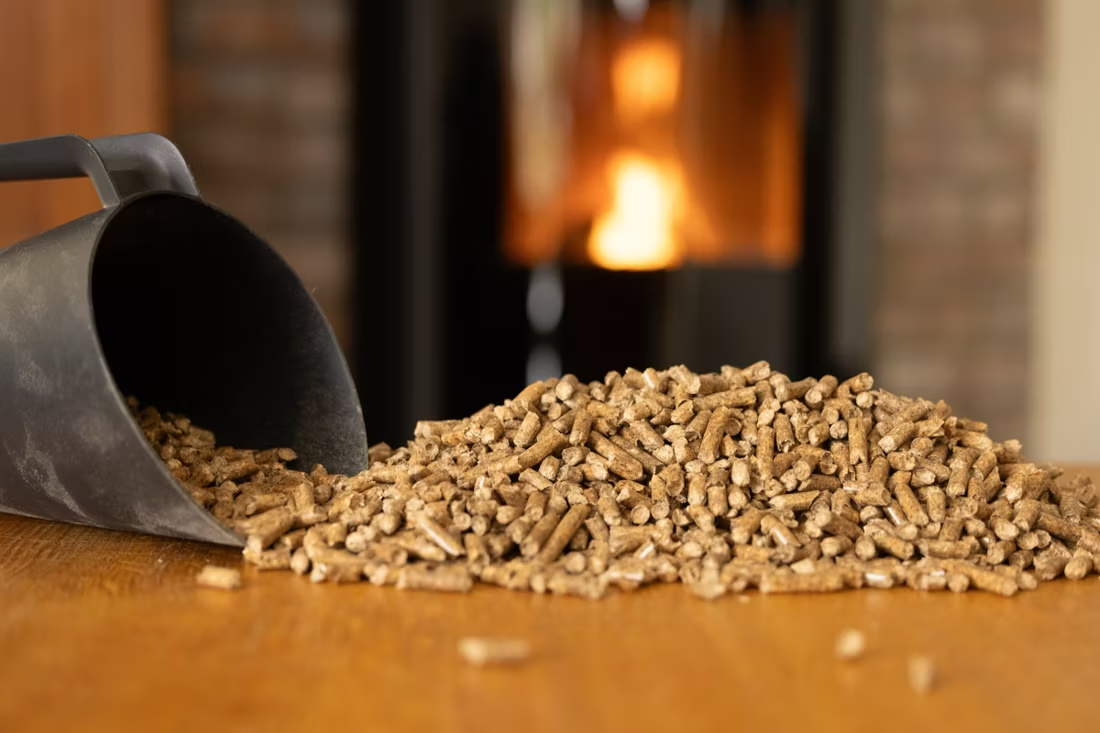
Pellet fuel is more available than pellet stoves themselves. Wisconsin has real production capacity, including Lignetics and Somerset Pellet Fuel, both of which supply the upper Midwest, plus Indeck Energy Services in the broader supply chain. Farm supply stores and some hardware retailers around the Milwaukee suburbs stock bagged pellets seasonally, typically in the $230 to $300 per ton range depending on brand and whether you buy a full pallet (usually fifty 40-pound bags) at once. Because demand is lower here than in pellet-heavy regions, call ahead in late fall to confirm stock rather than assuming it's on the shelf.
What's the difference between a pellet stove and a pellet insert?
A pellet stove is a freestanding, boxy unit that vents through an exterior wall with a small-diameter PVC or stainless pipe—it can go almost anywhere with wall access and no chimney required. A pellet insert is built to slide into an existing masonry fireplace opening, using a liner run up the existing chimney. In Menomonee Falls, where most homes with fireplaces have a single wood-burning masonry unit that rarely gets used, an insert is usually the more popular retrofit because it reuses infrastructure you already have and keeps the mantel and hearth look intact.
Do I need a permit to install a pellet stove in Menomonee Falls?
Yes. The Village of Menomonee Falls Building Inspections Division requires a permit for any new solid-fuel or pellet-burning appliance, covering both the mechanical installation and the wall or roof penetration used for venting. Most hearth retailers who install pellet equipment will pull the permit as part of the job and schedule the required inspection. Because pellet installs are infrequent here compared to gas fireplace work, confirm your installer has actually handled a pellet-specific permit with the village—the venting requirements differ enough from gas that it's worth asking directly.
What's the best pellet stove for this climate?
With Menomonee Falls having a winter heating load similar to Minneapolis and winter lows near 11°F, look for a stove with a large hopper (40+ pounds) and a burn rate that can hold overnight without a refill. Harman and Lopi both make pellet units with auto-ignition and higher BTU output suited to real supplemental room heat rather than just ambiance. Since the local pellet market is thin, plan on ordering through a dealer that special-orders rather than expecting floor stock, and confirm they can service what they sell—replacement auger motors and igniters aren't things every hearth shop around here keeps on hand.
How much maintenance does a pellet stove need?
Pellet stoves need more attention than a gas fireplace but less than a wood stove: emptying the ash pan every few days during regular use, cleaning the burn pot weekly to prevent clinker buildup, and a full professional cleaning of the venting and hopper mechanism once a year, usually before the season starts in October or November. Because so few hearth companies in the Milwaukee suburbs specialize in pellet equipment specifically, ask any installer up front whether they also service what they sell—it makes a real difference for ongoing maintenance.
Will a pellet stove work during a power outage?
Not without a battery backup. Pellet stoves rely on an electric auger to feed fuel and a blower to distribute heat, so a standard unit goes dark the moment power drops—worth knowing given how often pellet gets pitched as a wood-heat alternative. Some owners pair their stove with a small backup battery system or a generator sized to the stove's modest draw (usually under 500 watts) specifically to keep it running through a Wisconsin Electric Power Co outage. If reliable heat during outages is the priority, a wood stove or a battery-backed gas fireplace with IPI ignition is the more dependable choice.
Pellet vs. gas—which is right for my Menomonee Falls home?
Gas is the default here for good reason: natural gas service is broadly available in Menomonee Falls, installation is generally simpler, and a gas fireplace or insert runs on demand with no fuel storage or ash cleanup. Pellet stoves make sense in narrower cases—supplemental heat in a room gas doesn't reach, a lake property, or a household that wants a wood-adjacent look and fuel efficiency without splitting and stacking cordwood. For a main living space with existing gas access, gas will almost always be the more practical, lower-maintenance option; pellet is worth pursuing only if your situation falls outside that norm.
What's the difference between an insert and a zero-clearance fireplace?
An insert is a fireplace that slides into a pre-existing wood-burning fireplace—if you don't have one, there's nothing to insert it into. A zero-clearance fireplace is built into a framed wall, which makes it the answer for remodels and new construction. Simple test: existing masonry fireplace means insert; blank or framed wall means zero-clearance.
Why is a fireplace insert so efficient?
An insert does two things: it seals the chimney completely, so you stop losing air you already paid to heat, and it radiates warmth into the room through the firebox and glass. Most add a heat-exchange fan that pulls cool room air underneath, wraps it around the hot firebox, and pushes it back out warm. Your home is more efficient before you've even lit the first fire.
How much should I budget for a fireplace?
For an average home—covering the fireplace, the vent pipe, and basic installation—a budget between $3,900 and $5,500 gives you a lot of options across wood, gas, and pellet. By the time you add finish work, gas line, and electrical, the average complete installation lands between $5,000 and $12,000 all-in. In a remodel or new build, a good rule is to put about 2.5% of the total project cost toward the fireplace.
Can I install a fireplace myself?
If you're putting a fire in your house on purpose, it's best to work with an expert. Unless you're genuinely experienced in framing, gas line, vent pipe, and the national code on clearances to combustibles, have a professional do it—and ideally the same company that sells you the fireplace, so warranty, service, and liability all live under one roof.
Nearby Dealers
Hearth shops serving Menomonee Falls and the surrounding area.
Pellet Brands Stocked Around Menomonee Falls
Manufacturers will point you to the nearest stocking dealer.
Find out if pellet heat fits your Menomonee Falls home.
Tell us about your space and we'll give you a straight answer on whether pellet makes sense—plus a free Project Guide & Parts List with the exact equipment, vent kit, and a trusted local dealer for your project.
Find Your Fireplace →