
Pellet Heat: A Niche Fit in Lake Mills.
Lake Mills winters are genuinely cold, but most homes here already heat with natural gas or electric service. If a pellet stove still makes sense for your house, we'll help you find out—and match you with a local dealer who can install it right.
Every Project Starts From One of These Five Situations
Cold winters, but natural gas already does the job.
Lake Mills sits in Jefferson County at 825 feet, in climate zone 6A with a long, demanding heating season and average winter lows around 11°F—cold enough to rival nearby Madison and plenty severe by Midwest standards. Jefferson County's oak, maple, birch, and aspen woodlots are exactly the kind of forest cover that supports wood and pellet heating elsewhere in Wisconsin. Despite that, pellet stoves haven't caught on as a mainstream heating choice in Lake Mills itself.
Most homes in town heat with a natural gas furnace or electric service through Lake Mills Light & Water, the city's own municipal utility, or Wisconsin Electric Power Co. Residential electric rates here run roughly 13.9 to 19.2 cents per kWh depending on the provider, which keeps electric heat and gas furnaces competitive enough that pellet stoves tend to show up only as a specific, deliberate choice—supplemental heat for a sunroom or workshop, backup heat for outages, or a homeowner who simply prefers the look and feel of a pellet fire. Regional pellet producers including Somerset Pellet Fuel, Lignetics, and Indeck Energy Services keep pellet fuel manufactured and moving across Wisconsin, so sourcing bags isn't the obstacle—installer demand and dealer familiarity locally is just thinner than in parts of the state where pellet heat is the norm.
Three steps. No salesperson until you're ready.
Tell us about your project
Your zip code, your situation, and the fuel you're leaning toward—or let the answers point you to one.
See what's actually available
The brands dealers within 100 miles genuinely carry—real options, never a catalog mirage.
Get your dealer & Project Guide
A trusted local dealer, plus the free Project Guide & Parts List that names every component of the job.
Frequently Asked Questions
How much does a pellet stove installation cost in Lake Mills?
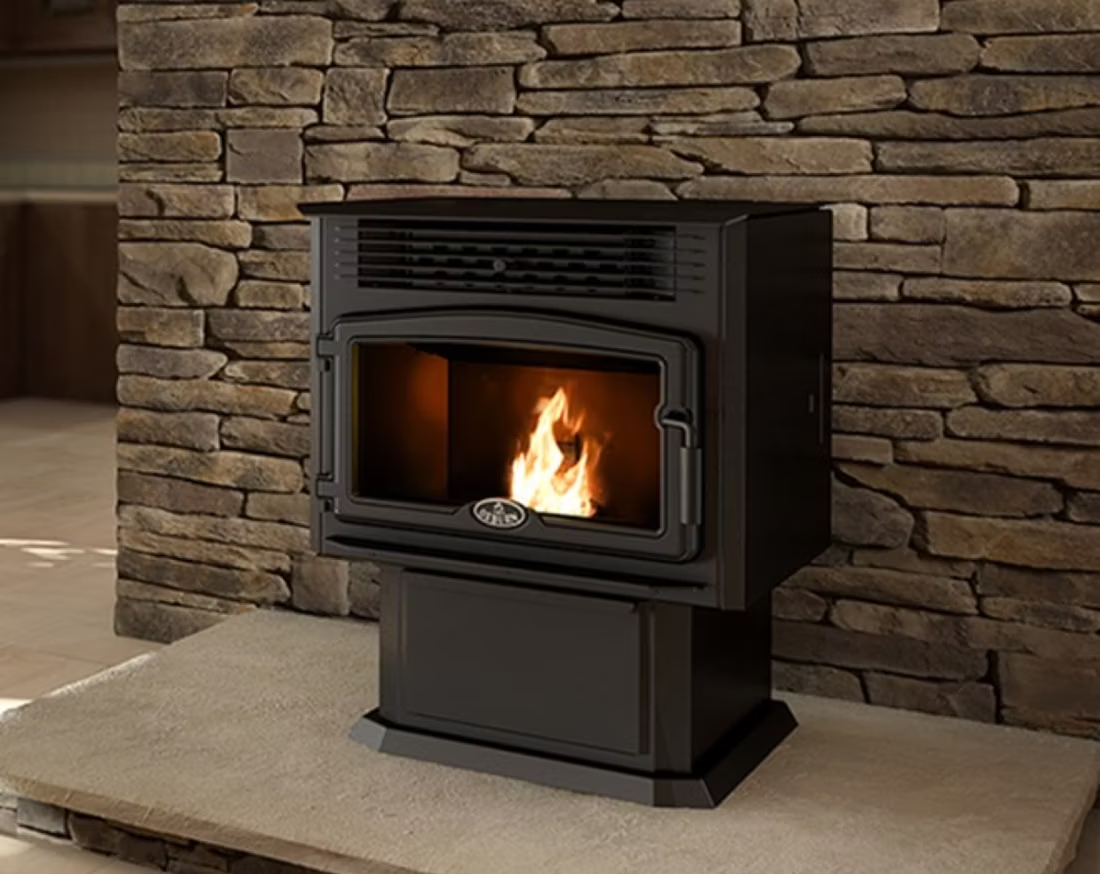
Because pellet installs are a smaller share of the work most Jefferson County hearth contractors do, pricing here tracks general Midwest norms rather than a deep local dataset: a freestanding pellet stove with new venting typically runs $3,000 to $6,000 installed, and a pellet insert into an existing masonry fireplace often runs $4,000 to $7,000 once a liner and hearth work are included. Installers who primarily handle gas fireplaces (the more common request in Lake Mills) can usually still quote and install pellet units—just ask specifically about their pellet experience before booking.
Why don't more homes in Lake Mills use pellet stoves given how cold it gets?
The climate numbers alone—a long, demanding heating season and winter lows near 11°F—would support pellet heat in a lot of towns. But Lake Mills has decent natural gas coverage and municipal electric service through Lake Mills Light & Water at competitive rates, so the fuel-cost argument for pellets is weaker here than in areas where propane or electric resistance heat is the only alternative. Pellet stoves end up being a choice homeowners make for a specific reason—ambiance, a detached workshop, backup heat—rather than a default whole-home solution the way gas furnaces have become.
Where does pellet fuel come from if I do install a stove?
Even though pellet stoves are uncommon in Lake Mills homes, fuel supply isn't a real barrier. Somerset Pellet Fuel operates a mill within the state, Lignetics is one of the largest pellet producers serving the broader Midwest, and Indeck Energy Services runs biomass operations in the region as well. Bags typically show up at farm co-ops, hardware stores, and some fuel dealers seasonally—you may just need to call ahead or order a season's supply in fall rather than expect year-round shelf stock the way you would in a town where pellet heat is standard.
What size pellet stove makes sense for a Lake Mills home?
Most local installs are supplemental rather than whole-home, so smaller units tend to fit the job: a stove rated for 1,000 to 1,500 square feet is plenty for heating a sunroom, finished basement, or attached workshop, while a home relying on pellet heat as its primary source would need a larger unit and a real look at insulation and layout. A local dealer can size this properly during an in-home visit—oversizing a pellet stove wastes fuel and shortens burn-pot life just as surely as undersizing leaves you cold.
Do I need a permit to install a pellet stove in Lake Mills?
Yes—any new vented, solid-fuel appliance typically requires a building permit through the City of Lake Mills Building Inspector's office, covering the appliance, venting, and clearances to combustibles. Because pellet installs are less frequent here than gas installs, it's worth confirming directly with the city before work starts rather than assuming your installer's default process covers it—permit requirements and inspection timing can vary by jurisdiction even within Jefferson County.
How does a pellet stove compare to the gas fireplaces most Lake Mills homeowners choose?
Gas is the standard, mainstream choice in Lake Mills—it's instant-on, doesn't require fuel storage, and works well paired with the natural gas service already common in town. A pellet stove requires you to store bags, load a hopper, and run a blower and auger off electricity, which is more hands-on than flipping a switch. What pellets offer that gas doesn't is a real, visible flame and the option to burn a renewable, regionally produced fuel—but for most Lake Mills homeowners weighing convenience against ambiance, gas remains the more common answer, and pellet is chosen deliberately by the smaller group who want that flame and don't mind the upkeep.
Can a pellet stove work as backup heat during a power outage?
Not on its own. Pellet stoves need electricity to run the auger that feeds fuel and the blower that distributes heat, so a standard unit goes dark in an outage just like a furnace does. Some homeowners pair a pellet stove with a small battery backup or generator sized to run just the stove's low-draw electronics, which can keep it operating through a multi-hour outage. If true no-power backup heat is your priority, a wood-burning appliance or a battery-backed gas fireplace is a more reliable fit than pellet.
How much maintenance does a pellet stove require?
Plan on emptying the ash pan every few days during regular use and doing a deeper burn-pot and glass cleaning every one to two weeks, depending on how many hours a day you run it. A full professional cleaning and inspection once a year—typically before the fall burning season—is the standard recommendation, covering the hopper, auger, exhaust fan, and venting. Because pellet servicing isn't a routine call for most Jefferson County hearth companies, ask your installer up front whether they offer annual service contracts or if you'll need to schedule that separately.
Is a pellet stove actually a good fit for my Lake Mills home?
For most Lake Mills homeowners, no—natural gas or the city's electric service already covers primary heating needs efficiently and with less hands-on maintenance. Where a pellet stove genuinely makes sense is supplemental heat for a specific room, a detached workshop or garage, or a homeowner who wants a real flame with cleaner burning and easier fuel handling than cordwood, and who's comfortable with hopper loading and annual service. If that describes your situation, a local dealer can walk through sizing and venting; if you're looking for primary whole-home heat, a gas insert is probably the better starting point for a Lake Mills house.
How often does a pellet stove need cleaning?
A clean pellet stove is a happy pellet stove. Plan on cleaning the burn pot about once a week when you're burning regularly—ash and clinkers gum up the air holes just like a pellet barbecue. Most pellet stove problems trace back to skipped cleaning that nobody explained up front. Some designs make it easy with a trapdoor burn pot: pull a lever and the gunk drops into the ash pan.
Why is a fireplace insert so efficient?
An insert does two things: it seals the chimney completely, so you stop losing air you already paid to heat, and it radiates warmth into the room through the firebox and glass. Most add a heat-exchange fan that pulls cool room air underneath, wraps it around the hot firebox, and pushes it back out warm. Your home is more efficient before you've even lit the first fire.
Does a fireplace add value to my home?
On average, a fireplace adds back to the home about the same amount you spent installing it. Add the monthly savings from heating the rooms you actually use instead of the whole house—often hundreds of dollars a year—and the value case is strong before you even count what a fire does for how your family uses the room.
Can a fireplace actually lower my heating bill?
Yes—by creating a comfort zone. A furnace heats every square foot of the house just to warm the one room you're in; a gas fireplace on low burns roughly a sixth of the gas a typical furnace does. Set the furnace around 55–60 degrees as a baseline, then heat the rooms your family actually uses. Families who heat this way commonly save $20–$60 a month.
Nearby Dealers
Hearth shops serving Lake Mills and the surrounding area. Every listing shows whether it is a WhyFire partner, a dealer we have verified as authorized for the brands we recommend, or a local business carrying hearth products. No manufacturer pays for placement. How we verify dealers →
Al Beyers Indoor Comfort System-Cambridge, Wi
R & W Heating
Pellet Brands Stocked Around Lake Mills
Manufacturers will point you to the nearest stocking dealer.
See if pellet heat fits your Lake Mills home.
Tell us about your house and how you'd use a pellet stove, and we'll send you a free Project Guide & Parts List—the right unit, the vent kit, and a local Jefferson County dealer who can install it—or point you toward gas or electric if that's the better fit.
Find Your Fireplace →