
Pellet Heat Is Rare Here—But It Still Has a Place.
Most Geneva Lake homes run on natural gas and electric heat. For cottages, boathouses, and detached spaces where a pellet stove makes sense, we'll connect you with a local dealer who actually stocks them.
Every Project Starts From One of These Five Situations
Gas and electric heat dominate Geneva Lake homes—pellet stoves are the exception.
Lake Geneva sits in Walworth County at just under 1,000 feet elevation, with a solid Wisconsin heating season and average winter lows near 15°F—a real Wisconsin winter, but nowhere near the extremes of Duluth or Fargo. Unlike parts of the Upper Midwest where wood and pellet heat carry over from a farming or off-grid heritage, Lake Geneva's housing stock is dominated by resort homes, lakefront properties, and gas-serviced neighborhoods where natural gas fireplaces and electric heat pumps handle most of the work. There's no local air quality advisory driving solid-fuel adoption here either—Walworth County reports no significant air quality concerns, so there's little regulatory push toward cleaner-burning pellet appliances the way there is in places with winter inversion problems.
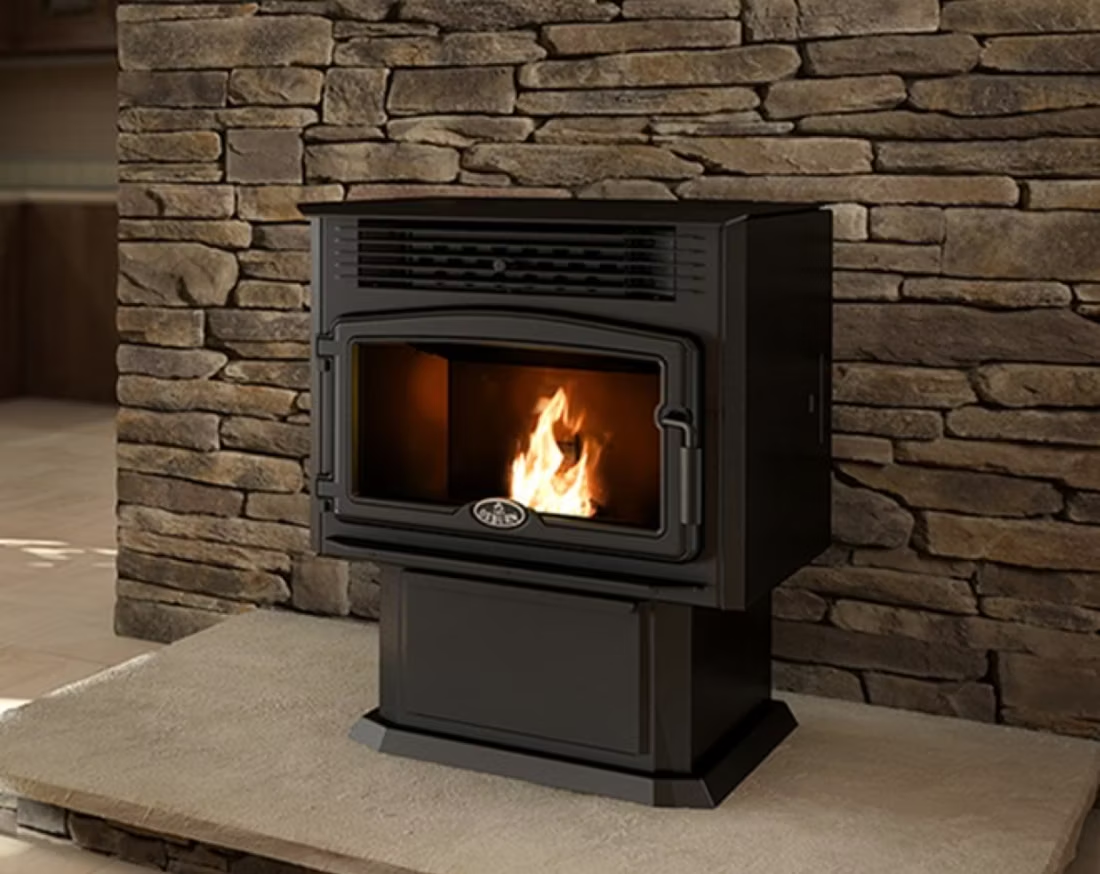
That doesn't mean pellet stoves are off the table. A handful of Lake Geneva homeowners install them in boathouses, lakeside cabins, detached garages, and workshops where running a gas line isn't practical and a masonry chimney doesn't exist. Regional pellet supply is solid even though local demand is light—Lignetics, Indeck Energy Services, and Somerset Pellet Fuel all serve the broader Wisconsin-Illinois corridor, and bags are typically available through farm supply retailers rather than dedicated hearth shops. If a pellet stove fits your situation, we'll be straightforward about that fit and find you a dealer who actually installs and services them in this market, rather than one who treats it as an afterthought.
Three steps. No salesperson until you're ready.
Tell us about your project
Your zip code, your situation, and the fuel you're leaning toward—or let the answers point you to one.
See what's actually available
The brands dealers within 100 miles genuinely carry—real options, never a catalog mirage.
Get your dealer & Project Guide
A trusted local dealer, plus the free Project Guide & Parts List that names every component of the job.
Frequently Asked Questions
Are pellet stoves actually common in Lake Geneva?
No, and we won't pretend otherwise. Most homes in the Lake Geneva area heat with natural gas or electric systems, and gas fireplaces are the far more common secondary heat source in this resort market. Pellet stoves show up occasionally in lake cottages, boathouses, and detached workshops where a gas line isn't run and a chimney doesn't exist. If that's your situation, a pellet stove can still be a smart, clean-burning choice—it's just not the mainstream option here the way it is in more rural, wood-heat-dependent parts of Wisconsin.
How much does a pellet stove installation cost near Lake Geneva?
Nationally, a pellet stove installation typically runs $3,000 to $6,000 depending on the unit, venting run, and hearth pad requirements—expect Lake Geneva pricing to land in that same range. Because pellet stoves are a niche request here compared to gas fireplaces, fewer local dealers stock them, and some installers may travel from the greater Rockford or Milwaukee area, which can add to the quote. Ask any dealer we match you with whether they install pellet units regularly or occasionally—that answer tells you a lot about how smooth the process will be.
Where can I buy pellet fuel near Lake Geneva?
Pellets themselves aren't hard to find even though pellet stoves are uncommon locally. Regional producers like Lignetics, Indeck Energy Services, and Somerset Pellet Fuel supply the Wisconsin-Illinois corridor, and bags typically show up at farm supply and hardware retailers rather than dedicated hearth stores. Because Lake Geneva doesn't have a dense pellet-stove customer base, it's worth calling ahead in peak winter months to make sure a store has stock rather than assuming it's on the shelf.
Why don't more homes in Lake Geneva use pellet stoves?
A few things stack against pellet stoves here. Natural gas service reaches most of the city, and gas fireplaces deliver the instant, low-maintenance heat that fits a resort-town lifestyle of second homes and weekend use. There's also no air quality advisory pushing residents toward cleaner-burning solid fuel the way winter inversion zones do elsewhere. And Walworth County's housing stock skews toward newer lake homes without the masonry fireplaces or rural acreage that typically make wood and pellet heat practical. Pellet stoves aren't wrong for the area—they're just competing with an easier, more established gas infrastructure.
Is a pellet stove a good fit for a boathouse or lake cottage?
Often, yes. Detached structures around Geneva Lake—boathouses, guest cabins, bunkies—frequently lack both a gas line and a masonry chimney, which rules out the two most common heat sources. A pellet stove vents through a simple, small-diameter pipe and doesn't require the clearances a wood stove needs, making it a reasonable fit for a compact seasonal building. Just plan for electricity: the auger and blower both need power, so a stove alone won't help during an outage unless it's paired with a battery backup or generator.
What's the difference between a pellet stove and a wood stove for a property like this?
A wood stove burns cordwood—oak, maple, birch, and aspen are the common species around Walworth County—and it will run through a power outage since it needs no electricity to operate. A pellet stove burns compressed wood pellets, is easier to load and maintain, and burns cleaner with less ash, but it depends on electricity for the auger and combustion blower. Both are uncommon choices in Lake Geneva relative to gas, but if you're deciding between the two for a cabin or workshop, the honest tradeoff is convenience and clean burning (pellet) versus true off-grid reliability (wood).
Do I need a permit to install a pellet stove in Lake Geneva?
Most likely, yes. Solid-fuel and pellet-burning appliances typically require a building permit through the City of Lake Geneva Building Inspection Department, or through Walworth County Land Use & Resource Management if the property sits outside city limits. Because pellet installs are infrequent here, it's worth confirming directly with whichever office covers your address rather than assuming the process mirrors a gas fireplace permit—venting and clearance requirements differ, and a certified installer will usually handle the paperwork as part of the job.
How does a pellet stove compare to a gas fireplace for a Lake Geneva home?
Gas fireplaces win on convenience in this market—no fuel storage, no ash, instant on-off, and they fit the resort-home aesthetic Lake Geneva buyers tend to want. Pellet stoves can actually run more efficiently on paper (many models rate in the 70-83% efficiency range) and give you a real flame with hopper-fed automation, but they need a fuel supply chain that isn't well established locally and require regular hopper loading and ash removal. For a primary living space with gas already run to the house, gas is almost always the simpler choice. For a detached building without gas service, pellet is worth a real look.
Pellet stove or electric heater for backup heat at the lake—which makes more sense?
Neither is a true power-outage solution on its own, which is worth knowing upfront. A pellet stove still needs electricity for its auger and blower, and portable electric heaters obviously need power too. Local electric service comes from Wisconsin Power & Light and Rock Energy Cooperative, with residential rates roughly 14.5 to 16.9 cents per kWh depending on provider—reasonable for running a pellet stove's blower, but irrelevant if the grid itself is down. If genuine off-grid backup heat is the goal for a lake property, a wood-burning option paired with a small generator for the pellet stove's electronics is the more resilient combination.
How often does a pellet stove need cleaning?
A clean pellet stove is a happy pellet stove. Plan on cleaning the burn pot about once a week when you're burning regularly—ash and clinkers gum up the air holes just like a pellet barbecue. Most pellet stove problems trace back to skipped cleaning that nobody explained up front. Some designs make it easy with a trapdoor burn pot: pull a lever and the gunk drops into the ash pan.
What's the difference between an insert and a zero-clearance fireplace?
An insert is a fireplace that slides into a pre-existing wood-burning fireplace—if you don't have one, there's nothing to insert it into. A zero-clearance fireplace is built into a framed wall, which makes it the answer for remodels and new construction. Simple test: existing masonry fireplace means insert; blank or framed wall means zero-clearance.
Can I install a fireplace myself?
If you're putting a fire in your house on purpose, it's best to work with an expert. Unless you're genuinely experienced in framing, gas line, vent pipe, and the national code on clearances to combustibles, have a professional do it—and ideally the same company that sells you the fireplace, so warranty, service, and liability all live under one roof.
How much should I budget for a fireplace?
For an average home—covering the fireplace, the vent pipe, and basic installation—a budget between $3,900 and $5,500 gives you a lot of options across wood, gas, and pellet. By the time you add finish work, gas line, and electrical, the average complete installation lands between $5,000 and $12,000 all-in. In a remodel or new build, a good rule is to put about 2.5% of the total project cost toward the fireplace.
Nearby Dealers
Hearth shops serving Lake Geneva and the surrounding area. Every listing shows whether it is a WhyFire partner, a dealer we have verified as authorized for the brands we recommend, or a local business carrying hearth products. No manufacturer pays for placement. How we verify dealers →
Lakeside Fireplace
Lakes Brick & Block
James R. Tayler & Sons
Fireplace And Patio
Pellet Brands Stocked Around Lake Geneva
Manufacturers will point you to the nearest stocking dealer.
Find your pellet stove in Lake Geneva.
Tell us about your cottage, boathouse, or workshop and we'll put together a free Project Guide & Parts List—the right pellet stove, the vent kit it needs, and a local dealer who actually installs them around Geneva Lake.
Find Your Fireplace →