
Find a pellet stove built for Green County's long winters.
Green County averages 7,115 heating degree days and winter lows near 11°F—a heating season that runs from October to April. A pellet stove or insert delivers clean, thermostat-controlled heat without daily wood-splitting, and we'll connect you with a trusted local dealer who can size and install it right.
Every Project Starts From One of These Five Situations
Automated heat for dairy-country winters.
Green County sits in the rolling dairy and Swiss-heritage farmland of south-central Wisconsin, home to Monroe, New Glarus, Brodhead, and Albany. Winters here run long—the county averages 7,115 heating degree days a year, with average lows around 11°F, a heating season comparable to Madison just up the road on I-90. Wood has always been available locally, with oak, maple, birch, and aspen common on county farms and woodlots, but hauling and splitting cordwood isn't practical for every household, especially on properties already busy with dairy and livestock chores.
That's where pellet stoves and inserts fit in. A hopper load of pellets can run 24 to 50 hours depending on the unit and thermostat setting, and Green County has no air quality non-attainment issues or wood-burning curtailment days to worry about—pellet or wood, you can burn on the coldest nights without restriction. Regional supply is solid, too: brands like Indeck Energy Services, Lignetics, and Somerset Pellet Fuel are sourced and sold throughout southern Wisconsin, so stocking up for the season doesn't mean driving to Madison or Rockford.
Three steps. No salesperson until you're ready.
Tell us about your project
Your zip code, your situation, and the fuel you're leaning toward—or let the answers point you to one.
See what's actually available
The brands dealers within 100 miles genuinely carry—real options, never a catalog mirage.
Get your dealer & Project Guide
A trusted local dealer, plus the free Project Guide & Parts List that names every component of the job.
Frequently Asked Questions
How much does a pellet stove installation cost in Green County?
Most pellet stove and insert installations in Green County run in the $3,000 to $6,500 range, depending on the unit, whether it's a freestanding stove or an insert into an existing fireplace, and how far the exterior vent run has to travel through a wall or masonry chimney. Pellet stoves need a dedicated electrical outlet nearby to power the auger and blower, and any existing chimney used for a pellet insert typically needs a stainless liner sized for pellet exhaust rather than a full masonry flue. Expect the low end for a straightforward wall-vent install in a Monroe or Brodhead ranch home, and the higher end for an insert into an older farmhouse chimney around Albany or New Glarus.
What size pellet stove do I need for my Green County home?
Sizing depends on square footage, ceiling height, and how open your floor plan is. As a rough guide for Green County's 7,115-heating-degree-day climate: smaller units (rated under 1,000 sq ft) work for a single room or supplemental heat in a farmhouse den or kitchen, mid-size units (1,000-1,800 sq ft) handle most main living areas, and larger units (1,800-2,500+ sq ft) can serve as primary heat for an open-concept home. Older, leakier farmhouses common around Browntown and Juda often need to size up compared to a newer, tightly built home of the same footprint. A local dealer will walk your space and size it properly—an oversized stove short-cycles and loses efficiency, while an undersized one runs on high all winter and still can't keep up.
Where can I find a certified pellet stove installer near me?
Look for a hearth dealer with NFI (National Fireplace Institute) pellet-specialist certification, which covers proper venting, clearances, and combustion-air requirements specific to pellet appliances rather than wood-burning units. A trusted local dealer serving Green County will handle the wall or chimney venting, confirm placement of the electrical outlet the stove needs to run its auger and blower, and pull any required building permit as part of the install. Pellet venting and clearances differ from a masonry wood-stove chimney, so this isn't a job to hand to a general handyman.
What's the difference between a pellet stove and a pellet insert?
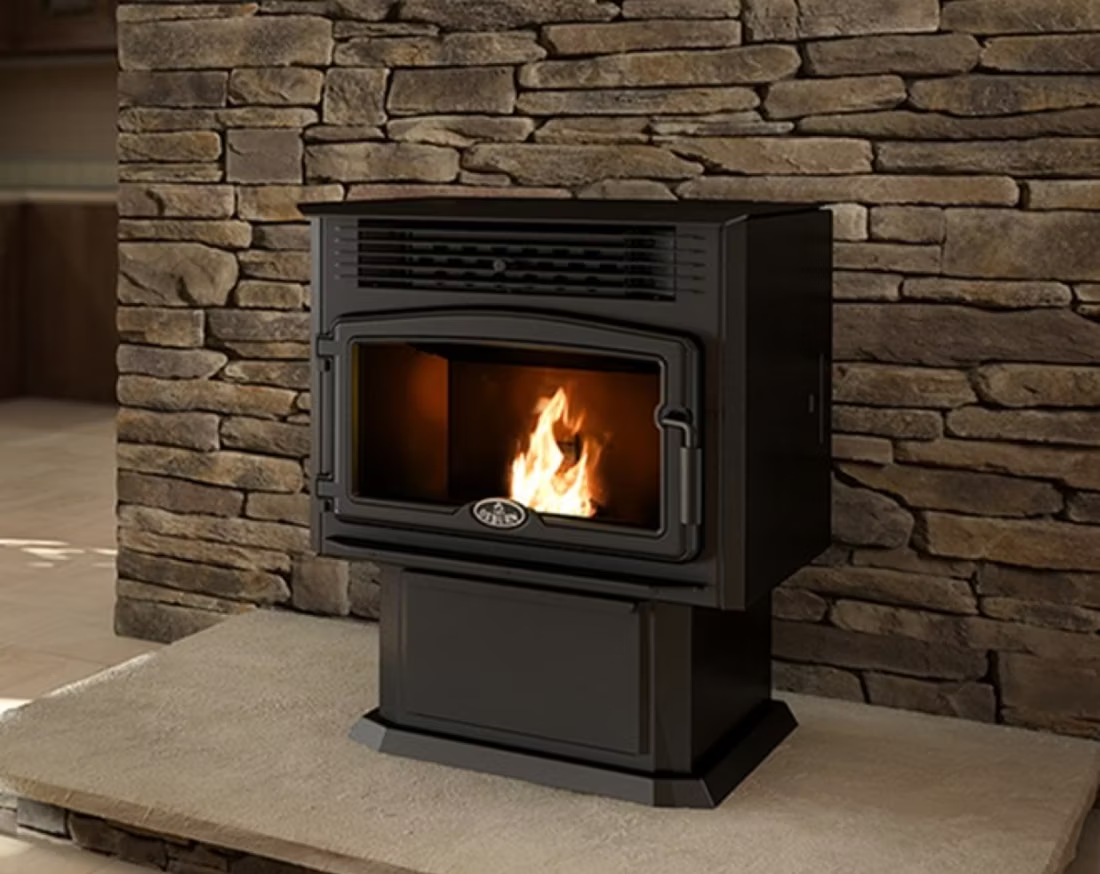
A pellet stove is a freestanding unit that sits on a hearth pad and vents through an exterior wall or up through the roof—it can go almost anywhere with the right clearances, including a den, sunroom, or converted farm outbuilding. A pellet insert is built to slide into an existing masonry fireplace opening, using a sealed stainless liner run up the existing chimney. For the older brick fireplaces common in Monroe and New Glarus farmhouses, an insert turns a mostly decorative fireplace into genuine supplemental or primary heat. Homes without an existing fireplace, or new construction, are usually better suited to a freestanding stove.
Do I need a permit to install a pellet stove in Green County?
In most cases, yes. Pellet stove and insert installations typically require a building permit through your local municipality—Monroe, Brodhead, New Glarus, and Albany each handle permitting through their own village or city building office, while unincorporated parts of the county go through Green County's planning and zoning office. The permit confirms the unit is UL-listed, the vent termination clears windows and property lines by code, and the hearth pad meets clearance requirements. Most local dealers handle this paperwork as part of the installation, so it typically isn't something you have to manage yourself.
What's the best pellet stove for Green County's cold winters?
For a climate averaging 11°F winter lows and over 7,000 heating degree days, look for a stove with a large hopper (at least 40-60 lbs) so you're not reloading every few hours on the coldest nights, and a dependable auto-ignition system, since pellet stoves rely on electricity to run. Brands like Harman and Lopi build units designed for sustained cold-climate use, and either pairs well with pellets from regional producers like Lignetics or Somerset Pellet Fuel. If backup heat during a winter power outage matters—worth considering on rural Green County properties served by overhead lines—ask your local dealer about battery-backup options, since a pellet stove without power won't run.
How often does a pellet stove need to be cleaned and serviced?
Pellet stoves need more frequent attention than people expect: the ash pan and burn pot should be cleaned every few days to weekly during regular winter use, with the glass wiped down as needed. Beyond that, plan on a full annual service checking the auger motor, exhaust blower, gaskets, and venting—typically done at the end of burning season or before it starts in the fall. Because pellet stoves rely on moving mechanical parts rather than just a static flue, skipping the annual service is the most common reason units start running inefficiently or throwing error codes mid-winter.
Where can I buy wood pellets in Green County?
Wood pellets are available through hearth retailers and farm-supply stores throughout the region, with regional brands like Indeck Energy Services, Lignetics, and Somerset Pellet Fuel commonly stocked in southern Wisconsin. Pricing typically runs in the $230-$280 per ton range for premium hardwood pellets, and most Green County households burn 2-3 tons over a full winter depending on whether the stove serves as primary or supplemental heat. Local dealers generally recommend buying early in fall, before the first cold snap drives up demand, and buying by the ton rather than piecemeal by the bag to save money over the season.
Pellet stove vs. wood stove—which is right for my Green County home?
Wood stoves burn cordwood—oak, maple, birch, and aspen are all common on Green County woodlots—and work without electricity, which matters for backup heat during a winter power outage on rural lines. Pellet stoves are more automated: load the hopper, set the thermostat, and they self-feed and self-ignite, with less ash and no splitting or stacking. Green County has no wood-burning curtailment days or air quality restrictions, so neither fuel faces regulatory limits here—the choice comes down to convenience versus off-grid reliability. Many households end up running wood as backup and pellet as the everyday, thermostat-controlled option in the main living space.
How often does a pellet stove need cleaning?
A clean pellet stove is a happy pellet stove. Plan on cleaning the burn pot about once a week when you're burning regularly—ash and clinkers gum up the air holes just like a pellet barbecue. Most pellet stove problems trace back to skipped cleaning that nobody explained up front. Some designs make it easy with a trapdoor burn pot: pull a lever and the gunk drops into the ash pan.
What's the difference between an insert and a zero-clearance fireplace?
An insert is a fireplace that slides into a pre-existing wood-burning fireplace—if you don't have one, there's nothing to insert it into. A zero-clearance fireplace is built into a framed wall, which makes it the answer for remodels and new construction. Simple test: existing masonry fireplace means insert; blank or framed wall means zero-clearance.
How much should I budget for a fireplace?
For an average home—covering the fireplace, the vent pipe, and basic installation—a budget between $3,900 and $5,500 gives you a lot of options across wood, gas, and pellet. By the time you add finish work, gas line, and electrical, the average complete installation lands between $5,000 and $12,000 all-in. In a remodel or new build, a good rule is to put about 2.5% of the total project cost toward the fireplace.
Can I install a fireplace myself?
If you're putting a fire in your house on purpose, it's best to work with an expert. Unless you're genuinely experienced in framing, gas line, vent pipe, and the national code on clearances to combustibles, have a professional do it—and ideally the same company that sells you the fireplace, so warranty, service, and liability all live under one roof.
Stove and Fireplace Dealers in Green County
Listings include WhyFire partner dealers, dealers we have verified as authorized for the brands we recommend, and established local businesses that carry hearth products. Every listing shows which one it is. The ones marked Preferred run on WhyFire's software, so they can show you real pricing and book your appointment right here. No manufacturer pays for placement. How we verify dealers →
Risley Pellet Solutions, LLC
Lanz Furnace And Fireplace
Fireside Hearth & Home - Madison
Janesville Brick & Tile
Pellet Brands Stocked Around Green County
Manufacturers will point you to the nearest stocking dealer.
Find your pellet stove in Green County.
Tell us about your home and heating goals, and we'll match you with a trusted local dealer and send over your free Project Guide & Parts List—sized for your space, with the vent kit and parts you'll need for a Green County installation.
Find Your Fireplace →