
Warm up fast without the wood pile or gas line.
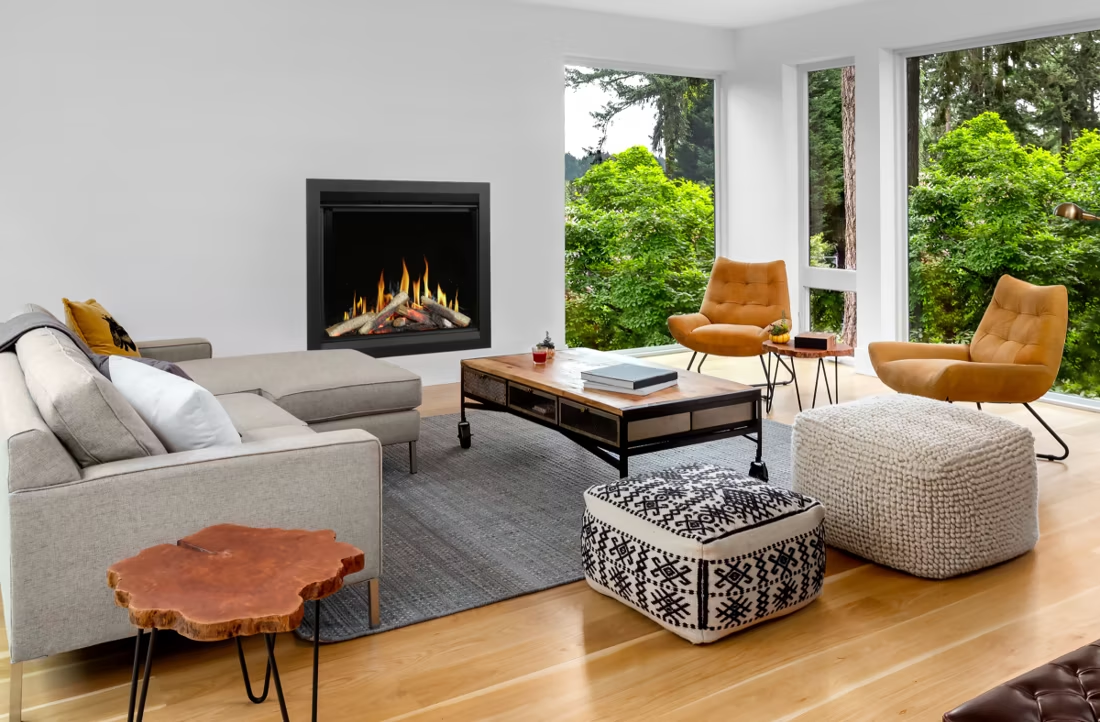
Fox Crossing logs a long, demanding heating season each year—electric fireplaces add real zone heat and a flame effect to any room with no chimney, no venting, and no fuel deliveries. Find the right unit and connect with a trusted local dealer.
Every Project Starts From One of These Five Situations
Zone heat that installs in an afternoon, no chimney required.
Fox Crossing sits in Winnebago County in Wisconsin's Fox Cities, a village of just under 19,000 people along Lake Winnebago's western shore. Winters here are long—average lows sit near 10°F, and the village puts in a long, demanding heating season each year, putting it in climate zone 6A alongside much of Minneapolis, MN. That kind of cold means the furnace still carries the whole house, but electric fireplaces have become a popular way to add supplemental warmth and ambiance to a living room, finished basement, or bedroom without touching the ductwork or the exterior wall.
Wood stoves and pellet stoves are essentially off the table for most Fox Crossing homes—the village's newer housing stock rarely has a masonry chimney, and neither fuel sees much local demand. Electric sidesteps that problem entirely: power comes from Wisconsin Electric Power Co. or Wisconsin Public Service Corp, the two utilities serving Winnebago County, at residential rates running roughly $0.16 to $0.19 per kWh. A plug-in unit can be heating a room the same day it arrives; a built-in wall or linear model usually means an afternoon of work for a licensed electrician to run a dedicated circuit. Either way, it's the fastest, lowest-maintenance way to add real heat to a Fox Crossing home.
Three steps. No salesperson until you're ready.
Tell us about your project
Your zip code, your situation, and the fuel you're leaning toward—or let the answers point you to one.
See what's actually available
The brands dealers within 100 miles genuinely carry—real options, never a catalog mirage.
Get your dealer & Project Guide
A trusted local dealer, plus the free Project Guide & Parts List that names every component of the job.
Frequently Asked Questions
How much does an electric fireplace installation cost in Fox Crossing?
Plug-in electric fireplaces and stove-style units that run off a standard 120V outlet typically cost $300 to $800 installed, since there's no electrical or carpentry work involved beyond setting the unit in place. Built-in wall or linear models—the kind framed into a wall or set into an existing fireplace opening—run $1,500 to $3,500 once you factor in a licensed electrician to run a dedicated 20-amp circuit and any surround or mantel finishing work. Local dealers can walk you through both tiers based on the room and look you're after.
Do electric fireplaces actually put out real heat in a climate like Fox Crossing's?
Yes, within limits. Most electric fireplaces top out around 1,500 watts, which works out to roughly 5,100 BTU—enough to noticeably warm a single room of 300 to 400 square feet, but not enough to replace a furnace in a climate that sees winter lows around 10°F and a long, demanding heating season each year. In Fox Crossing, electric units are best used as zone heat: warming the room you're actually sitting in so you can turn the thermostat down elsewhere, rather than as the home's primary heat source.
What's the difference between a plug-in electric fireplace and a built-in electric insert?
A plug-in unit—often a freestanding stove or mantel package—draws from any standard household outlet and can be moved or removed with no permanent changes to the room. A built-in electric insert is set into a wall cavity or an existing masonry fireplace opening and typically needs its own dedicated circuit, which means an electrician pulling wire to the breaker panel. For Fox Crossing renters or anyone who wants heat up and running the same day, plug-in units are the simpler route. Homeowners doing a fireplace remodel usually prefer the cleaner, flush look of a built-in.
Do I need a permit to install an electric fireplace in Fox Crossing?
A plug-in electric fireplace generally doesn't require a permit since it's just an appliance plugged into an existing outlet. A built-in unit that requires new wiring or a dedicated circuit typically does need an electrical permit through the Village of Fox Crossing Building Inspection Department, since that work has to meet current electrical code. Most licensed electricians and local hearth dealers handle the permit application as part of the installation, so it's rarely something the homeowner has to file directly.
What size electric fireplace do I need for my room?
Since nearly all electric fireplaces cap out at 1,500 watts regardless of price, sizing is less about heat output and more about matching the unit's footprint to the wall or opening and the room's overall size. A 30 to 40 inch unit suits a bedroom or den, a 50 to 60 inch linear model works well as a living room focal point, and larger great rooms in Fox Crossing's newer open-concept homes often do better with two smaller units in different zones than one oversized fireplace trying to cover the whole space.
Will my electric fireplace work during a power outage?
No. Unlike a wood stove that burns independent of the grid, or a gas fireplace with battery-backup ignition, an electric fireplace stops the moment the power drops—and Winnebago County does see winter storms that knock out electricity for hours at a time. If backup heat during outages matters for your Fox Crossing home, plan on a generator to keep the unit running, or look at gas as a supplemental option alongside electric for the rooms where reliability matters most.
What's the difference between an electric fireplace and a space heater?
Both plug into a standard outlet and produce comparable heat, since both are capped around 1,500 watts by code. The real difference is design: electric fireplaces are built as a room's focal point, with realistic LED flame effects, glowing log or crystal media, and a mantel or surround meant to look like a real hearth. A space heater is purely functional. For Fox Crossing homeowners who want supplemental heat that also upgrades the look of a room, the fireplace is worth the extra cost; for a garage or workshop, a basic heater does the same heating job for less.
How much does it cost to run an electric fireplace on Fox Crossing electric rates?
A typical 1,500-watt electric fireplace uses 1.5 kWh per hour of runtime. On Wisconsin Electric Power Co.'s residential rate of about $0.1923 per kWh, that's roughly $0.29 an hour; on Wisconsin Public Service Corp.'s rate of about $0.1623, it's closer to $0.24 an hour. Running the fireplace four hours an evening works out to roughly $29 to $35 a month, depending on which utility serves your address—cheap compared to running a furnace longer, but worth factoring in if you plan to use it daily through a Fox Crossing winter.
Electric vs. gas—which is right for my Fox Crossing home?
Gas fireplaces put out significantly more heat, can be sized to actually contribute to whole-room or supplemental whole-home heating, and—with the right ignition system—can keep running during a power outage. Electric fireplaces cost far less to install, need no gas line or venting, and can go in almost any room, including interior walls and upper floors where running gas line isn't practical. Wood and pellet stoves see little demand in Fox Crossing's newer housing stock, so most homeowners here are really choosing between these two. If you want a straightforward supplemental-heat and ambiance upgrade with the simplest install, electric wins. If you want a unit that can meaningfully offset furnace use on the coldest nights, gas is the better fit.
Can I put a TV above my fireplace?
Yes—with an asterisk. Fireplaces are hot and TVs don't like heat. Either put a mantel between them to deflect rising warmth, or choose a fireplace with heat-management technology that creates a cool zone on the wall above—the wall stays around 125 degrees, barely warm, while the room still gets full heat. If you like clean lines and don't want a mantel, heat management is the answer.
How much does an electric fireplace cost to run?
With the heater on, a typical unit draws about 1,500 watts—at average electric rates that's roughly 20 cents an hour. Run the flame effect alone and it costs pennies; the flames are LED-driven and use about as much power as a light bulb. There's no pilot light, no fuel delivery, and essentially no maintenance.
What is an in-home preview and do I need one?
It's a visit where a hearth professional measures your space, confirms the model you picked actually works in your home, and walks the specs—framing, gas line, venting, finish work—before anything is ordered. Some details you just can't know until you see the house. Never make a down payment without one; it's the single most-skipped step that burns buyers.
Does a fireplace add value to my home?
On average, a fireplace adds back to the home about the same amount you spent installing it. Add the monthly savings from heating the rooms you actually use instead of the whole house—often hundreds of dollars a year—and the value case is strong before you even count what a fire does for how your family uses the room.
Nearby Dealers
Hearth shops serving Fox Crossing and the surrounding area. Every listing shows whether it is a WhyFire partner, a dealer we have verified as authorized for the brands we recommend, or a local business carrying hearth products. No manufacturer pays for placement. How we verify dealers →
Elite Fireplace LLC
Fox Valley Stone & Brick Co., Inc.
Warm Sensations
Electric Service in Fox Crossing
An electric fireplace's heater draws about 1,500 watts—pennies per hour at local rates.
Wisconsin Electric Power Co
Wisconsin Public Service Corp
Find your electric fireplace in Fox Crossing.
Tell us a bit about your home and we'll match you with the right electric fireplace or insert—and connect you with a trusted local dealer, plus a free Project Guide & Parts List for your Fox Crossing installation.
Find Your Fireplace →