
Steady, Set-and-Forget Heat for Lake Winnebago Winters.
Thermostat-controlled, hopper-fed heat for Fond du Lac's long, cold season—no splitting or stacking cordwood required. Find the right unit and connect with a trusted local dealer.
Every Project Starts From One of These Five Situations
Consistent heat without the woodpile.
Fond du Lac sits at the southern tip of Lake Winnebago at 764 feet elevation, where average winter lows hover around 12°F and the city faces a long, demanding heating season—heating demand in the same range as Madison, about 90 miles to the southwest. That's a long, serious heating season, and it's exactly the kind of climate pellet appliances are built to handle: set the thermostat, load the hopper, and let the auger do the rest through a Wisconsin January.
Fond du Lac County's woodlots run heavy on oak, maple, birch, and aspen, and plenty of local homes still burn cordwood—but pellet fuel decouples heating from having a woodshed at all. Regional pellet suppliers including Indeck Energy Services, Lignetics, and Somerset Pellet Fuel keep bagged hardwood pellets moving through eastern Wisconsin hearth shops, so fuel availability isn't tied to a summer cutting-and-seasoning cycle. For homeowners who want solid-fuel backup heat and real flame without hauling and splitting wood, a pellet stove or insert is often the more practical fit for a Fond du Lac home.
Three steps. No salesperson until you're ready.
Tell us about your project
Your zip code, your situation, and the fuel you're leaning toward—or let the answers point you to one.
See what's actually available
The brands dealers within 100 miles genuinely carry—real options, never a catalog mirage.
Get your dealer & Project Guide
A trusted local dealer, plus the free Project Guide & Parts List that names every component of the job.
Frequently Asked Questions
How much does a pellet stove installation cost in Fond du Lac?
A freestanding pellet stove installation in Fond du Lac typically runs $3,000 to $6,500, depending on the stove, whether venting runs through an exterior wall or existing chimney chase, and any hearth pad work needed for clearance-to-combustible requirements. A pellet insert going into an existing masonry fireplace, with a liner run up the chimney, usually lands closer to $4,000 to $7,500. Local hearth dealers will give you a firm number after seeing the room and the venting path in person.
What size pellet stove do I need for my home?
Sizing depends on square footage, ceiling height, insulation, and whether the stove is meant as primary or supplemental heat. Given Fond du Lac's long, demanding heating season, homes here generally need more heating capacity than the national average—a stove rated for 1,500 sq ft in a milder climate may only comfortably cover 1,000-1,200 sq ft locally once you're into a stretch of single-digit nights. Hopper capacity matters too: a larger hopper means fewer refills during the coldest weeks. A local dealer will size the unit to your actual floor plan rather than a generic chart.
Where can I find certified pellet stove installers near Fond du Lac?
Look for installers with NFI (National Fireplace Institute) certification, which covers proper venting, clearance-to-combustibles, and hopper/auger setup specific to pellet appliances. Most hearth retailers serving the Fond du Lac area handle sales and installation together, which keeps warranty coverage and code compliance under one roof. Because pellet venting runs are shorter and simpler than a masonry chimney, some installers also do this work alongside gas fireplace installs—ask specifically about pellet-appliance experience rather than assuming general HVAC or chimney experience transfers directly.
What's the difference between a pellet stove and a pellet insert?
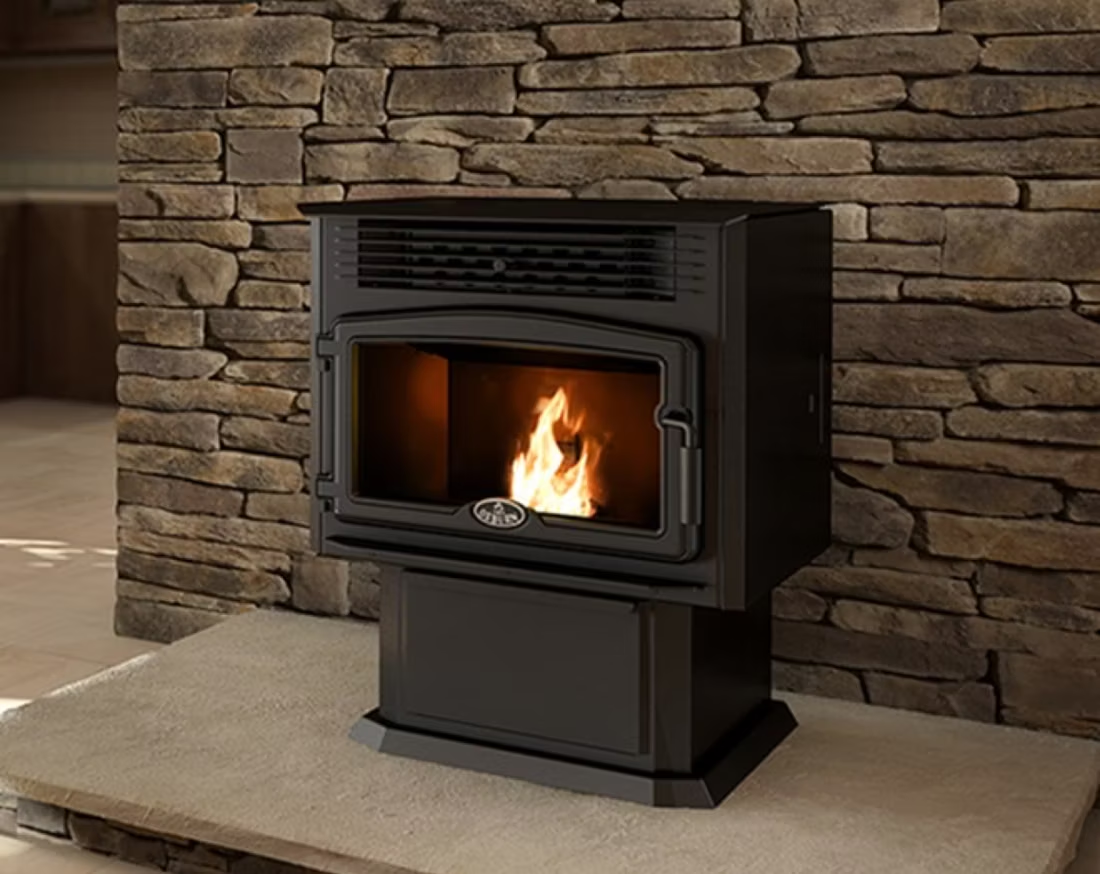
A pellet stove is a freestanding unit that sits on its own hearth pad and vents through a wall or existing chimney chase—it can go almost anywhere in the house with the right clearances. A pellet insert is built to slide into an existing masonry fireplace opening, using a stainless liner run up through the original chimney for venting. For Fond du Lac homes with an existing wood-burning fireplace that's more decorative than functional, an insert is usually the better upgrade since it reuses the chimney you already have. Homes without an existing fireplace typically go with a freestanding stove instead.
Do I need a permit to install a pellet stove in Fond du Lac?
Yes—new pellet stove and insert installations require a building permit, either through the City of Fond du Lac's building inspection office or Fond du Lac County if the property sits outside city limits. Most local hearth dealers handle the permit application and inspection scheduling as part of the installation package. Unlike some parts of the country, Fond du Lac has no wood-smoke non-attainment designation or seasonal curtailment program, so there's no burn-ban paperwork to track—just standard code compliance for venting and clearances.
What's the best pellet stove for Fond du Lac's climate?
For a heating season with regular single-digit nights, look for a stove with a larger hopper (40-plus pounds) and a firebox rated for continuous, high-output burns rather than a light-duty model built mainly for ambiance. Brands with a strong Midwest dealer network—Harman, Lopi, and Enviro among them—hold up well under daily heating-season use and are easy to get serviced locally. A thermostat-controlled model with automatic ignition is worth the extra cost here since it lets the stove modulate output overnight without you tending it, which matters when it's 12°F outside and staying that way for days.
How much maintenance does a pellet stove need?
Pellet stoves need more frequent light maintenance than wood stoves but far less heavy cleaning. Plan on emptying the ash pan every few days during heavy winter use, cleaning the burn pot weekly to keep it from clinkering over, and a full professional cleaning of the exhaust venting and combustion blower once a year—typically before burning season starts in the fall. Neglecting the annual service is the most common cause of reduced heat output and error codes on the control board.
Does a pellet stove work during a power outage?
Not without a backup power source. Pellet stoves rely on an electric auger to feed fuel and a blower to distribute heat and exhaust combustion gases, so a standard unit shuts down the moment power drops—a real consideration in Fond du Lac given how often winter storms off Lake Winnebago knock out lines along with the cold snap that follows. Many owners run a small battery backup or generator sized for the stove's modest draw (typically under 400 watts) specifically for this reason. Day-to-day running costs are low even at Wisconsin Power & Light's residential rate of about 16.9 cents per kWh, since the auger and blower don't draw much continuous power.
Pellet stove vs. wood stove—which is right for my Fond du Lac home?
Wood stoves work without electricity, which matters for outage-prone winter storms, and pair well with the oak, maple, birch, and aspen that are common firewood species around Fond du Lac County. They also tend to put out more raw heat per load. Pellet stoves trade that off for convenience and consistency: load the hopper, set the thermostat, and the stove self-regulates output for hours without tending, with less ash and no need to season or store cordwood. If backup heat during a power outage is the priority, wood has the edge. If day-to-day convenience and steady, hands-off heat matter more, pellet is usually the better fit. Local hearth dealers carry both and can walk through the trade-offs for your specific house.
How often does a pellet stove need cleaning?
A clean pellet stove is a happy pellet stove. Plan on cleaning the burn pot about once a week when you're burning regularly—ash and clinkers gum up the air holes just like a pellet barbecue. Most pellet stove problems trace back to skipped cleaning that nobody explained up front. Some designs make it easy with a trapdoor burn pot: pull a lever and the gunk drops into the ash pan.
What do I measure to size a fireplace insert?
Four numbers tell you what fits: the front width, the front height, the back width, and the overall depth of your existing fireplace opening. Grab a tape measure, jot those down, and snap a photo of the wall—those two things do more to move your project forward than anything else you can do today.
Can a fireplace actually lower my heating bill?
Yes—by creating a comfort zone. A furnace heats every square foot of the house just to warm the one room you're in; a gas fireplace on low burns roughly a sixth of the gas a typical furnace does. Set the furnace around 55–60 degrees as a baseline, then heat the rooms your family actually uses. Families who heat this way commonly save $20–$60 a month.
What is an in-home preview and do I need one?
It's a visit where a hearth professional measures your space, confirms the model you picked actually works in your home, and walks the specs—framing, gas line, venting, finish work—before anything is ordered. Some details you just can't know until you see the house. Never make a down payment without one; it's the single most-skipped step that burns buyers.
Nearby Dealers
Hearth shops serving Fond du Lac and the surrounding area.
Pellet Brands Stocked Around Fond du Lac
Manufacturers will point you to the nearest stocking dealer.
Find your pellet stove in Fond du Lac.
Tell us a bit about your home and we'll match you with the right pellet stove or insert, plus a free Project Guide & Parts List—including the vent kit and your recommended local Fond du Lac dealer.
Find Your Fireplace →