
Reliable heat for Door County's long, lake-effect winters.
From Sturgeon Bay to Sister Bay, Fish Creek, and Washington Island, gas fireplaces give Door County homes and cottages instant, dependable heat without the wood-tending. Find the right unit and connect with a trusted local dealer.
Every Project Starts From One of These Five Situations
Convenience built for a peninsula full of part-time homes.
Door County juts into Lake Michigan and Green Bay, and that exposure shapes its winters—7,965 heating degree days, average lows around 10°F, and the kind of lake-effect snow squalls that pile up fast along the shoreline, not unlike what Duluth, MN sees off Lake Superior. With just over 12,000 year-round residents spread across Sturgeon Bay, Egg Harbor, Fish Creek, Ephraim, Sister Bay, Baileys Harbor, and ferry-only Washington Island, a huge share of the county's housing stock is seasonal—cottages and vacation homes that sit empty for stretches and need to warm up fast when the owners arrive on a Friday night in January.
Natural gas service through Wisconsin Public Service reaches Sturgeon Bay and the immediate surrounding corridor, but most of the rest of the peninsula—and certainly Washington Island, which depends on the ferry for deliveries—runs on propane. Either fuel gets you the same result: flip a switch and the living room is warm in minutes, no ash, no wood stacked on the porch, and no need to plan ahead before a weekend visit. For older cottages with drafty single-pane windows and thin insulation, a gas insert or fireplace also delivers steady zone heat that takes the edge off without running the furnace nonstop through a Door County winter.
Three steps. No salesperson until you're ready.
Tell us about your project
Your zip code, your situation, and the fuel you're leaning toward—or let the answers point you to one.
See what's actually available
The brands dealers within 100 miles genuinely carry—real options, never a catalog mirage.
Get your dealer & Project Guide
A trusted local dealer, plus the free Project Guide & Parts List that names every component of the job.
Frequently Asked Questions
How much does a gas fireplace installation cost in Door County?
A typical gas fireplace installation in Door County runs roughly $4,500 to $10,000, depending on the unit, whether you're on natural gas or propane, and how much venting or gas line work is involved. A direct-vent insert going into an existing masonry fireplace with gas already run to the room sits at the lower end. New construction or a full built-in installation—with framing, venting, and a fresh gas line or propane tank hookup—runs toward the higher end. Homes on Washington Island or in the more remote northern reaches of the peninsula should expect a modest travel and delivery premium worked into the estimate, since materials and crews have to make the ferry crossing or drive further from Sturgeon Bay.
Can I convert my existing wood fireplace to gas?
Yes, and it's a common project in Door County's older cottages, many of which have a masonry fireplace originally built to burn local oak or maple. A gas insert typically drops into that existing opening and vents through the same chimney with a stainless liner, which keeps the exterior look of the fireplace intact while eliminating the need to haul and stack wood at a home you might only visit every few weeks. Expect $4,000 to $8,500 for a straightforward conversion, more if the chimney needs relining or if propane tank work is required for homes outside the Wisconsin Public Service natural gas footprint around Sturgeon Bay.
Do I need natural gas, or is propane the standard here?
It depends on where in the county you are. Wisconsin Public Service delivers natural gas to Sturgeon Bay and the immediately surrounding area, so homes there can typically add a gas fireplace without much fuss if the appliance is already using natural gas. Outside that corridor—Egg Harbor, Fish Creek, Ephraim, Sister Bay, Baileys Harbor, and especially Washington Island, which has no bridge or gas main and relies on the ferry for everything—propane is the standard, supplied by regional delivery companies and stored in an on-site tank. Most gas fireplace models can be configured for either fuel; your local dealer sets the orifice and regulator accordingly.
Will my gas fireplace work during a power outage?
Most modern gas fireplaces will, which matters on a peninsula where exposed shoreline power lines go down during lake-effect snow squalls and winter storms. Units with IPI (intermittent pilot ignition) run on a small battery backup that kicks in automatically when the power drops, so the fireplace still lights on demand. Valor takes a different approach—their units generate their own electricity through the pilot's thermocouple, so there's no battery to check or replace, ever. For a seasonal cottage on Washington Island or out toward Gills Rock that might sit unattended for stretches, that self-powering design is worth asking your local dealer about specifically.
What's the difference between a gas fireplace, gas insert, and gas stove?
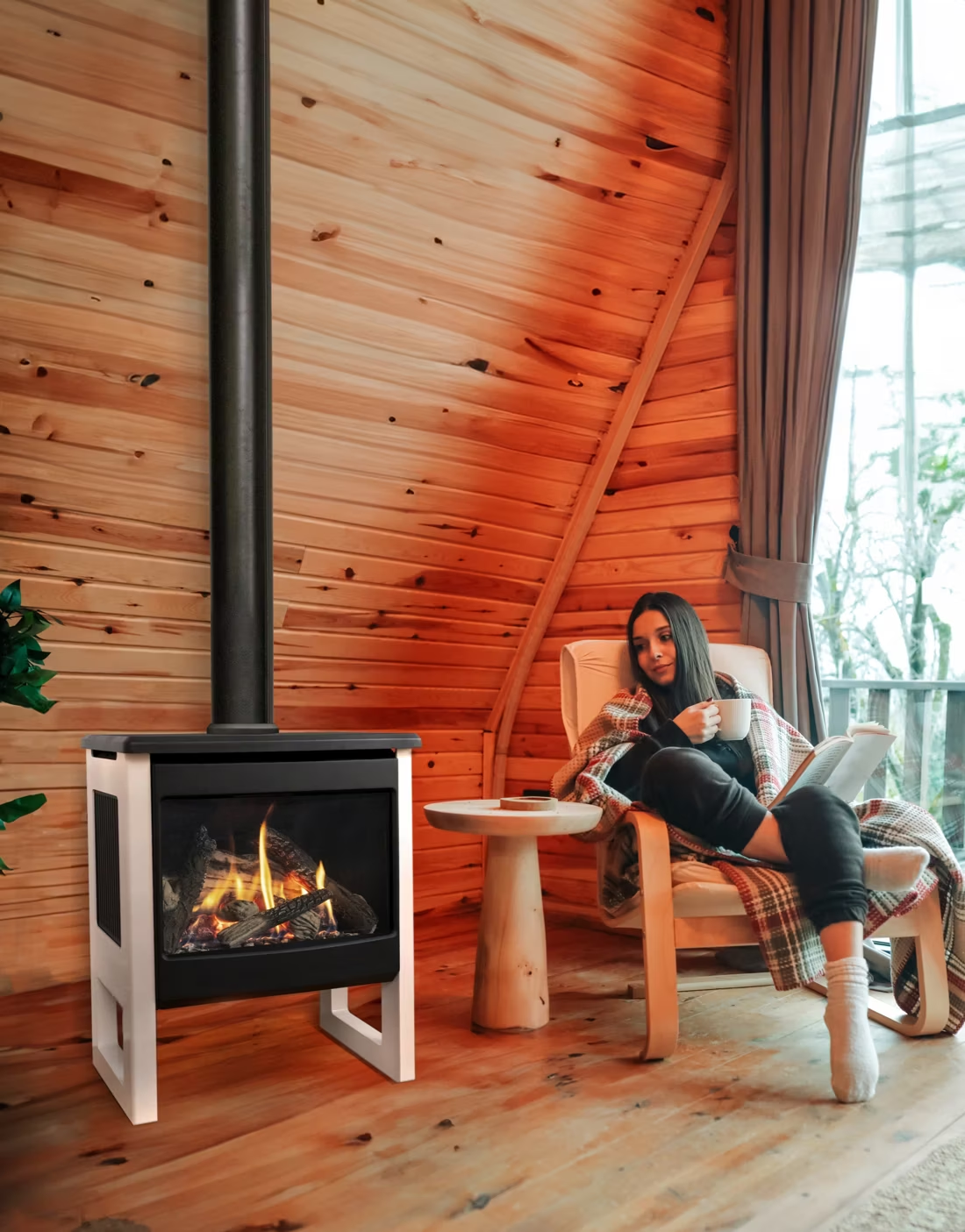
A gas fireplace is a fully built-in unit framed into a wall—the right call for new construction or a full remodel. A gas insert slides into an existing masonry fireplace opening and uses the existing chimney as its vent path, which fits many of Door County's older cottage fireplaces well. A gas stove is a freestanding unit that sits on the floor like a wood stove but burns gas, and works in rooms without an existing fireplace or chimney at all. For most Door County homeowners upgrading an existing wood-burning fireplace, an insert is the simplest and most cost-effective path.
Do I need a permit to install a gas fireplace in Door County?
Yes—a building permit is required through the Door County Land Use Services Department for new gas fireplace or insert installations, along with a separate gas line permit if new piping is being run. Propane tank installations or upgrades typically require sign-off from your propane supplier as well. Most established local dealers handle all of this paperwork as part of the installation, coordinating the gas-fitter, the venting work, and the inspection so you're not managing three separate trades yourself.
What's the difference between vented and vent-free gas fireplaces?
Vented gas fireplaces (direct-vent or B-vent) draw combustion air from outside and exhaust it back outside through sealed venting—they're the cleanest, safest option and the standard choice for Door County's climate zone 6A winters, where a home is sealed tight for months at a time. Vent-free units burn fuel directly into the room without external venting; they're legal in Wisconsin but come with strict room-sizing and ventilation rules, and they release water vapor and small amounts of combustion byproducts into the living space. For a cottage that's closed up for weeks between visits, a vented unit is the safer and more universally recommended choice—ask your local dealer to walk you through both if you're weighing it.
How often should my gas fireplace be serviced?
An annual inspection is recommended even for a fireplace that only runs on weekends or during summer visits. A technician checks the burner, pilot, gas connections, and venting, and cleans the glass and interior—lake-region humidity and shoreline moisture can accelerate corrosion on fittings faster than in a drier inland climate. Most local service providers in the Sturgeon Bay area charge $150 to $250 for a standard annual visit, and scheduling it in early fall before the cottage crowd thins out is the easiest way to make sure it's ready for your first cold-weather visit.
Gas vs. wood—which is right for my Door County home?
Wood is deeply rooted here—oak, maple, birch, and aspen are all common locally, and Hiawatha National Forest issues cutting permits for $10 to $20 per cord during the May-to-October season, which makes self-cut firewood an affordable option for full-time residents. But wood requires someone on-site regularly to tend it, split it, and stock it, which is a real limitation for the many Door County owners who visit their homes only on weekends or in summer. Gas solves that problem outright: flip a switch, get heat in minutes, and walk away without banking a fire. Many full-time peninsula households keep both—wood for ambiance and backup heat, gas in the main living space for convenience and quick warmth on arrival.
Why is my open fireplace making my house colder?
Open fireplaces suck—literally. As the fire burns, it consumes air your furnace already paid to heat and pulls it out through the chimney, so the house is actually colder after the fire goes out than before you lit it. An insert fixes this: it seals the chimney, puts fixed glass across the front, and turns that hole in your house into a real heat source.
Is my gas fireplace wasting gas?
If it was installed more than 15 years ago, probably. Older gas fireplaces keep a standing pilot light burning all the time, and that little flame can cost a couple hundred dollars a year. Newer models use pilot-on-demand ignition—the pilot lights only when you use the fireplace and goes out when you turn it off.
Can a fireplace actually lower my heating bill?
Yes—by creating a comfort zone. A furnace heats every square foot of the house just to warm the one room you're in; a gas fireplace on low burns roughly a sixth of the gas a typical furnace does. Set the furnace around 55–60 degrees as a baseline, then heat the rooms your family actually uses. Families who heat this way commonly save $20–$60 a month.
What is an in-home preview and do I need one?
It's a visit where a hearth professional measures your space, confirms the model you picked actually works in your home, and walks the specs—framing, gas line, venting, finish work—before anything is ordered. Some details you just can't know until you see the house. Never make a down payment without one; it's the single most-skipped step that burns buyers.
Stove and Fireplace Dealers in Door County
Listings include WhyFire partner dealers, dealers we have verified as authorized for the brands we recommend, and established local businesses that carry hearth products. Every listing shows which one it is. The ones marked Preferred run on WhyFire's software, so they can show you real pricing and book your appointment right here. No manufacturer pays for placement. How we verify dealers →
Wulf Brothers- Sturgeon Bay, Wi
Laughlin Chimney & Fireplace
Wulf Brothers-Sister Bay, Wi
Midwest Expansion
Energy Shop
Find your gas fireplace in Door County.
Tell us about your home or cottage and we'll match you with a trusted local Door County dealer and send over a free Project Guide & Parts List—the exact parts, including the vent kit, and a clear plan for your gas fireplace project.
Find Your Fireplace →