
Electric fireplace heat for Door County's cottages and condos.
Ambiance and supplemental warmth for the peninsula—from Sturgeon Bay to Sister Bay, Fish Creek to Washington Island. Find the right electric unit for your cottage, condo, or year-round home, and connect with a trusted local dealer.
Every Project Starts From One of These Five Situations
Real heat and ambiance, without a chimney to maintain.
Door County occupies the long peninsula between Green Bay and Lake Michigan, and its year-round population of roughly 12,200 lives alongside a summer population that multiplies many times over—cottages in Fish Creek, condos in Sister Bay, historic inns in Ephraim, and vacation homes scattered from Egg Harbor to Washington Island. Winters here are genuinely cold: an average winter low near 10°F and a long, demanding heating season put Door County in the same climate territory as Duluth, Minnesota, not the milder stretches of southern Wisconsin. That combination—a huge inventory of seasonal and rental properties plus a real cold-climate heating need—is exactly where electric fireplaces earn their place.
Many Door County properties can't easily add a wood stove or gas line—historic district rules in Ephraim and Fish Creek restrict exterior venting, condo associations along the Sister Bay and Egg Harbor waterfronts limit chimney penetrations, and short-term rental owners want a heat source a renter can't burn the place down with. An electric fireplace or insert solves all of that: no venting, no gas line, no combustion byproducts, and a simple 120V or 240V circuit run by a licensed electrician. Wisconsin Public Service (WPS) provides electric service across most of the peninsula, and a growing number of Door County homeowners are pairing an electric unit for ambiance and zone heat with a wood stove or propane furnace that carries the real cold-weather load.
Three steps. No salesperson until you're ready.
Tell us about your project
Your zip code, your situation, and the fuel you're leaning toward—or let the answers point you to one.
See what's actually available
The brands dealers within 100 miles genuinely carry—real options, never a catalog mirage.
Get your dealer & Project Guide
A trusted local dealer, plus the free Project Guide & Parts List that names every component of the job.
Frequently Asked Questions
How much does an electric fireplace installation cost in Door County?
Plug-in electric inserts and freestanding units that use a standard 120V outlet run roughly $300 to $1,200 installed, with no electrician required beyond confirming the circuit. Built-in wall units and larger inserts that need a dedicated 240V circuit typically run $800 to $2,500 once you factor in the unit, wiring from a local electrician, and any wall or mantel framing. Costs run toward the higher end for older Door County cottages and historic Ephraim or Fish Creek homes where the electrical panel may need upgrading before a dedicated circuit can be added.
Will an electric fireplace actually heat my Door County home?
Most electric fireplaces are rated around 4,600 to 5,200 BTU (roughly 1,500 watts)—enough to comfortably heat a single room, but not enough to serve as primary heat through a Door County winter with a long, demanding heating season and average lows near 10°F. Think zone heat and ambiance in the living room or bedroom, not a replacement for your furnace, propane system, or wood stove. Where electric units do carry more of the load is in smaller condos and well-insulated newer builds around Sister Bay and Egg Harbor, where the space being heated is limited enough for a 1,500-watt unit to make a real dent.
Do I need a permit to install an electric fireplace in Door County?
A simple plug-in electric insert or freestanding unit generally doesn't require a permit—it's no different than plugging in a space heater. A built-in wall unit that requires new wiring or a dedicated circuit does typically need an electrical permit through Door County's building and zoning department, and the work itself needs to be done by a licensed electrician. If you're in a historic district—Ephraim and Fish Creek both have design review overlays—check whether any exterior or structural changes around the fireplace surround need separate sign-off.
Why do so many Door County vacation rentals and condos use electric fireplaces?
Electric fireplaces solve several problems specific to Door County's rental-heavy market at once: no venting means condo associations and historic-district properties don't have to fight over chimney penetrations, no open flame or hot glass on most models means lower liability for a renter who's never operated a wood stove, and app or remote-controlled units let property managers set schedules and shut units off between guests. For a Sister Bay condo or a short-term rental in Egg Harbor, that combination of low maintenance and low risk usually outweighs the ambiance trade-off of not having a real wood or gas flame.
Will my electric fireplace work if the power goes out?
No—and this is worth planning around on a Lake Michigan peninsula where winter storms and ice can knock out power for hours or longer. Unlike a wood stove or a battery-backed gas fireplace, an electric unit is fully dependent on grid power from WPS. If you're relying on your fireplace for real heat during a Door County winter outage, you need a wood stove, a propane heater, or a generator as backup—the electric fireplace is best understood as a convenience and ambiance appliance, not an emergency heat source.
Can I put an electric insert into my existing fireplace?
Yes, and it's one of the most common projects among Door County's older cottage and historic-home owners. An electric insert slides into an existing masonry or prefab fireplace opening, plugs into a nearby outlet or a new dedicated circuit, and gives you real-looking flame and heat without cleaning ash, buying wood, or maintaining a chimney. It's a particularly good fit for older Ephraim and Fish Creek homes where the original fireplace is more decorative than functional at this point, or where the flue has deteriorated and full wood-burning restoration isn't worth the cost.
What does an electric fireplace cost to run in Door County?
Running cost depends on wattage and how much you use it—a 1,500-watt unit run on high draws about 1.5 kWh per hour. At typical Wisconsin Public Service residential rates, that works out to somewhere around 20 to 25 cents per hour of use, noticeably cheaper than most people expect but still more than a wood stove burning already-split oak or maple. Most owners run electric units on lower heat settings, or flame-only with no heat, for evening ambiance rather than running them at full output for hours at a time.
What size electric fireplace do I need?
For ambiance alone, almost any size works—sizing only matters if you want the unit to contribute real heat. As a rule of thumb, a standard 1,500-watt insert or wall unit is enough for a single room up to roughly 400 square feet in a reasonably well-insulated Door County home; drafty older cottages or larger open rooms will feel less of a difference. Linear wall units are sized more by the width of the wall or mantel you're filling than by BTU output, since most Door County buyers are choosing them for the look as much as the heat.
Electric vs. wood—which makes more sense for my Door County property?
Wood stoves and inserts burning local oak, maple, birch, or aspen remain the more serious cold-weather answer on the peninsula—they work without power, which matters during Lake Michigan winter storms, and they can genuinely carry the heat load through a long, demanding winter heating season. Electric fireplaces don't compete on raw heat output or outage resilience, but they win on simplicity: no chimney, no ash, no venting through a historic-district wall, and no worries about a renter mishandling an open flame. Many Door County homeowners end up with both—a wood stove for real winter heat and self-sufficiency, and an electric unit in a bedroom or den for easy ambiance without the upkeep.
Can I put a TV above my fireplace?
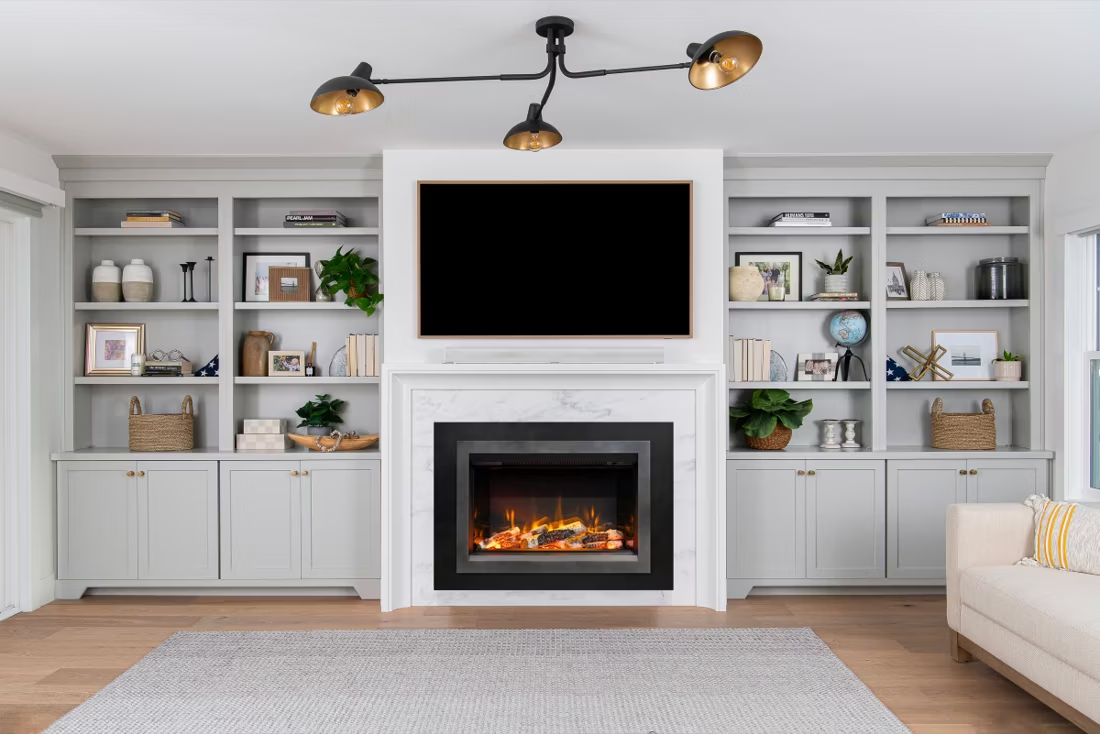
Yes—with an asterisk. Fireplaces are hot and TVs don't like heat. Either put a mantel between them to deflect rising warmth, or choose a fireplace with heat-management technology that creates a cool zone on the wall above—the wall stays around 125 degrees, barely warm, while the room still gets full heat. If you like clean lines and don't want a mantel, heat management is the answer.
Does an electric fireplace need a vent or chimney?
No—that's its superpower. An electric fireplace needs a wall and an outlet, period. No vent pipe, no gas line, no clearances to design around, which is why it works in bedrooms, offices, apartments, and walls where venting a gas or wood unit would be impractical or impossible. Installation is typically the simplest and least expensive of any fireplace type.
What is an in-home preview and do I need one?
It's a visit where a hearth professional measures your space, confirms the model you picked actually works in your home, and walks the specs—framing, gas line, venting, finish work—before anything is ordered. Some details you just can't know until you see the house. Never make a down payment without one; it's the single most-skipped step that burns buyers.
Can a fireplace actually lower my heating bill?
Yes—by creating a comfort zone. A furnace heats every square foot of the house just to warm the one room you're in; a gas fireplace on low burns roughly a sixth of the gas a typical furnace does. Set the furnace around 55–60 degrees as a baseline, then heat the rooms your family actually uses. Families who heat this way commonly save $20–$60 a month.
Stove and Fireplace Dealers in Door County
Listings include WhyFire partner dealers, dealers we have verified as authorized for the brands we recommend, and established local businesses that carry hearth products. Every listing shows which one it is. The ones marked Preferred run on WhyFire's software, so they can show you real pricing and book your appointment right here. No manufacturer pays for placement. How we verify dealers →
Wulf Brothers- Sturgeon Bay, Wi
Laughlin Chimney & Fireplace
Wulf Brothers-Sister Bay, Wi
Midwest Expansion
Energy Shop
Find your electric fireplace in Door County.
Tell us about your cottage, condo, or year-round home and we'll match you with a trusted local dealer—plus a free Project Guide & Parts List with the exact parts for your electric fireplace project in Door County.
Find Your Fireplace →