
Instant heat and ambiance for Dodge County's long winters.
With a long, demanding winter heating season and winter lows averaging 9°F, Dodge County homes need heat that works the moment you flip a switch. Find the right electric unit and connect with a trusted local dealer.
Every Project Starts From One of These Five Situations
No venting, no fuel storage, no fuss.
Dodge County sits in climate zone 6A, between Madison and Milwaukee, with farmland and small cities like Beaver Dam, Watertown, Juneau, and Mayville stretched across mostly flat terrain. Winters here are long and genuinely cold—comparable to what you'd see in Madison or Fargo, ND in terms of heating load—and the county racks up one of the longest, coldest heating seasons around. That's a lot of months where supplemental heat matters, whether it's warming a finished basement, taking the chill off a sunroom, or adding ambiance to a living room without opening up a wall for venting.
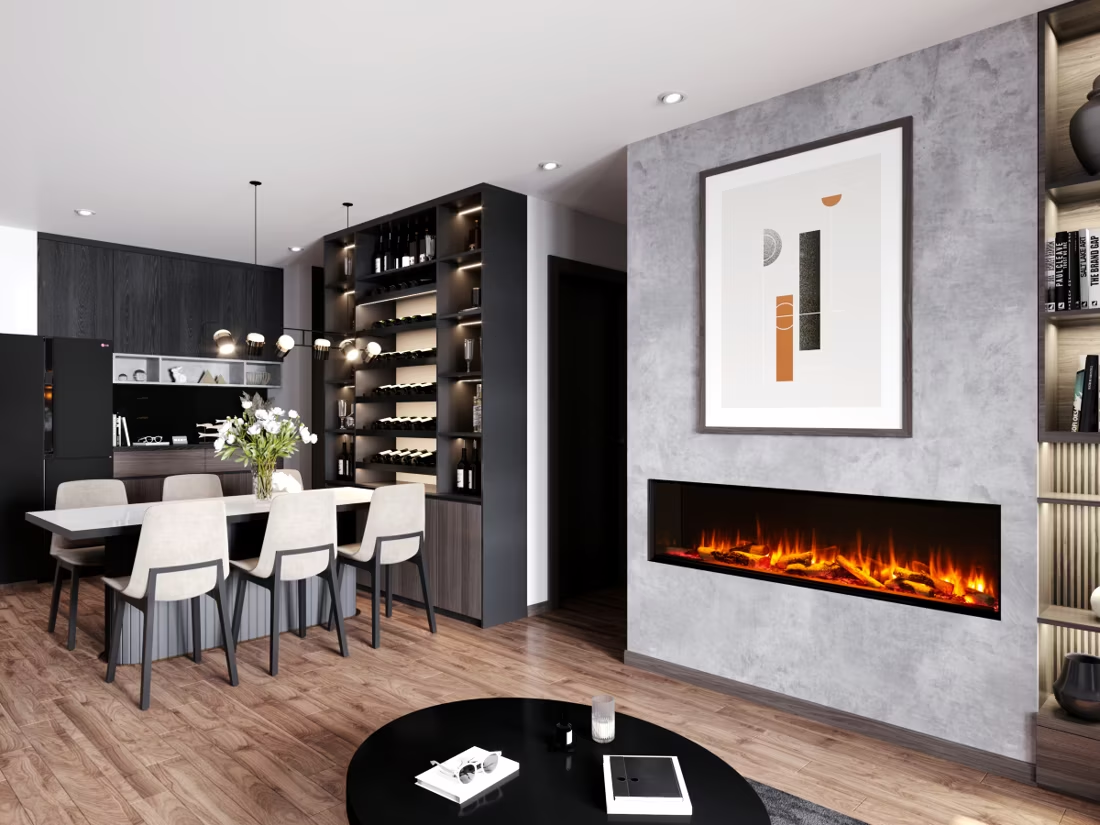
Electric fireplaces and inserts have become a practical option for a lot of Dodge County homeowners precisely because they skip the complications that come with wood or gas: no chimney, no gas line, no permit for a flue, and no cutting into exterior walls. They plug into a standard outlet or a dedicated 240V circuit for larger units, and most modern models put out real, usable heat for a bedroom, den, or apartment-style space—not just a decorative flicker. For older farmhouses and rural homes throughout the county where running new gas line or masonry work isn't practical, electric is often the fastest path to a working fireplace.
Three steps. No salesperson until you're ready.
Tell us about your project
Your zip code, your situation, and the fuel you're leaning toward—or let the answers point you to one.
See what's actually available
The brands dealers within 100 miles genuinely carry—real options, never a catalog mirage.
Get your dealer & Project Guide
A trusted local dealer, plus the free Project Guide & Parts List that names every component of the job.
Frequently Asked Questions
How much does an electric fireplace installation cost in Dodge County?
Most electric fireplace installations in Dodge County run $400 to $1,200, and a large share of that range is determined by whether the unit is a simple plug-in insert or a built-in model that needs a dedicated 240V circuit. A basic electric insert dropped into an existing fireplace opening or a freestanding unit on a media wall is on the lower end—often just the cost of the unit plus a few hours of labor. Larger built-in units, especially ones installed during a remodel with new framing or a dedicated circuit run by an electrician, land toward the higher end. Compared to wood or gas installs, electric is consistently the least expensive way to add a fireplace in Dodge County homes.
Do I need a permit to install an electric fireplace in Dodge County?
Generally, plug-in electric fireplaces and inserts don't require a permit since there's no venting, gas line, or structural chimney work involved. If your installation requires a new dedicated 240V circuit, that electrical work typically falls under standard electrical permitting through your local municipality—Beaver Dam, Watertown, Juneau, and other Dodge County jurisdictions each handle this through their own building department. Most licensed electricians pull this permit as a routine part of the job, so it's rarely something homeowners have to manage themselves. Confirm with your installer whether your specific unit needs the dedicated circuit.
Can an electric fireplace actually heat a room, or is it just for looks?
Modern electric fireplaces can genuinely heat a room—most units put out around 4,600 to 5,000 BTUs, enough for a 400 to 600 square foot space depending on insulation and ceiling height. That's a real difference from older electric fireplaces that were mostly decorative. For Dodge County's cold-climate reality, an electric unit works well as supplemental or zone heat in a bedroom, den, finished basement, or three-season room, but it's not a substitute for whole-home heating during a stretch of single-digit nights. Homeowners looking for backup heat during a furnace outage should also know most electric units require power to run—they won't help during an outage the way a wood stove would.
What's the difference between an electric fireplace and an electric insert?
An electric fireplace is typically a standalone or wall-mounted unit that can be installed almost anywhere with an outlet nearby—no existing opening required. An electric insert is built to slide into an existing fireplace opening, whether that's an old wood-burning masonry fireplace or a zero-clearance box, giving it new life without construction. For Dodge County's older farmhouses with existing but unused masonry fireplaces, an insert is often the simplest upgrade—it fits the opening you already have and typically just needs a nearby outlet or a short electrical run.
How does electric heat compare to wood heat in a Dodge County home?
Wood stoves burning local oak, maple, or birch put out significantly more heat and can run without power, which matters during Dodge County's occasional winter storm outages. Electric fireplaces trade that raw heat output and outage resilience for convenience—no wood handling, no ash, no chimney maintenance, and instant on-off operation. For a primary heat source in a drafty older home, wood generally wins in this climate zone. For a bedroom, den, or finished basement where the goal is comfort and ambiance rather than carrying the full heating load, electric is usually the better and far less expensive fit.
Are electric fireplaces energy efficient to run?
Electric fireplaces convert nearly all their electricity into heat, which makes them efficient at the point of use, but running one as a primary heat source over Dodge County's long winter can add noticeably to an electric bill given how much heating the county typically needs each year. Most homeowners use them as zone heat—running the unit only in the room they're occupying—rather than heating an entire home, which keeps operating costs reasonable. Check with your local utility about time-of-use rates, since running supplemental electric heat during off-peak hours can lower the cost of daily use.
Can I install an electric fireplace myself?
Plug-in models that use a standard 120V outlet can often be installed without an electrician, especially freestanding units or simple inserts. If your unit requires a dedicated 240V circuit, or if you're recessing a built-in unit into a wall during a remodel, that work should go through a licensed electrician—both for safety and because it typically needs to be permitted. A local dealer can tell you upfront which category your chosen unit falls into, which affects both cost and installation timeline.
What size electric fireplace do I need for my Dodge County home?
Sizing depends on the room's square footage and how much of the heat load you want the unit to carry. For a supplemental-heat bedroom or den in the 200 to 400 square foot range, a standard 26 to 36-inch insert or built-in usually covers it. Larger open-concept living areas may need a bigger unit or won't be fully heated by electric alone—those spaces are often better served by pairing electric ambiance with the home's existing furnace or a wood stove for real heat output. A local dealer can walk through your specific room dimensions and recommend the right BTU output.
Electric vs. gas—which is right for my home?
Gas fireplaces put out considerably more heat than electric units and can be a legitimate zone-heat source even on Dodge County's coldest nights, but installation involves a gas line and typically costs several thousand dollars more than electric. Electric fireplaces cost far less to install, require no venting or gas line, and can go almost anywhere with access to power—but they won't match gas for raw heat output in a large room. For homeowners without existing gas service or gas line proximity, or for smaller rooms where ambiance matters as much as heat, electric is usually the simpler and more economical choice.
Can I put a TV above my fireplace?
Yes—with an asterisk. Fireplaces are hot and TVs don't like heat. Either put a mantel between them to deflect rising warmth, or choose a fireplace with heat-management technology that creates a cool zone on the wall above—the wall stays around 125 degrees, barely warm, while the room still gets full heat. If you like clean lines and don't want a mantel, heat management is the answer.
Does an electric fireplace need a vent or chimney?
No—that's its superpower. An electric fireplace needs a wall and an outlet, period. No vent pipe, no gas line, no clearances to design around, which is why it works in bedrooms, offices, apartments, and walls where venting a gas or wood unit would be impractical or impossible. Installation is typically the simplest and least expensive of any fireplace type.
Can a fireplace actually lower my heating bill?
Yes—by creating a comfort zone. A furnace heats every square foot of the house just to warm the one room you're in; a gas fireplace on low burns roughly a sixth of the gas a typical furnace does. Set the furnace around 55–60 degrees as a baseline, then heat the rooms your family actually uses. Families who heat this way commonly save $20–$60 a month.
Does a fireplace add value to my home?
On average, a fireplace adds back to the home about the same amount you spent installing it. Add the monthly savings from heating the rooms you actually use instead of the whole house—often hundreds of dollars a year—and the value case is strong before you even count what a fire does for how your family uses the room.
Stove and Fireplace Dealers in Dodge County
Listings include WhyFire partner dealers, dealers we have verified as authorized for the brands we recommend, and established local businesses that carry hearth products. Every listing shows which one it is. The ones marked Preferred run on WhyFire's software, so they can show you real pricing and book your appointment right here. No manufacturer pays for placement. How we verify dealers →
Badger Masonry & Fireplace
Binner Pools, Spas & Fireplace
Find your electric fireplace in Dodge County.
Tell us a bit about your home and we'll match you with the right electric fireplace or insert, plus a free Project Guide & Parts List and a trusted local dealer to install it.
Find Your Fireplace →