
Find the right fireplace for a Dodge County winter.
Wood, gas, pellet, and electric fireplace resources for Beaver Dam, Watertown, Juneau, Horicon, Mayville, Fox Lake, and every farm and town in between. Find the right fuel and connect with a trusted local hearth retailer.
Every Project Starts From One of These Five Situations
Farm country heat, mid-December through mid-March.
Dodge County sits in the flat farmland between Madison and Milwaukee, wrapped around Horicon Marsh, with communities like Beaver Dam, Watertown, Mayville, Horicon, Fox Lake, and the county seat of Juneau spread across mostly rural townships. Climate zone 6A puts Dodge County's total winter heating demand in the same range as Duluth, Minnesota—long, hard winters where the average low sits around 9°F and a home's heat source has to work for five or six months a year, not just on cold snaps. Farmsteads and wooded lots throughout the county produce a steady supply of oak, maple, birch, and aspen—hardwoods that split clean and burn long, which is a big reason wood stoves and inserts remain common here even in homes that also have gas or propane.
On this hub you'll find hearth retailers, service technicians, and fuel suppliers covering the whole county—from the Beaver Dam and Watertown area down through Horicon, Mayville, and Fox Lake, out to the smaller towns and townships between them. Pick a fuel below to see local dealers, typical installation costs, and recommended units for your specific project. Whether you're heating a farmhouse outside Juneau or a lake cottage near Fox Lake, this is the place to start.
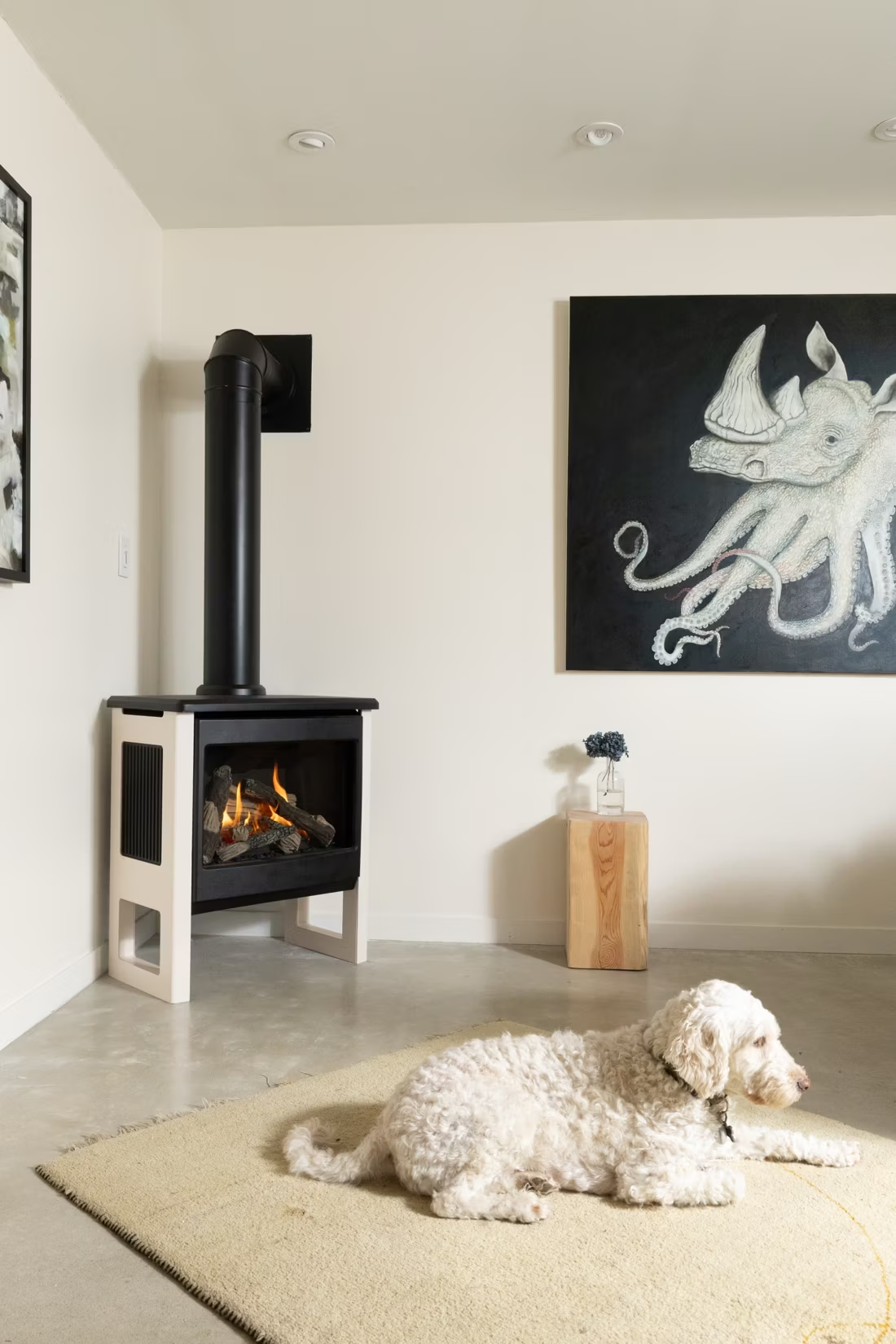
Four fuels. One honest answer for Dodge County.
Three steps. No salesperson until you're ready.
Tell us about your project
Your zip code, your situation, and the fuel you're leaning toward—or let the answers point you to one.
See what's actually available
The brands dealers within 100 miles genuinely carry—real options, never a catalog mirage.
Get your dealer & Project Guide
A trusted local dealer, plus the free Project Guide & Parts List that names every component of the job.
Frequently Asked Questions
Which fuel works best in Dodge County?
It depends on the home and the household. Wood is a strong option in Dodge County's farm townships—oak and maple from local woodlots burn long and hot, and a wood stove or insert keeps a farmhouse warm even if the power goes out during a winter storm. Gas is the convenience pick in Beaver Dam, Watertown, and the other larger towns where natural gas service reaches—no wood handling, no ash, heat at the flip of a switch. Pellet stoves are the middle ground: they run on delivered pellets from suppliers like Lignetics or Somerset Pellet Fuel, give you wood-style ambiance, and don't require splitting or stacking a woodpile. Electric fireplaces work well as supplemental heat in bedrooms, additions, or apartments in Beaver Dam and Watertown, but with an average low near 9°F and winters on par with Duluth, Minnesota, electric alone rarely carries a whole house here. Most Dodge County homes end up pairing a primary heat source—wood, pellet, or gas—with electric in a secondary room.
Do I need a permit to install a fireplace in Dodge County?
In most cases, yes. Wisconsin's Uniform Dwelling Code governs one- and two-family home construction and covers most fireplace, stove, and insert installations, and Dodge County's cities and villages—Beaver Dam, Watertown, Horicon, Mayville, Fox Lake, and Juneau—issue permits through their own local building inspectors. In the unincorporated townships, permitting typically runs through the county's building inspection process. Gas installations also require a licensed plumber or gas-fitter for the line work, and any wood-burning appliance should meet current EPA emissions standards to qualify for insurance and resale purposes. Electric fireplaces usually don't need a permit unless the installation involves new wiring or a built-in unit. Most local retailers handle the permitting on your behalf as part of the installation, so you typically aren't filing paperwork yourself.
Are there air quality or burning restrictions in Dodge County?
No—Dodge County doesn't have the kind of geographic setup that traps smoke the way a mountain basin or coastal valley can, and there are no active air quality non-attainment concerns tied to residential wood burning here. That means no seasonal burn curtailment days to plan around, unlike some western counties. That said, a well-seasoned load of local oak or maple in an EPA-certified stove will always burn cleaner and produce more usable heat than green or wet wood, so seasoning your firewood a full year is worth doing regardless of any regulation.
Can one local hearth retailer handle all four fuel types?
Several Dodge County retailers carry three or four fuel types, which is useful if you're still deciding between wood, gas, pellet, and electric. Dealers based in Beaver Dam and Watertown tend to be the larger multi-fuel showrooms, with working displays across several categories. Smaller shops closer to Horicon or Mayville may lean more heavily into wood and pellet, since that's what most farm and lake-cottage customers in those areas are asking for. If you're cross-shopping fuels, a multi-fuel dealer can walk you through real trade-offs for your specific house—wood heat load capacity, gas line distance, or pellet hopper sizing—rather than just pointing you at a catalog.
How does service work in the rural townships of Dodge County?
Most chimney sweeps and gas or pellet technicians serving Dodge County are based in Beaver Dam or Watertown and drive out to the surrounding townships—the farm country around Fox Lake, Horicon, Mayville, and Juneau included. Expect a modest trip fee for calls well outside town, and expect scheduling to tighten up fast once the first hard frost hits; booking your annual chimney sweep or gas inspection in September or October, before the 7,700-degree-day heating season really kicks in, is far easier than trying to get someone out during a January cold snap. If you're heating a rural property with wood as a primary source, keeping a pellet or electric backup on hand isn't a bad idea for the coldest stretches.
What's the typical cost range for fireplace installation across all fuel types in Dodge County?
Costs vary by fuel and by how much existing infrastructure a home already has. Wood stove or insert installation: roughly $4,000–$8,500 for a typical retrofit, more if new chimney or hearth work is required. Gas fireplace, insert, or stove: roughly $4,000–$10,000 depending on whether gas line extension work is needed, with straightforward conversions in already-piped homes on the lower end. Pellet stove or insert: roughly $4,000–$7,000 for a standard install. Electric fireplace: $200–$2,800 for the unit itself, plus $300–$1,100 in labor for anything beyond a plug-and-play installation. For pricing tied to specific local retailers, see the county + fuel pages above.
Wood, gas, pellet, or electric—how do I choose?
Match the fuel to your life, not the other way around. Wood: lowest fuel cost and total power-outage independence, but you're hauling and stacking. Gas: press a button, set a thermostat, no maintenance to speak of. Pellet: wood economics with automatic feeding, in exchange for weekly cleaning and a need for electricity. Electric: plugs in anywhere with honest supplemental heat. Nobody regrets the fuel that fits how they actually live.
Can a fireplace actually lower my heating bill?
Yes—by creating a comfort zone. A furnace heats every square foot of the house just to warm the one room you're in; a gas fireplace on low burns roughly a sixth of the gas a typical furnace does. Set the furnace around 55–60 degrees as a baseline, then heat the rooms your family actually uses. Families who heat this way commonly save $20–$60 a month.
Can I install a fireplace myself?
If you're putting a fire in your house on purpose, it's best to work with an expert. Unless you're genuinely experienced in framing, gas line, vent pipe, and the national code on clearances to combustibles, have a professional do it—and ideally the same company that sells you the fireplace, so warranty, service, and liability all live under one roof.
How much should I budget for a fireplace?
For an average home—covering the fireplace, the vent pipe, and basic installation—a budget between $3,900 and $5,500 gives you a lot of options across wood, gas, and pellet. By the time you add finish work, gas line, and electrical, the average complete installation lands between $5,000 and $12,000 all-in. In a remodel or new build, a good rule is to put about 2.5% of the total project cost toward the fireplace.
Stove and Fireplace Dealers in Dodge County
Listings include WhyFire partner dealers, dealers we have verified as authorized for the brands we recommend, and established local businesses that carry hearth products. Every listing shows which one it is. The ones marked Preferred run on WhyFire's software, so they can show you real pricing and book your appointment right here. No manufacturer pays for placement. How we verify dealers →
Badger Masonry & Fireplace
Binner Pools, Spas & Fireplace
Get matched with a Dodge County hearth dealer.
Tell us about your home and pick your fuel, and we'll send a free Project Guide & Parts List—a plan for your fireplace project with the exact parts, including the vent kit, and our recommended local dealer in Dodge County.
Find Your Fireplace →