
Pellet Heat Is Rare in Combined Locks—But Not Impossible.
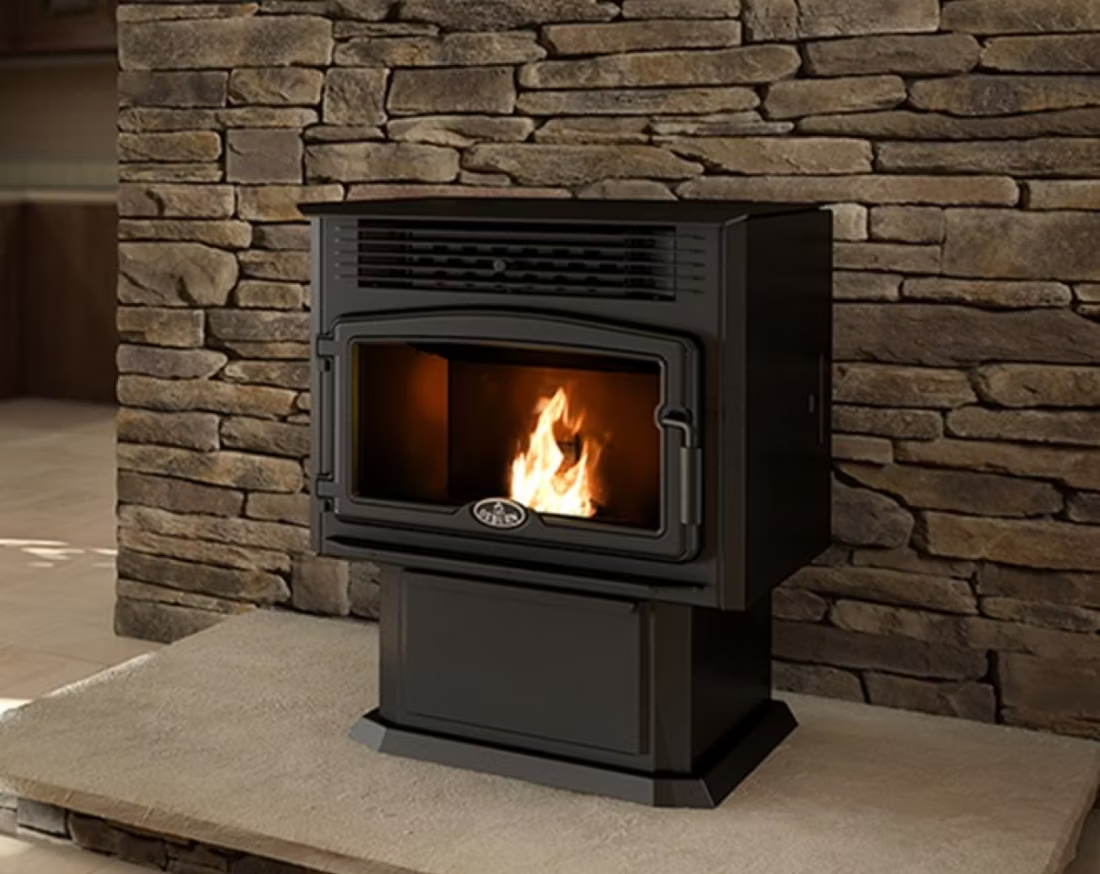
Most homes here run on natural gas or electric heat, but a small number of Fox Valley homeowners still choose pellet stoves for garage heat, workshops, or a cleaner alternative to cordwood. We'll help you find a dealer who can actually get one installed.
Every Project Starts From One of These Five Situations
Natural gas dominates here—pellet stoves fill a smaller niche.
Combined Locks is a small Fox River village of about 3,600 people in Outagamie County, wedged between Kimberly and Kaukauna in Wisconsin's Fox Valley. At 693 feet elevation and climate zone 6A, the village logs a cold-climate winter heating load in the same range as Madison, WI—with winter lows averaging around 10°F and hard freezes common from December through February.
That kind of cold makes reliable heat non-negotiable, but Combined Locks sits inside We Energies' natural gas footprint, and running a furnace or gas fireplace off an existing line is simply the path of least resistance for most households. Pellet stoves require bagged fuel storage, a hopper to load, and an auger and blower that draw on the same electric grid—advantages that shrink when gas is already piped to the house. The homeowners who do install a pellet stove here tend to be the exception: someone heating a detached garage or workshop, a household that wants a supplemental heat source independent of gas pricing, or someone who prefers the lower-maintenance burn of pellets over cordwood. Regional producers like Indeck Energy Services, Lignetics, and Somerset Pellet Fuel supply the wider Wisconsin market, so fuel is available—it's just a smaller, more deliberate choice locally than gas or electric.
Three steps. No salesperson until you're ready.
Tell us about your project
Your zip code, your situation, and the fuel you're leaning toward—or let the answers point you to one.
See what's actually available
The brands dealers within 100 miles genuinely carry—real options, never a catalog mirage.
Get your dealer & Project Guide
A trusted local dealer, plus the free Project Guide & Parts List that names every component of the job.
Frequently Asked Questions
Are pellet stoves common in Combined Locks?
Not especially. Combined Locks sits inside We Energies' natural gas service territory, and most homes here heat with a gas furnace or gas fireplace rather than a solid-fuel stove. Wood stoves and pellet stoves both see limited use in this specific village—it's a dense, small-lot community along the Fox River rather than a rural or forested area where cordwood and pellet heat tend to be the default. That said, pellet stoves aren't absent: a handful of local homeowners run them for garage heat, workshop space, or as a lower-maintenance alternative to a wood-burning setup.
Why would someone install a pellet stove instead of just using gas or electric heat?
The households in Combined Locks who choose pellet usually have a specific reason: heating a detached garage or shop that isn't on the gas line, wanting a visible flame and radiant warmth that a forced-air furnace doesn't provide, or preferring the lower ash and easier loading of pellets over splitting and stacking cordwood. Pellet stoves also don't need a masonry chimney—they vent through a small-diameter pipe out a side wall, which matters in a village with older, tightly built homes. But for most Fox Valley households already piped for natural gas, it's a supplemental choice rather than a primary one.
How much does a pellet stove installation cost in Combined Locks?
Nationally, a pellet stove installation typically runs $3,500 to $6,500 including the unit, venting, and hearth pad, and that range holds up reasonably well for the Fox Valley. Costs land on the lower end when the stove vents through an exterior wall with a short horizontal run, and climb when longer venting, a dedicated electrical circuit for the auger and blower, or a new hearth pad are needed. Because pellet installs are less common here than gas conversions, it's worth getting quotes from more than one installer—pricing can vary more in a market where fewer dealers stock and service pellet equipment.
What size pellet stove do I need for a Combined Locks home?
With a winter heating load similar in severity to Madison, WI and winter lows averaging around 10°F, Combined Locks sees genuinely cold, sustained winters. If you're heating a full living area as a primary source, look at a stove rated for 1,500 to 2,500 square feet. If the goal is heating a garage, workshop, or a single large room while gas handles the rest of the house, a smaller unit rated under 1,000 square feet is usually plenty. A local dealer will size it against your actual insulation and layout rather than square footage alone.
Where can I buy pellet fuel near Combined Locks?
Wisconsin has solid regional pellet production, including Indeck Energy Services, Lignetics, and Somerset Pellet Fuel, all of which distribute into the Fox Valley through farm supply stores and hardware retailers in Kaukauna, Kimberly, and Appleton. Because pellet stoves are less common in Combined Locks itself, don't expect every hardware store on Main Street to stock bags year-round—it's worth confirming with a supplier before burning season and buying enough to get through a Wisconsin winter, since demand and price both climb once cold weather sets in.
Do I need a permit to install a pellet stove in Combined Locks?
Yes—a solid-fuel appliance installation typically requires a building permit through the Village of Combined Locks, and the electrical circuit needed for the stove's auger and blower may require a separate electrical permit. A licensed local installer will usually pull both as part of the job. Because pellet installs aren't a routine, high-volume permit type here the way a gas furnace swap might be, it's worth confirming directly with the village building department before work starts rather than assuming your installer has already handled it.
Pellet vs. wood—which makes more sense in Combined Locks?
Both are genuinely niche choices in this village compared to gas and electric heat, but between the two, pellet has some practical advantages locally. Combined Locks isn't near public forest land with cutting permits the way northern Wisconsin is, so sourcing cordwood usually means buying it by the face cord rather than harvesting it yourself, even though oak, maple, birch, and aspen are the common species around the Fox Valley. Pellet fuel, by contrast, ships in from regional producers like Lignetics and is easier to store in bags than a wood stack. Wood does burn during a power outage, which pellet stoves cannot do without a battery backup—so if outage resilience is the priority, that's a point in wood's favor even in a market where neither is common.
Will a pellet stove work during a power outage?
Not without a backup power source. Pellet stoves rely on an electric auger to feed fuel and a blower to distribute heat, so a standard unit shuts down the moment the power goes out—unlike a wood stove, which burns with no electricity at all. Some pellet stove manufacturers offer battery-backup kits or small inverter setups that can run the stove for several hours during an outage. If reliable heat during Fox Valley winter storms is a priority, ask your installer about a battery backup option, or consider whether a gas fireplace with battery-backed ignition—a more common local choice—might suit your needs better.
Pellet vs. gas—which is right for my home in Combined Locks?
For most homes here, gas wins on convenience: Combined Locks sits within We Energies' natural gas network, and a gas fireplace or furnace delivers instant, thermostat-controlled heat with none of the fuel handling a pellet stove requires. Pellet makes more sense in specific situations—heating a garage or space that isn't on the gas line, wanting visible flame and radiant heat gas doesn't fully replicate, or simply preferring a lower-emissions solid fuel to wood. If your home is already piped for gas, that's usually the default choice; if you're heating an outbuilding or want a supplemental stove, pellet is worth a look from a local dealer who can walk you through both options.
Why is a fireplace insert so efficient?
An insert does two things: it seals the chimney completely, so you stop losing air you already paid to heat, and it radiates warmth into the room through the firebox and glass. Most add a heat-exchange fan that pulls cool room air underneath, wraps it around the hot firebox, and pushes it back out warm. Your home is more efficient before you've even lit the first fire.
What's the difference between an insert and a zero-clearance fireplace?
An insert is a fireplace that slides into a pre-existing wood-burning fireplace—if you don't have one, there's nothing to insert it into. A zero-clearance fireplace is built into a framed wall, which makes it the answer for remodels and new construction. Simple test: existing masonry fireplace means insert; blank or framed wall means zero-clearance.
How much should I budget for a fireplace?
For an average home—covering the fireplace, the vent pipe, and basic installation—a budget between $3,900 and $5,500 gives you a lot of options across wood, gas, and pellet. By the time you add finish work, gas line, and electrical, the average complete installation lands between $5,000 and $12,000 all-in. In a remodel or new build, a good rule is to put about 2.5% of the total project cost toward the fireplace.
Can a fireplace actually lower my heating bill?
Yes—by creating a comfort zone. A furnace heats every square foot of the house just to warm the one room you're in; a gas fireplace on low burns roughly a sixth of the gas a typical furnace does. Set the furnace around 55–60 degrees as a baseline, then heat the rooms your family actually uses. Families who heat this way commonly save $20–$60 a month.
Nearby Dealers
Hearth shops serving Combined Locks and the surrounding area. Every listing shows whether it is a WhyFire partner, a dealer we have verified as authorized for the brands we recommend, or a local business carrying hearth products. No manufacturer pays for placement. How we verify dealers →
Warm Sensations
Elite Fireplace LLC
Fox Valley Stone & Brick Co., Inc.
Hockers Brick & Tile
Energy Shop
Pellet Brands Stocked Around Combined Locks
Manufacturers will point you to the nearest stocking dealer.
Find your pellet stove in Combined Locks.
Tell us about your home and your goals, and we'll match you with a trusted local dealer and send over a free Project Guide & Parts List—a plan for your pellet project in Combined Locks with the exact parts, including the vent kit, and our recommended installer.
Find Your Fireplace →