
Reliable gas heat for Burnett County's coldest nights.
With winters that push past 8,400 heating degree days, Burnett County homes and lake cabins need heat that lights instantly and holds steady. Find the right propane or gas unit, and get matched with a trusted local dealer.
Every Project Starts From One of These Five Situations
Instant heat for a place where winter means business.
Burnett County sits in the far northwest corner of Wisconsin, tucked against the St. Croix and Namekagon rivers with hundreds of lakes scattered across a landscape of pine and hardwood forest. Climate zone 7 territory, an average winter low of just 1°F, and roughly 8,422 heating degree days put Burnett County in the same cold-climate bracket as International Falls, Minnesota—a place where a heating system has to actually perform, not just look good. For the county's year-round residents and its many seasonal lake cabin owners along the Yellow, Clam, and Namekagon river chains, that means a fireplace or stove that can be counted on the moment the temperature drops.
Burnett County is rural enough that municipal natural gas lines are scarce outside a handful of village centers, so propane is the practical choice for most homeowners here—delivered and stored in a tank, and just as capable of running a direct-vent fireplace, insert, or freestanding stove as natural gas would be. Wood remains part of the heating mix for many households (oak, maple, birch, and aspen are all common cordwood species locally, and Forest Service permits for cutting on nearby national forest land run $10 to $20 per cord during the May-to-October season), but for primary living spaces, second homes that sit empty for weeks at a time, and anyone who wants heat at the flip of a switch, propane gas is increasingly the default.
Three steps. No salesperson until you're ready.
Tell us about your project
Your zip code, your situation, and the fuel you're leaning toward—or let the answers point you to one.
See what's actually available
The brands dealers within 100 miles genuinely carry—real options, never a catalog mirage.
Get your dealer & Project Guide
A trusted local dealer, plus the free Project Guide & Parts List that names every component of the job.
Frequently Asked Questions
How much does a gas fireplace installation cost in Burnett County?
A typical propane fireplace or insert installation in Burnett County runs roughly $3,500 to $9,500, depending on the unit, whether you already have a propane tank and line in place, and how much venting work is involved. A direct-vent insert going into an existing masonry fireplace with propane already on site sits at the lower end. New construction, a fresh tank installation, or a longer gas line run to a detached cabin or outbuilding pushes toward the higher end. Because so many properties here are lake cabins used seasonally, installers also factor in whether the unit needs to handle freeze-thaw cycles in an unheated structure part of the year—worth mentioning during your in-home consultation.
Is natural gas available in Burnett County, or is it all propane?
Outside of a small number of village centers, most of Burnett County does not have municipal natural gas service, which makes propane the standard fuel for gas fireplaces, inserts, and stoves here. That's not a downside for performance—nearly every gas fireplace on the market today can be configured to run on propane just as well as natural gas, and a local dealer will set the correct orifice and regulator for propane during installation. If you're on a shared or private propane tank already for your furnace or water heater, adding a fireplace to that same supply is usually straightforward.
Can I convert my existing wood fireplace to gas?
Yes, and it's a common request from Burnett County homeowners who want the look of their existing masonry fireplace without the daily work of tending a wood fire—especially for lake homes that sit closed up for stretches of the winter. A gas insert typically installs into the existing firebox and vents through a stainless liner run up your current chimney. Expect the project to run in a similar range to a standalone insert installation, with the main variable being whether a new propane line needs to be run to the fireplace location.
Will my gas fireplace work during a power outage?
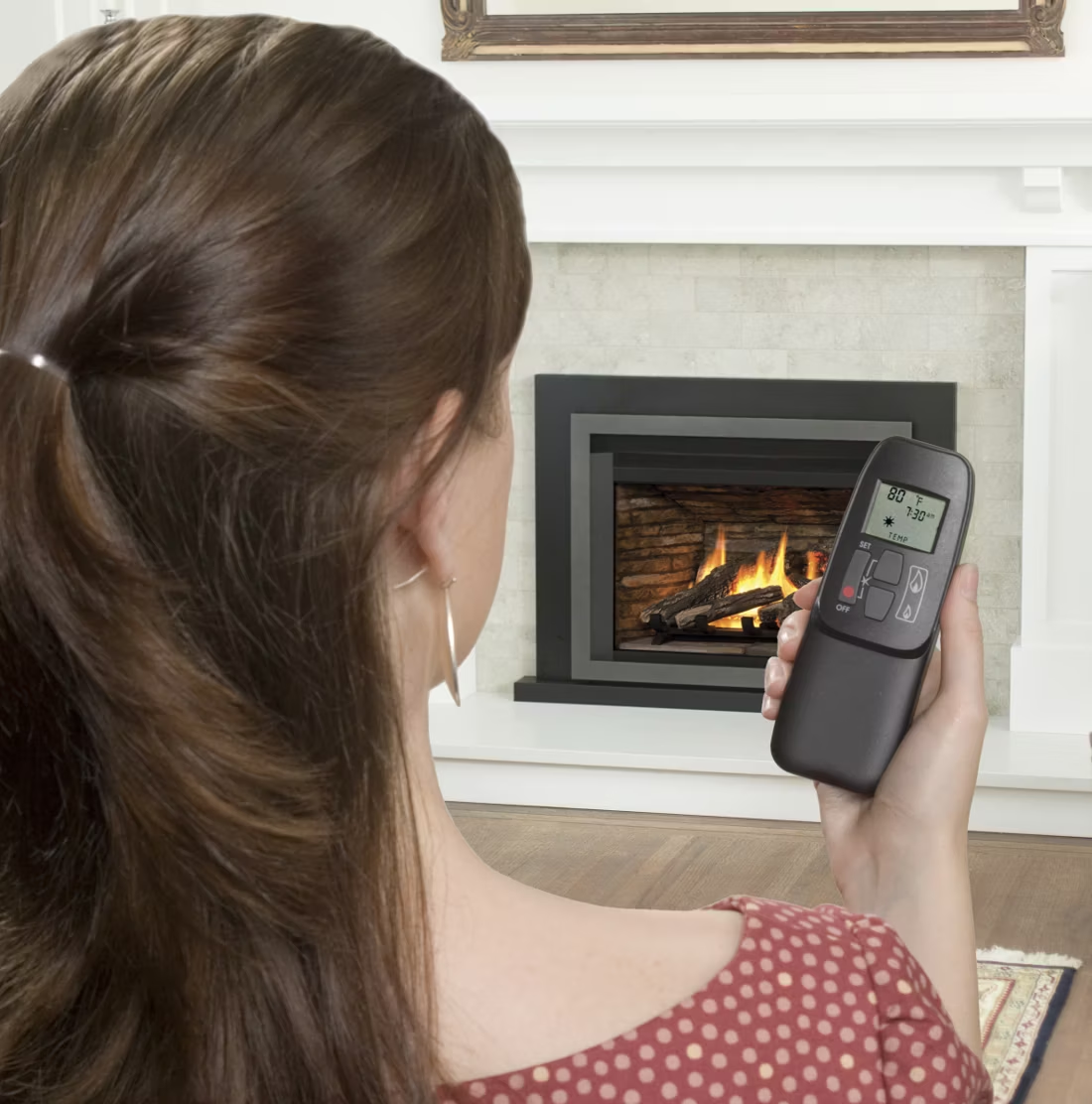
Most direct-vent gas fireplaces with intermittent pilot ignition include a battery backup that keeps the unit operable when the power drops—a real consideration in Burnett County, where rural power lines and heavy lake-effect snow can mean outages that stretch for hours or longer during a winter storm. Some manufacturers, including Valor, go a step further with pilot-generated electricity that needs no batteries at all. If you're heating a cabin that isn't checked on daily, ask your local dealer about which ignition system fits your situation—it matters more here than in a house someone's in every day.
What's the difference between a gas fireplace, insert, and stove for my home?
A built-in gas fireplace is framed into a wall and suits new construction or a full remodel. A gas insert drops into an existing masonry firebox and is the natural fit for the many older farmhouses and lake cottages around Burnett County that already have a wood-burning fireplace they'd rather not tend daily. A freestanding gas stove sits on the floor like a wood stove but runs on propane—a good option for cabins or additions without an existing chimney or fireplace opening. A local dealer can walk your specific space and tell you which format actually works with your structure.
Do I need a permit to install a propane fireplace in Burnett County?
Yes—new gas or propane fireplace installations typically require both a building permit and sign-off on the gas line work, which needs to be done by a licensed installer. Most hearth dealers serving Burnett County coordinate the permitting, the propane line connection, and the venting inspection as one package, so you're not left managing separate trades. If your project also involves a new or upgraded propane tank, your propane supplier will handle the tank-side permitting and setback requirements separately.
Vented vs. vent-free—which makes sense for a Burnett County cabin?
Direct-vent (sealed combustion) fireplaces draw outside air for combustion and exhaust byproducts back outdoors, making them the safest and most universally recommended option—especially in a tightly built cabin that's closed up for weeks at a time in winter, where indoor air quality and moisture buildup matter. Vent-free propane units are legal in Wisconsin but require careful attention to room size and ventilation, and they're generally a poorer fit for seasonal properties that sit unattended. For nearly all Burnett County installations, a direct-vent unit is the right call.
How often should my gas fireplace be serviced?
Plan on an annual inspection before the heating season starts, typically in early fall. A technician checks the burner, pilot assembly, propane connections, and venting, and cleans the glass and interior components. For cabins that sit vacant for stretches of the winter, it's also worth having the unit checked at the start of the season even if it wasn't used much—rodents, moisture, and dust are common issues in structures that aren't occupied daily, and a quick inspection catches problems before they turn into a no-heat situation on a cold weekend.
Gas vs. wood—which is the better fit in Burnett County?
Wood remains a strong choice here—oak, maple, birch, and aspen are all locally abundant, Forest Service cutting permits run just $10 to $20 per cord, and a wood stove keeps working even when the power's out, which matters given how rural the county's electric infrastructure can be. Gas wins on convenience: no hauling wood to a cabin you visit every other weekend, no ash cleanup, and instant heat the moment you walk in from the cold. Many Burnett County homeowners run both—wood as the primary or backup heat source at a year-round residence, propane gas for the convenience of a seasonal cabin or a secondary living space that needs to warm up fast.
Can I put a TV above my fireplace?
Yes—with an asterisk. Fireplaces are hot and TVs don't like heat. Either put a mantel between them to deflect rising warmth, or choose a fireplace with heat-management technology that creates a cool zone on the wall above—the wall stays around 125 degrees, barely warm, while the room still gets full heat. If you like clean lines and don't want a mantel, heat management is the answer.
Why is my open fireplace making my house colder?
Open fireplaces suck—literally. As the fire burns, it consumes air your furnace already paid to heat and pulls it out through the chimney, so the house is actually colder after the fire goes out than before you lit it. An insert fixes this: it seals the chimney, puts fixed glass across the front, and turns that hole in your house into a real heat source.
Does a fireplace add value to my home?
On average, a fireplace adds back to the home about the same amount you spent installing it. Add the monthly savings from heating the rooms you actually use instead of the whole house—often hundreds of dollars a year—and the value case is strong before you even count what a fire does for how your family uses the room.
Can I install a fireplace myself?
If you're putting a fire in your house on purpose, it's best to work with an expert. Unless you're genuinely experienced in framing, gas line, vent pipe, and the national code on clearances to combustibles, have a professional do it—and ideally the same company that sells you the fireplace, so warranty, service, and liability all live under one roof.
Stove and Fireplace Dealers in Burnett County
Listings include WhyFire partner dealers, dealers we have verified as authorized for the brands we recommend, and established local businesses that carry hearth products. Every listing shows which one it is. The ones marked Preferred run on WhyFire's software, so they can show you real pricing and book your appointment right here. No manufacturer pays for placement. How we verify dealers →
Copycat Hearth & Home
Comfort By Design- Osceola
Kindled Hearth Fireplace Store
Find your gas fireplace in Burnett County.
Tell us about your home or cabin and we'll put together a free Project Guide & Parts List—the exact parts, including the vent kit, and a trusted local dealer to install it right.
Find Your Fireplace →