
Add real warmth to your Burnett County home—no chimney required.
Zone heat and ambiance for lake cabins, additions, and main living spaces across Burnett County's Northwoods—no venting, no gas line, no masonry. Find the right unit and connect with a trusted local dealer.
Every Project Starts From One of These Five Situations
Instant, mess-free warmth for cold Northwoods nights.
Burnett County sits in Wisconsin's far northwest corner, threaded by the St. Croix and Namekagon rivers and dotted with hundreds of lakes that draw seasonal cabin owners alongside the roughly 2,850 year-round residents counted here. This is Climate Zone 7 territory—8,422 heating degree days and winter lows averaging 1°F, putting Burnett County in the same cold-climate bracket as Duluth, Minnesota, just up the shore. Many homes and camps in the county still lean on the region's oak, maple, birch, and aspen for primary or backup wood heat, but electric fireplaces have carved out a real niche for a very practical reason: they work in buildings that were never built with a chimney or gas line in mind.
For a seasonal cabin on one of Burnett County's lakes, a screened porch conversion, or a bedroom addition that doesn't justify running new gas piping, an electric fireplace installs in an afternoon with no venting, no clearance-to-combustibles headache, and no local air-quality paperwork—Burnett County reports no air quality concerns, so there's no burn-ban or curtailment logic to navigate the way there is with wood. What electric won't do in an 8,400-HDD climate is replace a real heat source for the whole house: resistance heat is convenient and clean, but it's realistic to treat it as supplemental zone heat or ambiance rather than the sole thing standing between your family and a Burnett County January.
Three steps. No salesperson until you're ready.
Tell us about your project
Your zip code, your situation, and the fuel you're leaning toward—or let the answers point you to one.
See what's actually available
The brands dealers within 100 miles genuinely carry—real options, never a catalog mirage.
Get your dealer & Project Guide
A trusted local dealer, plus the free Project Guide & Parts List that names every component of the job.
Frequently Asked Questions
How much does an electric fireplace installation cost in Burnett County?
Plug-in electric inserts and freestanding units that run on a standard 120V household outlet typically run $300 to $700 installed, since there's no wiring work involved beyond setting the unit and confirming clearances. Built-in electric fireplaces or larger inserts that need a dedicated 240V circuit run higher—usually $1,500 to $4,000 once a licensed electrician runs new wiring, especially in older lake cabins around Siren or Webster where panel capacity can be limited. Framing a built-in unit into a wall or existing masonry opening adds to that range. A local dealer can give you a firm number after seeing your panel and the space.
Can an electric fireplace actually heat a room in a Burnett County winter?
Yes, for a single room or open living area—most electric fireplaces put out around 4,000 to 5,000 BTU, enough to noticeably warm a bedroom, sunroom, or den even with outside temperatures near the county's 1°F average winter low. What it won't do is heat an entire home through an 8,422-heating-degree-day season the way a wood stove or propane furnace can. Think of electric as zone heat: it takes the edge off in the room you're using, cuts down on the central heat running constantly, and lets you skip firing up the whole-house system for a single occupied room, especially in a cabin used only on weekends.
Do I need a permit or an electrician to install an electric fireplace?
Plug-in units generally don't require any permit—they're appliances, not fixed installations. Built-in electric fireplaces that need a new 240V circuit do require electrical work pulled through Burnett County's building department, and that wiring should be done by a licensed electrician rather than DIY, particularly in older seasonal cabins where the existing panel may already be near capacity. Most hearth retailers who sell built-in electric units either employ a licensed electrician or coordinate directly with one as part of the install, so you're not left managing the permit and inspection yourself.
I don't have gas at my cabin—is electric my best option?
For many of Burnett County's lake properties, yes. A lot of camps and older cabins around the county's lakes were never plumbed for natural gas and don't have a propane tank installed, which makes a gas fireplace a bigger project—tank installation, gas line runs, and a bigger up-front cost. An electric fireplace sidesteps all of that: plug it in or run a single dedicated circuit, and you're done. The tradeoff is heat output and independence from the power grid, which matters more in this climate than in milder ones.
Will my electric fireplace still work if the power goes out?
No—and this is worth being direct about. Electric fireplaces run entirely on grid power, and Burnett County's Northwoods location means winter storms and ice events do knock out power, sometimes for hours or longer. If you're relying on heat during an outage, an electric fireplace won't help. Many Burnett County homeowners pair an electric unit for everyday convenience and ambiance with a wood stove or fireplace elsewhere in the house—using the abundant local oak, maple, and birch—as genuine backup heat when the power drops.
What type of electric fireplace works best for a lake cabin?
For seasonal cabins around Burnett County's lakes, a plug-in freestanding stove or a mantel-style unit is usually the simplest choice—no wiring beyond an outlet, easy to winterize or move if the cabin sits empty part of the year, and no risk tied to an unused gas line freezing or degrading. For a cabin that gets more regular use or a primary residence, a built-in wall unit with a dedicated 240V circuit delivers steadier heat output and a more finished look, closer to what you'd expect from a traditional fireplace.
How much does an electric fireplace cost to run compared to wood or pellets?
Running an electric fireplace on its highest heat setting typically costs somewhere in the range of 15 to 30 cents an hour depending on local electric rates—reasonable for occasional supplemental use, but expensive as a primary heat source across a full Burnett County heating season. By comparison, a cord of local oak or maple cut under a Superior National Forest permit runs $10 to $20, and regional pellet brands like Indeck Energy Services and Lignetics typically land in a comparable range per ton to wood on a cost-per-BTU basis. For occasional zone heat in one room, electric is cheap and simple. For carrying the whole house through an 8,400-HDD winter, wood or pellet fuel is the more economical route.
Where can I buy an electric fireplace in Burnett County?
Rather than guessing between big-box options online, the better move is working with a local hearth dealer who actually installs in this county and knows the wiring quirks of older Northwoods cabins versus newer builds around Siren, Webster, Grantsburg, and Danbury. Find My Fireplace doesn't sell or ship fireplaces—we match you with a trusted local dealer who carries units that are genuinely available and installable here, and we send you a free Project Guide & Parts List so you walk into that conversation knowing what you actually need.
Electric vs. wood—which is right for my Burnett County home?
Wood is the traditional backbone of heat in this part of Wisconsin—Burnett County's forests are full of oak, maple, birch, and aspen, and a Superior National Forest cutting permit runs just $10 to $20 per cord during the May-to-October season, making self-cut firewood genuinely affordable. Wood also keeps working when the power doesn't, which matters through a long, cold Northwoods winter. Electric wins on convenience: no ash, no wood handling, no chimney to maintain, and instant on-off operation for a bedroom, sunroom, or cabin without an existing hearth. Many Burnett County households end up with both—wood for real heat and outage backup, electric for the room where convenience matters most.
Do electric fireplaces actually produce heat?
Yes—most put out around 4,800–5,000 BTUs from a standard outlet, which comfortably warms a bedroom, office, or den as a comfort-zone heater. What they won't do is carry a whole house the way wood, gas, or pellet can. Think of electric as ambiance-first with honest supplemental heat: flames on with no heat in July, flames plus warmth in January.
Can I put a TV above my fireplace?
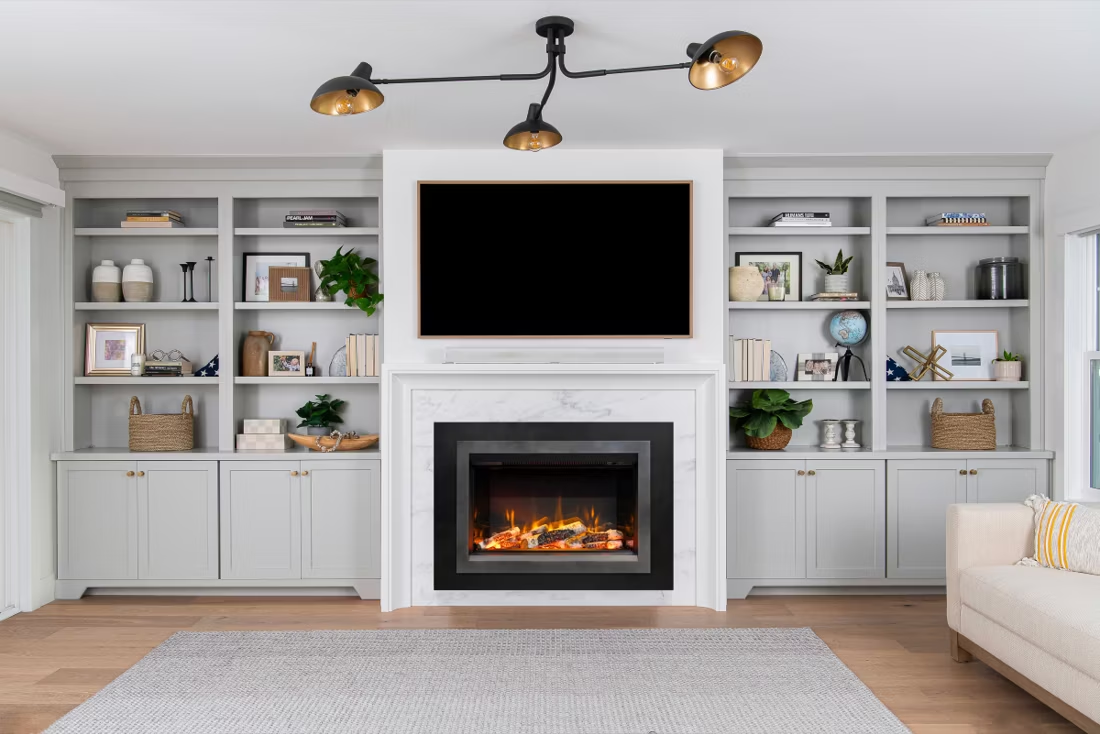
Yes—with an asterisk. Fireplaces are hot and TVs don't like heat. Either put a mantel between them to deflect rising warmth, or choose a fireplace with heat-management technology that creates a cool zone on the wall above—the wall stays around 125 degrees, barely warm, while the room still gets full heat. If you like clean lines and don't want a mantel, heat management is the answer.
Can I install a fireplace myself?
If you're putting a fire in your house on purpose, it's best to work with an expert. Unless you're genuinely experienced in framing, gas line, vent pipe, and the national code on clearances to combustibles, have a professional do it—and ideally the same company that sells you the fireplace, so warranty, service, and liability all live under one roof.
What is an in-home preview and do I need one?
It's a visit where a hearth professional measures your space, confirms the model you picked actually works in your home, and walks the specs—framing, gas line, venting, finish work—before anything is ordered. Some details you just can't know until you see the house. Never make a down payment without one; it's the single most-skipped step that burns buyers.
Stove and Fireplace Dealers in Burnett County
Listings include WhyFire partner dealers, dealers we have verified as authorized for the brands we recommend, and established local businesses that carry hearth products. Every listing shows which one it is. The ones marked Preferred run on WhyFire's software, so they can show you real pricing and book your appointment right here. No manufacturer pays for placement. How we verify dealers →
Copycat Hearth & Home
Comfort By Design- Osceola
Kindled Hearth Fireplace Store
Find the right electric fireplace for your Burnett County home.
Tell us a bit about your home or cabin and we'll match you with a trusted local dealer, plus a free Project Guide & Parts List for your electric fireplace project in Burnett County.
Find Your Fireplace →