
Gas heat built for Buffalo County's bluff-country winters.
From the Mississippi River bluffs at Fountain City to the dairy farms around Mondovi and Waumandee, Buffalo County sees over 7,300 heating degree days and winter lows that regularly sit in single digits. Find the right gas fireplace or insert and connect with a trusted local dealer.
Every Project Starts From One of These Five Situations
Reliable heat when the river valley gets cold.
Buffalo County is bluff country—steep ridges above the Mississippi at Fountain City and Alma, rolling dairy farmland inland toward Mondovi and Cochrane, and a population spread thin across roughly 6,100 residents in small villages and township roads. With 7,317 heating degree days and an average winter low of 7°F, this county sits closer in cold-climate terms to Duluth than to most of southern Wisconsin. Wood heat has deep roots here—oak, maple, birch, and aspen are all common locally cut species—but gas has become the go-to for homeowners who want dependable, hands-off heat through a long, hard winter.
Piped natural gas service reaches some homes in and near the villages of Mondovi and Alma, but most of Buffalo County's rural households run on propane, the same as the LP furnaces and water heaters already common on area farms. That makes a gas fireplace or insert an easy add-on for households that already have a tank and LP service, and a straightforward tank installation for those that don't. Either way, the payoff is the same: instant heat at the flip of a switch, none of the wood-hauling that a February morning on a dairy farm doesn't have time for, and a unit that can be sized to zone-heat a living room while the furnace handles the rest of the house.
Three steps. No salesperson until you're ready.
Tell us about your project
Your zip code, your situation, and the fuel you're leaning toward—or let the answers point you to one.
See what's actually available
The brands dealers within 100 miles genuinely carry—real options, never a catalog mirage.
Get your dealer & Project Guide
A trusted local dealer, plus the free Project Guide & Parts List that names every component of the job.
Frequently Asked Questions
How much does a gas fireplace installation cost in Buffalo County?
For a county this rural, most installations land somewhere between $4,000 and $10,000, with the biggest cost swings coming from your existing setup. If you already have propane service for your furnace or water heater, adding a direct-vent gas insert into an existing fireplace is usually on the lower end. If you're starting from scratch—a new propane tank, a long line run across a farm parcel, or venting through a wall on a room addition near Nelson or Waumandee—expect the higher end of that range. Homes already tied into natural gas near Mondovi or Alma tend to see somewhat lower gas-line costs since there's no tank to install.
Can I convert my existing wood fireplace to gas?
Yes, and it's a common project in Buffalo County's older farmhouses, many of which have a masonry fireplace that's spent decades burning local oak or maple. A gas insert fits into that existing opening and uses the chimney as its venting path with a stainless liner, so you keep the look of the original hearth while getting real, consistent heat instead of a fireplace that mostly just draws warm air out of the room. Costs typically run $4,000 to $9,000 depending on the insert and whether you're on propane or already have natural gas at the property. It's worth having a local installer check the chimney's condition first—decades of wood smoke can mean liner work is needed regardless of fuel choice.
Do I need natural gas, or should I plan on propane?
Plan on propane unless you're within reach of the limited natural gas infrastructure near Mondovi or Alma village limits—most of Buffalo County, including the farmland around Cochrane, Nelson, and Waumandee, runs on propane for furnaces, water heaters, and now fireplaces. If you already have an LP tank and service for your home, adding a gas fireplace is straightforward; your installer sets the unit up for propane pressure and orifices. If you don't have a tank yet, a local propane supplier will typically handle the tank installation as part of the project, and your fireplace installer coordinates the line run from there.
Will my gas fireplace work during a power outage?
Most will, which matters in a county where winter storms off the Mississippi River valley can knock out power for hours or longer. Units with intermittent pilot ignition (IPI) run on battery backup—typically AA batteries built into the unit—that kick in automatically and keep the fireplace lighting on demand when the grid drops. Valor fireplaces take a different approach: their pilot generates its own electricity through the thermocouple, so there's no battery to remember at all. For a rural Buffalo County home where a generator may not be running the whole house, that kind of self-powered ignition is worth asking your local dealer about.
What's the difference between a gas fireplace, gas insert, and gas stove?
A gas fireplace is a fully built-in unit framed into a wall—the right call for new construction or a remodel without an existing hearth. A gas insert slides into an existing masonry fireplace opening, which is common in the older farmhouses scattered across Buffalo County, and uses the existing chimney as its vent path. A gas stove is a freestanding unit that sits on the floor like a wood stove but burns propane or natural gas, useful when you want zone heat in a room that has no fireplace or chimney at all. Most homeowners here with an existing hearth go with an insert; those building new or adding a room typically choose a built-in fireplace or freestanding stove.
Do I need a permit to install a gas fireplace in Buffalo County?
Yes. Within the villages of Alma, Mondovi, Fountain City, and Cochrane, permits are issued by the village office; in unincorporated parts of the county, the Buffalo County Zoning and Planning Department handles building permits, and gas line work requires a licensed gas-fitter regardless of location. Most local hearth dealers coordinate the permit and the gas-fitter as part of the install, which is one less thing to manage yourself—especially useful if the job also involves a new propane tank and line, which typically needs its own sign-off from the propane supplier.
What's the difference between vented and vent-free gas fireplaces?
Vented, direct-vent units draw combustion air from outside and exhaust it back outside through a sealed pipe—they're the cleanest and most universally recommended option, and they perform well in tightly built or remodeled farmhouses where indoor air quality matters. Vent-free units burn directly into the room and are legal in Wisconsin under strict room-sizing and ventilation rules, but they release some combustion byproducts indoors. With Buffalo County averaging over 7,300 heating degree days, most homeowners keep their houses well-sealed for efficiency, which makes direct-vent the safer and more comfortable choice for sustained daily use. Local dealers can walk through both options if you're weighing them for a smaller room or outbuilding.
How often should my gas fireplace be serviced?
Plan on an annual inspection, ideally before the coldest stretch of winter sets in. A technician checks the burner, pilot assembly, venting, and gas connections, and cleans the glass and interior—a much simpler job than a wood chimney sweep, but still important for safety and efficiency. Local gas appliance technicians serving Buffalo County typically charge $150 to $250 for this service. If your unit sees heavy use as a main heat source through a long river-valley winter, a quick mid-season check of the pilot and battery backup is a good habit too.
Gas vs. wood—which is right for my Buffalo County home?
Wood remains a strong choice here—oak, maple, birch, and aspen are all readily available locally, air quality restrictions are essentially nonexistent in this county, and a wood stove keeps working during a power outage without needing batteries or backup power. Gas trades that self-sufficiency for convenience: instant on-off heat, no hauling or ash cleanup, and a consistent flame that doesn't need tending before a 5 a.m. start on the farm. Many Buffalo County households end up with both—a gas insert or fireplace for daily use in the main living space, and a wood stove elsewhere for backup heat when a winter storm rolls through the valley.
Can I put a TV above my fireplace?
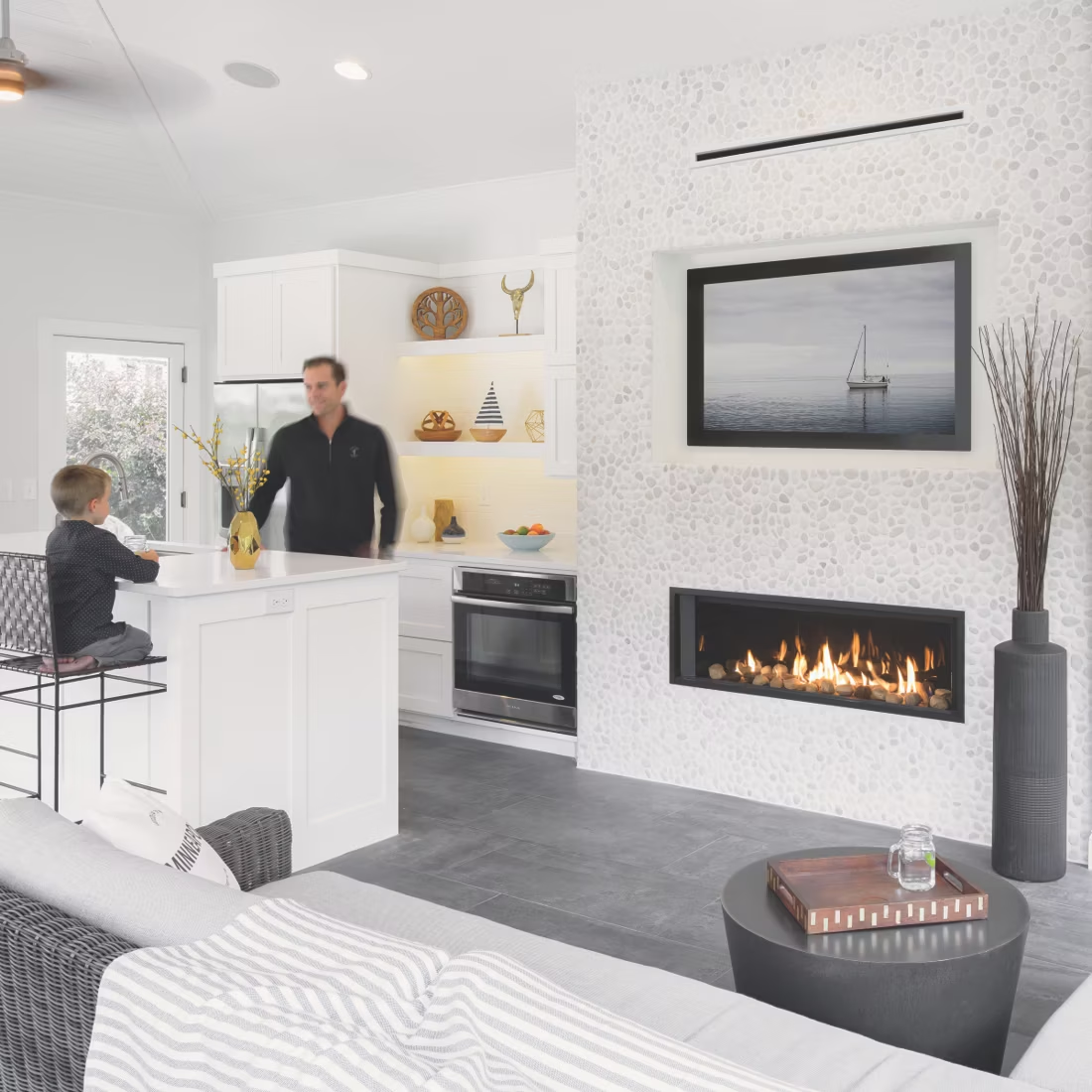
Yes—with an asterisk. Fireplaces are hot and TVs don't like heat. Either put a mantel between them to deflect rising warmth, or choose a fireplace with heat-management technology that creates a cool zone on the wall above—the wall stays around 125 degrees, barely warm, while the room still gets full heat. If you like clean lines and don't want a mantel, heat management is the answer.
Why is a fireplace insert so efficient?
An insert does two things: it seals the chimney completely, so you stop losing air you already paid to heat, and it radiates warmth into the room through the firebox and glass. Most add a heat-exchange fan that pulls cool room air underneath, wraps it around the hot firebox, and pushes it back out warm. Your home is more efficient before you've even lit the first fire.
Does a fireplace add value to my home?
On average, a fireplace adds back to the home about the same amount you spent installing it. Add the monthly savings from heating the rooms you actually use instead of the whole house—often hundreds of dollars a year—and the value case is strong before you even count what a fire does for how your family uses the room.
What is an in-home preview and do I need one?
It's a visit where a hearth professional measures your space, confirms the model you picked actually works in your home, and walks the specs—framing, gas line, venting, finish work—before anything is ordered. Some details you just can't know until you see the house. Never make a down payment without one; it's the single most-skipped step that burns buyers.
Stove and Fireplace Dealers in Buffalo County
Listings include WhyFire partner dealers, dealers we have verified as authorized for the brands we recommend, and established local businesses that carry hearth products. Every listing shows which one it is. The ones marked Preferred run on WhyFire's software, so they can show you real pricing and book your appointment right here. No manufacturer pays for placement. How we verify dealers →
Poolman
Ccs Services LLC
Find your gas fireplace in Buffalo County.
Tell us a bit about your home and heating setup, and we'll match you with a trusted local dealer and send over a free Project Guide & Parts List—the exact parts, including the vent kit, for your gas fireplace project in Buffalo County.
Find Your Fireplace →