
Bluff-country heat for every home in Buffalo County.
Wood, gas, pellet, and electric fireplace resources for every town in Buffalo County—from Alma along the Mississippi to Mondovi and Cochrane. Find the right unit and connect with a trusted local hearth retailer.
Every Project Starts From One of These Five Situations
Cold, rural, and wood-heavy: heating in Buffalo County, Wisconsin.
Buffalo County sits in the driftless region of western Wisconsin, a landscape of steep bluffs and river valleys along the Mississippi. At over 7,300 heating degree days and average winter lows around 7°F, this county runs colder and longer than most of the state—closer to a Duluth, MN winter than a Madison one. Oak, maple, birch, and aspen grow throughout the ridges and coulees here, and with a population under 6,500 spread across mostly rural terrain, wood heat isn't a novelty—it's the practical backbone of how a lot of farmhouses and ridge-top homes stay warm from October through April.
What you'll find on this hub: hearth retailers, service technicians, and fuel suppliers serving every community in the county—from the river towns of Alma, Fountain City, and Cochrane to inland Mondovi and the smaller unincorporated crossroads in between. Pick your fuel below to drill into specifics—local dealers, installation costs, recommended units, and the resources that match your project. Whether you're heating a bluffside cabin or a dairy-country farmhouse, this is the starting point.
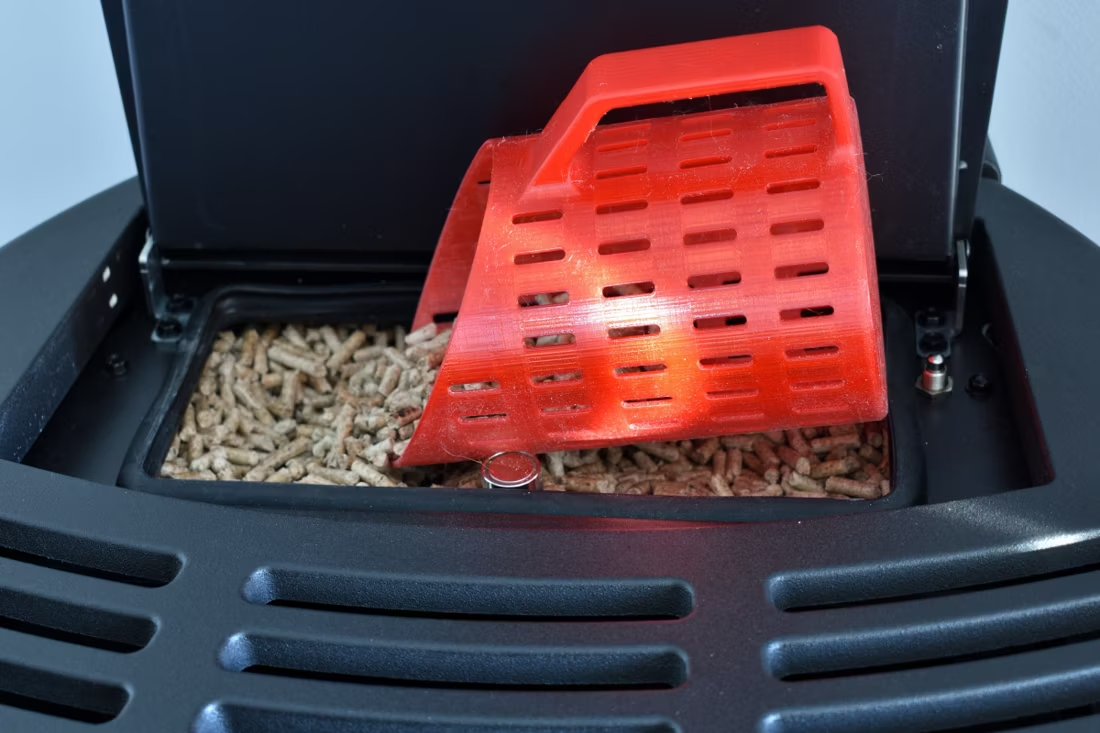
Four fuels. One honest answer for Buffalo County.
Three steps. No salesperson until you're ready.
Tell us about your project
Your zip code, your situation, and the fuel you're leaning toward—or let the answers point you to one.
See what's actually available
The brands dealers within 100 miles genuinely carry—real options, never a catalog mirage.
Get your dealer & Project Guide
A trusted local dealer, plus the free Project Guide & Parts List that names every component of the job.
Frequently Asked Questions
Which fuel works best in Buffalo County?
It depends on the home and how remote it is. Wood is the traditional mainstay here—oak, maple, birch, and aspen are all locally abundant, and a catalytic or non-cat EPA-certified wood stove can carry a farmhouse through a stretch of single-digit nights without leaning on the grid. Gas is the convenience option, mostly propane in this rural county since natural gas mains are limited outside the larger towns—instant heat with none of the wood-splitting labor. Pellet is a strong middle ground, especially with regional supply from Indeck Energy Services and Lignetics keeping fuel available through the winter without a six-cord woodpile. Electric fireplaces are mostly supplemental here—good for a bedroom or a finished basement, but not something anyone in bluff country relies on as a sole heat source once the mercury drops into single digits.
Do I need a permit to install a fireplace in Buffalo County?
In most cases, yes. New wood stoves, wood inserts, gas fireplaces, gas inserts, gas stoves, and pellet stoves generally require a building permit, and wood-burning appliances need to meet current EPA emissions standards. Gas installations also typically require a separate permit for the gas line work, done by a licensed installer. Electric fireplaces usually skip the permit process unless you're doing a built-in installation with new wiring. Permitting in Buffalo County runs through the local township or municipal building office depending on whether the property sits within an incorporated town like Mondovi or Alma, or out in the unincorporated townships. Most hearth retailers handle this paperwork as part of the installation, so you're not usually navigating it solo.
Is there anything to worry about with wood smoke or air quality in Buffalo County?
Not really—this is one of the advantages of the driftless region's open topography. Unlike basin or valley communities that trap winter inversions, Buffalo County's rolling bluffs and river corridors don't have the geography that concentrates wood smoke the way a bowl-shaped basin does. There are no current non-attainment designations or mandatory burn curtailments here. That said, an EPA-certified stove still burns cleaner and more efficiently than an older unit, and with heating seasons this long, the efficiency gains show up directly in how much wood you're splitting each fall.
Can one local hearth retailer handle all four fuel types?
Some can, but in a county this rural, dealers often specialize rather than stock everything. A retailer based in Mondovi or Alma may carry wood, gas, and pellet as their core lines, with electric fireplaces as a smaller display category rather than a focus. If you're cross-shopping fuels—say, deciding between a wood insert and a pellet stove for a farmhouse—look for a multi-fuel dealer with working showroom displays of each, since that's the easiest way to compare heat output and day-to-day operation before committing. The county + fuel pages above break out which local retailers carry which fuels.
How does service work for homes way out on the ridges or in the coulees?
Most technicians serving Buffalo County are based in Mondovi, Alma, or across the county line in Eau Claire, and they travel out to the more remote ridge and coulee properties as part of routine service routes. Given how spread out the county is—steep terrain, gravel township roads, long distances between towns—expect a modest travel charge for calls well off the main corridors. Scheduling your annual chimney sweep or gas inspection in late summer or early fall, before the first cold snap, gets you ahead of the rush; mid-winter emergency calls in this county can mean a longer wait given how far technicians may need to drive.
What's the typical cost range for fireplace installation across all fuel types in Buffalo County?
Costs run roughly in line with rural Midwest averages, sometimes with a modest travel premium built in given the driftless terrain. Wood stove or insert: $4,000–$8,500 for a typical install, more for new chimney construction on an older farmhouse. Gas fireplace, insert, or stove: $4,000–$10,000 depending on whether propane line work is needed. Pellet stove or insert: $4,200–$7,000 for most installs. Electric fireplace: $200–$3,000 for the unit itself, plus $400–$1,200 in labor for anything beyond a simple plug-in unit. The county + fuel pages above break these down further with local retailer-specific pricing.
How much should I budget for a fireplace?
For an average home—covering the fireplace, the vent pipe, and basic installation—a budget between $3,900 and $5,500 gives you a lot of options across wood, gas, and pellet. By the time you add finish work, gas line, and electrical, the average complete installation lands between $5,000 and $12,000 all-in. In a remodel or new build, a good rule is to put about 2.5% of the total project cost toward the fireplace.
Wood, gas, pellet, or electric—how do I choose?
Match the fuel to your life, not the other way around. Wood: lowest fuel cost and total power-outage independence, but you're hauling and stacking. Gas: press a button, set a thermostat, no maintenance to speak of. Pellet: wood economics with automatic feeding, in exchange for weekly cleaning and a need for electricity. Electric: plugs in anywhere with honest supplemental heat. Nobody regrets the fuel that fits how they actually live.
Can I install a fireplace myself?
If you're putting a fire in your house on purpose, it's best to work with an expert. Unless you're genuinely experienced in framing, gas line, vent pipe, and the national code on clearances to combustibles, have a professional do it—and ideally the same company that sells you the fireplace, so warranty, service, and liability all live under one roof.
What is an in-home preview and do I need one?
It's a visit where a hearth professional measures your space, confirms the model you picked actually works in your home, and walks the specs—framing, gas line, venting, finish work—before anything is ordered. Some details you just can't know until you see the house. Never make a down payment without one; it's the single most-skipped step that burns buyers.
Stove and Fireplace Dealers in Buffalo County
Listings include WhyFire partner dealers, dealers we have verified as authorized for the brands we recommend, and established local businesses that carry hearth products. Every listing shows which one it is. The ones marked Preferred run on WhyFire's software, so they can show you real pricing and book your appointment right here. No manufacturer pays for placement. How we verify dealers →
Poolman
Ccs Services LLC
Find your fireplace in Buffalo County.
Pick your fuel below and I'll match you with a trusted local dealer and send over a free Project Guide & Parts List—the exact parts, including the vent kit, for your home and their recommended installer.
Find Your Fireplace →