
Electric heat that keeps up with Bristol's long winters.
Flip-a-switch warmth for the zone heating Bristol homes need alongside a furnace—sized right and installed by a trusted local dealer, no chimney required.
Every Project Starts From One of These Five Situations
Reliable warmth without the venting, wood, or pellets.
Bristol is a small village in Kenosha County, tucked near the Wisconsin-Illinois line, but its winters are anything but mild—average lows hover around 13°F and the area racks up nearly 7,000 heating degree days a year, putting it closer to Duluth, Minnesota than to Chicago in raw cold. Despite that, wood and pellet heating aren't a meaningful part of local heating culture here the way they are farther north in Wisconsin; most Bristol homes are newer construction on natural gas, and electric fireplaces fill the role of supplemental zone heat and ambiance rather than primary warmth.
Wisconsin Electric Power Company (We Energies) serves the area at a residential rate around $0.1923 per kWh—a bit above the national average, which matters when you're deciding between a plug-in unit and a hardwired built-in. The upside of electric is installation simplicity: no chimney, no gas line, no combustion byproducts, which makes it a realistic option for finished basements, bedrooms, and rooms without an existing flue. Most Bristol homeowners pair one with their gas furnace—running the fireplace to heat the room they're actually in while easing off the thermostat elsewhere.
Three steps. No salesperson until you're ready.
Tell us about your project
Your zip code, your situation, and the fuel you're leaning toward—or let the answers point you to one.
See what's actually available
The brands dealers within 100 miles genuinely carry—real options, never a catalog mirage.
Get your dealer & Project Guide
A trusted local dealer, plus the free Project Guide & Parts List that names every component of the job.
Frequently Asked Questions
How much does an electric fireplace installation cost in Bristol?
Most electric fireplace installations in Bristol run $300 to $2,500. A plug-in insert or mantel package that drops into an existing opening sits at the low end—it just needs a standard outlet. A built-in wall unit or a linear electric fireplace set into new framing runs higher, since it typically calls for a dedicated 20-amp circuit installed by a licensed electrician to code. Larger units (50+ inches) or custom surrounds push toward the top of that range. Compare that to a wood or gas install in this area and it's a fraction of the cost—no chimney, no venting, and no gas line to run.
Will an electric fireplace actually heat my home during Bristol's cold winters?
Not as a whole-house solution—and any installer being straight with you will say the same. Bristol sees average winter lows around 13°F and racks up nearly 7,000 heating degree days a year, more in line with Duluth, Minnesota than with southern Wisconsin generally. A typical electric fireplace puts out 4,600 to 9,000 BTUs, enough to noticeably warm a single room—living room, bedroom, finished basement—but not a whole house. Most Bristol homeowners install one to supplement a gas furnace, heating the room they're in while easing off the thermostat elsewhere.
Do I need a permit for an electric fireplace in Bristol?
Plug-in units—inserts, mantel packages, TV-stand fireplaces—don't require a permit; they're no different than plugging in a space heater. If you're having a unit hardwired on a dedicated circuit, or building a wall recess for a linear electric fireplace, that electrical work needs to go through the Village of Bristol Building Department and Kenosha County electrical inspection, and it has to be done by a licensed electrician. Most local dealers coordinate this as part of the installation so you're not chasing down inspections yourself.
What does it cost to run an electric fireplace in Bristol?
At We Energies' residential rate of about $0.1923 per kWh, a typical 1,500-watt electric fireplace running on high costs roughly $0.29 an hour to operate. Most models let you run the flame effect without the heater, drawing only 30 to 100 watts—pennies an hour—so you get the ambiance without the heating cost when you don't need the extra warmth. Compare that to a furnace cycling to heat an entire home, and running an electric fireplace to warm just the room you're in is usually the cheaper way to take the edge off.
Electric vs. gas fireplace—which is right for my Bristol home?
Gas fireplaces put out more heat, typically 20,000 to 40,000 BTUs, and can genuinely offset furnace use during Bristol's coldest stretches, but they require a vented chimney or direct-vent installation and a gas line. Electric fireplaces install almost anywhere—no venting, no gas line, no combustion byproducts—but they're realistically a supplemental heat source for one room. For a finished basement, bedroom, or a room without existing gas or chimney access, electric is usually the practical choice. For a great room where you want real heat output during a January cold snap, gas is worth the extra installation cost.
Are electric fireplaces safe to install in Bristol without a chimney?
Yes—that's one of the main advantages. Electric fireplaces don't burn fuel, so there's no combustion, no carbon monoxide, and no venting requirement. That makes them a straightforward option for condos, apartments, finished basements, and homes without an existing chimney or flue, which is common in Bristol's newer subdivisions near I-94. The main installation consideration is electrical—confirming the circuit can handle the unit's draw, which a licensed electrician checks during install.
What types of electric fireplaces are available for Bristol homes?
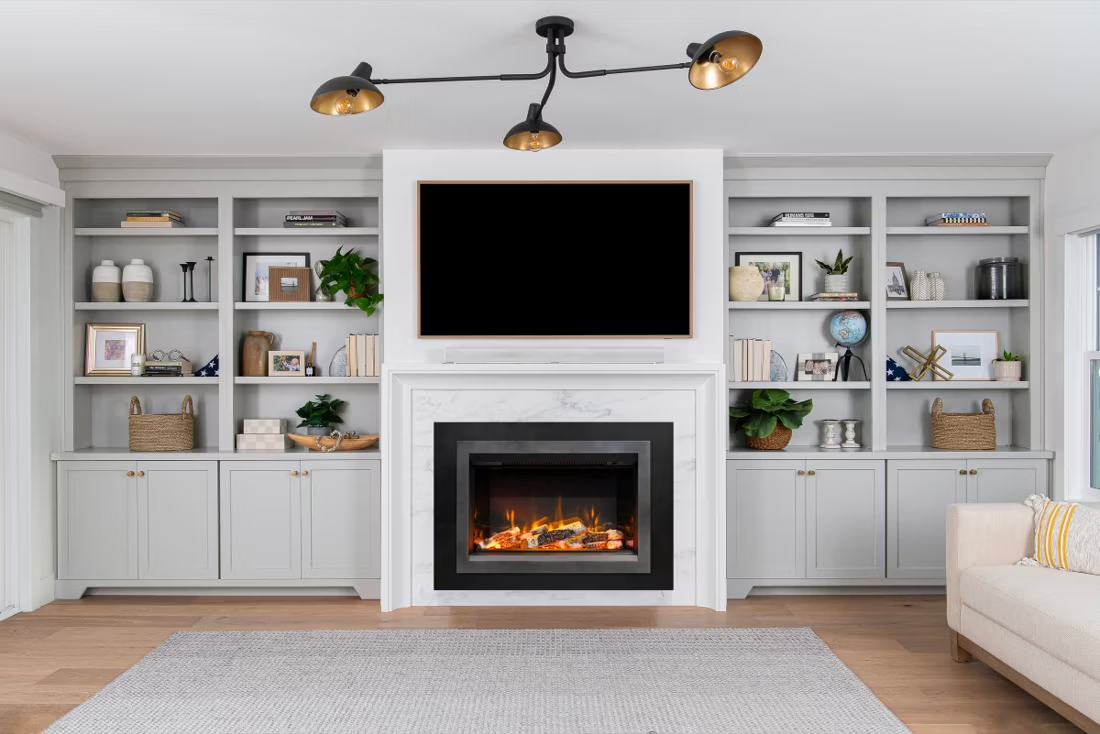
The main categories are inserts that drop into an existing fireplace opening, wall-mount or linear units that mount flush or recess into a wall (popular in newer great-room layouts), mantel packages that are freestanding with a built-in surround and need no installation at all, and TV-stand or media console units. Brands like Dimplex, Napoleon, and Touchstone are commonly stocked by hearth dealers in the Kenosha County area. A local dealer can walk you through which style fits your room and existing layout.
Why doesn't Find My Fireplace list wood or pellet options for Bristol?
Wood and pellet appliances aren't a significant part of the local heating market in Bristol the way they are in more rural or forested parts of Wisconsin. Most homes here run on natural gas for primary heat, and the village's residential subdivisions don't lend themselves to wood storage or cutting permits the way areas farther north do. If you're specifically set on a wood stove or pellet insert, a local dealer can still special-order one, but electric and gas are the fuels most Bristol homeowners are actually choosing.
How do I know what size electric fireplace I need?
Sizing an electric fireplace is mostly about the room, not the whole house, since these are zone heaters. As a rule of thumb, a 1,500-watt unit will noticeably warm a room around 400 square feet; larger linear units with higher wattage cover a bit more. Width matters too—a 50-inch wall unit suits a typical Bristol great room, while a 26 to 30 inch insert fits a bedroom or smaller den. A local dealer will measure your space, and your existing opening if you're converting from a wood or gas fireplace, to recommend the right size.
Can I put a TV above my fireplace?
Yes—with an asterisk. Fireplaces are hot and TVs don't like heat. Either put a mantel between them to deflect rising warmth, or choose a fireplace with heat-management technology that creates a cool zone on the wall above—the wall stays around 125 degrees, barely warm, while the room still gets full heat. If you like clean lines and don't want a mantel, heat management is the answer.
Do electric fireplaces actually produce heat?
Yes—most put out around 4,800–5,000 BTUs from a standard outlet, which comfortably warms a bedroom, office, or den as a comfort-zone heater. What they won't do is carry a whole house the way wood, gas, or pellet can. Think of electric as ambiance-first with honest supplemental heat: flames on with no heat in July, flames plus warmth in January.
What is an in-home preview and do I need one?
It's a visit where a hearth professional measures your space, confirms the model you picked actually works in your home, and walks the specs—framing, gas line, venting, finish work—before anything is ordered. Some details you just can't know until you see the house. Never make a down payment without one; it's the single most-skipped step that burns buyers.
How much should I budget for a fireplace?
For an average home—covering the fireplace, the vent pipe, and basic installation—a budget between $3,900 and $5,500 gives you a lot of options across wood, gas, and pellet. By the time you add finish work, gas line, and electrical, the average complete installation lands between $5,000 and $12,000 all-in. In a remodel or new build, a good rule is to put about 2.5% of the total project cost toward the fireplace.
Nearby Dealers
Hearth shops serving Bristol and the surrounding area. Every listing shows whether it is a WhyFire partner, a dealer we have verified as authorized for the brands we recommend, or a local business carrying hearth products. No manufacturer pays for placement. How we verify dealers →
Alaskan Fireplace Co
Smokin' Deal Bbq
Fireplaces Plus
Lakeside Fireplace
Lakes Brick & Block
Fireplace And Patio
Electric Service in Bristol
An electric fireplace's heater draws about 1,500 watts—pennies per hour at local rates.
Wisconsin Electric Power Co
Find your electric fireplace in Bristol.
Tell us a bit about your home and we'll match you with a trusted local Bristol-area dealer and send over your free Project Guide & Parts List—the right unit, the electrical requirements, and a plan sized for your room.
Find Your Fireplace →