
Keep Your Family Warm and Safe—No Matter What
With 8,356 heating degree days and winter lows averaging 3°F, Bloomer needs wood heat that actually performs. Find the right stove or insert, and connect with a trusted local dealer.
Every Project Starts From One of These Five Situations
Hardwood country deserves a stove that can keep up.
Bloomer sits in Chippewa County's hardwood belt, at just under 1,000 feet elevation in a Zone 6A climate that puts it in the same cold-climate tier as Duluth, Minnesota, a couple hours north. Winters here run long—nearly 8,400 heating degree days a year—with average lows around 3°F and stretches well below zero common from December through February. This is Blue Ox Marathon country, named for the logging legend tied to this stretch of the Chippewa Valley, and the region's oak, maple, birch, and aspen stands have fueled wood stoves and boilers here for generations.
Plenty of homes around Bloomer and the surrounding townships sit outside any natural gas main, which makes wood one of the few heat sources a homeowner fully controls—no utility bill, no waiting on a propane truck. Electric heat is available through Northern States Power (Xcel Energy), Bloomer Electric & Water, or Chippewa Valley Electric Cooperative depending on where you're located, but at roughly 15.8 cents per kWh and with this many heating degree days, electric resistance heat gets expensive fast. A well-sized wood stove or insert, burning the oak and maple that's abundant locally, still does the heavy lifting in a lot of Chippewa County homes.
Three steps. No salesperson until you're ready.
Tell us about your project
Your zip code, your situation, and the fuel you're leaning toward—or let the answers point you to one.
See what's actually available
The brands dealers within 100 miles genuinely carry—real options, never a catalog mirage.
Get your dealer & Project Guide
A trusted local dealer, plus the free Project Guide & Parts List that names every component of the job.
Frequently Asked Questions
How much does a wood stove installation cost in Bloomer?
Most wood stove installations around Bloomer run $3,500 to $8,000, depending on the stove, whether you need new Class A chimney pipe, and whether a hearth pad has to be built or upgraded for code clearances. Because Bloomer doesn't have a large hearth retail presence of its own, many homeowners work with dealers in Chippewa Falls or Eau Claire, about 20 to 25 minutes away, who then send an installation crew out to the property. Homes without an existing chimney—common in the area's older farmhouses that were built around wood cookstoves rather than modern flues—tend to land toward the higher end once full venting is factored in.
What size wood stove do I need for a Chippewa County home?
With average winter lows around 3°F and stretches of subzero weather most winters, undersizing is the bigger risk here—a stove built for a milder climate will run flat-out and still lose the battle on the coldest nights. Older farmhouses common around Bloomer, with less insulation and higher ceilings than newer construction, often need a step up from what a sizing chart alone would suggest. As a starting point: stoves rated for 1,000-2,000 square feet handle a well-insulated main living area, while larger or draftier homes do better with a 2,000+ square foot rated unit or a wood-fired furnace/boiler setup. A local dealer will walk your home before recommending a specific model.
Where can I find a certified wood stove installer near Bloomer?
Look for NFI (National Fireplace Institute) or CSIA (Chimney Safety Institute of America) certification—both signal real training in wood-burning clearances and venting, not just general contracting experience. Bloomer itself is a small town of under 4,000 people, so most certified installers work out of Chippewa Falls or Eau Claire and service the surrounding townships, including Bloomer, as part of their regular route. Ask any installer for their NFI or CSIA credentials before signing a contract—improper clearance-to-combustible work is the top cause of chimney fires in wood-heat households.
Should I get a freestanding wood stove or a wood insert?
A freestanding stove sits on its own hearth pad and works in nearly any room with the right clearances—it's the usual choice for a shop, cabin, or a home without an existing fireplace. A wood insert is built to slide into an existing masonry fireplace, which matters in Bloomer's older housing stock: a lot of homes built through the mid-1900s around Chippewa County still have an open masonry fireplace that was never much of a heat source. Dropping a modern insert into that opening turns a decorative, heat-losing fireplace into a real primary or supplemental heat source using the chimney you've already got.
Do I need a permit to install a wood stove in Bloomer?
Yes—new wood stove installations require a building permit, whether you're inside Bloomer city limits (through City Hall) or out in unincorporated Chippewa County (through the county's zoning and building office). The stove itself needs to meet current EPA emissions standards. The good news for this area: Chippewa County doesn't have the winter air-quality curtailment periods you'll find in some Western states, so once your stove is installed and permitted, you won't be dealing with burn bans on cold, still nights—which, given how many of those Bloomer gets, matters.
What's the best wood stove for a Bloomer winter?
Given how long and cold the heating season runs here—HDD north of 8,300 and stretches of subzero weather most winters—a catalytic stove from a brand like Blaze King is worth a look for its extended burn times; some models hold a fire 20+ hours on a full load of oak, which matters when it's -10°F overnight. Non-catalytic stoves from Pacific Energy or Lopi are a solid, lower-maintenance option for supplemental heat or smaller spaces. Oak and maple, both common in Chippewa County woodlots, burn hot and slow and pair well with either style; birch and aspen burn faster and are better for shoulder-season fires or kindling.
How often should I have my chimney cleaned in Bloomer?
The CSIA recommends an annual inspection for any wood-burning system, and with a heating season that can run October through April here, that's not a suggestion to skip. Plan on a sweep and inspection each late summer or early fall before the season starts. If you're burning a lot of birch or aspen—both common and easy to come by locally, but softer and faster-burning than oak—you'll build creosote faster and may want a mid-season check, especially in a home burning wood as primary heat rather than backup.
Where can I get firewood in Chippewa County?
Oak, maple, birch, and aspen are all common in the woodlots and forest land around Bloomer, and several local sellers deliver by the cord—expect $180 to $260 per cord depending on species and whether it's seasoned or green, with oak and maple commanding a premium over aspen. If you're set up to cut your own, the Wisconsin DNR manages permits for firewood gathering on county forest and state forest land in the region; check with the Chippewa County Forestry Department for current rules and any acreage open to cutting that season.
Wood stove or pellet stove—which fits a Bloomer home better?
Wood stoves run on cordwood, work with zero electricity (a real advantage when a winter ice storm takes down a rural electric co-op line, which happens here), and let you take advantage of the oak and maple that's genuinely cheap and plentiful in Chippewa County. Pellet stoves, stocked locally in brands like Lignetics and regional supplier Somerset Pellet Fuel, are more convenient—load the hopper, set it, and it runs clean—but they need electricity for the auger and blower, so they go dark in the same outage a wood stove would ride through. For a primary heat source in a rural home served by Chippewa Valley Electric Cooperative lines, wood's outage-proof operation is a real point in its favor; for a low-maintenance secondary heat source in town, pellet is worth a look.
What does it take to replace an existing fireplace?
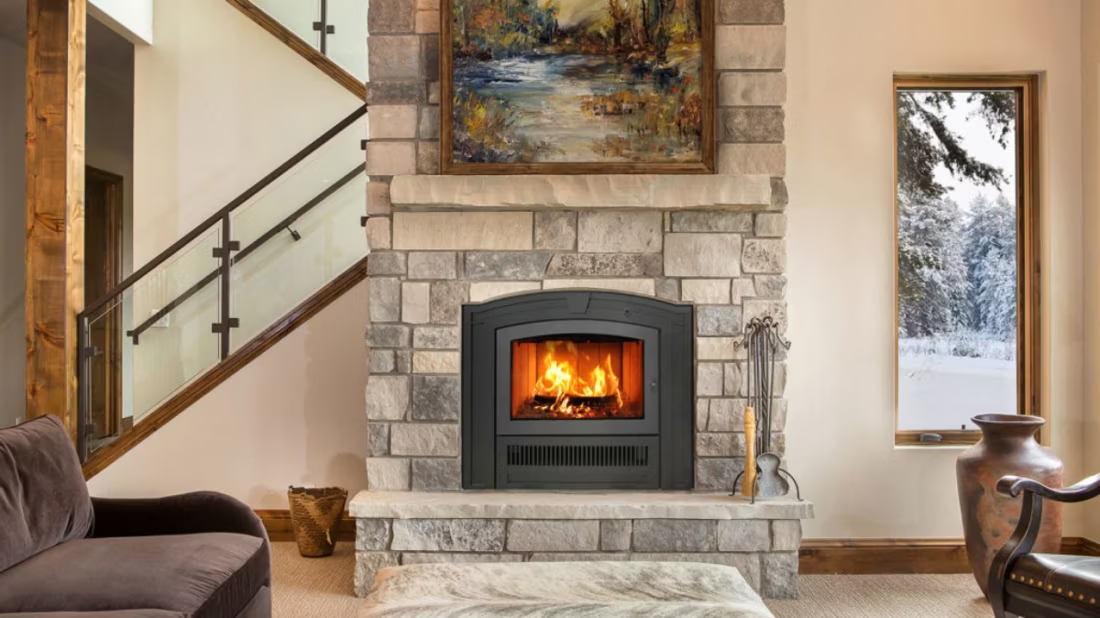
Fireplaces are like icebergs—bigger behind the wall than in front of it. Replacement means removing the surrounding tile or stone (the finish material laps onto the fireplace face), pulling the old unit, setting the new one in the same enclosure, and re-finishing the wall. A hearth professional can determine what's behind your wall without demolition during an in-home preview.
Why is a fireplace insert so efficient?
An insert does two things: it seals the chimney completely, so you stop losing air you already paid to heat, and it radiates warmth into the room through the firebox and glass. Most add a heat-exchange fan that pulls cool room air underneath, wraps it around the hot firebox, and pushes it back out warm. Your home is more efficient before you've even lit the first fire.
How much should I budget for a fireplace?
For an average home—covering the fireplace, the vent pipe, and basic installation—a budget between $3,900 and $5,500 gives you a lot of options across wood, gas, and pellet. By the time you add finish work, gas line, and electrical, the average complete installation lands between $5,000 and $12,000 all-in. In a remodel or new build, a good rule is to put about 2.5% of the total project cost toward the fireplace.
What is an in-home preview and do I need one?
It's a visit where a hearth professional measures your space, confirms the model you picked actually works in your home, and walks the specs—framing, gas line, venting, finish work—before anything is ordered. Some details you just can't know until you see the house. Never make a down payment without one; it's the single most-skipped step that burns buyers.
Nearby Dealers
Hearth shops serving Bloomer and the surrounding area. Every listing shows whether it is a WhyFire partner, a dealer we have verified as authorized for the brands we recommend, or a local business carrying hearth products. No manufacturer pays for placement. How we verify dealers →
Ccs Services LLC
Poolman
Find your wood fireplace in Bloomer.
Tell us about your home and heating goals, and we'll match you with a trusted local dealer serving Bloomer and Chippewa County—plus a free Project Guide & Parts List with the exact stove, venting, and parts your project needs.
Find Your Fireplace →