
The no-chimney way to add heat in Wyoming County.
Zone heat for the hollows, ridges, and manufactured homes of Wyoming County—no chimney, no gas line, no new venting. Find the right electric fireplace or insert and connect with a trusted local dealer.
Every Project Starts From One of These Five Situations
Heat where you need it, without new venting.
Wyoming County sits in the Appalachian foothills of southern West Virginia, in climate zone 4A with roughly 4,951 heating degree days and winter lows averaging 22°F. That's a real heating season, but it's a step milder than the mountain-basin cold of places like Bozeman or Burlington—most Wyoming County homes are looking for steady supplemental warmth in specific rooms, not a whole-home wood-burning setup. The county's terrain of narrow hollows and ridgeline lots, combined with a housing stock that includes a large share of manufactured and modular homes, makes venting a real constraint that a lot of families run into when they start pricing out heating upgrades.
Oak, hickory, maple, and cherry still cover the ridges here, and plenty of Wyoming County households burn wood or run a pellet stove on Energex or Hamer Pellet Fuel as their main heat. But electric fireplaces fill a different, very real need: a family room in a double-wide that can't support a masonry chimney, a rental property where the landlord won't approve venting work, an addition or sunroom with no existing flue, or simply a homeowner who wants supplemental heat and fireplace ambiance without touching the roofline. A local dealer can tell you within minutes whether your panel has room for a dedicated circuit and which unit fits your space—that's the kind of on-the-ground answer a catalog page can't give you.
Three steps. No salesperson until you're ready.
Tell us about your project
Your zip code, your situation, and the fuel you're leaning toward—or let the answers point you to one.
See what's actually available
The brands dealers within 100 miles genuinely carry—real options, never a catalog mirage.
Get your dealer & Project Guide
A trusted local dealer, plus the free Project Guide & Parts List that names every component of the job.
Frequently Asked Questions
How much does an electric fireplace installation cost in Wyoming County?
Plug-in electric fireplaces that run off a standard 120V outlet typically cost $300 to $1,500 for the unit itself, with no installation labor beyond hanging or placing it. Built-in electric fireplaces or inserts that need a dedicated 20-amp circuit run higher once you add an electrician—often $800 to $2,500 total depending on how far the new wiring has to travel and whether a wall needs to be opened. Because electric units skip chimney work, flashing, and Class A pipe entirely, the total project cost is almost always lower than a comparable wood or gas installation in Wyoming County. A local dealer will give you a firm number after seeing your panel and the room.
What size electric fireplace do I need for my home?
Most electric fireplaces are rated to comfortably heat 400 to 1,000 square feet, which usually covers one main room rather than an entire house—a realistic expectation given winter lows averaging 22°F across the county. A 1,500-watt insert or built-in is the standard size for a living room or den; smaller mantel units work fine for a bedroom or home office. Because a lot of Wyoming County housing is spread across older farmhouses with multiple small rooms or single-wide and double-wide manufactured homes, it's often more effective to plan for two smaller zone units—one for the main living space, one for a back bedroom—than to try to oversize a single unit to cover square footage it wasn't built for.
Can an electric fireplace be my main heat source in Wyoming County?
For a whole house, usually not on its own. With about 4,951 heating degree days and winter lows regularly dropping into the low 20s, most Wyoming County homes pair electric fireplaces with a heat pump, propane furnace, or wood stove for full-house heat, and use the fireplace for zone heating in the room where the family actually spends time. Where electric can realistically serve as primary heat is a well-insulated addition, sunroom, or single-room manufactured home unit where the space is small enough for a 1,500-watt insert to keep up on its own.
Do I need a permit to install an electric fireplace in Wyoming County?
A plug-in unit on an existing 120V outlet generally doesn't require a permit—it's no different than plugging in a space heater. A built-in or insert model that requires a new dedicated circuit or any wiring changes typically does need an electrical permit, since that work falls under the county's building and electrical code. Wyoming County's building department can confirm requirements for your specific project, but in practice, the electrician handling your circuit work usually pulls the permit as part of the job.
What's the difference between an electric insert, a built-in, and a mantel unit?
An electric insert is built to slide into an existing masonry firebox—a common option in Wyoming County's older coal-camp-era homes that already have a fireplace opening but where the chimney is no longer safe or practical to use for wood or gas. A built-in electric fireplace is designed to be framed into a wall during a remodel or new construction, giving a more custom, flush look. A mantel unit is a freestanding cabinet-style fireplace that plugs in and needs no framing or existing firebox at all—the most common choice for manufactured and modular homes where there's no masonry opening to work with in the first place.
Will an electric fireplace work during a power outage?
No—electric fireplaces run entirely on household power, so they go dark the moment the electricity does. That matters in Wyoming County, where ice storms and downed lines on the ridges can knock out power for a day or more during winter. If backup heat during outages is a real concern for your household, most local dealers will point you toward pairing your electric fireplace with a wood stove or a battery-backed gas unit elsewhere in the house, rather than relying on electric alone as your only heat source.
How much does it cost to run an electric fireplace?
A typical 1,500-watt electric fireplace costs somewhere around $0.15 to $0.20 per hour to run at Appalachian Power's residential rates, which are the standard utility serving most of Wyoming County. Run four or five hours an evening through the winter and you're looking at roughly $20 to $35 a month in added electric cost—considerably cheaper than heating the same room with your central system, and with no wood to split, haul, or store.
Electric vs. wood—which is right for my home in Wyoming County?
Wood makes sense if you have access to your own timber—oak, hickory, maple, and cherry are all common on Wyoming County ridgelines—and you want heat that keeps working when the power doesn't. It does mean a chimney, clearances, and yearly maintenance. Electric makes sense when venting isn't realistic: manufactured and modular homes, rentals, additions, or older homes with a chimney that's no longer sound. If you want wood's convenience without the cutting and stacking, a pellet stove burning regional brands like Energex, Hamer, or Greene Team is a middle option worth asking a local dealer about alongside electric.
Are electric fireplaces a good fit for manufactured and mobile homes in Wyoming County?
Yes—it's one of the strongest use cases for electric heat in this county. Given how many households here live in single-wide or double-wide manufactured homes, electric fireplaces are attractive precisely because they avoid the roof penetrations, clearance requirements, and structural modifications that wood or gas units need. A mantel-style unit needs nothing more than a nearby outlet; a built-in model just needs confirmation that your electrical panel has room for a new circuit. Either way, a local dealer can check your panel and home setup in a single visit and tell you exactly what will and won't work.
Can I put a TV above my fireplace?
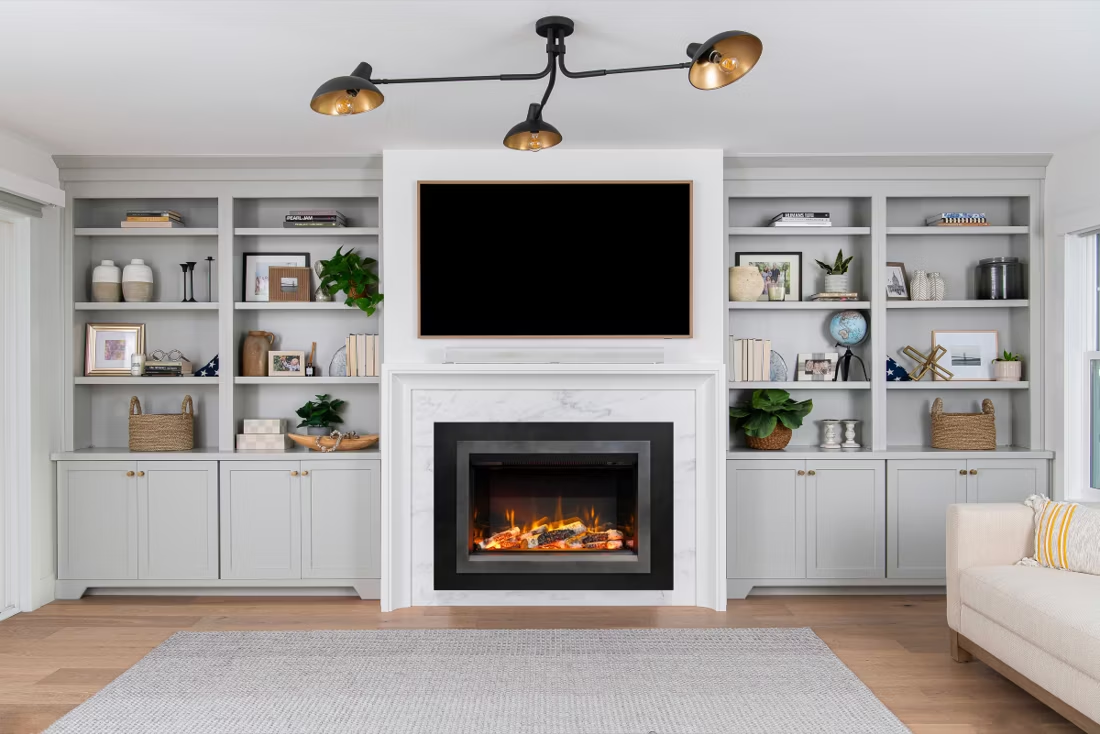
Yes—with an asterisk. Fireplaces are hot and TVs don't like heat. Either put a mantel between them to deflect rising warmth, or choose a fireplace with heat-management technology that creates a cool zone on the wall above—the wall stays around 125 degrees, barely warm, while the room still gets full heat. If you like clean lines and don't want a mantel, heat management is the answer.
Does an electric fireplace need a vent or chimney?
No—that's its superpower. An electric fireplace needs a wall and an outlet, period. No vent pipe, no gas line, no clearances to design around, which is why it works in bedrooms, offices, apartments, and walls where venting a gas or wood unit would be impractical or impossible. Installation is typically the simplest and least expensive of any fireplace type.
Should the dealer who sells my fireplace also install it?
Ideally, yes. A fireplace project involves vent pipe, gas line, electrical, and often tile or stone. Hire three or four separate trades and you own the liability and the game of telephone between them. One company selling and installing means one accountable party, start to finish—ask about factory training, on-time completion records, and what happens if an inspection fails.
Does a fireplace add value to my home?
On average, a fireplace adds back to the home about the same amount you spent installing it. Add the monthly savings from heating the rooms you actually use instead of the whole house—often hundreds of dollars a year—and the value case is strong before you even count what a fire does for how your family uses the room.
Stove and Fireplace Dealers in Wyoming County
Listings include WhyFire partner dealers, dealers we have verified as authorized for the brands we recommend, and established local businesses that carry hearth products. Every listing shows which one it is. The ones marked Preferred run on WhyFire's software, so they can show you real pricing and book your appointment right here. No manufacturer pays for placement. How we verify dealers →
Newport Trading Company Inc.
Global Stoves & Services
A & D Chimney Cleaning
Global Resources
Country Power Equipment
Marsh Lp Gas Company
Cline Lumber Company
Find your electric fireplace in Wyoming County.
Tell us about your home and we'll match you with a trusted local Wyoming County dealer and send over a free Project Guide & Parts List—the exact unit, electrical requirements, and installation plan for your space.
Find Your Fireplace →