
Real heat for Wyoming County's hills and hollows.
Wood, gas, pellet, and electric fireplace resources for every community in Wyoming County—from Pineville and Mullens to Oceana and the smaller hollows between. Find the right unit and connect with a local hearth dealer who actually services your road.
Every Project Starts From One of These Five Situations
Appalachian hardwood country in southern West Virginia.
Wyoming County sits deep in the southern West Virginia coalfields, a landscape of steep ridges and narrow hollows covered in oak, hickory, maple, and cherry—some of the best firewood species in the country, and species that have heated homes here for generations. At around 4,950 heating degree days and average winter lows near 22°F, the county's climate zone 4A winters are real but not extreme—noticeably milder than a place like Duluth, MN (over 9,000 HDD), but cold enough that a working stove or insert still matters for five or six months a year, especially up in the hollows where cold air settles at night.
What you will find on this hub: hearth retailers, service technicians, and fuel suppliers covering the whole county—Pineville (the county seat), Mullens, Oceana, and the unincorporated communities like Bud, Itmann, and New Richmond that make up most of the county's population. Pick your fuel below to see local dealers, typical installation costs, and the specific resources—permitting notes, regional pellet brands, and utility information—that apply to your project.
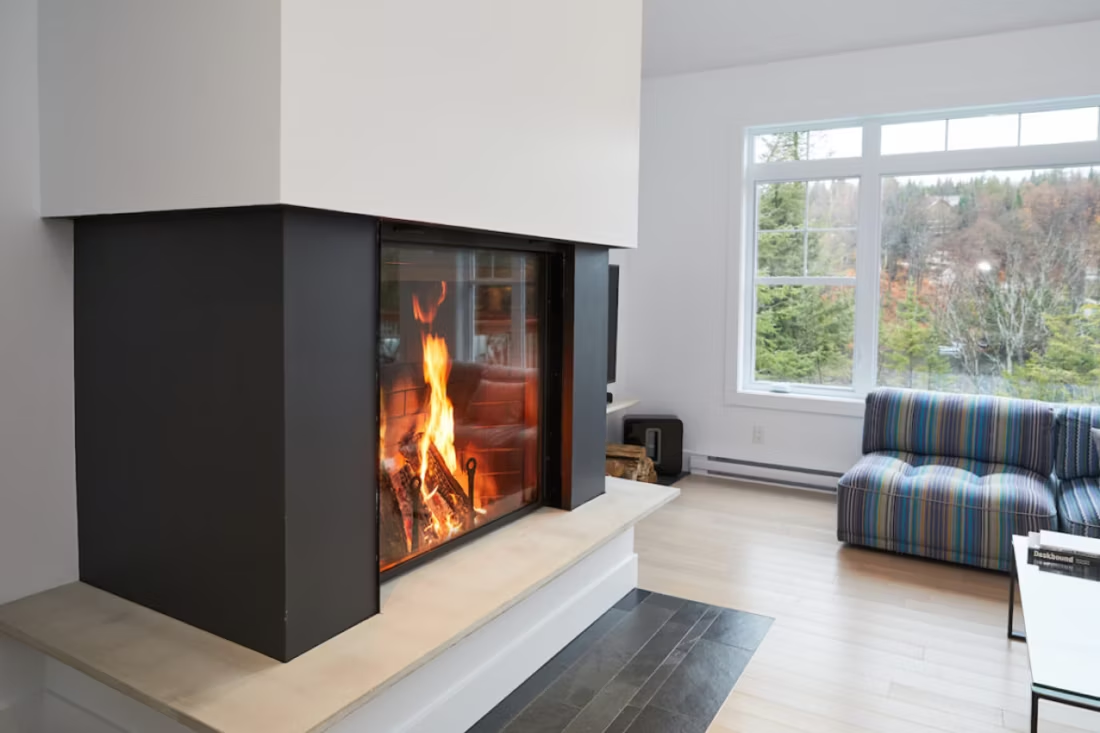
Four fuels. One honest answer for Wyoming County.
Three steps. No salesperson until you're ready.
Tell us about your project
Your zip code, your situation, and the fuel you're leaning toward—or let the answers point you to one.
See what's actually available
The brands dealers within 100 miles genuinely carry—real options, never a catalog mirage.
Get your dealer & Project Guide
A trusted local dealer, plus the free Project Guide & Parts List that names every component of the job.
Frequently Asked Questions
Which fuel works best in Wyoming County?
It depends on the home and the hollow it sits in. Wood is the traditional choice and still makes the most economic sense for a lot of Wyoming County households—oak, hickory, maple, and cherry are all locally available, split and seasoned wood burns hot and clean in a modern EPA-certified stove, and wood keeps working when winter storms knock out power on a mountain line. Gas is the low-maintenance option, though most rural parts of the county run on propane rather than piped natural gas, so tank placement and delivery matter as much as the appliance itself. Pellet is a solid middle ground if you want wood-style heat without splitting and stacking cordwood—regional brands like Energex, Hamer Pellet Fuel, and Greene Team Pellet Fuel are all sold within reasonable driving distance. Electric works well as a supplemental heater for a bedroom or a den on the Appalachian Power grid, but it is not a realistic primary heat source once temperatures drop into the teens for days at a time. Most households here end up running two fuels—wood or pellet for the bulk of the season, propane or electric for convenience and shoulder-season days.
Do I need a permit to install a fireplace or stove in Wyoming County?
It depends on where in the county you are. Wyoming County itself does not maintain a countywide building code office, so permitting for a wood stove, insert, or gas appliance mostly comes down to whether the home sits inside town limits. Pineville and Mullens each administer their own building permits for residential construction and heating appliance installs; in the unincorporated hollows and rural stretches of the county, there is often no formal permit requirement for the stove or insert itself. That said, gas line work still requires a licensed plumber or gas-fitter under West Virginia state law regardless of location, and any new electrical circuit for a built-in electric fireplace should go through a licensed electrician. A reputable local dealer will tell you upfront which of these apply to your specific address rather than assuming the same rule for the whole county.
Are there air quality restrictions on wood burning in Wyoming County?
No—Wyoming County has no designated air quality nonattainment status and no local wood-smoke ordinances or seasonal burn curtailment days like you'd see in a smoke-prone western valley. New wood stoves sold and installed here still need to meet the EPA's 2020 NSPS emissions standards, the same federal rule that applies nationwide, but there is no additional local restriction on when or how much you can burn. That gives Wyoming County households more flexibility than places with inversion-driven air quality programs, though basic courtesy—well-seasoned hardwood, a hot fire rather than a smoldering one—still keeps your chimney cleaner and your neighbors happier.
Can one local hearth retailer handle wood, gas, pellet, and electric?
In a county this size, most of the hearth retailers that do exist carry at least three of the four fuel types rather than specializing narrowly, simply because the customer base isn't large enough to support single-fuel shops. A dealer serving Pineville or Mullens is likely to have working wood, gas, and pellet displays on the floor, with electric units as a smaller side offering. If you're not sure which fuel fits your home, that's actually an advantage in a small county—you can compare options with one dealer visit rather than driving to several. Ask specifically which fuels a retailer installs and services, since carrying a unit and being able to install and maintain it aren't always the same thing.
How does service work out in the hollows and rural parts of the county?
Most technicians serving Wyoming County are based near Pineville or Mullens and travel out along Route 10 and the connecting hollow roads to reach homes in Oceana, Bud, Itmann, and the smaller unincorporated communities. Narrow gravel roads and steep grades can add real drive time even for a short distance on a map, so expect a modest trip charge for calls well outside town, and expect scheduling to tighten up once cold weather sets in. Booking your annual chimney sweep or gas system inspection in late summer or early fall, before the first cold snap, is the easiest way to avoid a multi-week wait for a mid-winter emergency call.
What's the typical cost range for fireplace installation across all fuel types in Wyoming County?
Costs run a bit lower here than in higher cost-of-living markets, but the same fuel-to-fuel pattern holds. Wood stove or insert installation typically runs $3,500–$7,500, more if new masonry chimney work or a full liner replacement is needed. Gas fireplace, insert, or stove installation runs roughly $4,000–$9,000, with propane tank placement and line work adding to the cost if you're not already set up for it. Pellet stove or insert installs generally fall between $3,500–$6,000. Electric fireplaces are the least expensive option—$200–$2,500 for the unit itself, plus $300–$1,000 in labor for anything beyond a simple plug-in installation. A local dealer can give you a firmer number once they've seen your chimney, your electrical panel, or your propane setup in person.
What is an in-home preview and do I need one?
It's a visit where a hearth professional measures your space, confirms the model you picked actually works in your home, and walks the specs—framing, gas line, venting, finish work—before anything is ordered. Some details you just can't know until you see the house. Never make a down payment without one; it's the single most-skipped step that burns buyers.
Can I install a fireplace myself?
If you're putting a fire in your house on purpose, it's best to work with an expert. Unless you're genuinely experienced in framing, gas line, vent pipe, and the national code on clearances to combustibles, have a professional do it—and ideally the same company that sells you the fireplace, so warranty, service, and liability all live under one roof.
Does a fireplace add value to my home?
On average, a fireplace adds back to the home about the same amount you spent installing it. Add the monthly savings from heating the rooms you actually use instead of the whole house—often hundreds of dollars a year—and the value case is strong before you even count what a fire does for how your family uses the room.
Wood, gas, pellet, or electric—how do I choose?
Match the fuel to your life, not the other way around. Wood: lowest fuel cost and total power-outage independence, but you're hauling and stacking. Gas: press a button, set a thermostat, no maintenance to speak of. Pellet: wood economics with automatic feeding, in exchange for weekly cleaning and a need for electricity. Electric: plugs in anywhere with honest supplemental heat. Nobody regrets the fuel that fits how they actually live.
Stove and Fireplace Dealers in Wyoming County
Listings include WhyFire partner dealers, dealers we have verified as authorized for the brands we recommend, and established local businesses that carry hearth products. Every listing shows which one it is. The ones marked Preferred run on WhyFire's software, so they can show you real pricing and book your appointment right here. No manufacturer pays for placement. How we verify dealers →
Newport Trading Company Inc.
Global Stoves & Services
A & D Chimney Cleaning
Global Resources
Country Power Equipment
Marsh Lp Gas Company
Cline Lumber Company
Get matched with a Wyoming County hearth dealer.
Tell us about your home and your fuel preference, and we'll match you with a trusted local dealer and send over a free Project Guide & Parts List—the exact parts your project needs, including the vent kit, and the local dealer we recommend for your Wyoming County address.
Find Your Fireplace →