
Add heat to any room in Wirt County—no chimney, no gas line, no permit headaches.
Zone heat for the farmhouses, modular homes, and river cabins along the Little Kanawha—from Elizabeth to the outlying hollows of Wirt County. Find the right electric fireplace or insert, and connect with a trusted local dealer.
Every Project Starts From One of These Five Situations
Supplemental heat without adding a vent.
Wirt County is one of West Virginia's smallest counties by population—just over 1,000 residents spread across farmland, wooded ridges, and the Little Kanawha River valley around the county seat of Elizabeth. Sitting in climate zone 4A, winters here run milder than the mountain counties to the east, but still cold enough that most homes lean on some kind of supplemental heat from late fall through early spring. A lot of the county's housing stock is older farmhouses and single-wide or double-wide modular homes, where a wood stove installation isn't always practical—either the manufacturer's warranty prohibits it, or there's no existing masonry chimney to build off of.
That's where electric fireplaces and inserts do their best work. A plug-in unit or a hardwired 240-volt insert needs no chimney, no gas line, and no combustion air—which matters in a county where natural gas mains don't reach every hollow and propane deliveries can be delayed by weather on rural roads. Many Wirt County households already burn oak, hickory, maple, or cherry for primary heat, cut from their own woodlots, and add an electric unit in a bedroom, sunroom, or finished basement for zone heat on nights they don't want to build a fire in the main stove. It's also the practical choice for river camps and seasonal cabins along the Little Kanawha that only need heat for a weekend at a time.
Three steps. No salesperson until you're ready.
Tell us about your project
Your zip code, your situation, and the fuel you're leaning toward—or let the answers point you to one.
See what's actually available
The brands dealers within 100 miles genuinely carry—real options, never a catalog mirage.
Get your dealer & Project Guide
A trusted local dealer, plus the free Project Guide & Parts List that names every component of the job.
Frequently Asked Questions
How much does it cost to add an electric fireplace in Wirt County?
Electric fireplaces themselves typically run $200 to $2,000 depending on size and features, and installation costs stay low because there's no venting, gas line, or chimney work involved. A simple plug-in freestanding unit or a wall-mount model needs nothing more than a standard outlet. A built-in electric insert or a larger unit that calls for a dedicated 240-volt circuit may need an electrician to run new wiring, which adds a few hundred dollars in rural Wirt County depending on how far the panel is from the install location. Either way, the total project cost is a fraction of what a wood stove or gas fireplace installation runs once venting and permitting are factored in.
What size electric fireplace do I need?
Sizing an electric fireplace comes down to the square footage of the specific room you're heating, not the whole house—most units are built to supplement central heat or a wood stove, not replace it. A small wall-mount or tabletop unit (roughly 400-1,000 sq ft of heating capacity) works for a bedroom or den; a larger insert or built-in unit can cover an open living area up to about 1,500 sq ft. For the older farmhouses common around Elizabeth and the surrounding hollows, drafty rooms and high ceilings mean you'll want to size toward the upper end of a unit's rated coverage. Local dealers can walk through your specific room and recommend wattage based on insulation and window exposure.
Who installs electric fireplaces in Wirt County?
Because electric fireplaces don't involve venting, gas lines, or masonry work, installation is far simpler than wood or gas—but it still matters who does it. A basic plug-in model can go in without a licensed contractor, but any unit that requires a new dedicated circuit or built-in wiring should go through a licensed electrician, especially in a rural county where panel upgrades and long wire runs are common in older homes. The hearth dealers who serve Wirt County typically coordinate directly with a local electrician when a project calls for one, so you're not left finding your own tradesperson.
What's the difference between an electric fireplace, insert, and stove?
An electric fireplace is usually a wall-mount, built-in, or mantel-style unit designed to look like a traditional fireplace from the front. An electric insert is built to slide into an existing masonry firebox—a common retrofit for the older fireplaces found in many Wirt County farmhouses, since it uses the existing opening without needing the chimney for anything but looks. An electric stove is a freestanding cabinet-style unit that mimics a wood stove's shape and can sit anywhere near an outlet. All three plug into standard household power, and none require venting of any kind—the difference is mostly about fitting your existing opening or your room's layout.
Do I need a permit to install an electric fireplace in Wirt County?
In most cases, no. A standard plug-in electric fireplace is treated like any other household appliance and doesn't trigger a building permit. If your project involves adding a new electrical circuit or modifying wiring for a hardwired 240-volt insert, that work should be done by a licensed electrician and may require an electrical permit—worth a quick call to the Wirt County Courthouse in Elizabeth to confirm what's required for your specific project before work starts. Either way, you're skipping the building permit, gas line permit, and chimney inspection that come with wood or gas installations.
What's the best electric fireplace for a Wirt County home?
For the older, often drafty farmhouses and modular homes common in Wirt County, look for a unit with a real heater rated at 4,600 to 5,200 BTU (the standard for most 1,500-watt electric heaters) rather than one sold purely for the flame effect. Brands like Dimplex, Napoleon, and Touchstone make inserts and freestanding units with realistic LED flame technology and enough heat output to genuinely warm a bedroom or den on a cold night. If you're retrofitting an existing masonry fireplace opening, measure it carefully—insert sizing is exact, and a local dealer can match the unit to your firebox rather than guessing from a big-box store aisle.
How long do electric fireplaces last, and what maintenance do they need?
Electric fireplaces are low-maintenance compared to wood or gas—there's no chimney to sweep, no gas line to inspect, and no ash to clean up. Most units last 10 to 15 years with normal use, and the main wear items are the heater fan or the LED light strip, both usually replaceable rather than requiring a whole new unit. Dusting the vents and occasionally checking that the plug and outlet aren't overheating—common advice for any high-draw 1,500-watt appliance—is about the extent of upkeep.
How much does it cost to run an electric fireplace in Wirt County?
Most electric fireplace heaters draw around 1,500 watts on the heat setting, which costs roughly 15 to 25 cents an hour to run depending on your electric rate—Wirt County homes served by a rural electric cooperative or an investor-owned utility will see slightly different rates, but the range holds fairly steady across West Virginia. Run several hours a night through a cold stretch, that adds up to a modest monthly increase, well below what most households spend supplementing with propane or heating oil. The flame effect alone, with the heater switched off, draws very little power, which is why a lot of Wirt County homeowners run the ambiance year-round and only switch on the heat when it's actually cold.
Electric vs. wood—which makes sense for my Wirt County home?
Wood remains the backbone of home heating for a lot of Wirt County households, especially those with their own woodlots of oak, hickory, maple, or cherry and a stove that can carry the whole house through a cold snap without power. Electric fireplaces can't do that job—they go dark in an outage—but they're the better fit for a specific room without chimney access, for modular and manufactured homes where a wood stove isn't structurally approved, and for river camps or seasonal cabins where nobody wants to deal with venting for occasional use. Plenty of local households run both: a wood stove as the primary workhorse, and an electric unit in a back bedroom or addition for quick, no-mess heat.
Do electric fireplaces actually produce heat?
Yes—most put out around 4,800–5,000 BTUs from a standard outlet, which comfortably warms a bedroom, office, or den as a comfort-zone heater. What they won't do is carry a whole house the way wood, gas, or pellet can. Think of electric as ambiance-first with honest supplemental heat: flames on with no heat in July, flames plus warmth in January.
Can I put a TV above my fireplace?
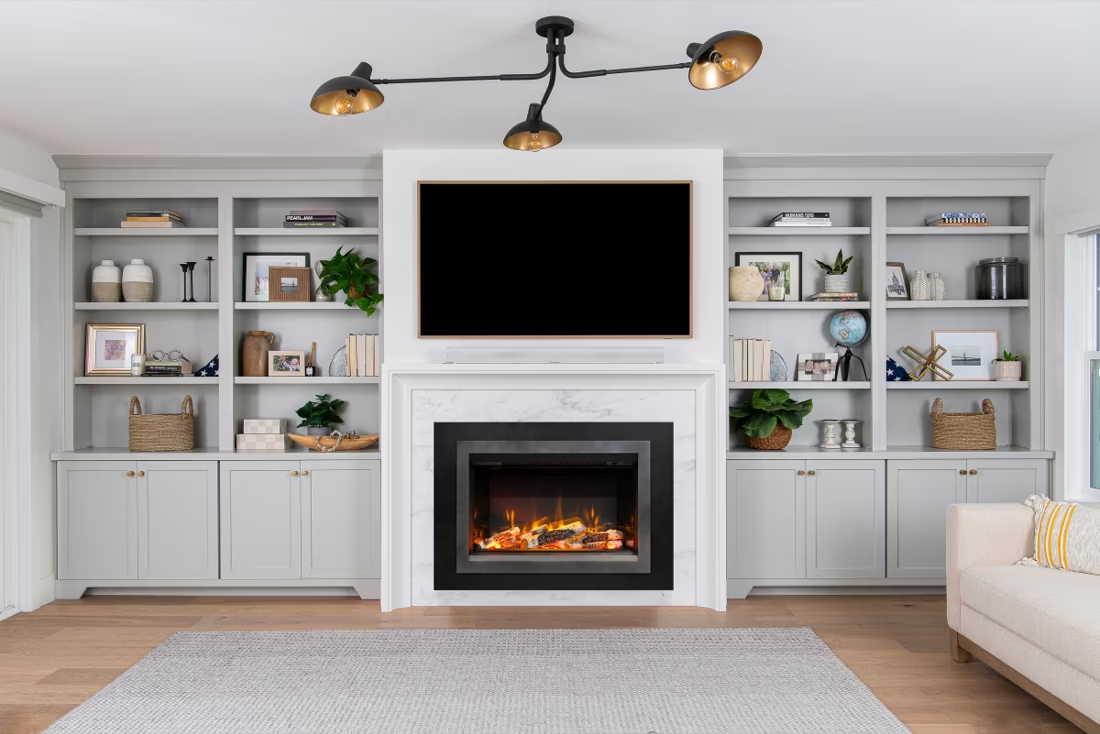
Yes—with an asterisk. Fireplaces are hot and TVs don't like heat. Either put a mantel between them to deflect rising warmth, or choose a fireplace with heat-management technology that creates a cool zone on the wall above—the wall stays around 125 degrees, barely warm, while the room still gets full heat. If you like clean lines and don't want a mantel, heat management is the answer.
Can a fireplace actually lower my heating bill?
Yes—by creating a comfort zone. A furnace heats every square foot of the house just to warm the one room you're in; a gas fireplace on low burns roughly a sixth of the gas a typical furnace does. Set the furnace around 55–60 degrees as a baseline, then heat the rooms your family actually uses. Families who heat this way commonly save $20–$60 a month.
Can I install a fireplace myself?
If you're putting a fire in your house on purpose, it's best to work with an expert. Unless you're genuinely experienced in framing, gas line, vent pipe, and the national code on clearances to combustibles, have a professional do it—and ideally the same company that sells you the fireplace, so warranty, service, and liability all live under one roof.
Stove and Fireplace Dealers in Wirt County
Listings include WhyFire partner dealers, dealers we have verified as authorized for the brands we recommend, and established local businesses that carry hearth products. Every listing shows which one it is. The ones marked Preferred run on WhyFire's software, so they can show you real pricing and book your appointment right here. No manufacturer pays for placement. How we verify dealers →
Hardman's Hardware
The Fore Timber Company Inc.
Hardman's Hardware
Bob's Fireplace
Hardman's Hardware
Find your electric fireplace in Wirt County.
Tell us about your home and we'll match you with the right electric fireplace, insert, or stove—plus a free Project Guide & Parts List with the exact parts and a trusted local dealer near Elizabeth.
Find Your Fireplace →