
Find the right hearth for your Wirt County home.
Wood, gas, pellet, and electric fireplace resources for Elizabeth and the unincorporated communities scattered along the Little Kanawha River—Palestine, Burning Springs, Creston, and beyond. Connect with a trusted local hearth retailer, even if the nearest one is based outside the county.
Every Project Starts From One of These Five Situations
Hardwood country along the Little Kanawha River.
Wirt County is one of West Virginia's smallest counties by population, tucked into the hills along the Little Kanawha River in climate zone 4A—cold, damp winters without the extreme lows of the northern plains, but plenty of heating-season demand. The county's oak, hickory, maple, and cherry forests have supplied firewood to local households for generations, and a lot of Wirt County homes still burn wood cut from their own or a neighbor's woodlot. Because the county sits off the main natural gas transmission corridors, propane tanks are the common gas setup here rather than piped utility gas—a detail that changes how a gas fireplace or insert gets installed and serviced.
With a population under 1,100 spread across a mostly rural landscape, Wirt County doesn't support its own hearth showroom in most cases—dealers based in Parkersburg (Wood County) or Ripley (Jackson County) routinely travel in for consultations, installs, and service calls. This hub rolls up retailers, technicians, and fuel suppliers who cover Wirt County, whether they're headquartered here in Elizabeth or driving in from a neighboring county. Pick your fuel below for installation costs, recommended units, and dealer specifics.
Four fuels. One honest answer for Wirt County.
Three steps. No salesperson until you're ready.
Tell us about your project
Your zip code, your situation, and the fuel you're leaning toward—or let the answers point you to one.
See what's actually available
The brands dealers within 100 miles genuinely carry—real options, never a catalog mirage.
Get your dealer & Project Guide
A trusted local dealer, plus the free Project Guide & Parts List that names every component of the job.
Frequently Asked Questions
Which fuel works best in a small, rural county like Wirt?
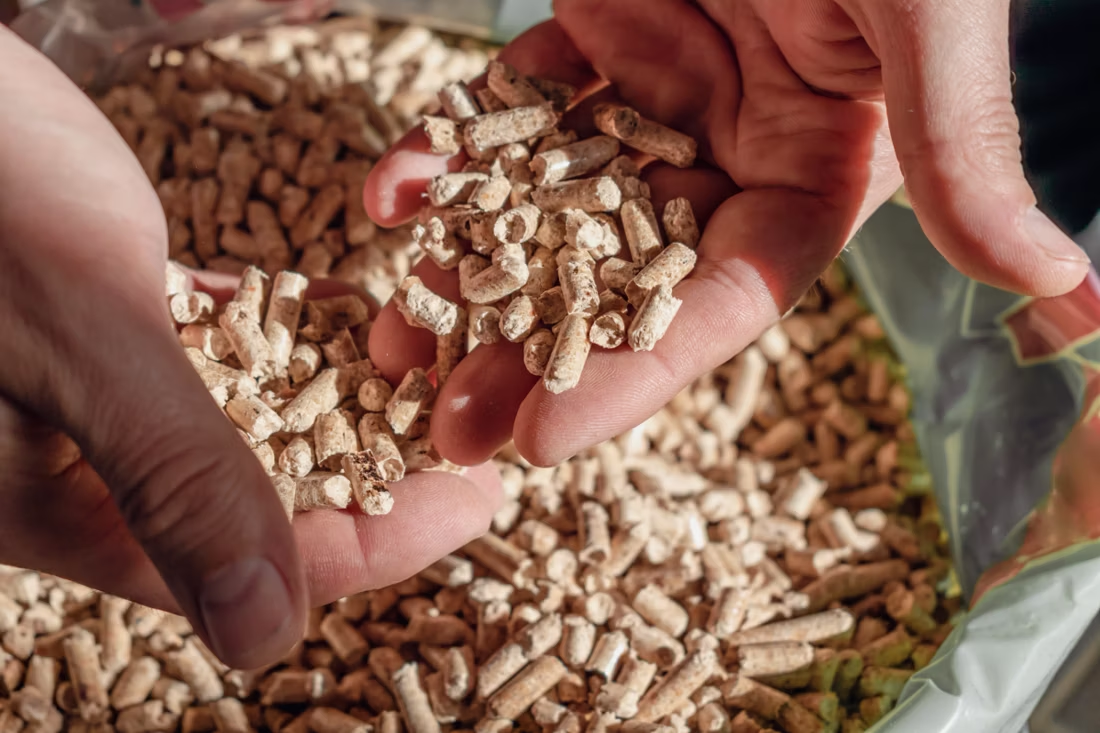
It depends on what's already at your property. Wood is the traditional heating fuel here—oak, hickory, maple, and cherry are all abundant in local woodlots, and a well-seasoned load of oak or hickory burns long and hot through a Zone 4A winter. Propane is the practical gas option, since Wirt County sits off the main natural gas pipeline routes; most 'gas' fireplace installs here run on a propane tank rather than piped utility gas. Pellet stoves are a solid middle ground if you don't want to split and stack wood—Energex, Hamer Pellet Fuel, and Greene Team Pellet Fuel are all regionally available through Mid-Atlantic distributors. Electric fireplaces work well for supplemental heat in a bedroom or family room, but with rural power lines that can go down in ice storms, most Wirt County homes keep a wood or propane backup as the primary heat source rather than relying on electric alone.
Do I need a permit to install a fireplace in Wirt County?
Generally yes, though Wirt County is small enough that it doesn't run a large, dedicated building department the way an urban county does—permitting for new construction and major mechanical work typically runs through the Wirt County Commission's office in Elizabeth, the county seat. Wood stoves and inserts installed today still need to meet EPA 2020 NSPS emissions standards regardless of county size. Propane fireplace and insert installs require a licensed propane technician to run and pressure-test the line, in addition to any local building sign-off. Most hearth retailers who service Wirt County—even ones based in Parkersburg or Ripley—are used to coordinating this paperwork with the county office as part of the install, so you're not usually navigating it alone.
Are there air quality restrictions on wood burning in Wirt County?
No. Unlike basin or valley counties that deal with winter temperature inversions and non-attainment status, Wirt County has no air quality advisories or burn restrictions tied to wood heat. That means no curtailment days and no mandatory retrofit rules for older stoves. It's still worth choosing an EPA-certified stove for efficiency and lower fuel use—burning oak or hickory in a modern catalytic or non-catalytic unit gets meaningfully more heat per cord than an old pre-EPA box stove—but there's no local regulatory pressure driving that choice here.
Can one local hearth retailer handle all four fuel types in Wirt County?
Given the county's population of just over 1,000, there's no hearth showroom physically located in Wirt County itself—the retailers who serve local homeowners are based in Parkersburg (Wood County) or Ripley (Jackson County) and travel in for consultations and installs. Several of these regional dealers carry all four fuel types—wood, propane-fed gas, pellet, and electric—which is useful if you're comparing options before committing. Others specialize in one or two fuels, particularly propane and wood. Because you're likely working with a dealer who drives in anyway, it's worth confirming upfront what fuels and service radius they cover for your part of the county.
How does installation and service scheduling work in a county this small?
Plan ahead. Because most technicians and retailers are commuting from Parkersburg or Ripley rather than working out of a Wirt County shop, service slots fill up fastest in September and October before the heating season starts, and a travel fee for the trip out—often $40 to $80 depending on how far into the county you are—is common. If you're near Elizabeth you're closer to that Parkersburg service corridor; homes further out toward Burning Springs or Creston may see slightly longer wait times for non-emergency chimney sweeps or annual propane inspections. Booking your annual service in late summer, rather than waiting for the first cold snap, is the easiest way to avoid a multi-week wait.
What's the typical installation cost range across fuel types in Wirt County?
Costs run close to regional Mid-Ohio Valley averages, sometimes with a modest travel charge added for dealers coming in from Wood or Jackson County. Wood stove or insert: roughly $3,800–$8,000 for a typical install using local oak or hickory as fuel, more if new chimney work is needed. Propane fireplace, insert, or stove: roughly $4,200–$9,500, with cost driven mainly by tank setup (if you don't already have one) and line run length. Pellet stove or insert: roughly $3,800–$6,800, plus the cost of stocking up on bagged pellets from a regional brand like Energex or Hamer. Electric fireplace: $200–$2,500 for the unit, with most wall-mount or insert installs staying in plug-and-play territory and needing little to no labor. See the county-plus-fuel pages above for cost detail tied to specific local dealers.
How much should I budget for a fireplace?
For an average home—covering the fireplace, the vent pipe, and basic installation—a budget between $3,900 and $5,500 gives you a lot of options across wood, gas, and pellet. By the time you add finish work, gas line, and electrical, the average complete installation lands between $5,000 and $12,000 all-in. In a remodel or new build, a good rule is to put about 2.5% of the total project cost toward the fireplace.
Can a fireplace actually lower my heating bill?
Yes—by creating a comfort zone. A furnace heats every square foot of the house just to warm the one room you're in; a gas fireplace on low burns roughly a sixth of the gas a typical furnace does. Set the furnace around 55–60 degrees as a baseline, then heat the rooms your family actually uses. Families who heat this way commonly save $20–$60 a month.
I know I want a fireplace—where do I actually start?
Do two things today: snap a photo of the wall or fireplace you want to transform, and take a tape measure to the space—width, height, depth. Those two artifacts answer most of a hearth professional's first questions. Then settle fuel (wood, gas, pellet, or electric) and set a realistic budget: $3,900–$5,500 covers fireplace, vent, and basic install for most homes.
Does a fireplace add value to my home?
On average, a fireplace adds back to the home about the same amount you spent installing it. Add the monthly savings from heating the rooms you actually use instead of the whole house—often hundreds of dollars a year—and the value case is strong before you even count what a fire does for how your family uses the room.
Stove and Fireplace Dealers in Wirt County
Listings include WhyFire partner dealers, dealers we have verified as authorized for the brands we recommend, and established local businesses that carry hearth products. Every listing shows which one it is. The ones marked Preferred run on WhyFire's software, so they can show you real pricing and book your appointment right here. No manufacturer pays for placement. How we verify dealers →
Hardman's Hardware
The Fore Timber Company Inc.
Hardman's Hardware
Bob's Fireplace
Hardman's Hardware
Find your fireplace in Wirt County.
Tell us about your home and we'll match you with a trusted local dealer—whether they're based in Elizabeth or traveling in from Parkersburg or Ripley—and send you a free Project Guide & Parts List with the exact parts, vent kit, and recommended dealer for your project.
Find Your Fireplace →