
Keep Your Family Warm and Safe—No Matter What
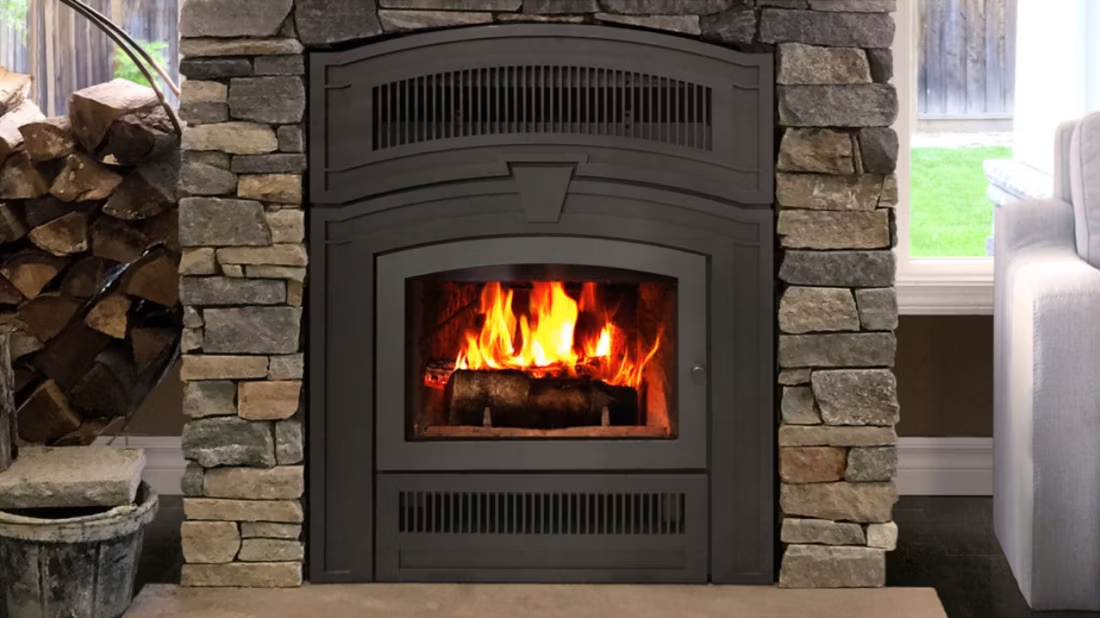
Most Vienna homes heat with natural gas, but a wood stove still earns its keep as backup heat during Ohio Valley ice storms or as a supplemental source in a den or basement. We'll match you with a local dealer who installs it right.
Every Project Starts From One of These Five Situations
Natural gas dominates the Mid-Ohio Valley—but wood still has fans.
Vienna sits along the Ohio River in Wood County at just 661 feet of elevation, with a climate zone 4A profile that's noticeably milder than the true wood-heat belt further north or up in the Appalachian highlands. Winter lows average around 24°F and the area has a fairly light overall winter heating load—a fraction of what a place like Duluth, MN or Fargo, ND sees. That, combined with widely available and affordably priced natural gas across the Mid-Ohio Valley, means most Vienna households simply never need to consider a standalone wood-burning system for primary heat.
That doesn't mean nobody wants one. Homeowners with rural acreage outside city limits, cabin and camp owners along the river, and residents who remember losing heat during a winter ice storm still install wood stoves and inserts—usually as backup heat or as a supplemental source in a den, basement, or sunroom. Wood County's hardwood forests supply plenty of oak, hickory, maple, and cherry for anyone willing to season it, and the Wood County Building Department oversees permitting for the installs that do happen. If you're one of the households in Vienna who wants a wood stove despite the gas-heavy norm, a local dealer can still get you a code-compliant, properly vented installation—we just won't pretend it's the default choice here.
Three steps. No salesperson until you're ready.
Tell us about your project
Your zip code, your situation, and the fuel you're leaning toward—or let the answers point you to one.
See what's actually available
The brands dealers within 100 miles genuinely carry—real options, never a catalog mirage.
Get your dealer & Project Guide
A trusted local dealer, plus the free Project Guide & Parts List that names every component of the job.
Frequently Asked Questions
How much does a wood stove installation cost in Vienna?
Expect somewhere in the $3,500 to $8,000 range for a typical wood stove or insert installation in Vienna, depending on the unit, whether you're venting through an existing masonry chimney or need new Class A pipe run through a wall or roof, and any hearth pad work required for clearance-to-combustibles code. Because wood heat is a minority choice here compared to gas, fewer installers specialize in it full-time—most who do also handle chimney and masonry work, which can mean slightly longer lead times than you'd find in a wood-heavy market. A local dealer will give you a firm number after seeing your chimney or venting path in person.
Is a wood stove even worth installing if I already have gas heat?
For a lot of Vienna homeowners, the honest answer is that it's a supplemental or backup decision rather than a primary-heat one. A small-to-medium wood stove in a den, basement, or living room can knock down your gas bill on the coldest days and, more importantly, keeps a room warm if an ice storm takes down power lines along the Ohio River—a real annual risk in this part of the Mid-Ohio Valley. If your goal is whole-home heat, gas is almost certainly the more practical and cost-effective route given how mild Vienna's winter heating load is compared to colder parts of the country. Wood makes the most sense as a second heat source, not a replacement.
Where can I find someone qualified to install a wood stove near me?
Look for installers carrying NFI (National Fireplace Institute) certification or CSIA (Chimney Safety Institute of America) credentials—these indicate real training in venting, clearances, and code compliance for solid-fuel appliances. Because wood-burning installs are less common in Vienna than gas work, it's worth confirming your installer has done recent wood stove or insert jobs specifically, not just gas fireplace conversions. A dealer who regularly handles both will know how to route Class A chimney pipe correctly and won't guess at hearth clearances.
Should I get a wood stove or a wood-burning insert?
If your Vienna home already has a working masonry fireplace, an insert is usually the better call—it seals up the drafty open firebox and uses your existing chimney, often with a stainless liner, to deliver real heat instead of losing warm air up the flue. A freestanding stove makes more sense if you're heating a room without an existing fireplace, like a basement or an addition, since it just needs proper clearances and a new chimney run. Given how many Vienna homes were built with a wood-burning fireplace already in place, inserts tend to be the more common project locally.
Do I need a permit to install a wood stove in Vienna?
Yes—new wood stove and insert installations require a building permit through the Wood County Building Department (or the City of Vienna's building office, depending on your address), and the unit itself needs to meet current EPA emissions standards. Most local installers fold this into the project so you're not filing paperwork yourself. Vienna doesn't have the winter air-quality inversion issues you'd see in mountain valleys further west, so there are no burn curtailment periods to worry about here—just standard code compliance.
What size wood stove do I actually need in Vienna's climate?
Vienna's winters are moderate by wood-heat standards—average lows around 24°F and a winter heating load well under half of what a colder market like Bismarck, ND or Burlington, VT deals with. That means most homeowners here don't need the extended 20+ hour catalytic burn times that matter in harsher climates. A small stove (rated for 1,000 sq ft or less) is often enough for a supplemental room, and even a medium stove (1,000–2,000 sq ft) will comfortably handle a larger open living area as backup or secondary heat. Oversizing is the more common mistake locally, since few homes here are asking a wood stove to carry the whole heating load.
How often does my chimney need cleaning if I only burn occasionally?
The CSIA recommends an annual inspection regardless of how much you burn, but if your wood stove in Vienna is mostly backup or occasional-use heat rather than daily fuel, you may go a full season with only light creosote buildup. Still, get it checked every year before burning season starts—a stove that sits unused for months and then gets fired up during a winter power outage is exactly the scenario where an unnoticed blockage or creosote buildup becomes a real hazard. A local chimney sweep can do a Level 1 inspection quickly even on a lightly used flue.
Where can I get good firewood in the Vienna area?
Wood County's hardwood forests supply plenty of oak, hickory, maple, and cherry, and several local tree services and small-scale firewood sellers around the Mid-Ohio Valley sell seasoned cords, typically $180 to $275 depending on species and how well it's dried. Oak in particular needs a full year or more of seasoning before it burns cleanly—buying "seasoned" oak that was split six months ago is a common way to end up with a smoky, inefficient fire. Cherry and maple season faster and are good options if you need firewood ready sooner.
Wood stove vs. relying on my gas furnace—which makes more sense here?
For nearly all daily heating in Vienna, a gas furnace or gas fireplace is going to be more convenient and often cheaper to run given how accessible natural gas is throughout the Mid-Ohio Valley. Wood's real advantage is independence—it keeps working when the power and gas infrastructure don't, which matters during the ice storms that occasionally hit this stretch of the Ohio River valley. Electric heat through Monongahela Power is reliable most of the year but offers zero backup value during an outage, same as gas furnaces with electric ignition and blowers. If resilience during a power outage is your main concern, a wood stove is the one option on the table that keeps working no matter what the grid is doing.
Why is a fireplace insert so efficient?
An insert does two things: it seals the chimney completely, so you stop losing air you already paid to heat, and it radiates warmth into the room through the firebox and glass. Most add a heat-exchange fan that pulls cool room air underneath, wraps it around the hot firebox, and pushes it back out warm. Your home is more efficient before you've even lit the first fire.
What's the difference between an insert and a zero-clearance fireplace?
An insert is a fireplace that slides into a pre-existing wood-burning fireplace—if you don't have one, there's nothing to insert it into. A zero-clearance fireplace is built into a framed wall, which makes it the answer for remodels and new construction. Simple test: existing masonry fireplace means insert; blank or framed wall means zero-clearance.
What is an in-home preview and do I need one?
It's a visit where a hearth professional measures your space, confirms the model you picked actually works in your home, and walks the specs—framing, gas line, venting, finish work—before anything is ordered. Some details you just can't know until you see the house. Never make a down payment without one; it's the single most-skipped step that burns buyers.
Does a fireplace add value to my home?
On average, a fireplace adds back to the home about the same amount you spent installing it. Add the monthly savings from heating the rooms you actually use instead of the whole house—often hundreds of dollars a year—and the value case is strong before you even count what a fire does for how your family uses the room.
Nearby Dealers
Hearth shops serving Vienna and the surrounding area. Every listing shows whether it is a WhyFire partner, a dealer we have verified as authorized for the brands we recommend, or a local business carrying hearth products. No manufacturer pays for placement. How we verify dealers →
Bob's Fireplace
Apex Feed & Supply, Inc.
Contractor’s Building Center
The Fore Timber Company Inc.
Hardman's Hardware
Find your wood stove in Vienna, WV.
Tell us about your home and how you plan to use it—backup heat, supplemental warmth, or an insert for an existing fireplace—and we'll match you with a local dealer and send over a free Project Guide & Parts List, vent kit included.
Find Your Fireplace →