
Real Heat, No Chimney Required.
Zone heat for Ravenswood's Ohio River winters—no gas line, no flue, no masonry work. Find the right unit and connect with a trusted local dealer.
Every Project Starts From One of These Five Situations
Zone heat built for the Mid-Ohio Valley's moderate winters.
Ravenswood sits along the Ohio River in Jackson County at just 624 feet of elevation, and the climate here is noticeably gentler than the mountain counties east of the Alleghenies. Average winter lows hover around 22°F and the town's overall winter heating load is roughly half of what a place like Duluth, Minnesota or Madison, Wisconsin racks up over a winter. That's exactly the kind of climate where a full wood stove or whole-house gas system can be more than a single room needs, and where a well-placed electric fireplace or insert can carry real, everyday heating load without a major construction project.
Electric heat here runs through Appalachian Power, at a residential rate around $0.17 per kWh, and it sidesteps the venting, gas piping, and chimney work that come with wood or gas installs—a real advantage in Ravenswood's older homes near downtown or the river, where fishing a flue through a finished wall isn't always practical. A plug-in electric insert needs nothing more than a standard outlet; a hardwired built-in typically calls for a dedicated 20-amp circuit, which a licensed electrician can permit through the Jackson County Building Department in an afternoon.
Three steps. No salesperson until you're ready.
Tell us about your project
Your zip code, your situation, and the fuel you're leaning toward—or let the answers point you to one.
See what's actually available
The brands dealers within 100 miles genuinely carry—real options, never a catalog mirage.
Get your dealer & Project Guide
A trusted local dealer, plus the free Project Guide & Parts List that names every component of the job.
Frequently Asked Questions
How much does an electric fireplace installation cost in Ravenswood?
Plug-in electric inserts and mantel units are the cheapest path in—most run $250 to $600 installed, since there's no venting or gas line to run, just an existing outlet. A hardwired built-in electric fireplace, recessed into a wall or a custom surround, typically runs $1,200 to $3,000 once an electrician pulls a dedicated circuit and the local dealer handles the framing and trim. That's well below what a wood insert or gas fireplace costs here, which is part of why electric is a common choice for a single room or a supplemental heat zone in Ravenswood homes.
Will an electric fireplace actually heat my room, or is it just for looks?
Most residential electric fireplaces put out around 4,600-5,200 BTUs on their highest setting (roughly 1,500 watts), which is enough to comfortably heat a 400-to-600-square-foot room—a living room, den, or finished basement space. Given Ravenswood's moderate winters, an electric unit can realistically serve as the primary heat source for one well-used room, or as zone heat that lets you turn down the thermostat elsewhere in the house. It won't heat an entire home the way a wood stove or gas furnace does, and any dealer worth working with will tell you that upfront rather than oversell the unit.
What does it cost to actually run an electric fireplace here?
At Appalachian Power's residential rate of about $0.17 per kWh, a typical 1,500-watt electric fireplace running on its highest heat setting costs roughly $0.25 to $0.26 per hour. Most owners don't run the heater element constantly—many use the flame effect without heat for ambiance and only kick on the heater during the coldest stretches—so a realistic monthly cost for regular evening use in a Ravenswood winter lands somewhere between $15 and $40, well below the operating cost of running central heat to cover the same room.
Will my electric fireplace work if the power goes out?
No—and this is the one real tradeoff worth knowing before you buy. Electric fireplaces need power to run the heater fan and, on most models, even the flame effect, so during an ice storm outage in the Mid-Ohio Valley an electric unit goes dark along with the rest of the house. If backup heat during outages matters to you, plenty of Ravenswood homeowners pair an electric fireplace for daily convenience with a wood stove or propane heater for the occasional multi-day outage—oak and hickory are both plentiful and split easily if you go that route.
Do I need a permit to install an electric fireplace in Ravenswood?
Usually not for a plug-in insert or mantel unit—if it plugs into an existing outlet, there's no permitting involved. A hardwired built-in electric fireplace on its own dedicated circuit is the exception: that's electrical work, and it typically requires a permit through the Jackson County Building Department. Most licensed electricians pull this permit as a routine part of the job, so it rarely adds real friction to the project, but it's worth confirming with your installer before work starts.
What types of electric fireplaces are available—insert, wall-mount, or built-in?
Electric inserts are designed to drop into an existing masonry fireplace opening, giving you real heat output from a firebox that may currently sit unused or purely decorative. Wall-mount units hang like a flat-screen TV and work well in living rooms or bedrooms where floor space is tight. Built-in units are framed into a wall or custom mantel surround during a remodel and look the most like a traditional fireplace once finished. For Ravenswood's older housing stock, converting an existing masonry opening with an insert is often the simplest and most cost-effective route.
What brands of electric fireplaces do local dealers typically carry?
Dimplex and Napoleon are the two brands most commonly stocked by hearth dealers serving this part of West Virginia, both known for realistic flame technology and reliable heater elements rated for continuous use. Touchstone and ClassicFlame show up as well, particularly for smaller wall-mount and mantel-style units. A local dealer can walk you through the flame technology, heater wattage, and cabinet options in person—something that's hard to judge accurately from an online listing alone.
Electric vs. pellet stove—which makes more sense for a Ravenswood home?
A pellet stove burning regional fuel like Energex or Hamer Pellet Fuel puts out significantly more heat—enough to serve as a home's primary heat source—but it needs venting, a hopper to load, ash to clean out, and electricity to run its auger and blower, so it still shuts down in a power outage. An electric fireplace needs none of that upkeep and installs in a fraction of the time, but tops out around 5,000 BTUs, more of a single-room or supplemental solution. For a Ravenswood home that already has a working furnace and just wants comfortable, low-maintenance heat in one room, electric is usually the simpler answer; for a home leaning on wood-adjacent heat to cut the furnace's workload all winter, pellet is worth a look too.
Is an electric fireplace worth it if I already have central heat?
For a lot of Ravenswood homeowners, yes—the appeal isn't replacing the furnace, it's zone heating. Running an electric fireplace in the room you actually spend your evening in, while nudging the central thermostat down a few degrees, is a common way to trim a winter electric bill without any construction. Given the area's relatively moderate winter heating load compared to harsher climates further north, a single electric unit can meaningfully offset furnace runtime in the room where you use it most, especially in an older home where one room runs colder than the rest of the house.
Can I put a TV above my fireplace?
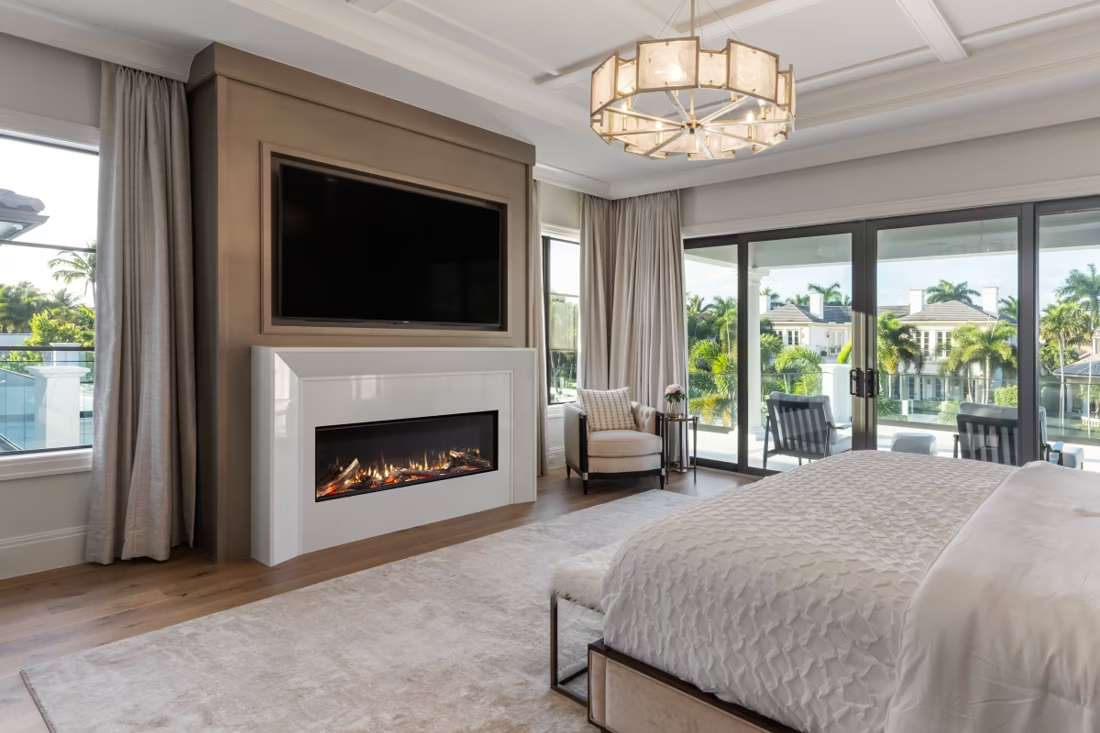
Yes—with an asterisk. Fireplaces are hot and TVs don't like heat. Either put a mantel between them to deflect rising warmth, or choose a fireplace with heat-management technology that creates a cool zone on the wall above—the wall stays around 125 degrees, barely warm, while the room still gets full heat. If you like clean lines and don't want a mantel, heat management is the answer.
Does an electric fireplace need a vent or chimney?
No—that's its superpower. An electric fireplace needs a wall and an outlet, period. No vent pipe, no gas line, no clearances to design around, which is why it works in bedrooms, offices, apartments, and walls where venting a gas or wood unit would be impractical or impossible. Installation is typically the simplest and least expensive of any fireplace type.
What is an in-home preview and do I need one?
It's a visit where a hearth professional measures your space, confirms the model you picked actually works in your home, and walks the specs—framing, gas line, venting, finish work—before anything is ordered. Some details you just can't know until you see the house. Never make a down payment without one; it's the single most-skipped step that burns buyers.
Can a fireplace actually lower my heating bill?
Yes—by creating a comfort zone. A furnace heats every square foot of the house just to warm the one room you're in; a gas fireplace on low burns roughly a sixth of the gas a typical furnace does. Set the furnace around 55–60 degrees as a baseline, then heat the rooms your family actually uses. Families who heat this way commonly save $20–$60 a month.
Nearby Dealers
Hearth shops serving Ravenswood and the surrounding area. Every listing shows whether it is a WhyFire partner, a dealer we have verified as authorized for the brands we recommend, or a local business carrying hearth products. No manufacturer pays for placement. How we verify dealers →
Hardman's Hardware
Baum Lumber Company
Rutland Bottle Gas
Hardman's Hardware
Electric Service in Ravenswood
An electric fireplace's heater draws about 1,500 watts—pennies per hour at local rates.
Appalachian Power Co
Find your electric fireplace in Ravenswood.
Tell us a bit about your home and we'll put together a free Project Guide & Parts List for your Ravenswood electric fireplace project, then connect you with a trusted local dealer to install it.
Find Your Fireplace →