
Zone heat for Jackson County, without the chimney.
From Ripley to Ravenswood and the farms in between, electric fireplaces give Jackson County homes real supplemental warmth with a plug and a wall bracket—no venting, no gas line, no permit headaches. Find the right unit and connect with a trusted local dealer.
Every Project Starts From One of These Five Situations
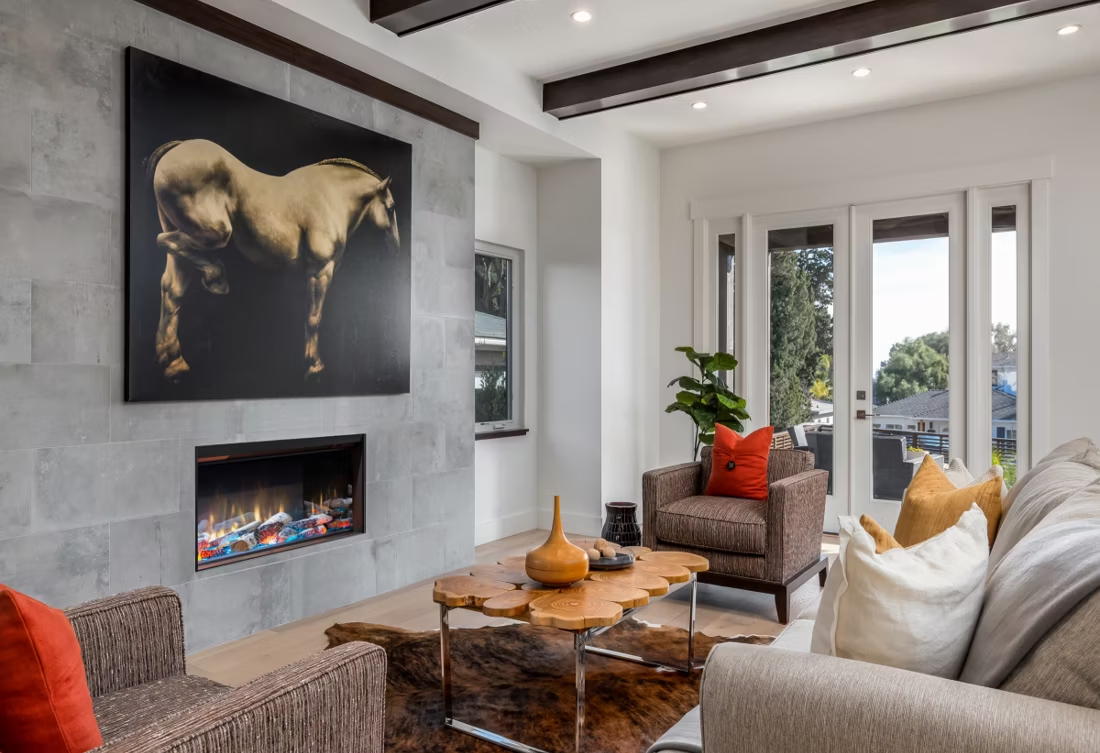
Electric fireplaces fit where wood and gas can't.
Jackson County sits in the Mid-Ohio Valley of west-central West Virginia, with Ripley as the county seat and Ravenswood anchoring the Ohio River side of the county. Climate zone 4A here means real winter—about 4,749 heating degree days a year and average lows around 22°F—but it's milder than the mountain counties to the east, and nowhere near the extremes of places like Duluth or Burlington. That's exactly the range where electric fireplaces earn their keep: enough cold to want supplemental heat in a bedroom, sunroom, or finished basement, but not so brutal that you need a whole-home wood or gas system to get through January.
A lot of Jackson County's housing stock is older farmhouses and manufactured or mobile homes spread across rural roads outside Ripley, Cottageville, Sandyville, and Kenna—plus rental units in Ravenswood and Ripley where landlords don't want to deal with a chimney or a gas line. Electric fireplaces solve both problems: no combustion, no venting, no building permit in most cases, and a straightforward 120V or 240V circuit that any licensed electrician can add. For homes already burning oak, hickory, or cherry for primary heat, an electric insert in a secondary room is often the easiest way to add comfort without opening up another chimney.
Three steps. No salesperson until you're ready.
Tell us about your project
Your zip code, your situation, and the fuel you're leaning toward—or let the answers point you to one.
See what's actually available
The brands dealers within 100 miles genuinely carry—real options, never a catalog mirage.
Get your dealer & Project Guide
A trusted local dealer, plus the free Project Guide & Parts List that names every component of the job.
Frequently Asked Questions
How much does an electric fireplace installation cost in Jackson County?
Plug-in freestanding units and simple wall-mounted electric fireplaces typically run $400 to $1,200 installed, since most just need a standard outlet and a mounting bracket. Built-in electric inserts set into an existing masonry fireplace or a custom-framed wall run higher—usually $1,200 to $2,800—especially if a dedicated 240V circuit needs to be run from the panel, which is common in Jackson County's older farmhouses that weren't wired with a spare circuit near the fireplace. Local electricians and hearth dealers serving Ripley and Ravenswood can quote the electrical work and the unit together.
Electric vs. wood—which makes more sense for my Jackson County home?
Wood still makes a lot of sense out here—Jackson County has plenty of oak, hickory, maple, and cherry available from private land and local firewood sellers, and a wood stove keeps working when the power's out, which matters on rural roads outside Ripley where outages can stretch longer than in town. Electric fireplaces don't provide backup heat during an outage, but they're far simpler to add to a second room, they don't need a chimney or clearances, and there's no ash, no creosote, and no annual sweep to schedule. Many Jackson County homes end up with both: wood or a wood insert as the primary or backup heat source, electric in a bedroom or sunroom for everyday convenience.
Electric vs. pellet stove—which is the better fit?
Pellet stoves are a real option in Jackson County—brands like Energex, Hamer Pellet Fuel, and Greene Team Pellet Fuel are sold regionally, and a pellet stove can put out serious heat for a whole living area. But pellet stoves need electricity to run the auger and blower anyway, plus a hopper to load and ash to empty, and venting through an exterior wall or roof. If you're just trying to add comfortable heat to one room without dealing with fuel bags or venting at all, an electric fireplace is the simpler answer. If you want to meaningfully cut a heating bill in a larger space, pellet is usually the stronger choice.
Do I need a permit or special wiring for an electric fireplace in Jackson County?
Most plug-in electric fireplaces don't require a permit at all—they run on a standard household outlet like any other appliance. Built-in units, especially larger models that call for a dedicated 240V circuit, may need an electrical permit through the Jackson County Building Department depending on the scope of the work. Since there's no combustion, no chimney, and no gas line involved, the permitting process is far simpler than a wood or gas install—the main thing to confirm is whether your electrical panel has room for the added circuit, which a local electrician can check quickly.
What's the best type of electric fireplace for an older farmhouse or manufactured home?
For older farmhouses common around Cottageville and Sandyville, a built-in electric insert set into an existing masonry fireplace opening is often the cleanest upgrade—it reuses the opening you already have and just needs power run to it. For manufactured and mobile homes, which make up a significant share of housing in rural Jackson County, a wall-mounted or recessed electric unit designed for thinner wall cavities works better than a heavy built-in insert, and installation is usually limited to a licensed electrician tying into an existing circuit or adding a new one at the breaker box.
Will an electric fireplace actually heat a room, or is it just for looks?
A good electric fireplace with a built-in fan-forced heater can genuinely heat a room of 400 to 1,000 square feet, depending on the model and your insulation—plenty for a bedroom, den, or sunroom addition. The heater and the flame effect run independently, so you can run the visual flame without the heat in warmer months, or run both together during a Jackson County cold snap. It's not going to replace whole-home heat in a drafty farmhouse, but as zone heat for the room you're actually sitting in, it does real work and can let you turn the thermostat down elsewhere in the house.
How much does it cost to run an electric fireplace day to day?
Most electric fireplace heaters draw around 1,500 watts on the heat setting, which works out to roughly 15 cents an hour at typical West Virginia electric rates—a few dollars a day if you run it during the coldest stretches. That's cheap compared to running whole-home electric resistance heat, but it's worth comparing against what you're already paying for wood or propane if you're deciding between adding an electric unit versus expanding an existing wood or pellet setup. Flame-only mode with the heater off uses only a few watts, so ambiance without heat costs almost nothing.
Built-in insert, wall-mounted, or freestanding—which should I choose?
If you have an existing masonry fireplace in a Jackson County farmhouse, a built-in insert that slides into the existing opening usually looks the most finished and blocks the old flue from drafting cold air into the room. If you're adding heat to a room with no fireplace—a converted porch, a finished basement, a bedroom—a wall-mounted or recessed unit saves floor space and mounts almost like a large TV. Freestanding electric stoves and mantels are the easiest option for renters in Ripley or Ravenswood since they need no wiring changes beyond an outlet and can move with you.
Will my electric fireplace still work during a power outage?
No—electric fireplaces need power to run, so they won't provide heat during an outage, which is a real consideration on some of the more rural roads outside Ripley and Kenna where outages can run longer than in town. If backup heat during storms matters to you, pair an electric fireplace for everyday convenience with a wood stove or insert as your primary or emergency heat source—a common setup in Jackson County given how much oak and hickory firewood is available locally.
Do electric fireplaces actually produce heat?
Yes—most put out around 4,800–5,000 BTUs from a standard outlet, which comfortably warms a bedroom, office, or den as a comfort-zone heater. What they won't do is carry a whole house the way wood, gas, or pellet can. Think of electric as ambiance-first with honest supplemental heat: flames on with no heat in July, flames plus warmth in January.
Can I put a TV above my fireplace?
Yes—with an asterisk. Fireplaces are hot and TVs don't like heat. Either put a mantel between them to deflect rising warmth, or choose a fireplace with heat-management technology that creates a cool zone on the wall above—the wall stays around 125 degrees, barely warm, while the room still gets full heat. If you like clean lines and don't want a mantel, heat management is the answer.
What is an in-home preview and do I need one?
It's a visit where a hearth professional measures your space, confirms the model you picked actually works in your home, and walks the specs—framing, gas line, venting, finish work—before anything is ordered. Some details you just can't know until you see the house. Never make a down payment without one; it's the single most-skipped step that burns buyers.
Can I install a fireplace myself?
If you're putting a fire in your house on purpose, it's best to work with an expert. Unless you're genuinely experienced in framing, gas line, vent pipe, and the national code on clearances to combustibles, have a professional do it—and ideally the same company that sells you the fireplace, so warranty, service, and liability all live under one roof.
Stove and Fireplace Dealers in Jackson County
Listings include WhyFire partner dealers, dealers we have verified as authorized for the brands we recommend, and established local businesses that carry hearth products. Every listing shows which one it is. The ones marked Preferred run on WhyFire's software, so they can show you real pricing and book your appointment right here. No manufacturer pays for placement. How we verify dealers →
Hardman's Hardware
Baum Lumber Company
Rutland Bottle Gas
Hardman's Hardware
Find your electric fireplace in Jackson County.
Tell us about your home and we'll match you with a trusted local Jackson County dealer, plus a free Project Guide & Parts List with the exact unit, wiring needs, and mounting parts for your project.
Find Your Fireplace →