
Warm, Clean Heat for the Mid-Ohio Valley.
Steady, thermostat-controlled heat for Parkersburg winters—find the right pellet stove or insert and connect with a trusted local dealer.
Every Project Starts From One of These Five Situations
Pellet heat built for Wood County's moderate winters.
Parkersburg sits along the Ohio River at about 635 feet of elevation, and winters here run milder than much of Appalachia—average lows sit around 24°F and the area sees a moderate winter heating season overall, well short of what a place like Burlington, VT or Duluth, MN deals with in a season. That moderate profile is well suited to pellet heat: homeowners get steady, thermostat-controlled warmth through the cold months without needing a stove built for sustained sub-zero extremes.
Wood County isn't currently under any air quality non-attainment designation or winter burn restrictions, so a pellet stove here is mostly a comfort and efficiency choice rather than a workaround for smoke regulations. Fuel is easy to source locally, too—regional brands like Energex, Hamer Pellet Fuel, and Greene Team Pellet Fuel are milled from Appalachian hardwood residuals not far from the Mid-Ohio Valley, which tends to keep bag prices reasonable and supply close to home rather than trucked in from out of region.
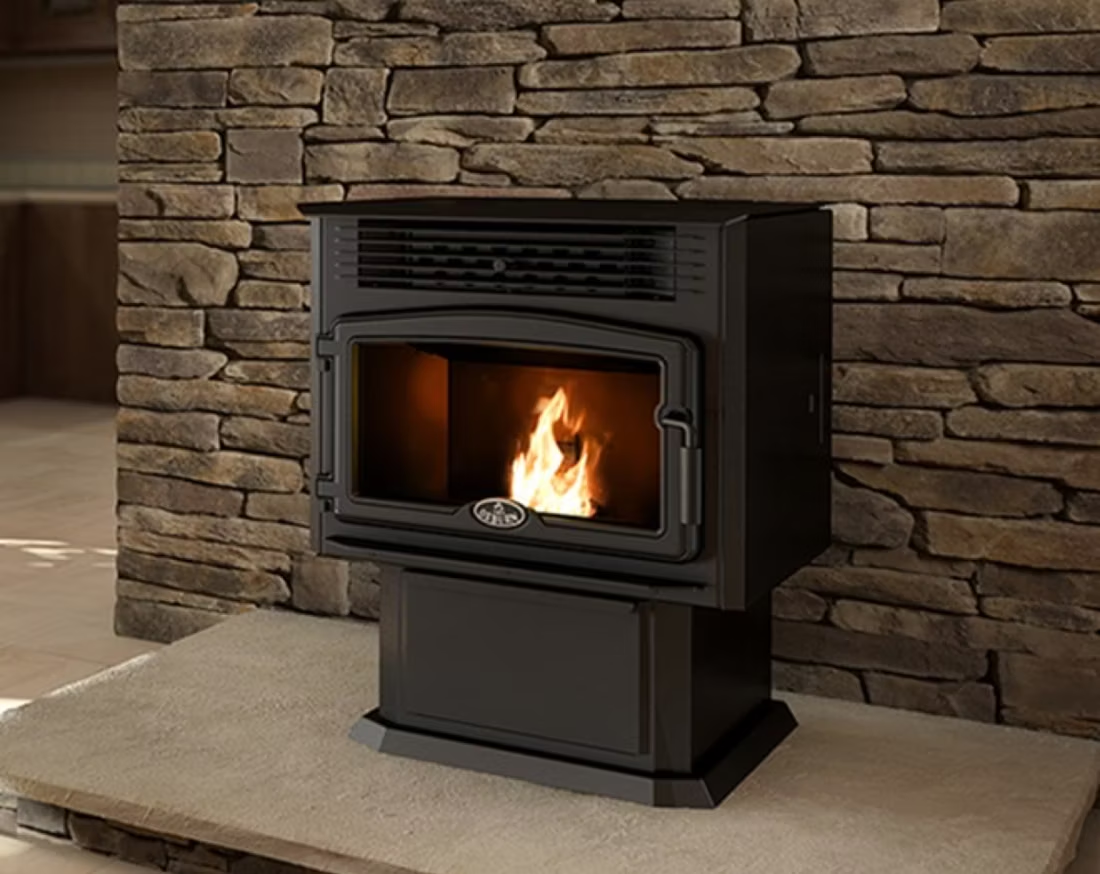
Three steps. No salesperson until you're ready.
Tell us about your project
Your zip code, your situation, and the fuel you're leaning toward—or let the answers point you to one.
See what's actually available
The brands dealers within 100 miles genuinely carry—real options, never a catalog mirage.
Get your dealer & Project Guide
A trusted local dealer, plus the free Project Guide & Parts List that names every component of the job.
Frequently Asked Questions
How much does a pellet stove installation cost in Parkersburg?
Most pellet stove installations in the Parkersburg area run roughly $3,000 to $6,500, depending on the unit, whether you're venting through an exterior wall or an existing chimney chase, and whether a hearth pad or electrical outlet needs to be added. A freestanding pellet stove venting straight out through a rear or side wall—common in the ranch and split-level homes around Parkersburg and Vienna—tends to land on the lower end. Inserts going into an existing masonry fireplace, which need a liner adapted for pellet venting, run a bit higher. A local dealer will give you a firm number after seeing your setup.
What size pellet stove do I need for my Parkersburg home?
With Parkersburg's moderate winter heating needs, most homes don't need a stove sized for extreme cold—this isn't Fargo or International Falls territory. A small to mid-size pellet stove (40,000–50,000 BTU) comfortably heats an open main living area of 1,000–1,800 square feet in a reasonably insulated home, while larger or older houses with less insulation may want a unit in the 60,000 BTU range for whole-home supplemental heat. Ceiling height, floor plan, and how open the home is all factor in—a local dealer can size it properly during an in-home visit rather than guessing off square footage alone.
What pellet brands are available near Parkersburg?
Homeowners in the Mid-Ohio Valley typically burn Energex, Hamer Pellet Fuel, or Greene Team Pellet Fuel—all produced from Appalachian hardwood residuals within a reasonable trucking distance of Wood County. Because the mills are regional rather than cross-country, bag pricing tends to run more stable than in markets that import pellets from the Pacific Northwest or Canada. Expect somewhere in the neighborhood of $230–$280 per ton bought by the pallet, with modest savings for buying a full season's supply (typically 2–3 tons for an average home) up front in fall.
Pellet stove vs. wood stove—which makes more sense in Parkersburg?
Wood County has plenty of oak, hickory, maple, and cherry available for traditional wood burning, and a wood stove will out-heat a pellet stove on raw BTU output and work with zero electricity—useful if Monongahela Power lines go down in an ice storm. A pellet stove trades that off for real convenience: load the hopper, set the thermostat, and walk away, with far less ash and no chimney creosote buildup to manage. For a household that wants set-it-and-forget-it heat and doesn't want to split, stack, and haul cordwood, pellet is usually the easier day-to-day fit; for backup heat during outages, wood still has the edge unless you pair the pellet stove with battery or generator backup.
Will my pellet stove work if the power goes out?
Not without backup power. Pellet stoves rely on an electric auger to feed fuel and a blower to circulate heat, so a Monongahela Power outage will shut the unit down even with a full hopper. Many Parkersburg homeowners pair a pellet stove with a small battery backup unit or a portable generator specifically for this reason, since ice storms are the more common outage cause locally. Day-to-day running cost is low regardless—at Monongahela Power's residential rate of about 14 cents per kWh, the auger and blower typically add only a few cents an hour to your electric bill.
How much pellet fuel storage space do I need?
A typical Parkersburg household burning a pellet stove as a primary or heavy supplemental heat source uses around 2–3 tons of pellets per winter, and each ton takes up roughly 50 cubic feet of dry storage—a corner of a garage, basement, or a dedicated storage bin works fine. Pellets need to stay dry, since moisture causes them to swell and break down, so a covered, off-the-ground storage spot matters more here than in drier climates. Buying your season's supply in fall from a local dealer or regional mill like Energex or Hamer avoids scrambling for stock mid-winter if a cold snap drives up demand.
Do I need a permit to install a pellet stove in Parkersburg?
Most pellet stove installations require a building permit, whether through the City of Parkersburg's building department or Wood County's, depending on where the property sits. The permit mainly covers proper venting clearances and hearth protection, since pellet stoves vent through smaller-diameter pipe than wood stoves but still need correct clearance to combustibles. Most local dealers pull the permit as part of the installation, so it's rarely something a homeowner has to handle solo—but it's worth confirming before work starts, especially in older Parkersburg neighborhoods with older wiring and framing.
How often does a pellet stove need to be cleaned and serviced?
Pellet stoves need more frequent light maintenance than wood stoves but far less heavy chimney work. Plan on emptying the ash pan every few days during regular use, a deeper burn-pot and glass cleaning every couple of weeks, and a full professional service—checking the auger, exhaust fan, gaskets, and venting—once a year, ideally before the heating season starts in fall. Homes running the stove as a primary heat source through a full Parkersburg winter should lean toward the more frequent end of that schedule; occasional supplemental use can stretch it out.
Pellet vs. gas—which is the better fit for my home?
Gas fireplaces offer instant on-off convenience with no fuel handling at all, and work well as a primary heat source if your home already has natural gas or propane service. Pellet stoves require loading a hopper and buying fuel by the ton rather than flipping a switch, but they burn a renewable, regionally milled fuel—a real plus in a hardwood-producing area like Wood County—and many homeowners simply prefer the visible flame and radiant feel of a pellet fire over a sealed gas unit. If convenience is the top priority, gas usually wins; if you like the idea of a real, visible fire without the full workload of cordwood, pellet is the middle ground.
Why is a fireplace insert so efficient?
An insert does two things: it seals the chimney completely, so you stop losing air you already paid to heat, and it radiates warmth into the room through the firebox and glass. Most add a heat-exchange fan that pulls cool room air underneath, wraps it around the hot firebox, and pushes it back out warm. Your home is more efficient before you've even lit the first fire.
Why is my open fireplace making my house colder?
Open fireplaces suck—literally. As the fire burns, it consumes air your furnace already paid to heat and pulls it out through the chimney, so the house is actually colder after the fire goes out than before you lit it. An insert fixes this: it seals the chimney, puts fixed glass across the front, and turns that hole in your house into a real heat source.
Can a fireplace actually lower my heating bill?
Yes—by creating a comfort zone. A furnace heats every square foot of the house just to warm the one room you're in; a gas fireplace on low burns roughly a sixth of the gas a typical furnace does. Set the furnace around 55–60 degrees as a baseline, then heat the rooms your family actually uses. Families who heat this way commonly save $20–$60 a month.
Can I install a fireplace myself?
If you're putting a fire in your house on purpose, it's best to work with an expert. Unless you're genuinely experienced in framing, gas line, vent pipe, and the national code on clearances to combustibles, have a professional do it—and ideally the same company that sells you the fireplace, so warranty, service, and liability all live under one roof.
Nearby Dealers
Hearth shops serving Parkersburg and the surrounding area. Every listing shows whether it is a WhyFire partner, a dealer we have verified as authorized for the brands we recommend, or a local business carrying hearth products. No manufacturer pays for placement. How we verify dealers →
Hardman's Hardware
Bob's Fireplace
The Fore Timber Company Inc.
Apex Feed & Supply, Inc.
Contractor’s Building Center
Baum Lumber Company
Pellet Brands Stocked Around Parkersburg
Manufacturers will point you to the nearest stocking dealer.
Find your pellet stove in Parkersburg.
Tell us a bit about your home and we'll put together a free Project Guide & Parts List—the right pellet stove or insert, the vent kit it needs, and a trusted local dealer to install it.
Find Your Fireplace →