
Instant heat for Monroe County's mountain homes.
No chimney, no gas line, no fuel storage—just heat where you need it, from the hollows around Union to the ridges above Peterstown. Find the right unit and connect with a trusted local dealer.
Every Project Starts From One of These Five Situations
Reliable heat without wood, gas, or venting.
Monroe County sits in the Allegheny highlands of southern West Virginia, a sparsely populated stretch of ridges and river bottoms along the Greenbrier and the Virginia line. With a population under 1,200 spread across small towns like Union, Alderson, Peterstown, and Gap Mills, homes here run the gamble from centuries-old farmhouses to newer construction tucked into hollows a long drive from the nearest hardware store. The county sits in climate zone 4A—real winter cold, but not the brutal, months-long deep freeze of places like Duluth or Bismarck—which means many homes get by with a primary heat source (wood, propane, or a heat pump) and lean on a secondary unit for the coldest stretches or for rooms the main system doesn't reach well.
Electric fireplaces have become the practical answer for exactly that gap. Plenty of Monroe County homes already burn local oak, hickory, maple, or cherry in a wood stove, or run on delivered propane, but adding heat to a sunroom, a finished basement, a rental cabin, or an addition without a chimney or gas line is a different problem. An electric insert or built-in solves it with a standard outlet or a simple dedicated circuit—no venting, no combustion byproducts, no fuel deliveries up a gravel road. It's also become a common choice for the county's older homes, where a masonry fireplace exists but the flue is compromised or too costly to reline, and for smaller outbuildings and guest cabins where running a full heating system doesn't pencil out.
Three steps. No salesperson until you're ready.
Tell us about your project
Your zip code, your situation, and the fuel you're leaning toward—or let the answers point you to one.
See what's actually available
The brands dealers within 100 miles genuinely carry—real options, never a catalog mirage.
Get your dealer & Project Guide
A trusted local dealer, plus the free Project Guide & Parts List that names every component of the job.
Frequently Asked Questions
How much does an electric fireplace installation cost in Monroe County?
Plug-in electric fireplace inserts and stoves that run off a standard 120V outlet typically run $300 to $1,200 installed, with most of that in the unit itself since no electrician is required. Built-in electric fireplaces or larger units that need a dedicated 20-amp circuit run higher, often $1,200 to $2,500, once you add a licensed electrician's time—a real consideration in a rural county where the nearest electrician may be coming from Lewisburg or Princeton. Converting an existing masonry fireplace with an electric insert sits in the lower-to-middle range since there's no venting work involved at all, just fitting the unit and wiring it.
Will an electric fireplace work if the power goes out?
No—and this matters in Monroe County, where outages happen during ice storms and high-wind events on the ridges. An electric fireplace is entirely dependent on grid power; when it's out, the unit is out. If you're choosing between fuels specifically for storm resilience, a wood stove or a vented gas unit with battery-backup ignition will keep working when an electric unit won't. Many Monroe County homeowners handle this by keeping a wood stove or fireplace as their primary or backup heat source and adding electric for daily convenience in rooms that don't need to double as emergency heat.
Do I need a permit or an electrician to install an electric fireplace?
A plug-in electric fireplace that uses a standard outlet generally doesn't require a permit—it's no different than plugging in a space heater. If you're installing a built-in unit that requires a new dedicated circuit or any new wiring, that work should be done by a licensed electrician and typically requires an electrical permit even in a rural county without a full building code. Monroe County doesn't have the kind of comprehensive building permitting you'd find in a larger jurisdiction, but electrical work still falls under state electrical code, and a licensed electrician will pull the permit as part of the job.
Can I put an electric insert into my existing fireplace?
Yes, and it's one of the more common projects in Monroe County's older housing stock—many farmhouses and town homes around Union and Alderson have a masonry fireplace with a flue that's cracked, undersized, or simply not worth relining. An electric insert drops into that opening, uses the existing surround, and needs no chimney work at all since there's no combustion to vent. It's usually the fastest and least invasive way to bring a dead fireplace back into daily use, and it works whether or not the original chimney is still sound.
What size electric fireplace do I need for my room?
Most electric fireplaces are sized by heater output (typically around 4,600–5,200 BTU, roughly 1,500 watts) rather than by the same square-footage math used for wood stoves, and that output comfortably heats a single room of 400 to 600 square feet as supplemental heat. For a larger open living area, or for a drafty older Monroe County farmhouse with less insulation, you're better off treating the unit as ambiance and zone comfort rather than expecting it to heat the whole space—pair it with your existing wood stove, propane furnace, or heat pump for anything beyond one room.
What's the difference between an electric fireplace and an electric insert or stove?
An electric fireplace is typically a built-in or wall-mounted unit designed for a fixed location—common in new construction or remodels where there's no existing masonry opening. An electric insert is sized to slide into an existing fireplace opening, which makes it the natural fit for Monroe County's older homes with unused or compromised chimneys. An electric stove is a freestanding cabinet-style unit that can sit anywhere near an outlet, which works well in a cabin, a converted outbuilding, or a room with no fireplace opening at all. All three heat the same way—there's no venting difference between them.
Electric vs. wood—which makes more sense for my Monroe County home?
Wood remains a strong choice here—the county has good access to oak, hickory, maple, and cherry, no air quality restrictions to navigate, and a wood stove keeps producing heat during a power outage on an ice-covered ridge road when nobody's coming to fix a line for a day or two. Electric can't do that. Where electric wins is convenience and flexibility: no wood to split and stack, no chimney to maintain, no smoke, and the ability to add heat to a room that was never built with venting in mind, like a finished basement or a sunroom addition. Many households in the county run both—wood or propane as the backbone, electric for the rooms and situations where it's the easier fit.
What will an electric fireplace cost to run day to day?
Most electric fireplace heaters draw around 1,500 watts on the heat setting. Running one for a few hours an evening in Monroe County, on Appalachian Power's residential rates, typically adds somewhere in the range of $15 to $40 a month depending on how many hours it runs and current rates. That's meaningfully cheaper than running a whole-home system to heat one room, which is exactly the math that makes electric fireplaces popular as supplemental heat rather than a whole-house solution in a county where a lot of housing stock is older and harder to heat evenly.
Where can I find someone to install an electric fireplace in Monroe County?
Given the county's small population—just over a thousand residents spread across Union, Alderson, Peterstown, and the surrounding hollows—there isn't a hearth showroom on every corner, and dealers serving the area often travel from Lewisburg in neighboring Greenbrier County or from Mercer County near Princeton and Bluefield. That travel distance is exactly why matching with the right dealer up front matters: you want someone who already knows the drive, has handled installs in older Monroe County housing stock, and can tell you honestly whether a plug-in unit will do the job or whether you need an electrician for a dedicated circuit before they ever show up.
Can I put a TV above my fireplace?
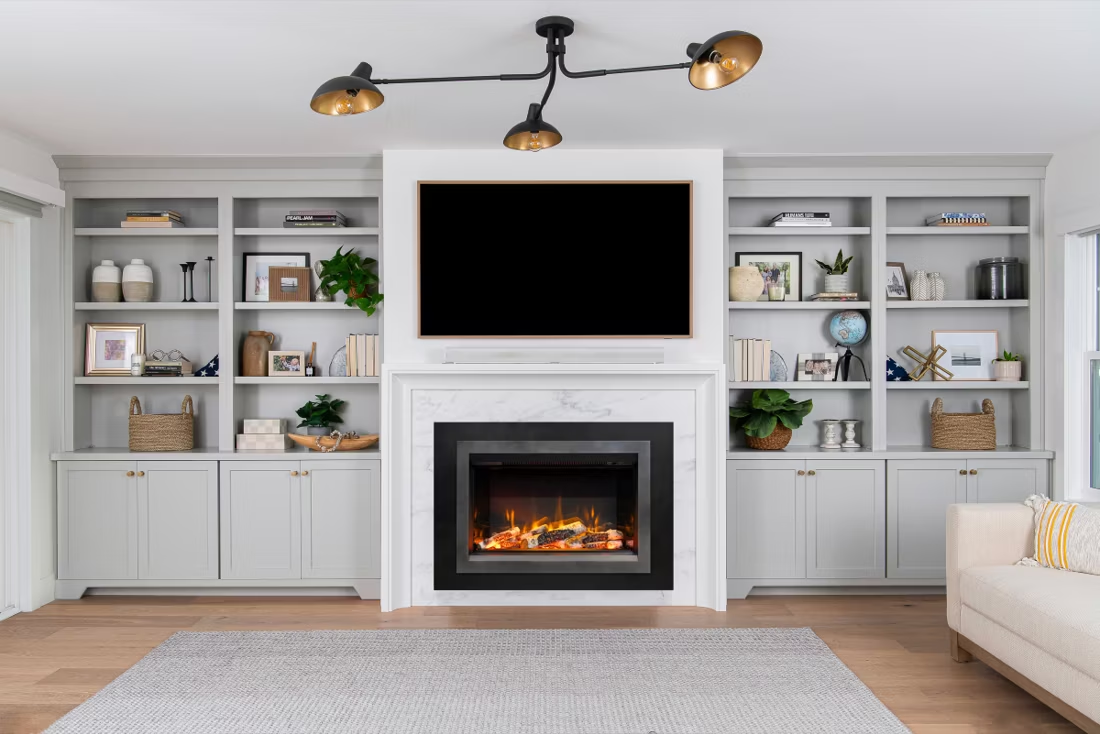
Yes—with an asterisk. Fireplaces are hot and TVs don't like heat. Either put a mantel between them to deflect rising warmth, or choose a fireplace with heat-management technology that creates a cool zone on the wall above—the wall stays around 125 degrees, barely warm, while the room still gets full heat. If you like clean lines and don't want a mantel, heat management is the answer.
Do electric fireplaces actually produce heat?
Yes—most put out around 4,800–5,000 BTUs from a standard outlet, which comfortably warms a bedroom, office, or den as a comfort-zone heater. What they won't do is carry a whole house the way wood, gas, or pellet can. Think of electric as ambiance-first with honest supplemental heat: flames on with no heat in July, flames plus warmth in January.
What is an in-home preview and do I need one?
It's a visit where a hearth professional measures your space, confirms the model you picked actually works in your home, and walks the specs—framing, gas line, venting, finish work—before anything is ordered. Some details you just can't know until you see the house. Never make a down payment without one; it's the single most-skipped step that burns buyers.
Should the dealer who sells my fireplace also install it?
Ideally, yes. A fireplace project involves vent pipe, gas line, electrical, and often tile or stone. Hire three or four separate trades and you own the liability and the game of telephone between them. One company selling and installing means one accountable party, start to finish—ask about factory training, on-time completion records, and what happens if an inspection fails.
Stove and Fireplace Dealers in Monroe County
Listings include WhyFire partner dealers, dealers we have verified as authorized for the brands we recommend, and established local businesses that carry hearth products. Every listing shows which one it is. The ones marked Preferred run on WhyFire's software, so they can show you real pricing and book your appointment right here. No manufacturer pays for placement. How we verify dealers →
Top Hat Stove & Fireplace
Radford Chimney Works
Blue Ridge Heating And Air
McGrady Perdue Heating & Cooling
Air Tech Home & Business
New River Building Supply
Marsh Lp Gas Company
Country Power Equipment
Newport Trading Company Inc.
Skyline Hearth & Fire
Global Stoves & Services
A & D Chimney Cleaning
Davenport Energy Roanoke
Find your electric fireplace in Monroe County.
Tell us a bit about your home and we'll put together a free Project Guide & Parts List—the right electric fireplace or insert for your space, plus a trusted local dealer who already knows Monroe County.
Find Your Fireplace →