
Find the right heating fuel for your Monroe County home.
Wood, gas, pellet, and electric fireplace resources for Union, Peterstown, Alderson, and the farms and hollows in between. Find the right unit and connect with a trusted local hearth retailer.
Every Project Starts From One of These Five Situations
Ridge-and-valley heating in the Allegheny Highlands.
Monroe County sits tucked against the Virginia line in the folded ridges of West Virginia's Allegheny Highlands, with roughly 1,150 residents spread across farms, hollows, and small towns like Union and Peterstown. Climate zone 4A means real winter—not Duluth-cold, but cold enough that a home without a reliable secondary heat source struggles when an ice storm takes down power lines along these rural roads. Oak, hickory, maple, and cherry are the wood species that come off local farms and woodlots, and a lot of households here still split and stack their own firewood the way their parents and grandparents did.
What you'll find on this hub: hearth retailers, service technicians, and fuel suppliers serving every community in the county—Union, Peterstown, Alderson, Gap Mills, and the unincorporated crossroads between them. Pick your fuel below to drill into specifics—local dealers, installation costs, recommended units, and the resources that match your project. Whether you're heating a farmhouse near the Greenbrier River or a cabin up in the ridges, this is the starting point.
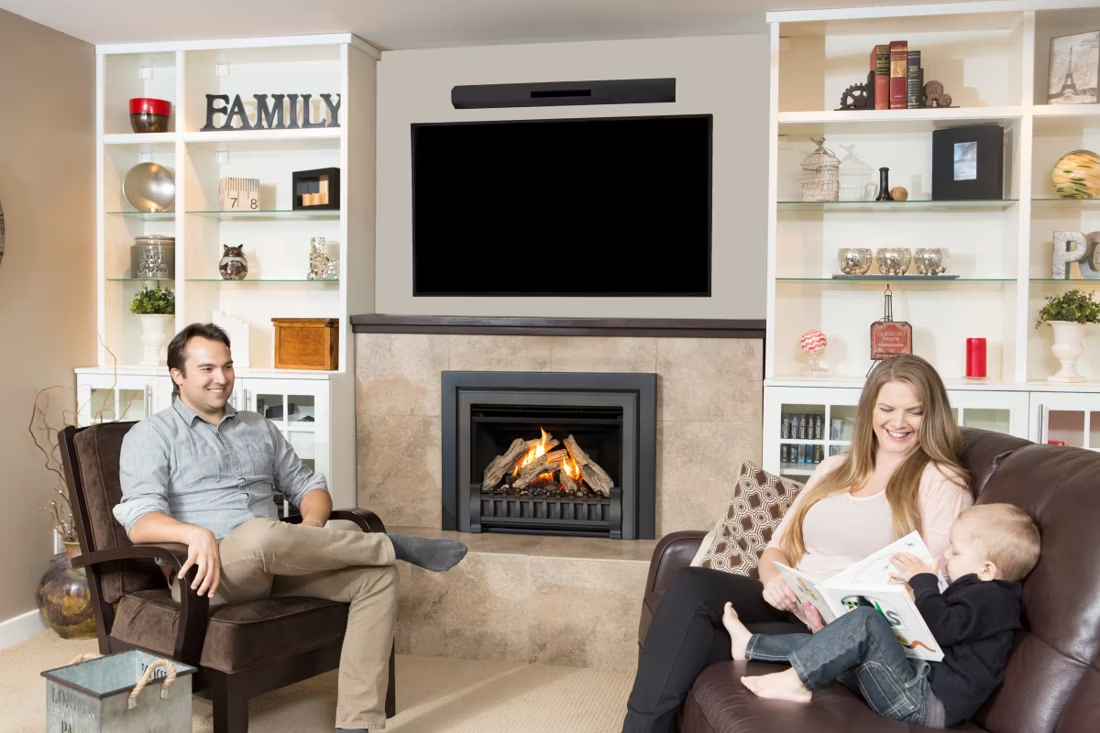
Four fuels. One honest answer for Monroe County.
Three steps. No salesperson until you're ready.
Tell us about your project
Your zip code, your situation, and the fuel you're leaning toward—or let the answers point you to one.
See what's actually available
The brands dealers within 100 miles genuinely carry—real options, never a catalog mirage.
Get your dealer & Project Guide
A trusted local dealer, plus the free Project Guide & Parts List that names every component of the job.
Frequently Asked Questions
Which fuel works best in Monroe County?
It depends on your home and how often you lose power. Wood is the traditional backbone here—with oak, hickory, maple, and cherry available from local farms and woodlots, a lot of Monroe County households burn wood as either primary heat or serious backup, especially since winter ice storms can take down rural power lines for days. Gas (mostly propane in this county, since natural gas service is limited) is the convenience option for homes that want instant, thermostat-controlled heat without hauling wood. Pellet stoves are a solid middle ground—less labor than splitting your own wood, and regional brands like Energex and Hamer Pellet Fuel keep supply reasonably accessible even this far into rural West Virginia. Electric fireplaces work well as supplemental heat for a bedroom or den but aren't a realistic primary heat source through a Monroe County winter, particularly if the power itself is what you're worried about losing.
Do I need a permit to install a fireplace in Monroe County?
Generally, yes, for anything involving new venting, gas lines, or structural chimney work—though enforcement and permitting processes in rural West Virginia counties like Monroe are often less formalized than in larger jurisdictions. Wood stove and insert installations typically need a permit tied to chimney and venting work; gas fireplace and insert installations need a permit plus a licensed gas-fitter for the propane line connection. Electric fireplaces usually don't require a permit unless you're hardwiring a built-in unit into a new electrical circuit. Requirements can vary depending on whether you're inside town limits (Union, Peterstown, Alderson) or in the unincorporated county, so it's worth confirming with the local building authority before work starts. Most hearth retailers who install in this county are used to navigating that process and can walk you through it.
Does Monroe County have air quality restrictions on wood burning?
No—Monroe County doesn't have the geographic or population profile that produces the winter inversion and non-attainment issues you see in basin or urban areas. There are no local burn bans or air quality advisories tied to wood heat here. That said, a properly installed and maintained stove still matters for your own household air quality and chimney safety—creosote buildup from burning unseasoned wood is a bigger practical concern in this county than any regulatory one, which is part of why annual sweeping matters even without a mandate requiring it.
Can one local hearth retailer handle all four fuel types in a county this rural?
Not always, and that's normal for a county with under 1,200 residents. In a service area this sparsely populated, some hearth retailers focus on wood and pellet—the two fuels tied most closely to local firewood supply and regional pellet brands—while others lean toward gas and electric for customers wanting lower-maintenance heat. Multi-fuel dealers do exist and typically travel in from slightly larger towns in the surrounding region to cover Monroe County installs. If you're trying to compare fuel types side by side, it's worth checking which retailers on the county + fuel pages explicitly list all four before assuming any one shop carries everything.
How does service work for homes way out in the county, off the main roads?
Most technicians serving Monroe County are based in a neighboring town or county and drive in, so expect a travel fee for calls out toward Gap Mills or the more remote hollows off Route 219—often somewhere in the $50–$100 range depending on distance. Scheduling ahead in late summer or early fall, before the first cold snap, gets you a much easier appointment than trying to book emergency service in January. Given how often ice storms knock out power in this part of the Highlands, it's worth treating wood heat as a real backup plan even if your primary system is gas or electric—and getting that wood stove or insert serviced annually so it's ready when you actually need it.
What's the typical cost range for fireplace installation across all fuel types in Monroe County?
Costs run in line with typical rural installation pricing, sometimes with a bit more in travel costs factored in given the distances involved. Wood stove or insert: roughly $4,000–$8,500 for a typical install, higher for new chimney construction. Propane fireplace, insert, or stove: roughly $4,000–$10,000 depending on line work and venting, since natural gas hookups aren't widely available in this county. Pellet stove or insert: roughly $4,000–$7,000 for a typical install. Electric fireplace: $200–$3,000 for the unit itself, with $400–$1,200 in labor for anything beyond a simple plug-and-play setup. For specifics tied to local retailer pricing, see the county + fuel pages above.
How much should I budget for a fireplace?
For an average home—covering the fireplace, the vent pipe, and basic installation—a budget between $3,900 and $5,500 gives you a lot of options across wood, gas, and pellet. By the time you add finish work, gas line, and electrical, the average complete installation lands between $5,000 and $12,000 all-in. In a remodel or new build, a good rule is to put about 2.5% of the total project cost toward the fireplace.
Can I install a fireplace myself?
If you're putting a fire in your house on purpose, it's best to work with an expert. Unless you're genuinely experienced in framing, gas line, vent pipe, and the national code on clearances to combustibles, have a professional do it—and ideally the same company that sells you the fireplace, so warranty, service, and liability all live under one roof.
Does a fireplace add value to my home?
On average, a fireplace adds back to the home about the same amount you spent installing it. Add the monthly savings from heating the rooms you actually use instead of the whole house—often hundreds of dollars a year—and the value case is strong before you even count what a fire does for how your family uses the room.
Wood, gas, pellet, or electric—how do I choose?
Match the fuel to your life, not the other way around. Wood: lowest fuel cost and total power-outage independence, but you're hauling and stacking. Gas: press a button, set a thermostat, no maintenance to speak of. Pellet: wood economics with automatic feeding, in exchange for weekly cleaning and a need for electricity. Electric: plugs in anywhere with honest supplemental heat. Nobody regrets the fuel that fits how they actually live.
Stove and Fireplace Dealers in Monroe County
Listings include WhyFire partner dealers, dealers we have verified as authorized for the brands we recommend, and established local businesses that carry hearth products. Every listing shows which one it is. The ones marked Preferred run on WhyFire's software, so they can show you real pricing and book your appointment right here. No manufacturer pays for placement. How we verify dealers →
Top Hat Stove & Fireplace
Radford Chimney Works
Blue Ridge Heating And Air
McGrady Perdue Heating & Cooling
Air Tech Home & Business
New River Building Supply
Marsh Lp Gas Company
Country Power Equipment
Newport Trading Company Inc.
Skyline Hearth & Fire
Global Stoves & Services
A & D Chimney Cleaning
Davenport Energy Roanoke
Find your fireplace in Monroe County.
Pick your fuel below and we'll match you with a trusted local dealer and send you a free Project Guide & Parts List—the exact parts, including the vent kit, and the dealer we recommend for your project.
Find Your Fireplace →