
Add heat and ambiance anywhere in Clay County, no chimney required.
For homes across Clay County's rural stretches—from the county seat of Clay to Ivydale and the hollows in between—an electric fireplace adds real zone heat and a real flame look without a gas line, a chimney, or a permit fight. Find the right unit and get matched with a trusted local dealer.
Every Project Starts From One of These Five Situations
The simplest heat source in a rural county.
Clay County sits in the Appalachian foothills of south-central West Virginia, with a county seat of just over 500 people and a landscape of hollows, ridgelines, and scattered homesteads. It falls in climate zone 4A—mixed-humid, with real winter cold but nothing close to the sustained sub-zero stretches you'd see in a place like Duluth or Fargo. That's exactly the profile where an electric fireplace earns its keep: enough cold to want supplemental heat in a bedroom, sunroom, or add-on room, but not so extreme that you need a whole-home combustion appliance to get through January.
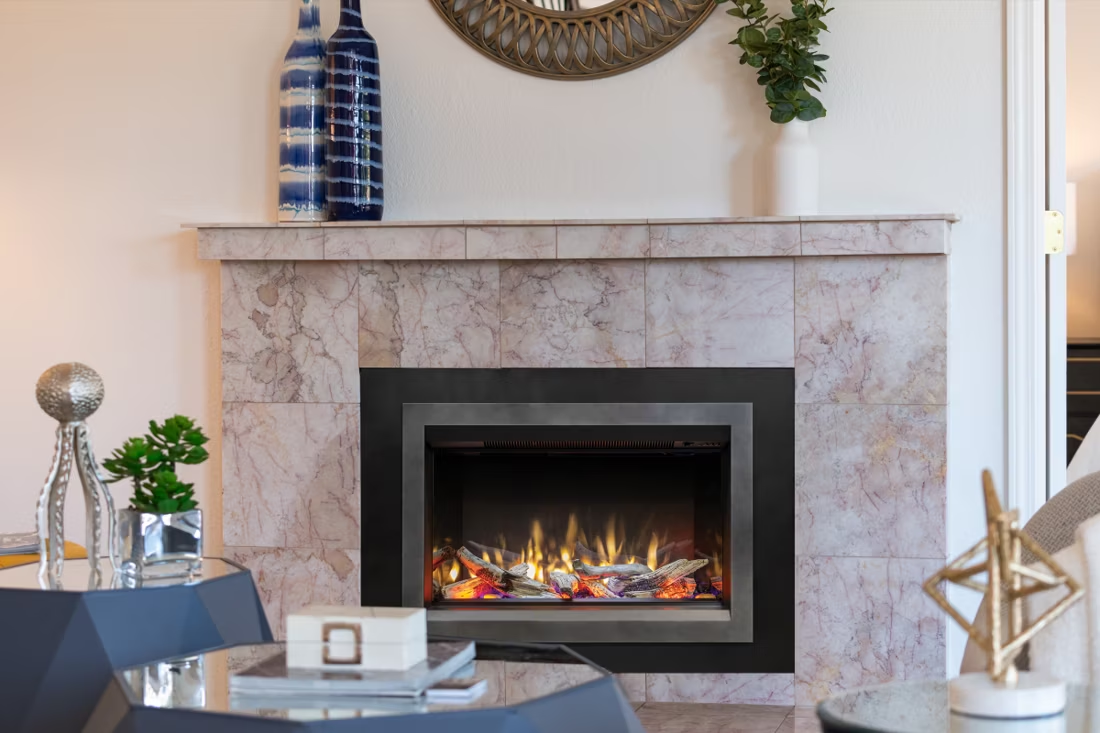
Wood has always been part of heating life here—oak, hickory, maple, and cherry are common on local land, and plenty of Clay County homes still lean on a wood stove for primary heat. But for the rooms a wood stove doesn't reach, or for manufactured and modular homes common throughout the county where adding venting is impractical, electric fireplaces fill the gap. There's no air quality restriction to work around here, no curtailment periods, and no gas line to run—just a 120V or 240V circuit and a unit that plugs in or hardwires cleanly into an existing wall or mantel.
Three steps. No salesperson until you're ready.
Tell us about your project
Your zip code, your situation, and the fuel you're leaning toward—or let the answers point you to one.
See what's actually available
The brands dealers within 100 miles genuinely carry—real options, never a catalog mirage.
Get your dealer & Project Guide
A trusted local dealer, plus the free Project Guide & Parts List that names every component of the job.
Frequently Asked Questions
How much does an electric fireplace installation cost in Clay County?
Most electric fireplace projects in Clay County run $300 to $1,200 for a plug-in insert or wall-mount unit into an existing opening, and $800 to $2,200 for a built-in unit that requires a dedicated 240V circuit run by an electrician. Because there's no venting, chimney work, or gas line involved, electric is consistently the least expensive of the four fuel types to install here. The main cost variable is electrical work—older farmhouses and some manufactured homes in the county may need panel or wiring upgrades before a larger built-in unit can be added.
Will an electric fireplace actually heat a room in Clay County?
Yes, for the room it's in. Most electric fireplaces put out 4,000 to 5,000 BTUs, comparable to a space heater, which is enough to noticeably warm a bedroom, den, or sunroom addition through Clay County's zone 4A winters. What it won't do is replace a wood stove or furnace as whole-home heat during a hard cold snap. Think of it as zone heat for the room you're actually sitting in, paired with your home's existing furnace, propane heater, or wood stove for the rest of the house.
Do I need a permit to install an electric fireplace in Clay County?
Generally no for a plug-in unit—there's no venting or gas work involved, so most simple insert or wall-mount installations don't trigger a building permit. If you're adding a built-in unit that requires new wiring or a dedicated circuit, an electrician pulling an electrical permit is standard practice and protects you if you ever sell the home. Check with your local building official before starting larger built-in projects, especially in older housing stock where panel capacity is a common limiting factor.
Electric vs. wood—which is right for my Clay County home?
Wood, burning local oak, hickory, or cherry, remains the go-to for primary heat and for storm resilience—a wood stove keeps working when the power lines along the county's back roads go down. Electric can't do that; it needs a live circuit to run. Where electric wins is convenience and reach: instant on-off operation, zero ash or chimney maintenance, and the ability to add heat and a real flame look to a room a wood stove simply can't serve, like a bedroom addition or a manufactured home. Many households here run both—wood as the backbone, electric for the rooms it doesn't cover.
Will my electric fireplace work during a power outage?
No—electric fireplaces require power to run the heater, flame effect, and any fan, so they go dark the moment the grid drops. For rural stretches of Clay County served by Appalachian Power, where storm-related outages can run longer than in town, that's worth planning around. If backup heat during outages matters to your household, pair an electric unit with a wood stove or propane heater rather than relying on electric as your only source.
What's the difference between an electric insert, a built-in, and a mantel package?
An electric insert drops into an existing fireplace opening—including an old wood-burning masonry fireplace you're retiring—and typically just plugs in. A built-in electric fireplace is designed to be framed into a wall like a real fireplace, often wired to a dedicated circuit for full heat output. A mantel package pairs a smaller electric unit with a surrounding mantel and hearth for homes with no existing fireplace opening at all. For Clay County's mix of older homes with existing hearths and newer manufactured or modular construction without one, all three show up regularly—a local dealer can tell you which fits your framing and wiring.
Are electric fireplaces a good fit for manufactured or modular homes?
Yes, and it's one of the more common installs in this part of West Virginia. Manufactured and modular homes generally can't support masonry chimneys or heavy vented gas units, but a plug-in or low-draw electric fireplace works within standard residential wiring and doesn't add structural load. Confirm your home's electrical panel has available capacity if you're considering a larger built-in unit, since older manufactured homes sometimes have limited amperage to spare.
How much does it cost to run an electric fireplace day to day?
Running a typical 1,500-watt electric fireplace on the heat setting for several hours a day adds roughly $10 to $25 a month to an Appalachian Power bill, depending on usage and current rates. Running it on flame-only mode with the heater off costs only a few cents an hour, since the LED flame effect draws minimal power. That low operating cost is part of why electric works well as everyday supplemental heat in rooms that don't need to run a furnace or wood stove nonstop.
Where can I see electric fireplaces in person near Clay County?
Given the county's small population and rural footprint, dedicated hearth showrooms are limited locally, and most Clay County residents end up working with a dealer based in a nearby larger town who serves the county on installs and delivery. That's exactly the matching problem Find My Fireplace solves—rather than guessing at a big-box model that may not be sized right for your room or wiring, we match you with a trusted local dealer who knows what's actually installable in your home and can quote it properly.
Does an electric fireplace need a vent or chimney?
No—that's its superpower. An electric fireplace needs a wall and an outlet, period. No vent pipe, no gas line, no clearances to design around, which is why it works in bedrooms, offices, apartments, and walls where venting a gas or wood unit would be impractical or impossible. Installation is typically the simplest and least expensive of any fireplace type.
Can I put a TV above my fireplace?
Yes—with an asterisk. Fireplaces are hot and TVs don't like heat. Either put a mantel between them to deflect rising warmth, or choose a fireplace with heat-management technology that creates a cool zone on the wall above—the wall stays around 125 degrees, barely warm, while the room still gets full heat. If you like clean lines and don't want a mantel, heat management is the answer.
Can a fireplace actually lower my heating bill?
Yes—by creating a comfort zone. A furnace heats every square foot of the house just to warm the one room you're in; a gas fireplace on low burns roughly a sixth of the gas a typical furnace does. Set the furnace around 55–60 degrees as a baseline, then heat the rooms your family actually uses. Families who heat this way commonly save $20–$60 a month.
How much should I budget for a fireplace?
For an average home—covering the fireplace, the vent pipe, and basic installation—a budget between $3,900 and $5,500 gives you a lot of options across wood, gas, and pellet. By the time you add finish work, gas line, and electrical, the average complete installation lands between $5,000 and $12,000 all-in. In a remodel or new build, a good rule is to put about 2.5% of the total project cost toward the fireplace.
Stove and Fireplace Dealers in Clay County
Listings include WhyFire partner dealers, dealers we have verified as authorized for the brands we recommend, and established local businesses that carry hearth products. Every listing shows which one it is. The ones marked Preferred run on WhyFire's software, so they can show you real pricing and book your appointment right here. No manufacturer pays for placement. How we verify dealers →
Walton Thriftway
The Best Hardware
Hardman's Hardware
F. M. Pile Hardware Co.
Fireside & Patio Shop
Find your electric fireplace in Clay County.
Tell us a bit about your room and your home's wiring, and we'll put together a free Project Guide & Parts List for your Clay County electric fireplace project—the right unit, what it needs electrically, and a trusted local dealer to install it.
Find Your Fireplace →