
Find your pellet stove in Berkeley County.
Thermostat-controlled, low-maintenance heat for the Eastern Panhandle's moderate winter heating season—from Martinsburg to Hedgesville to Falling Waters. Get matched with a vetted local dealer who can size and install the right unit.
Every Project Starts From One of These Five Situations
Set-and-forget heat for Eastern Panhandle winters.
Berkeley County sits in West Virginia's Eastern Panhandle, along the Potomac and I-81 corridor, with Martinsburg as the county seat and Hedgesville, Falling Waters, and Inwood filling out the rest of the county. Winters here are real but not extreme—climate zone 4A, a moderate winter heating season, and average lows around 23°F. That puts Berkeley County a notch milder than places like Fargo, ND or Burlington, VT, but still cold enough that a supplemental or primary heat source matters for four to five months of the year. The local hardwood mix—oak, hickory, maple, and cherry—is the same wood that feeds many of the region's pellet mills, so it's not a coincidence that pellet stoves have caught on here.
Berkeley County has no air quality non-attainment issues and no winter inversion restrictions, so there's no burn-ban risk hanging over a pellet appliance the way there is in some Western counties. Regional pellet brands including Energex, Hamer Pellet Fuel, and Greene Team Pellet Fuel are all sold within reach of the county, which keeps fuel sourcing simple. The appeal for most homeowners here is less about ambiance and more about control: load the hopper, set the thermostat, and let the auger do the rest—no splitting, stacking, or creosote buildup, and a cleaner glass than most wood units. A trusted local dealer can tell you whether a freestanding stove or an insert makes more sense for your specific fireplace or floor plan.
Three steps. No salesperson until you're ready.
Tell us about your project
Your zip code, your situation, and the fuel you're leaning toward—or let the answers point you to one.
See what's actually available
The brands dealers within 100 miles genuinely carry—real options, never a catalog mirage.
Get your dealer & Project Guide
A trusted local dealer, plus the free Project Guide & Parts List that names every component of the job.
Frequently Asked Questions
How much does a pellet stove installation cost in Berkeley County?
Cost depends mainly on whether you're installing a freestanding stove with straightforward through-wall venting or converting an existing masonry fireplace to a pellet insert, which involves more venting and finish work. It also depends on the stove's hopper size and features (thermostat integration, remote control, ash pan capacity). Rather than guess at a number that doesn't reflect your specific home, a local dealer will walk your space and give you a firm, itemized quote that includes the unit, venting, and any electrical work the auger and blower motor require.
What size pellet stove do I need for my Berkeley County home?
Sizing depends on square footage, ceiling height, insulation, and whether the stove is meant to be your primary heat or a supplemental source for one zone of the house. Given Berkeley County's moderate winter heating season and winter lows in the low 20s, most homes here do well with a mid-size unit rated for the main living area rather than the whole house, especially in older homes around Martinsburg with less insulation than newer construction in Hedgesville or Falling Waters subdivisions. An oversized stove will short-cycle and waste pellets; an undersized one won't keep up on the coldest nights. A local dealer will size this for free during an in-home visit rather than off a square-footage chart alone.
Where can I find a pellet stove dealer near me in Berkeley County?
Look for a dealer who installs and services what they sell rather than a big-box retailer that ships a unit and leaves venting and hopper setup to a general contractor. Pellet stoves have electrical components—the auger motor, combustion blower, and control board—that benefit from a technician who knows the specific brand's quirks. A dealer who regularly works with brands sold in this region, like Energex, Hamer Pellet Fuel, or Greene Team Pellet Fuel, will also know which pellet formulations run cleanest in which stoves.
What's the difference between a pellet stove and a pellet insert?
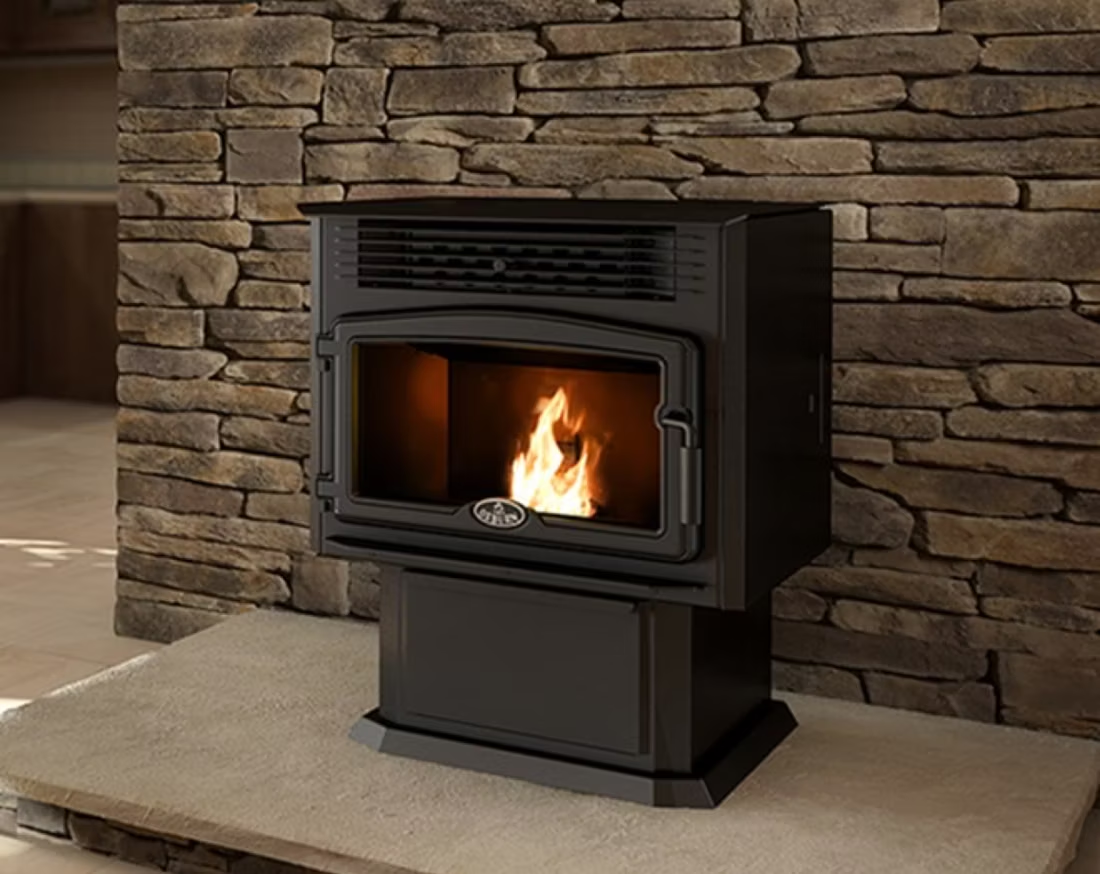
A pellet stove is a freestanding unit that sits on a hearth pad and vents through an exterior wall or existing chimney—it can go almost anywhere in a room with the right clearances. A pellet insert is built to slide into an existing masonry fireplace opening, using a vent liner run up the old chimney, and it's the more common choice for Berkeley County homes with an existing wood fireplace they want to convert to something lower-maintenance. New construction or rooms without a fireplace usually call for a freestanding stove instead.
Do I need a permit to install a pellet stove in Berkeley County?
Most pellet stove and insert installations require a building permit through Berkeley County's building permit office, since the install involves venting through an exterior wall or existing chimney and, in many cases, a dedicated electrical circuit for the auger and blower. A dealer who installs regularly in the county will typically handle the permit application as part of the job, so you're not stuck navigating it solo. Unlike wood-burning installs in some Western states, there's no ongoing air-quality curtailment to worry about here—Berkeley County has no non-attainment designation.
What's the best pellet stove for Berkeley County's climate?
With average winter lows around 23°F and a moderate winter heating season, Berkeley County doesn't demand the extreme-cold engineering that places like Duluth, MN or International Falls, MN require, but a larger hopper still matters if you want overnight burns without a 2 a.m. refill. Look for a stove with at least a 40-pound hopper if it's heating your primary living space, and ask your dealer which models run well on the regional pellet supply—Energex, Hamer Pellet Fuel, and Greene Team Pellet Fuel are all common in this part of the Eastern Panhandle, and not every stove burns every brand's pellet with equal efficiency.
How often does a pellet stove need to be cleaned and serviced?
Pellet stoves need more frequent attention than wood stoves, just less messy attention. The ash pan and burn pot typically need emptying every few days to weekly depending on use, the glass should be wiped down regularly, and the exhaust venting and combustion blower need a full inspection and cleaning at least once a year—ideally before the season starts in fall. Skipping the annual service is the most common reason pellet stoves lose efficiency or start jamming mid-winter. A local dealer can handle this service or point you to a technician who specializes in pellet appliances specifically, since the mechanics differ from a wood stove sweep.
Where can I buy pellets locally in Berkeley County?
Pellet fuel from regional producers like Energex, Hamer Pellet Fuel, and Greene Team Pellet Fuel is generally available through hardware stores, farm supply retailers, and hearth dealers serving the Eastern Panhandle. Buying local or regional brands cuts down on shipping cost baked into the price and means the pellets were milled from hardwood similar to what grows in the county—oak, hickory, maple, and cherry are all common feedstock species regionally. Your dealer can tell you which brand burns cleanest in the specific stove you choose, since ash content and moisture vary by producer.
Pellet stove vs. wood stove—which is right for my home?
Wood stoves burn cordwood, work without electricity, and can serve as backup heat during a power outage—a real consideration given how often Eastern Panhandle winter storms knock out power for a few hours at a time. Pellet stoves need electricity to run the auger and combustion blower, so they go dark in an outage unless paired with a battery backup, but they offer thermostat control, longer unattended burn times, less ash, and no wood splitting or stacking. For Berkeley County homes where convenience and consistent, hands-off heat matter more than backup capability, pellet is usually the better fit. For homes prioritizing storm-proof heat, wood is worth a look instead—a local dealer can walk you through both.
What's the difference between an insert and a zero-clearance fireplace?
An insert is a fireplace that slides into a pre-existing wood-burning fireplace—if you don't have one, there's nothing to insert it into. A zero-clearance fireplace is built into a framed wall, which makes it the answer for remodels and new construction. Simple test: existing masonry fireplace means insert; blank or framed wall means zero-clearance.
How often does a pellet stove need cleaning?
A clean pellet stove is a happy pellet stove. Plan on cleaning the burn pot about once a week when you're burning regularly—ash and clinkers gum up the air holes just like a pellet barbecue. Most pellet stove problems trace back to skipped cleaning that nobody explained up front. Some designs make it easy with a trapdoor burn pot: pull a lever and the gunk drops into the ash pan.
What is an in-home preview and do I need one?
It's a visit where a hearth professional measures your space, confirms the model you picked actually works in your home, and walks the specs—framing, gas line, venting, finish work—before anything is ordered. Some details you just can't know until you see the house. Never make a down payment without one; it's the single most-skipped step that burns buyers.
How much should I budget for a fireplace?
For an average home—covering the fireplace, the vent pipe, and basic installation—a budget between $3,900 and $5,500 gives you a lot of options across wood, gas, and pellet. By the time you add finish work, gas line, and electrical, the average complete installation lands between $5,000 and $12,000 all-in. In a remodel or new build, a good rule is to put about 2.5% of the total project cost toward the fireplace.
Stove and Fireplace Dealers in Berkeley County
Listings include WhyFire partner dealers, dealers we have verified as authorized for the brands we recommend, and established local businesses that carry hearth products. Every listing shows which one it is. The ones marked Preferred run on WhyFire's software, so they can show you real pricing and book your appointment right here. No manufacturer pays for placement. How we verify dealers →
Roach Energy
A&A Pools
Dawson's Home Center
Dawsons Ace Hardware
Blaine Window Hardware, Inc.
Monocacy Chimney Care
Blossman Gas And Appliance
Prouty's Chimney Sweep
Pellet Brands Stocked Around Berkeley County
Manufacturers will point you to the nearest stocking dealer.
Get your Berkeley County pellet stove Project Guide.
Tell us about your home and heating goals, and we'll match you with a trusted local dealer and send a free Project Guide & Parts List—the stove or insert, the venting, and the exact parts your Berkeley County installation needs.
Find Your Fireplace →